Cassin’s Auklet doesn’t attract attention with bright colors or impressive size, yet it is one of the Pacific’s most remarkable seabirds.
It can raise two broods in a single breeding season, feeds on dense swarms of krill over deep ocean canyons, and waits until late at night to return to its burrow.
The species also became a symbol of the changing Pacific Ocean after an unprecedented die-off left tens of thousands of birds stranded along the west coast of North America during the 2014 marine heatwave.
Species Profile
Scientific Classification
1. Subspecies
Two are recognised.
- P. a. aleuticus (Pallas, 1811) — Aleutian Islands and southern Alaska to northern Baja California, plus the Kurile Islands
- P. a. australis van Rossem, 1939 — southern Baja California
An extinct relative, Ptychoramphus tenuis, is known from the Late Pliocene of the San Diego Formation in California.
2. Identification & Appearance
Ptychoramphus aleuticus · Identification & Appearance
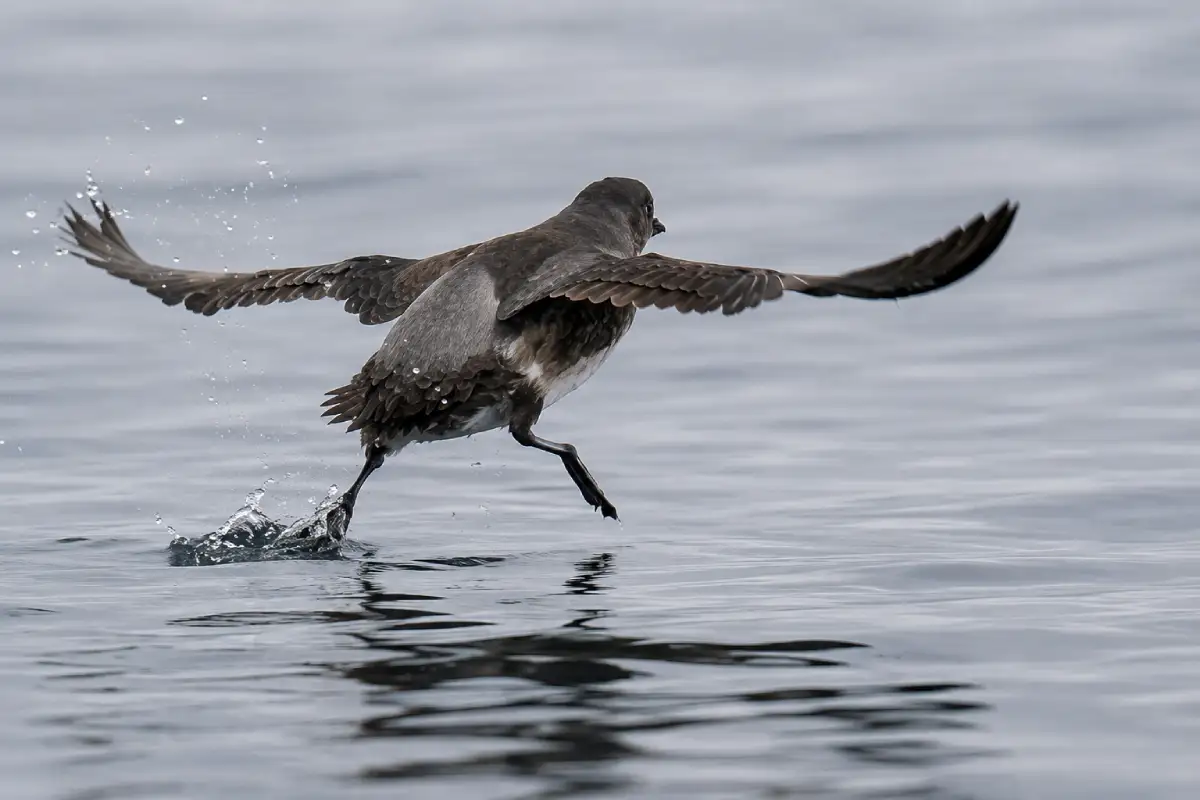
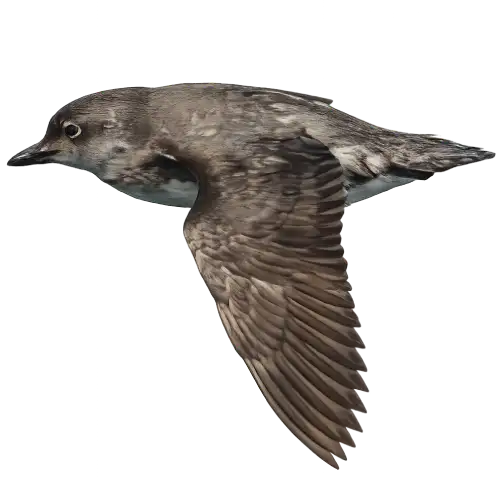
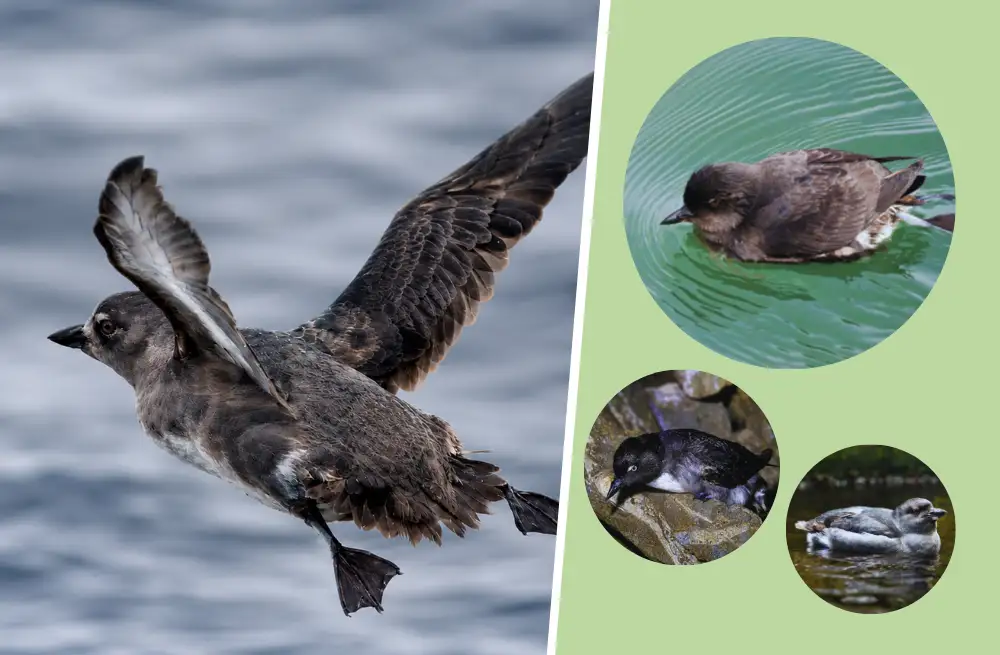
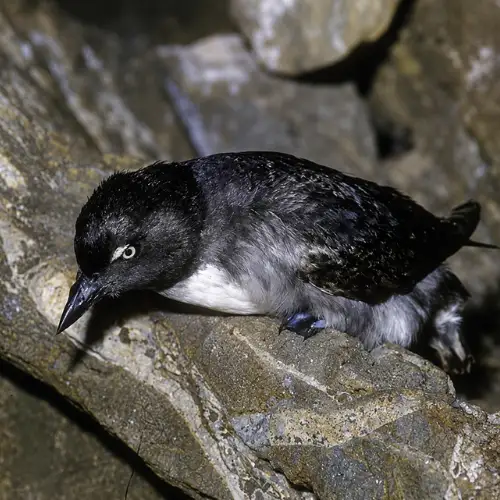
Near ThreatenedSmall, chunky and, by the standards of this family, entirely nondescript. Dark above, pale below, with a small white mark above the eye. The bill is dark with a pale spot at the base. The feet are blue.
It has no breeding plumage. This is the unusual part. Where puffins grow bill plates and golden tufts, and guillemots turn coral-red at the gape, Cassin's Auklet looks essentially the same all year. For a family built on seasonal ornament, that is a real departure.
Identifying It at Sea
Since the plumage offers little, the flight does the work. It is consistently described as looking like a flying tennis ball: small, round and fast, on short stubby wings.
Getting close enough to see more is difficult. The species moves away from ships at distances over a kilometre, which means counts at sea may be substantially underestimated.
3. Range & Habitat
Ptychoramphus aleuticus · Range & Habitat
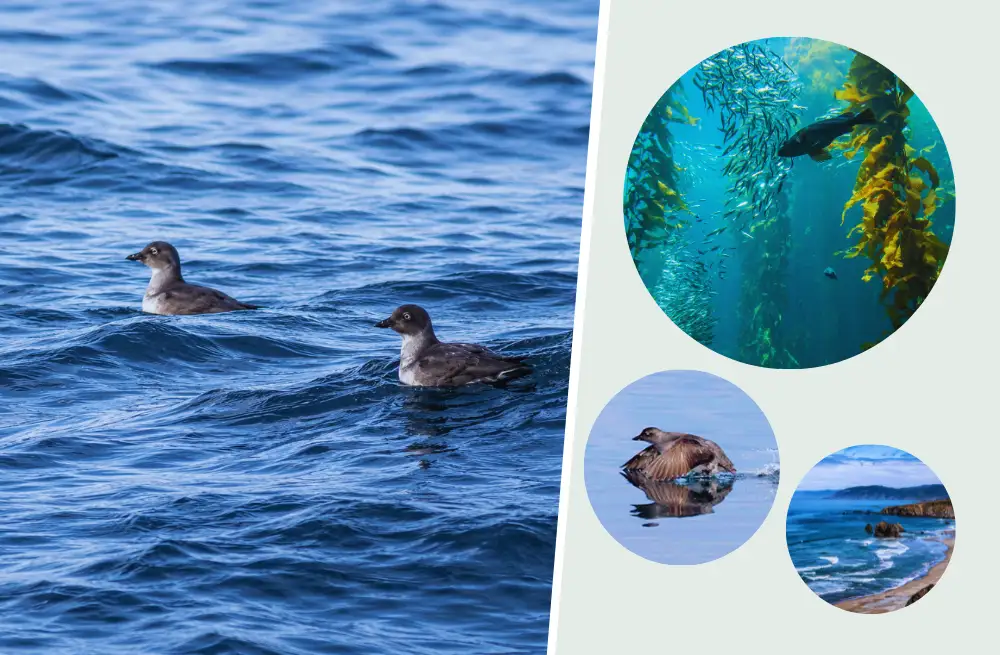
North Pacific EndemicCassin's Auklet prefers cold, productive waters where food is abundant, especially areas rich in zooplankton like krill and copepods. Here are its favorite habitats:
The continental shelf drops sharply into deep ocean, forcing cold, nutrient-dense water upward.
Ecological Advantage High-density krill blooms concentrate along the drop-off, providing effortless feeding grounds.

Coastal currents pull nutrient-rich water up from the seabed to fuel massive plankton growth.
Ecological Advantage Provides a rich marine food web supporting continuous high-calorie foraging.

Isolated islands offer safe burrow nesting sites completely isolated from land predators.
Ecological Advantage Allows short, low-energy shuttle flights between nesting burrows and feeding spots.
Vast pelagic waters stretching far beyond coastal shelves during non-breeding months.
Ecological Advantage Gives flexibility to track shifting zooplankton patches without colony range limits.

Migration is limited. The species is not generally considered migratory, though northern birds may shift south in winter, and Cornell notes some movement in both directions toward the centre of the eastern Pacific range.
At sea, the birds gather where the seabed does something interesting. Submarine canyons and upwellings concentrate their prey, and the auklets follow the bathymetry rather than the coastline.
4. Diet & Diving
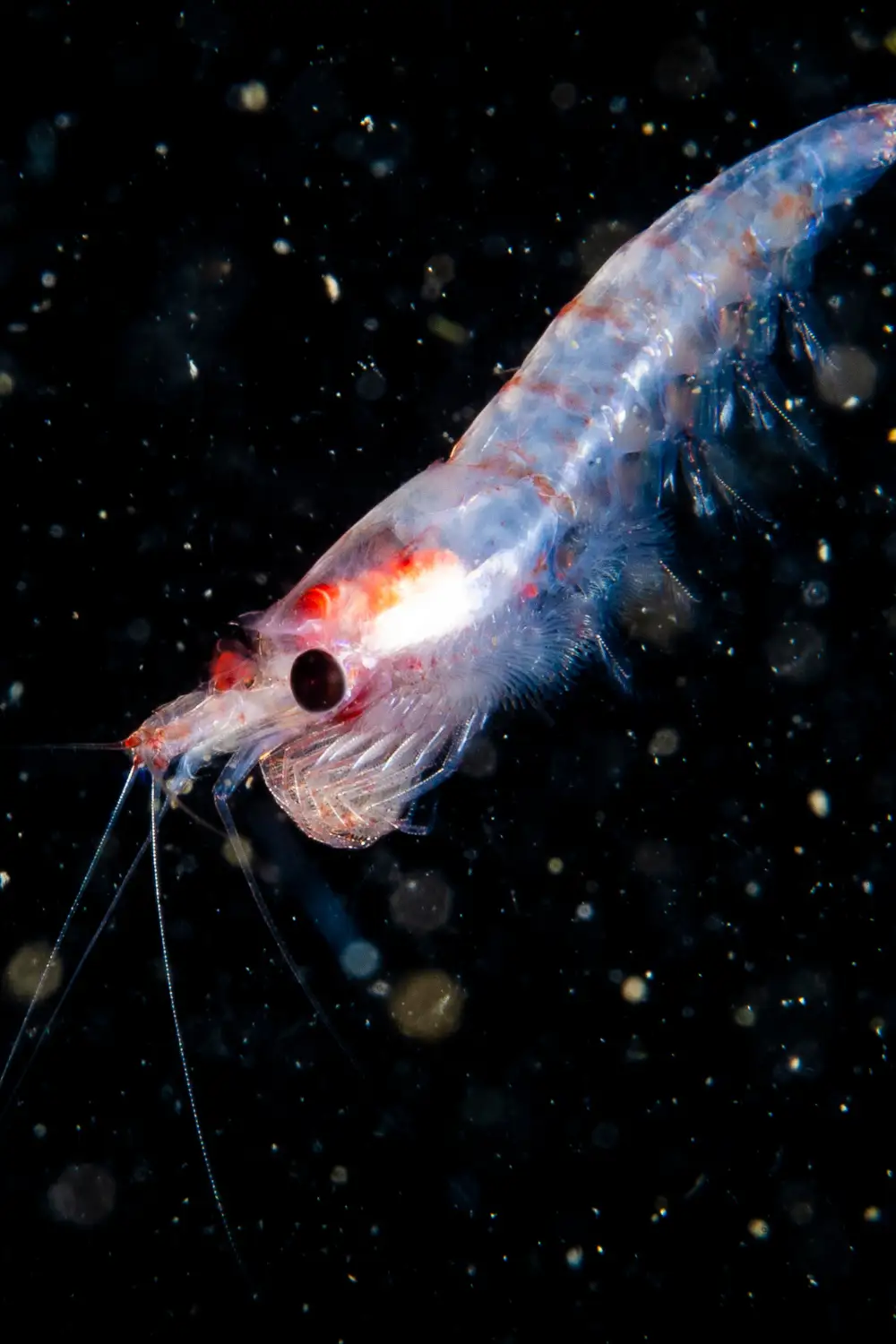
Large zooplankton, and krill above all, along with small crustaceans, squid, and larval and juvenile fish.
Diving is wing-propelled. Recorded depths reach 30 m, with some estimates putting the maximum nearer 80 m.
Where prey is concentrated the birds gather in large flocks, which is otherwise not typical of the species.
The Gular Pouch
Food is collected and carried back to the colony in a specialised throat pouch, often called a sublingual pouch in the literature. All true auklets have one.
This is worth setting against the Rhinoceros Auklet, which visits its colony at night like this species but carries fish externally in its bill. The two solve the same problem differently, and the pouch is one of the clearest markers of which birds are actually auklets.
5. Breeding & Nesting
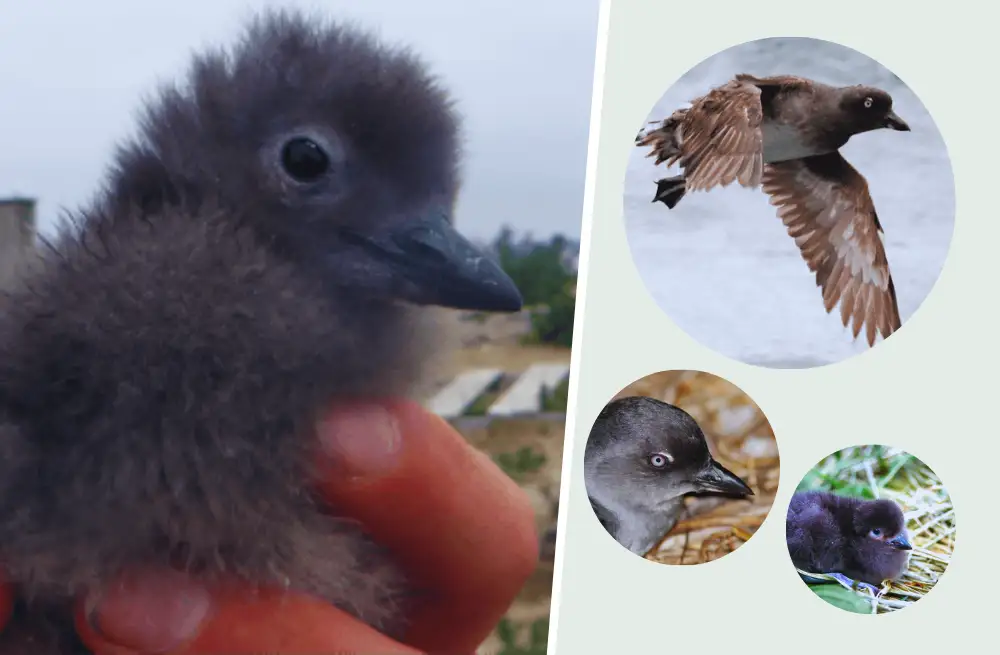
Burrows are excavated with the birds' sharp toenails, or natural cracks are used instead. The species readily accepts artificial structures. Pairs show strong loyalty both to each other and to a particular nest site over many years.
Everything Happens After 11pm
Incubating birds swap shifts at night, usually after 23:00, and leave the colony again before dawn.
The reason is predation. Western Gulls and Peregrine Falcons take auklets moving between the sea and the colony, and darkness is the only defence a 200 g seabird has. The whole daily rhythm of the colony is organised around not being seen.
Chicks are fed nightly for 35 days on partially digested euphausiids and other small crustaceans, regurgitated from the gular pouch. The chick then fledges alone and makes its own way to the water.
Two Broods in One Season
This is the headline fact, and it is worth stating precisely, because sources scope the claim differently.
Cassin's Auklet stands apart from nearly every other northern seabird because it can sometimes raise two broods in a single breeding season. After successfully fledging its first chick, a pair may lay a second clutch, a remarkable strategy that has been documented mainly in the southern part of the species' breeding range.
Either way the behaviour is exceptional. Nearly every other auk lays one egg and raises one chick a year, and several of them cannot even replace a lost egg.
Breeding timing shifts dramatically with latitude. Birds in Baja California nest from late autumn through winter; birds in Alaska nest in early to mid-summer. Laying runs late in El Niño years and early when upwelling arrives early, which ties reproduction directly to ocean conditions.
Demographics
Recruitment has been well studied at the Farallon Islands. About 27% of a cohort begins breeding at age three, and by age eight over 95% have recruited, with a mean recruitment age of 3.6 years. Minimum annual breeding propensity is 0.83 and apparent local survival 0.76, but juvenile survival from hatching to age two is only 0.15.
6. Conservation
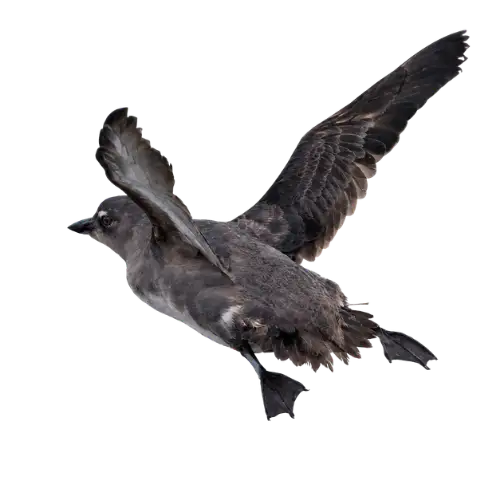
Population & Breeding Trends
Interactive data from Southeast Farallon Island (SEFI) indicating a severe long-term population decline paired with highly erratic, climate-driven breeding success.
| IUCN status | Near Threatened |
| Trend | Significant decline over the past four decades in North America |
| Legal protection | Migratory Bird Treaty Act of 1918 |
This is the only auk covered here that is not listed as Least Concern, and the reasons are specific.
Threats include introduced carnivores, particularly in Alaska, oil spills and contaminants, human disturbance, increased predation associated with artificial lighting, and changes in sea surface temperature driven by El Niño. Some populations, principally the Farallon Islands, have declined steeply.
The structural problem is worse than any single threat. Research published in 2007 found that annual variation in ocean climate affects survival, breeding propensity, breeding success and recruitment all at once, in the same direction. A species whose every demographic parameter moves together with sea temperature has no internal buffer, which is precisely the situation that produces rapid population collapse under climate change.
The 2014 Die-Off
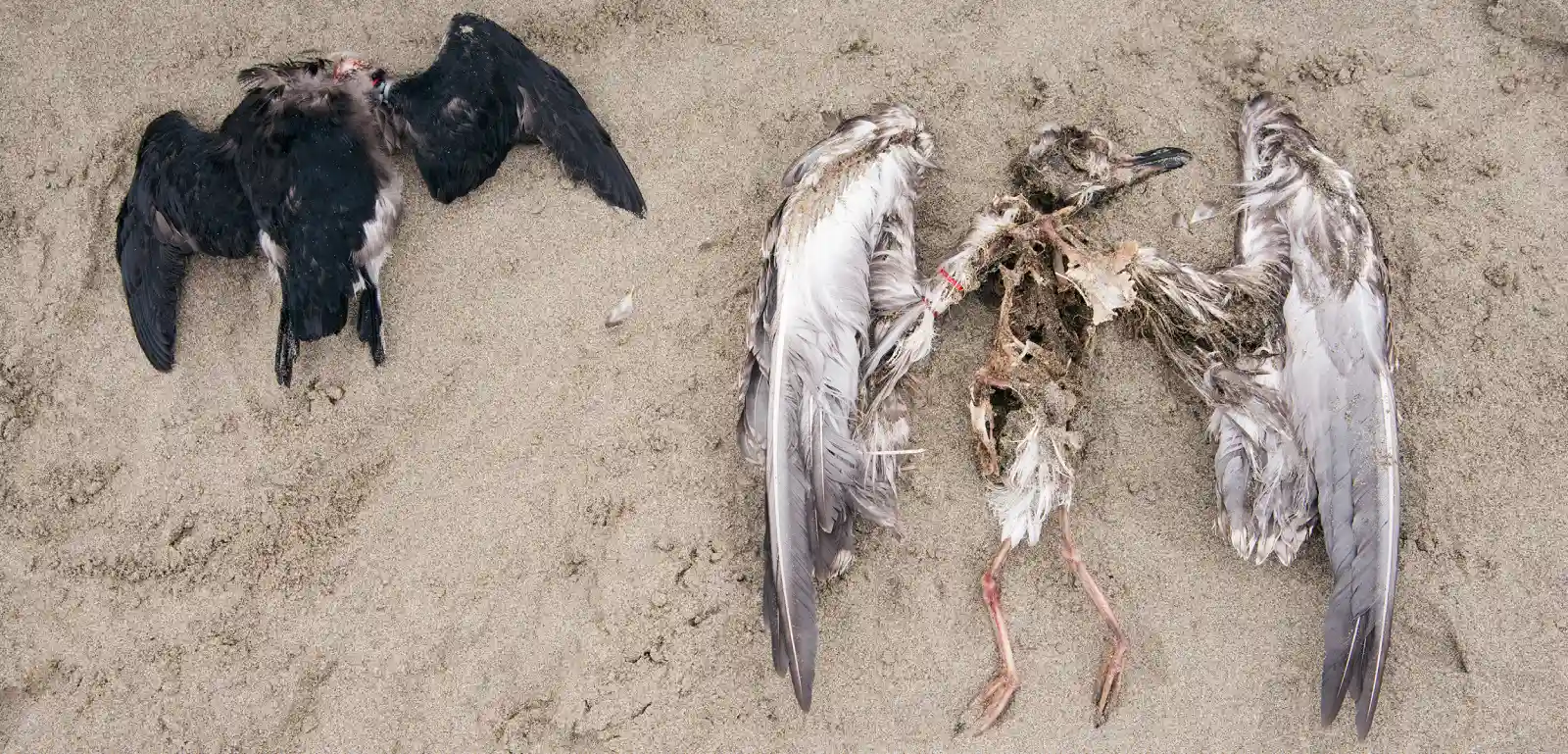
In the last months of 2014, the carcasses of thousands of Cassin's Auklets began washing ashore from northern California to the north coast of Washington.
The Coastal Observation and Seabird Survey Team estimated between 50,000 and 100,000 deaths that year. Viruses, bacteria and oil spills were all ruled out. The birds had starved: examination found little evidence of food in their stomachs.
Researchers at the Farallon Institute linked the event to unusual warmth in the North Pacific disrupting the marine food chain, affecting the zooplankton, krill and fish that develop in cold water and everything that eats them. The die-off came in late summer, just as that year's chicks were beginning to fledge.
It remains one of the clearest recent illustrations of what the 2007 demographic finding predicted.
Similar Species
Iconic seabird famous for its vibrant, multi-colored beak.
Read More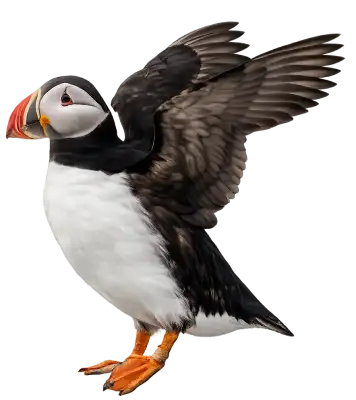

Penguin-like diver with a slender, pointed bill.
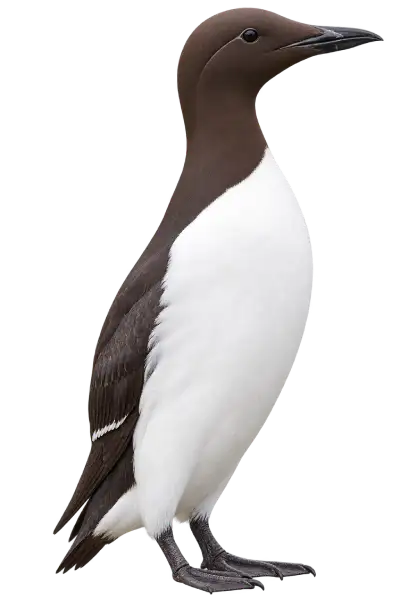

Stocky cliff-nester recognized by a distinct white bill stripe.
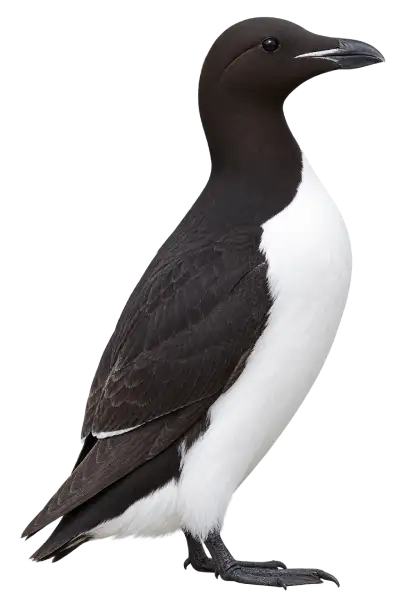

A robust, black-and-white seabird recognized by its thick, blunt bill.
Read More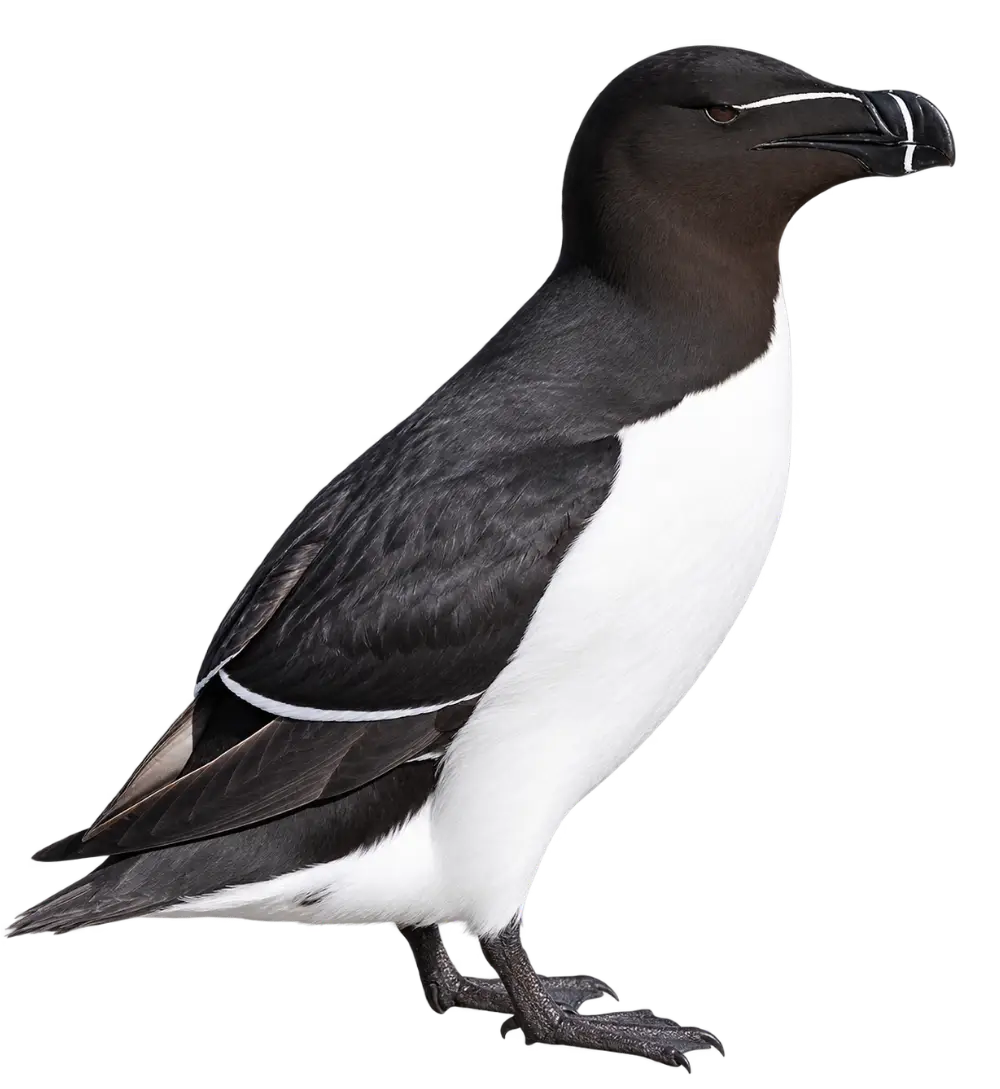
Pelagic bird sporting sweeping golden head plumes.
Read More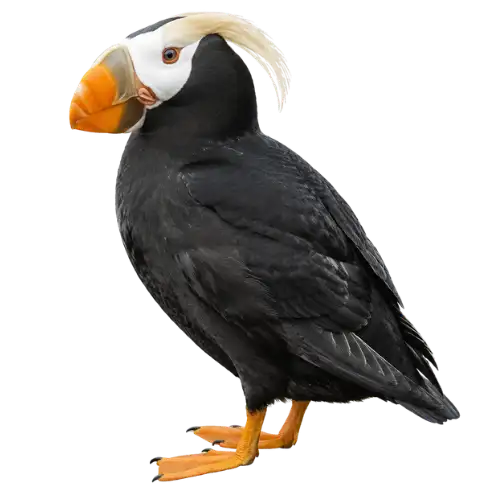
A striking coastal seabird with solid black plumage and prominent white wing patches.
Read More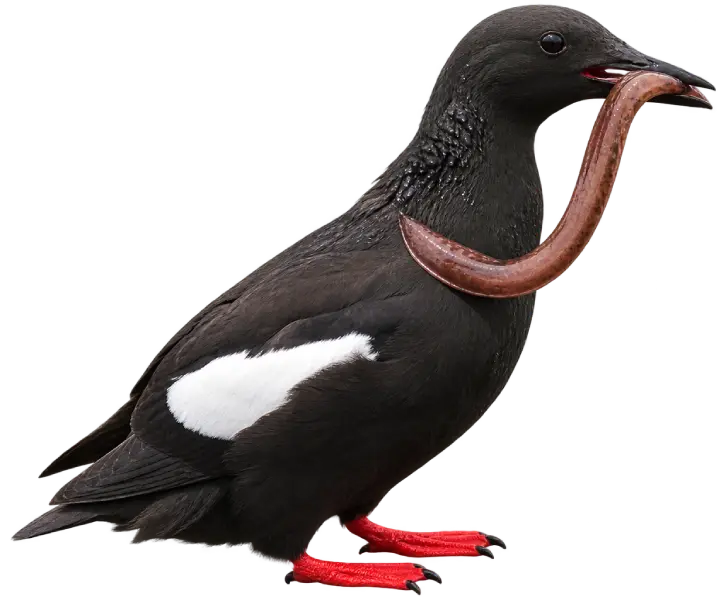
Massive, flightless seabird driven to extinction in the 1800s.
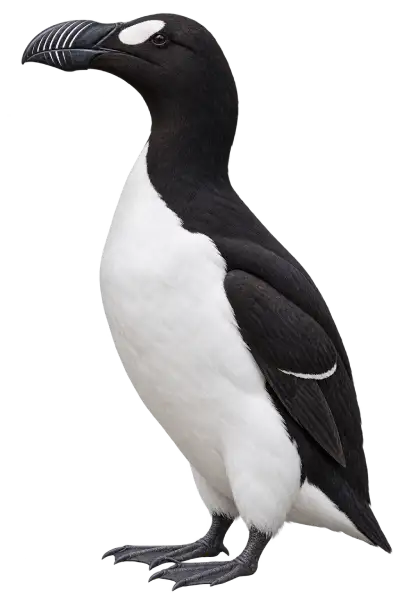
Tiny, plump Arctic seabird that gathers in massive flocks.
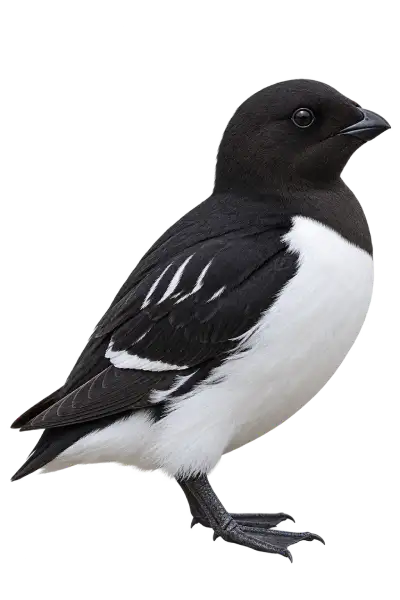

Pacific seabird known for distinct white eye-rings.
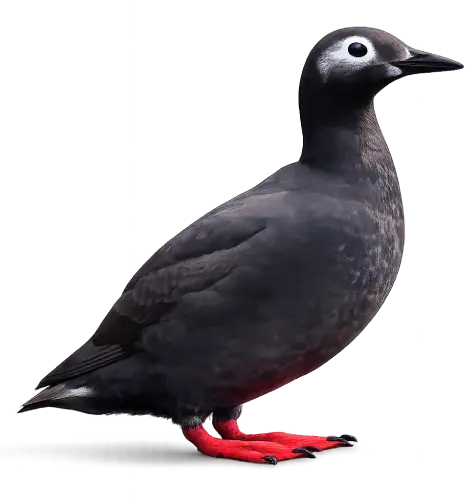

Small seabird that remarkably nests in old-growth forests.
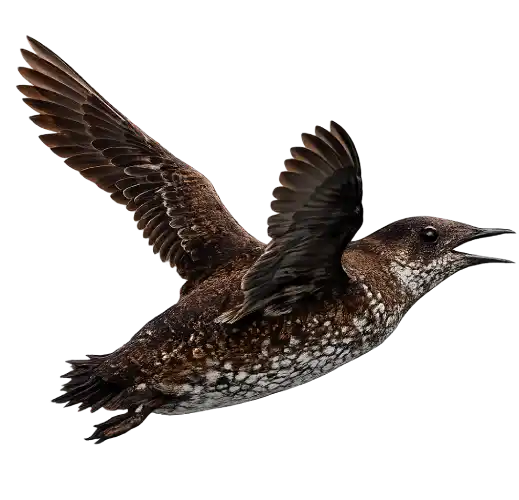
Striking black seabird with large white wing patches.
Read More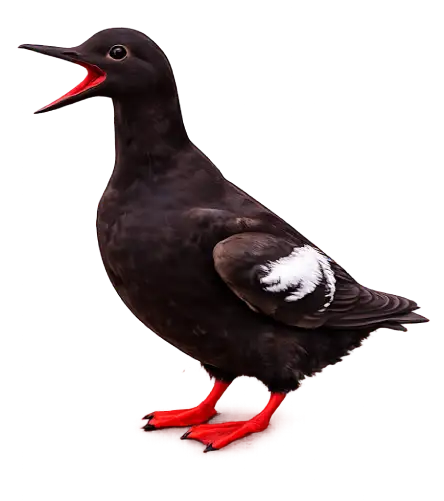
Distinctive seabird named for the fleshy horn above its eyes.
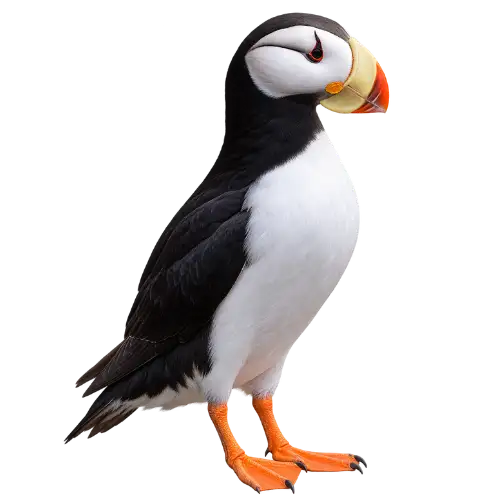
Common Questions About Cassin's Auklets
Sources & References
- Cassin's auklet — species article
- IUCN Red List assessment for Ptychoramphus aleuticus
- Cassin's Auklet call recording
- Role of larval host plants in climate-driven range expansion
Last reviewed August 2026.