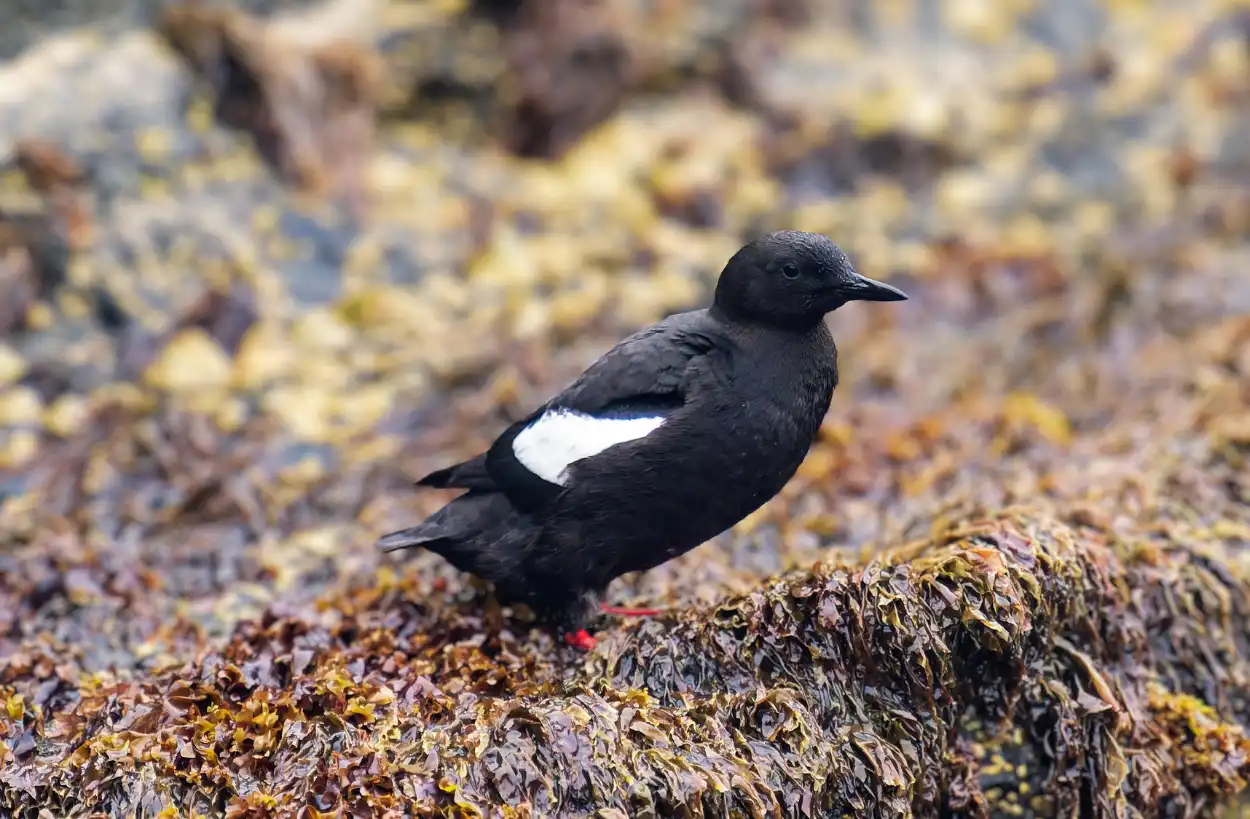
The auk that does things differently. While puffins, razorbills, and murres crowd into huge cliff colonies, lay a single egg, and head out to sea for winter, Black Guillemots take a quieter approach.
They nest alone or in pairs, lay two eggs, and hunt along the seabed in shallow coastal waters. In much of their range, they barely leave their breeding grounds at all.
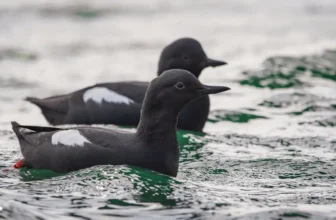
In summer, their plumage is almost entirely black, broken by a striking white wing patch, with coral-red legs and a matching red mouth adding an unexpected flash of color.
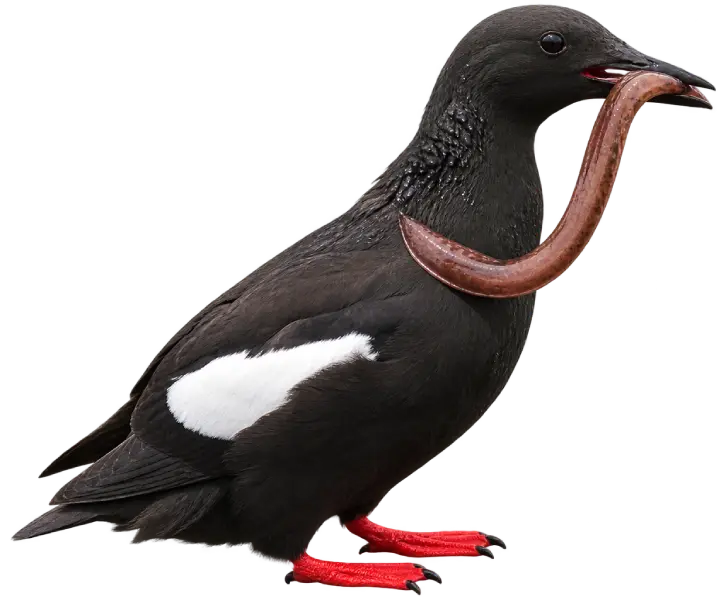
Species Profile
Scientific Classification
The global population is estimated at ~750,000 birds, heavily anchored by stable Arctic colonies. However, heavily monitored European populations are experiencing severe, documented declines due to shifting marine conditions and nearshore pollution.
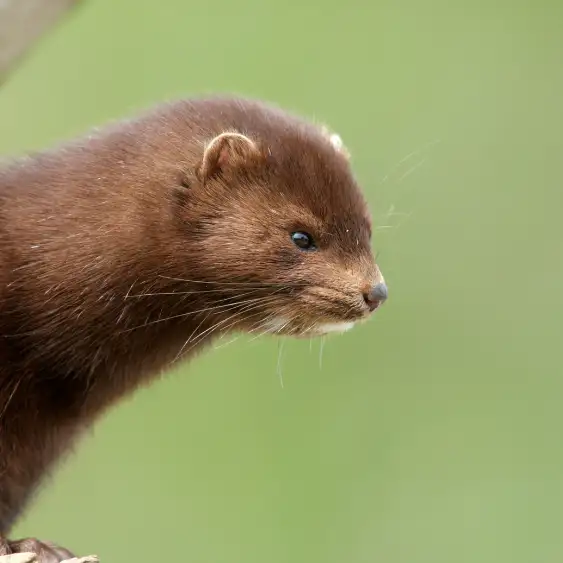
Rats, mink, and feral cats decimate colonies on offshore islands where ground-nesting birds lack escape routes.
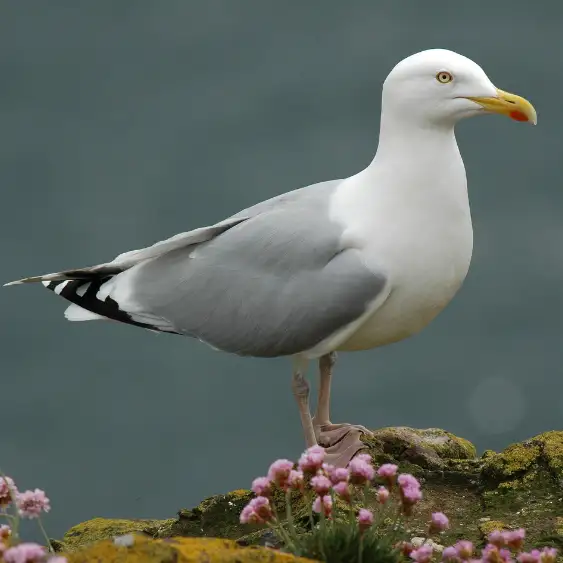
Gulls and crows opportunistically raid nests for eggs and chicks, accelerating declines in smaller, isolated colonies.
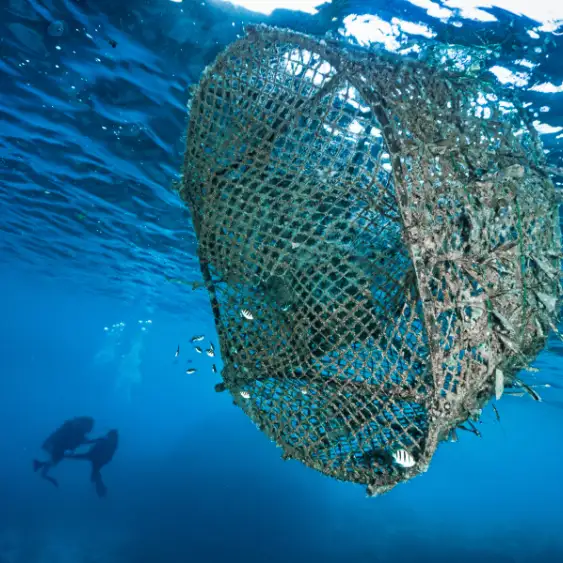
Birds diving in shallow, nearshore waters frequently become entangled and drown in commercial gillnets.

Rising sea temperatures shift the distribution of vital forage fish, severely restricting food availability during breeding.

Strict year-round coastal residency leaves populations highly susceptible to local oil spills and chemical runoff.

Human shoreline development destroys critical rock crevices and boulder fields required for successful nesting.
Historically dense populations in Iceland plummeted from an estimated 40,000 breeding pairs to roughly 12,000 pairs over a decade.
Severe regional declines trigger localized Red List warnings across the UK and Scandinavia, initiating annual monitoring programs.
Ocean warming definitively linked to the displacement of benthic prey, leading to widespread breeding failures in temperate zones.
Official UK Seabird Monitoring Programme confirms a 26% population contraction in Shetland strongholds since the year 2000.
Removing invasive mammals from nesting islands is the fastest proven method to allow vulnerable colonies to rebound.
Establishing protected shorelines safeguards vital boulder fields and natural crevices from destructive human development.
Enforcing alternative gear and strict seasonal closures drastically reduces accidental drownings in nearshore fisheries.
Strict maritime regulations and rapid cleanup protocols are required to protect shallow foraging zones from toxic runoff.
Tracking marine food webs enables conservation authorities to adjust local management strategies as ocean temperatures rise.
Birds that have adapted to life within the marine environment, spending significant time near the ocean and coming to land primarily to breed.
A diverse order of birds encompassing shorebirds, gulls, and auks. They are typically found near water and exhibit a wide variety of feeding behaviors.
A family of web-footed diving seabirds, known for their compact bodies and their incredible ability to "fly" underwater to pursue prey.
A small genus of medium-sized auks featuring strikingly distinct summer and winter plumages, highlighted by bright red legs and inner mouths.
An animal that feeds primarily on fish. The Black Guillemot specializes in hunting benthic (bottom-dwelling) fish like blennies and gunnels in shallow waters.
Rugged shorelines that provide ideal foraging in shallow inshore waters and ample hiding spots among boulders and cliffs for nesting.
Birds that lay their eggs deep within rocky crevices or under boulders, offering vital protection against harsh weather and coastal predators.
An IUCN conservation category assigned to species that are widespread and abundant, facing no immediate threat of severe decline or global extinction.
1. Naming & Taxonomy
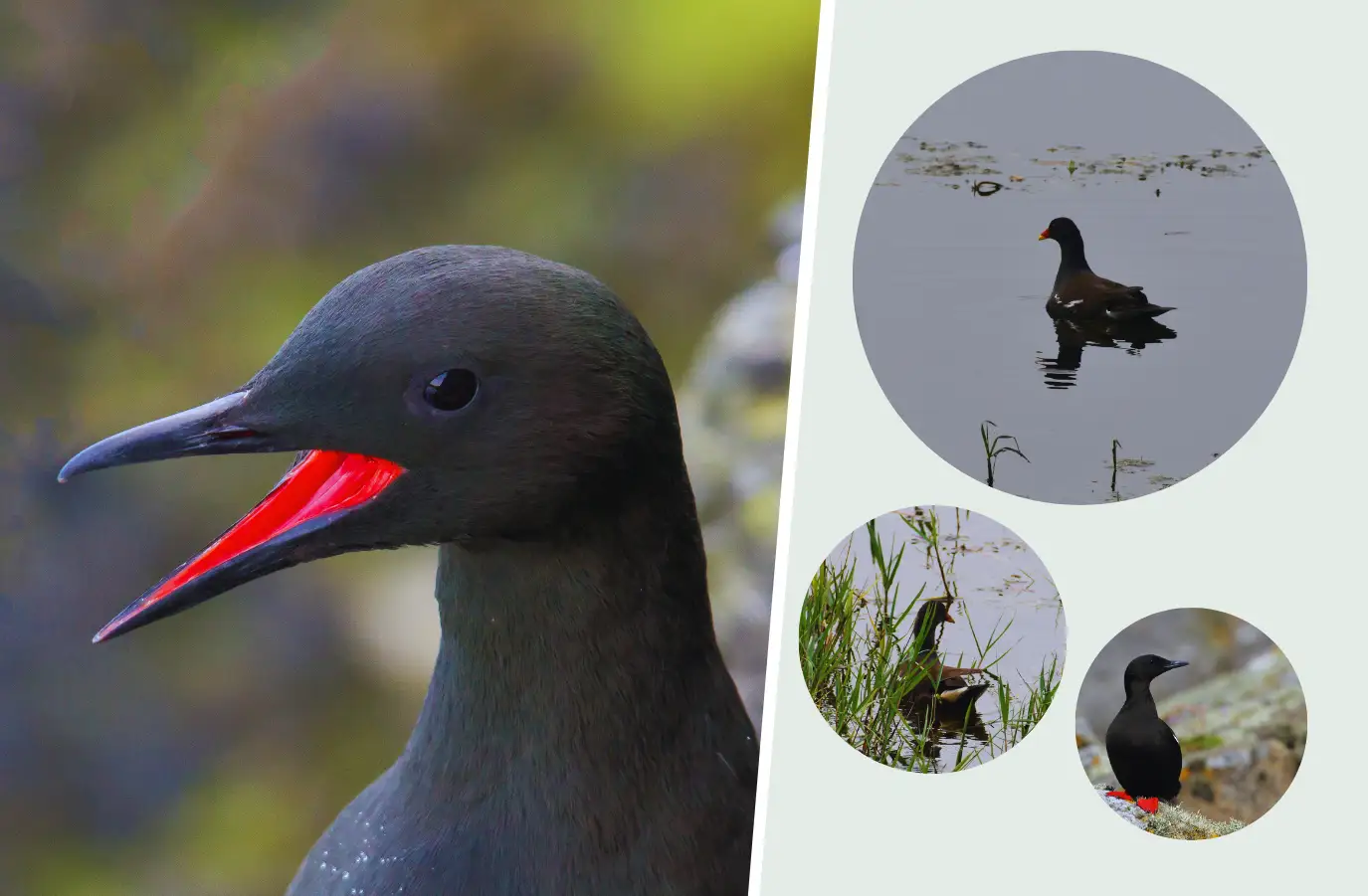
Linnaeus described the species in 1758 as Alca grylle, placing it with the other auks. The type locality was given as the Ocean of northern Europe, since restricted to Sweden.
The modern genus came eleven years later. Cepphus was introduced in 1769 by the Prussian naturalist Peter Simon Pallas, and now holds three species.
Three Names, Three Languages
Cepphus comes from the Ancient Greek kepphos, a pale waterbird mentioned by Greek authors including Aristotle. Which bird they actually meant is not recoverable.
grylle was the local dialect name for this species on Gotland at the time of Linnaeus's visit there in 1741. He took the word straight from the islanders.
Guillemot comes from the French guillemot, probably from Guillaume, William. Underneath that it is onomatopoeic, imitating the loud, high-pitched will, willem begging calls of newly fledged Common Guillemot chicks. So the name belongs, strictly speaking, to a different species and was extended to this one.
Other Names
Tystie is the Shetland and Orkney name and is still in common use among British birders. Sea pigeon and Greenland dove are also recorded. Note that "sea dove" has been applied both to this species and to the Little Auk, which is a genuine source of confusion in older literature.
Subspecies
Five are recognised, spanning boreal to high Arctic waters.
- C. g. mandtii (Lichtenstein, 1822) — high Arctic coasts: west and east Greenland, Jan Mayen, Svalbard, northern Siberia, northern Alaska, northeast Canada to north Labrador
- C. g. arcticus (C. L. Brehm, 1824) — low Arctic to north temperate: south Greenland, northwest British Isles, southern Scandinavia, the White Sea, south Labrador, Newfoundland and the Gulf of Maine
- C. g. islandicus Hørring, 1937 — coastal Iceland
- C. g. faeroeensis C. L. Brehm, 1831 — Faroe Islands
- C. g. grylle (Linnaeus, 1758) — coastal Baltic Sea
2. Identification & Appearance
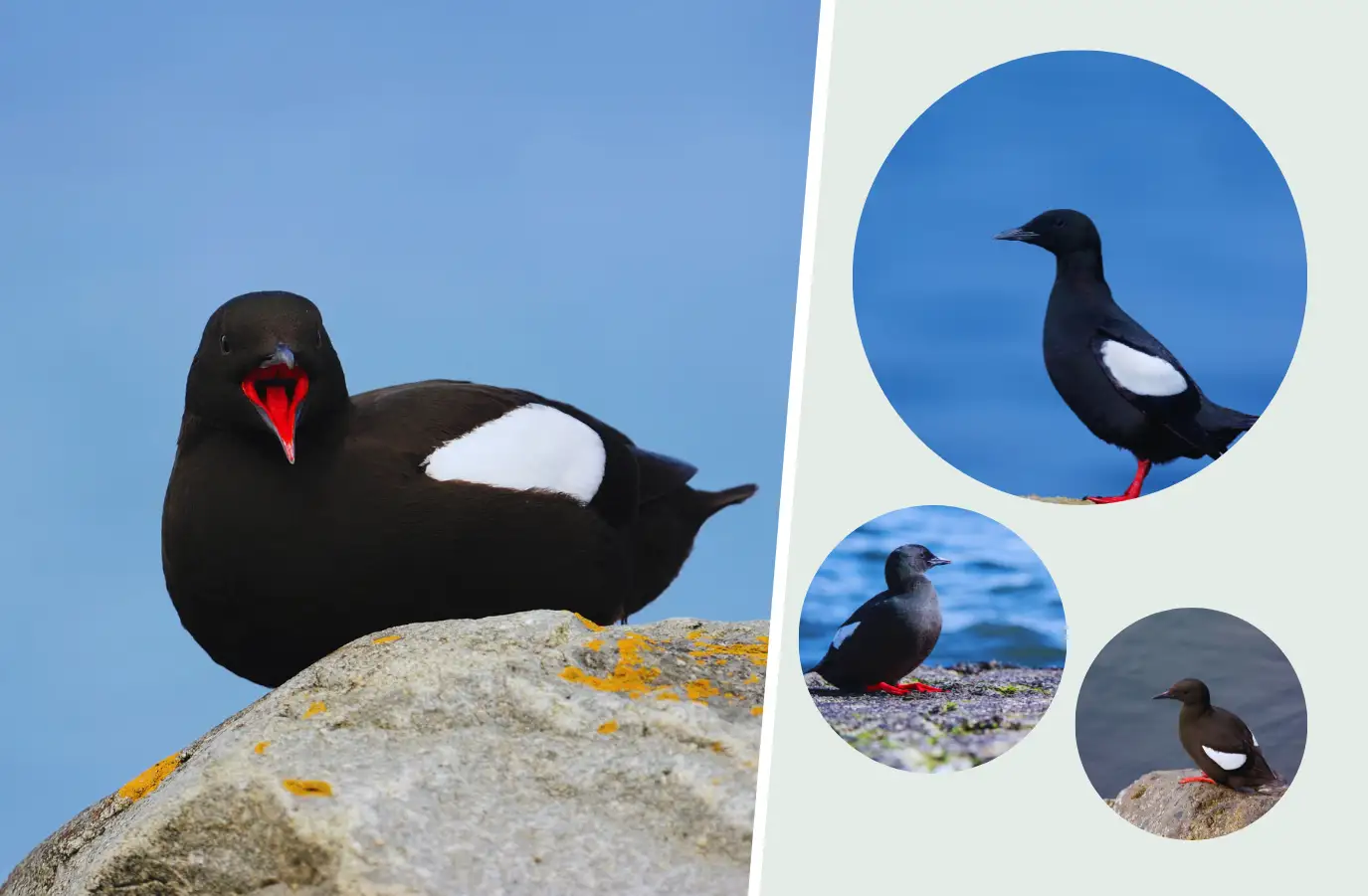
Cepphus grylle
ID SnapshotSummer
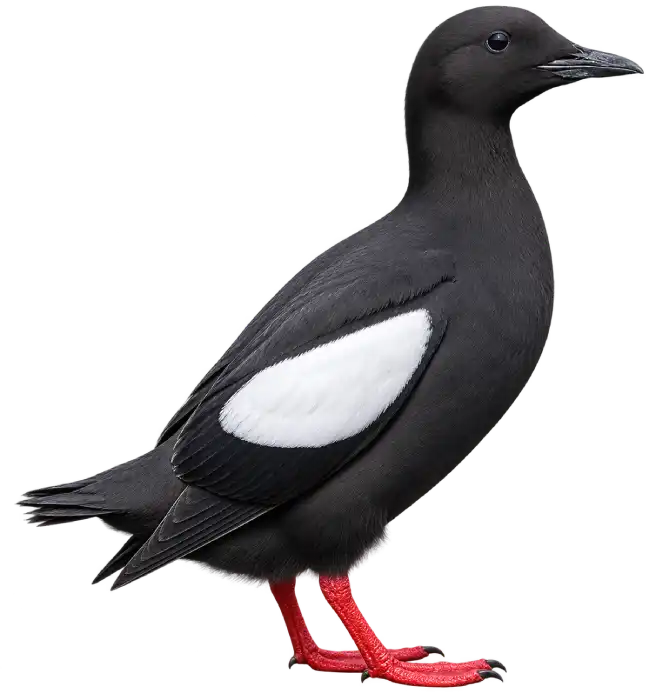
Entirely black apart from a large white patch on the upper wing. The bill is black, long and slender rather than deep. The legs, the feet and the inside of the mouth are all bright coral-red.
That red gape is worth watching for. It becomes prominent during the breeding season and shows clearly when the bird calls, which it does in a high whistle.
Winter
A different-looking bird. The upperparts become barred light grey and white, the head turns pale grey and the underparts white. The legs and feet fade to pale red.
Three things stay constant through the moult and are the key to identification year-round: the white wing patch, the black bill and the red mouth.
Sexes and Young Birds
There is no sexual difference detectable in the field. Males and females look alike in both plumages.
Juveniles and immatures are easy to pick out, because the white wing patch is spotted with grey or brown feathering. That mottling is visible at considerable distance, which makes age assessment unusually straightforward for a seabird.
3. Range & Habitat
Cepphus grylle · Detailed Distribution & Ecology
Benthic Coastal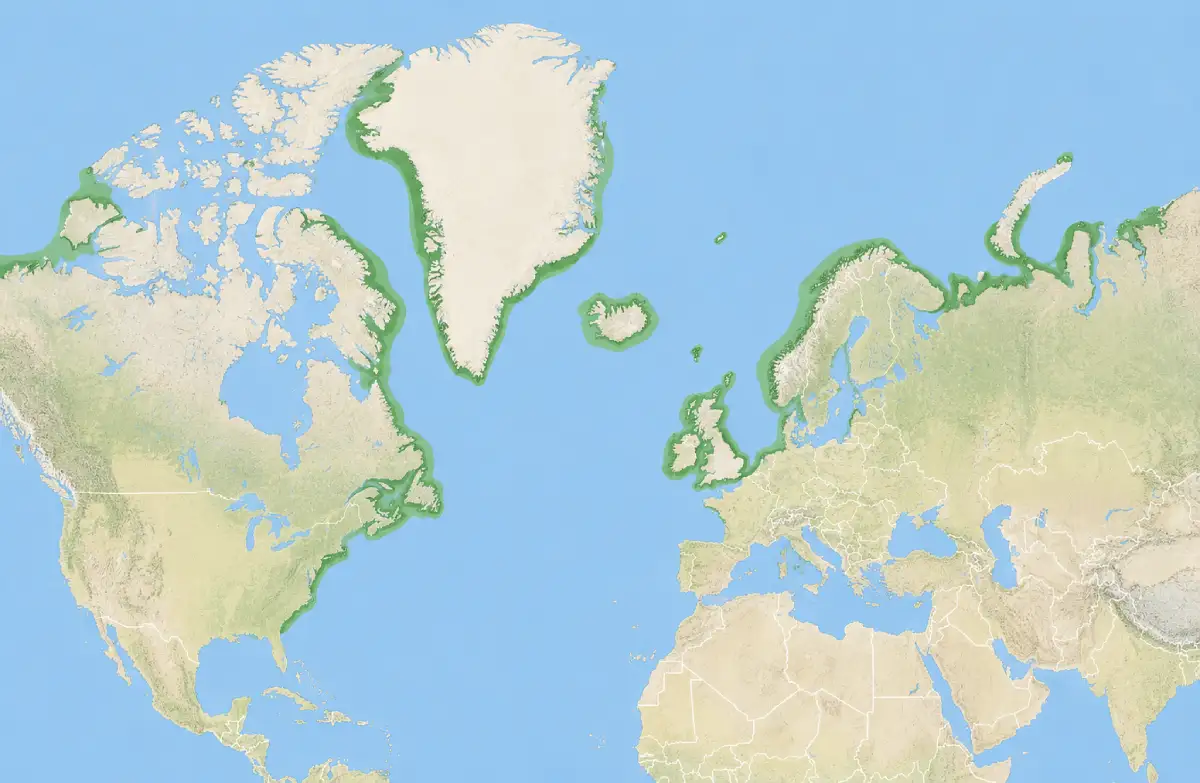
& Arctic
resident
waters
-
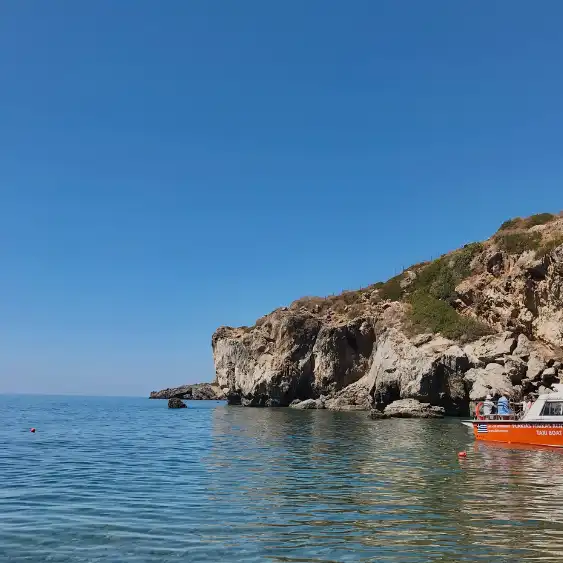 Rocky Seabeds
Perfect for hunting bottom-dwelling fish and crabs hiding among coastal kelp forests.
Rocky Seabeds
Perfect for hunting bottom-dwelling fish and crabs hiding among coastal kelp forests. -
 Rocky Coasts
Provides deep, predator-proof crevices essential for nesting and successfully raising two chicks.
Rocky Coasts
Provides deep, predator-proof crevices essential for nesting and successfully raising two chicks. -
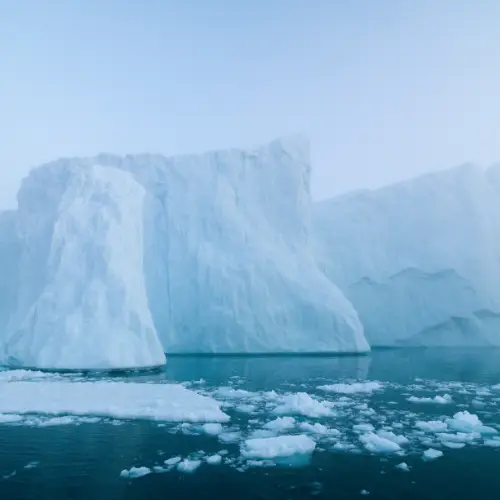 Arctic Waters
Cold, highly productive currents guarantee the high-energy diet required to survive the extremes.
Arctic Waters
Cold, highly productive currents guarantee the high-energy diet required to survive the extremes. -
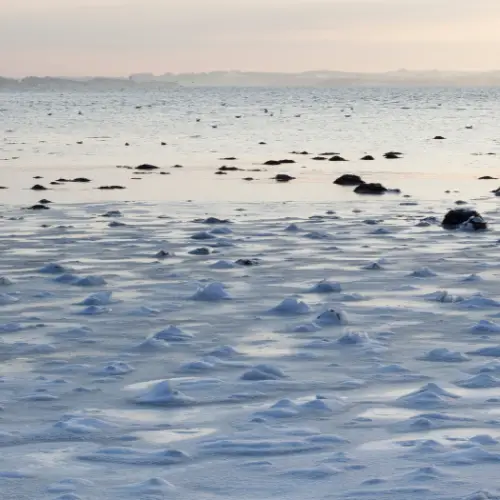 Ice Polynyas
Crucial winter lifelines (openings in the ice) allowing high-Arctic birds to hunt without migrating.
Ice Polynyas
Crucial winter lifelines (openings in the ice) allowing high-Arctic birds to hunt without migrating. -
 Shallows
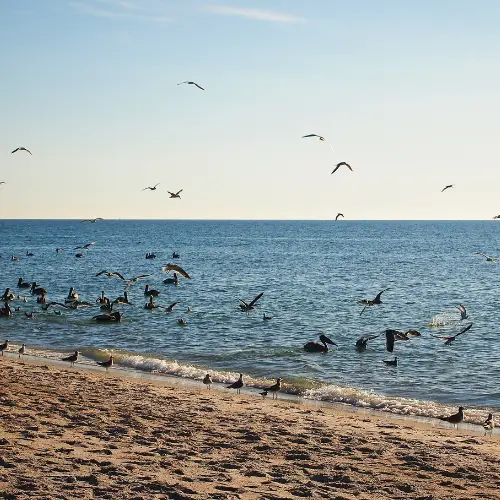
Allows for short, energy-efficient dives (15-20m) to frequently ferry single fish back to chicks.
Shallows
Allows for short, energy-efficient dives (15-20m) to frequently ferry single fish back to chicks.
The population splits roughly into thirds by zone: about 40% breeds in the high Arctic, where the largest colonies are, with 30% in the low Arctic and 30% in boreal waters.
Habitat is rocky shore. The birds use cliffs, crevices and boulders for nesting and hunt the inshore waters below them.
In Britain and Ireland
Fairly common around the Irish coast and in western and northern Scotland. Elsewhere in Britain it is genuinely scarce, breeding only at St Bees Head in Cumbria, on the Isle of Man, and on east Anglesey in north Wales.
Surtsey
The Black Guillemot is one of the few birds to have colonised Surtsey, the volcanic island that emerged off Iceland in 1963. For a species that needs rock crevices above the tide line, a brand-new island of raw lava is exactly the right kind of empty.
4. Diet & Foraging
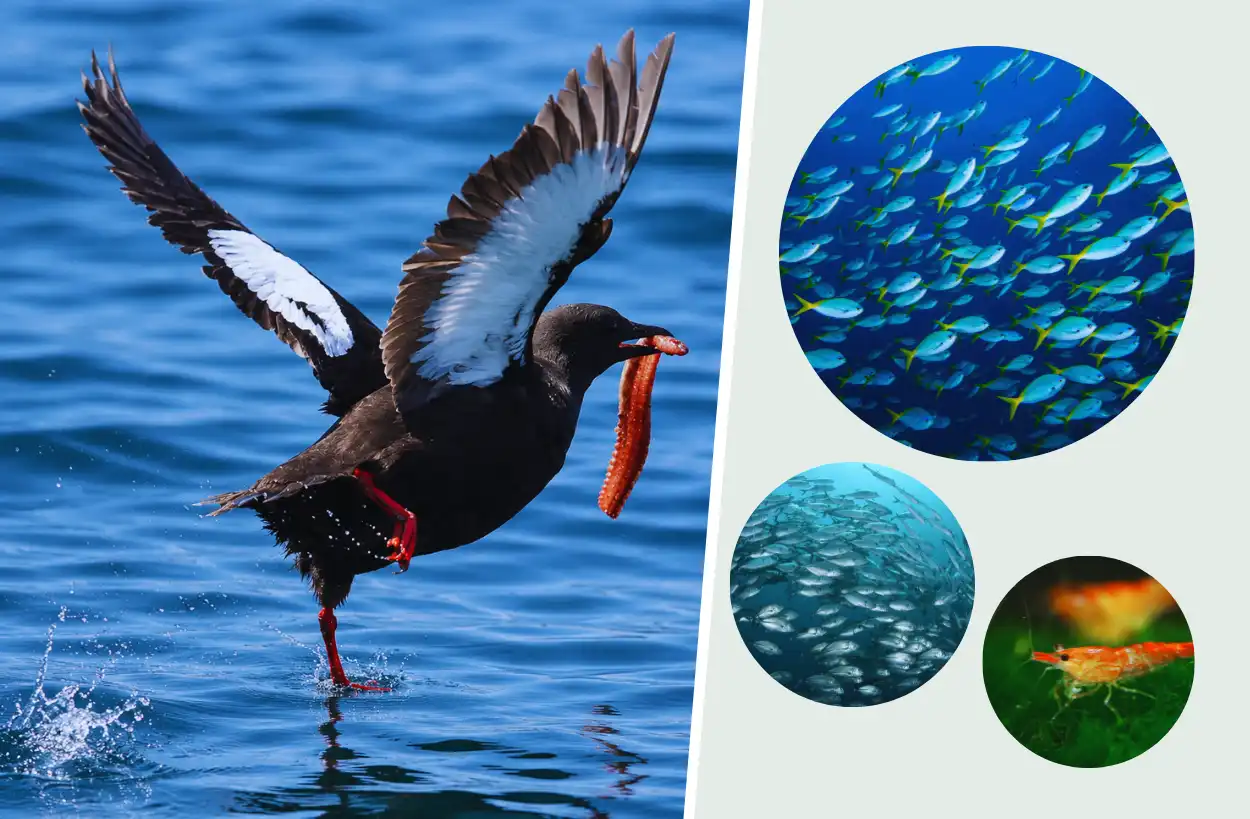
This is where the Black Guillemot separates itself from the rest of the family.
It feeds on the bottom, not in open water. The diet is benthic and kelp-forest prey: sculpins, butterfish, rock gunnel, northern sandlance, herring, jellyfish, molluscs and small crustaceans.
It stays close to home. During the breeding season it forages mostly in inshore waters less than 50 m deep, and unusually close to the colony. Compare that with a Razorbill flying 100 km out to sea during incubation.
Dives are shallow by auk standards. Typically 15 to 20 m, with a recorded maximum of at least 43 m. Wings provide propulsion, feet steer.
Small prey is swallowed whole underwater. Larger items are brought to the surface and worked in the bill to soften before being swallowed.
Single-Prey Loading
Black Guillemots carry one prey item at a time back to the chick, rather than a beakful. This is a real constraint: chicks need a high number of energy-rich items each day, and delivering them singly limits how far the parents can range. Inshore feeding is not just a preference, it is what the provisioning strategy requires.
Edmund Selous, writing in The Bird Watcher in the Shetlands in 1905, noted that a Black Guillemot will sometimes carry a caught fish in its bill for hours before doing anything with it.
5. Breeding & Nesting
Cepphus grylle · Breeding & Nesting
Monogamous PairsTwo Eggs, Not One
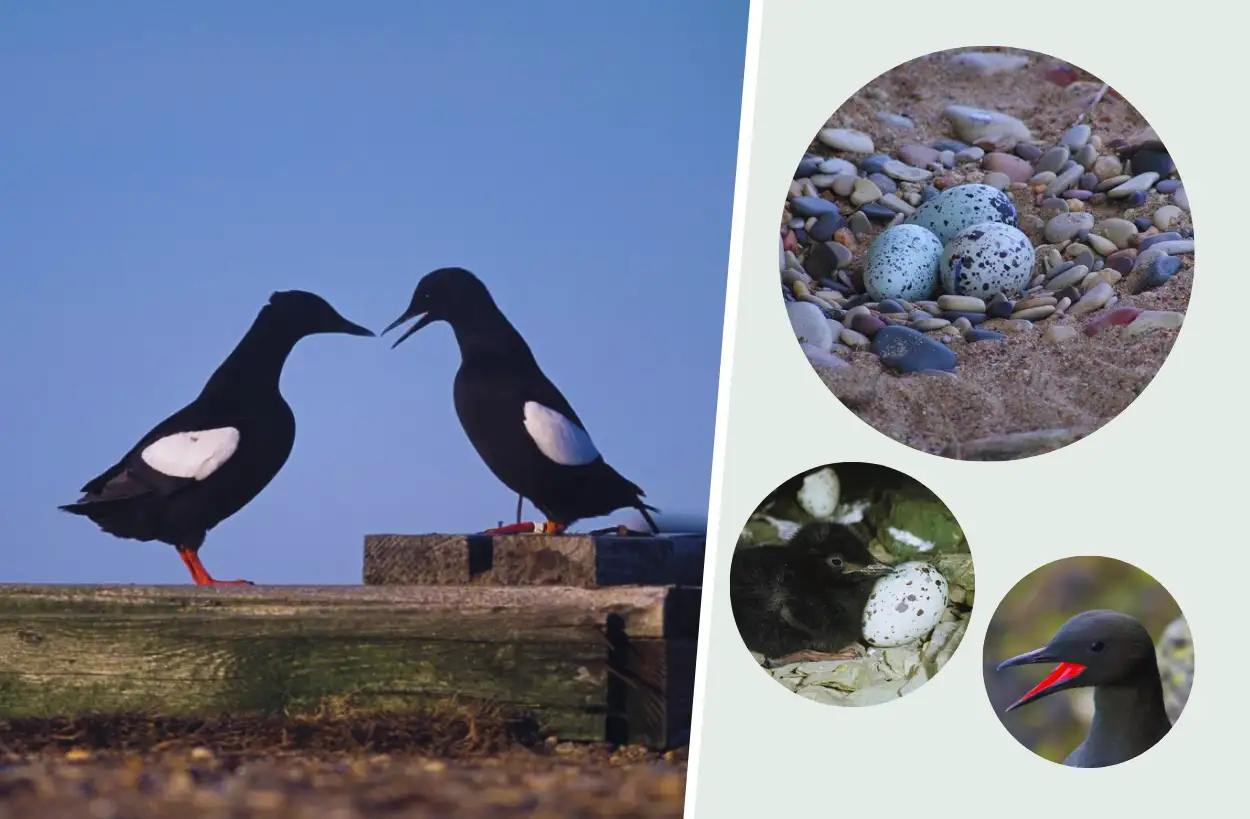
Every other auk covered on this site lays a single egg. All three Cepphus guillemots lay two, and a Black Guillemot pair will typically raise both chicks to fledging.
That difference follows from the feeding strategy. A bird foraging on the seabed in shallow water close to the colony can make many short trips a day. A bird flying 100 km offshore cannot, and can only support one chick.
Nesting
Pairs nest above the high tide mark in crevices or gaps between boulders. Many pairs build no nest at all and lay directly on the rock.
Colonies in the southern part of the range are small and widely scattered, possibly because prey is evenly dispersed rather than concentrated. In the high Arctic, colonies of 2,000 to 10,000 pairs have been reported.
The Chicks
Hatchlings are covered in black down and are cared for by both parents until fledging at 30 to 40 days.
They then leave alone. Unlike the Razorbill, whose chick is escorted to sea by its father, and unlike the Atlantic Puffin, whose fledgling makes its own way down at night, a young Black Guillemot is entirely independent from the moment it fledges. It will not return to its natal colony until it is three or four years old.
Similar Species
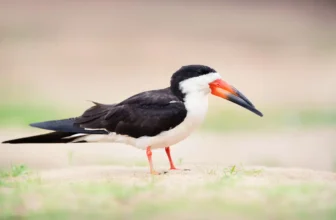
Iconic seabird famous for its vibrant, multi-colored beak.
Read More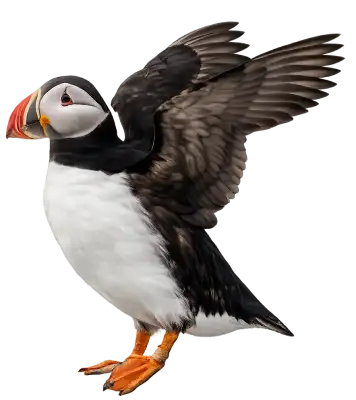
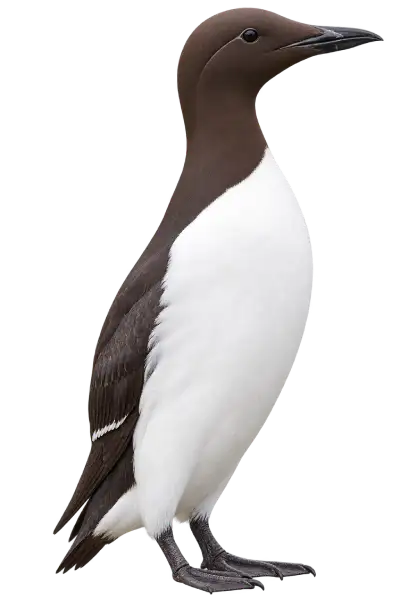
Penguin-like diver with a slender, pointed bill.

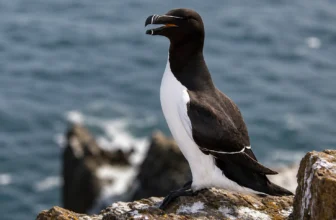
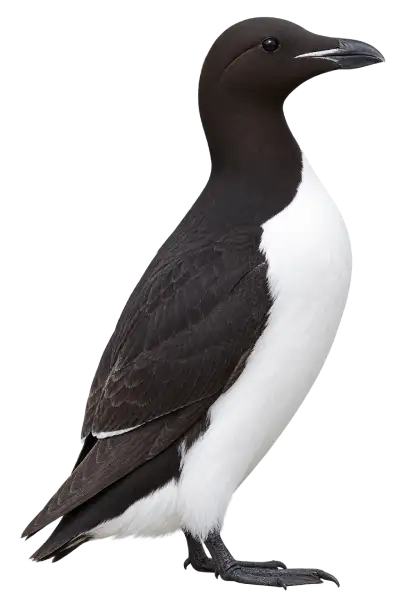
Stocky cliff-nester recognized by a distinct white bill stripe.

A robust, black-and-white seabird recognized by its thick, blunt bill.
Read More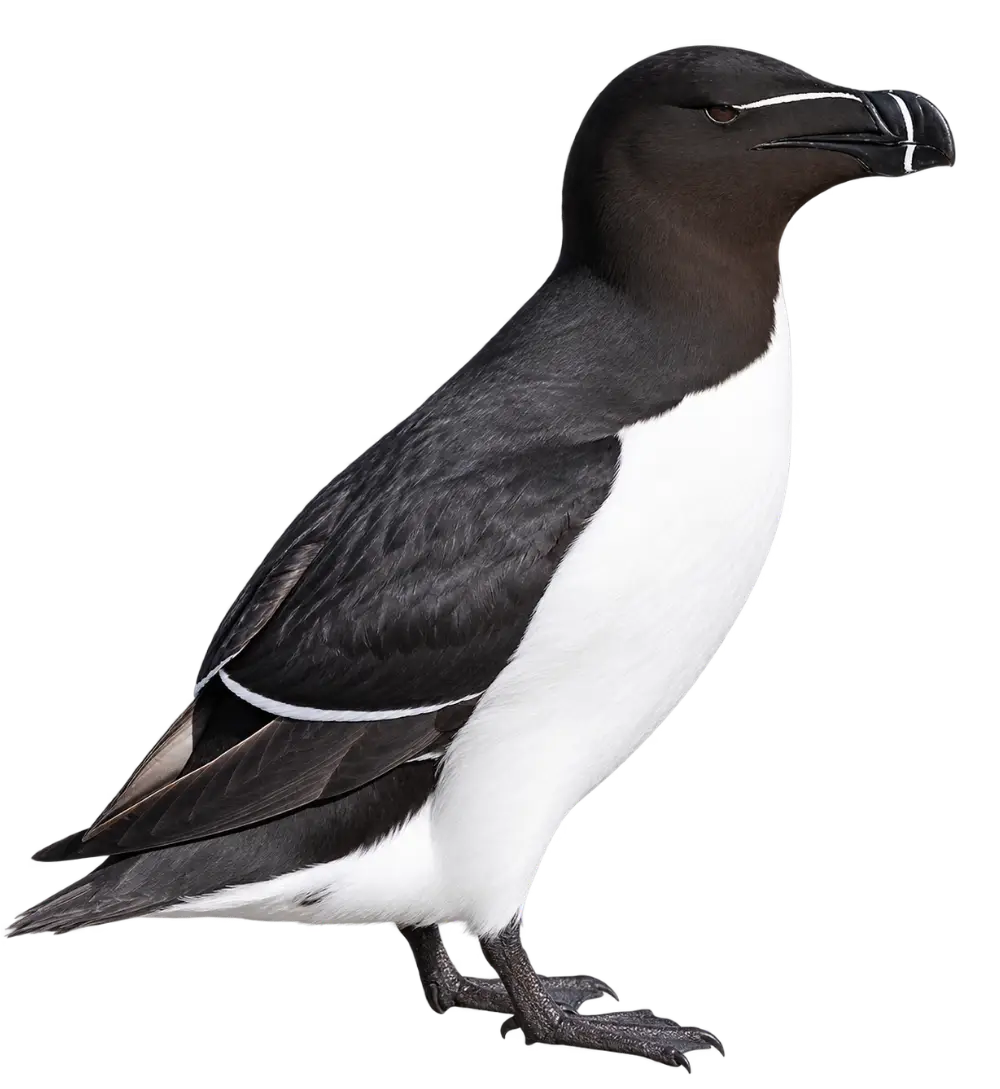
Pelagic bird sporting sweeping golden head plumes.
Read More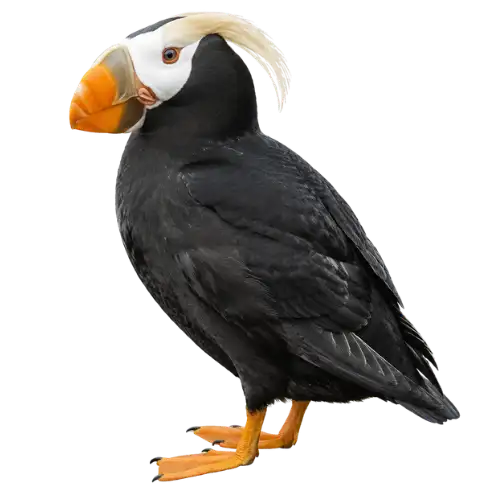
Nocturnal forager with a prominent pale bill horn.
Read More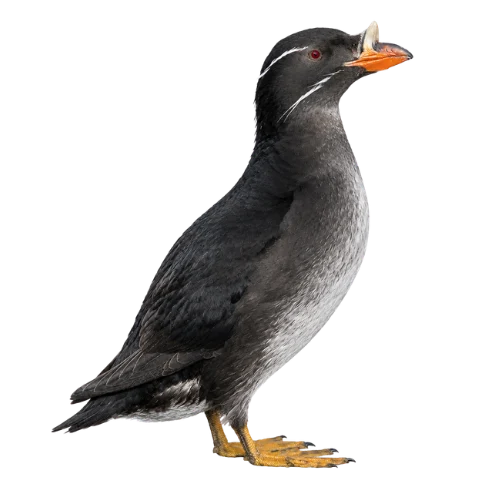
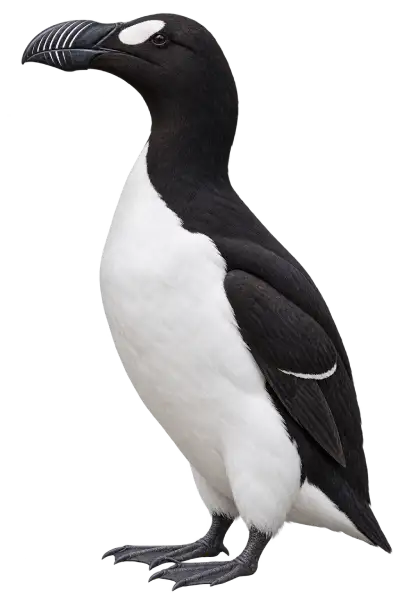
Massive, flightless seabird driven to extinction in the 1800s.
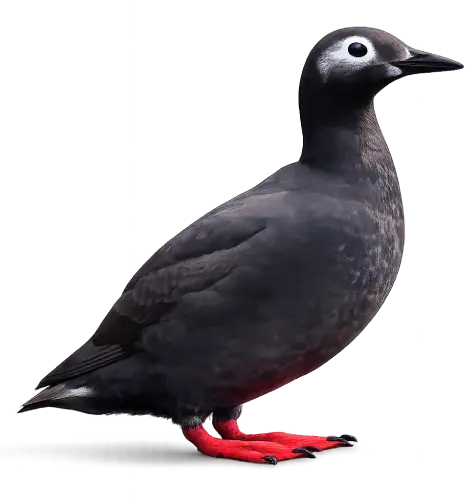
Pacific seabird known for distinct white eye-rings.

Small seabird that remarkably nests in old-growth forests.
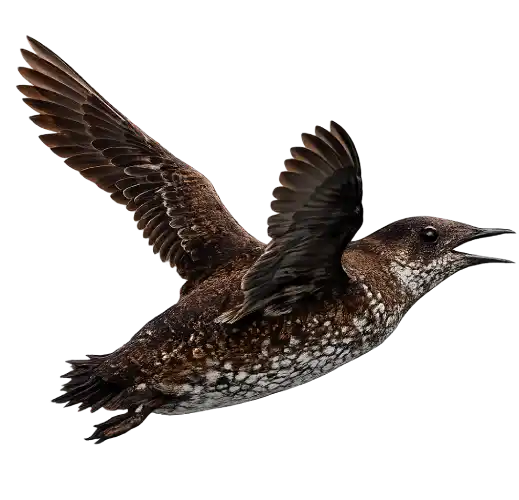
Striking black seabird with large white wing patches.
Read More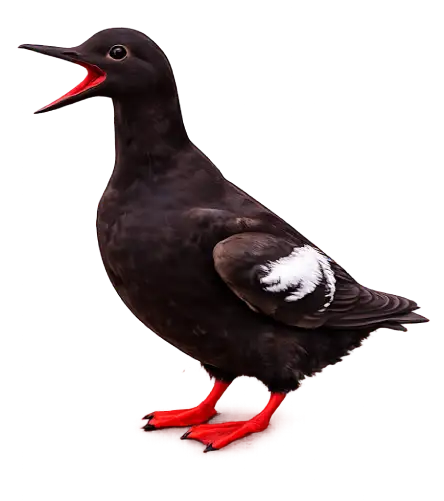
Distinctive seabird named for the fleshy horn above its eyes.
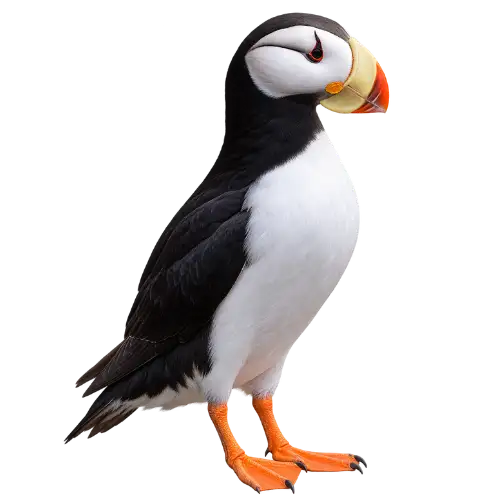
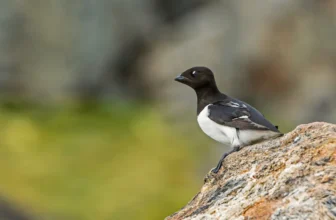
Tiny, plump Arctic seabird that gathers in massive flocks.
Read More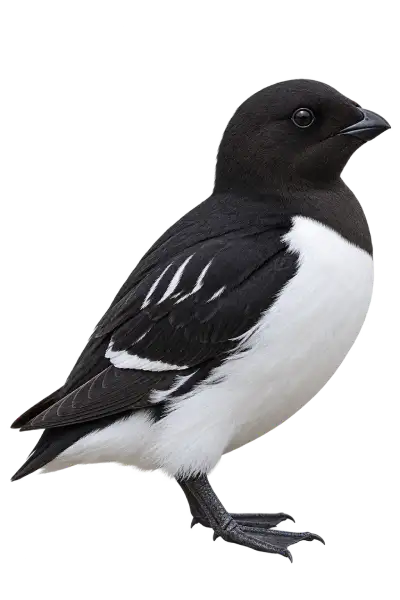

Large, graceful seabird known for its dark eye stripe and impressive wingspan.
Read More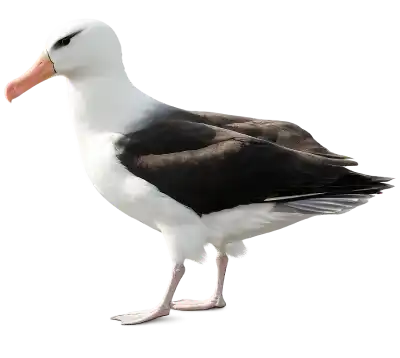

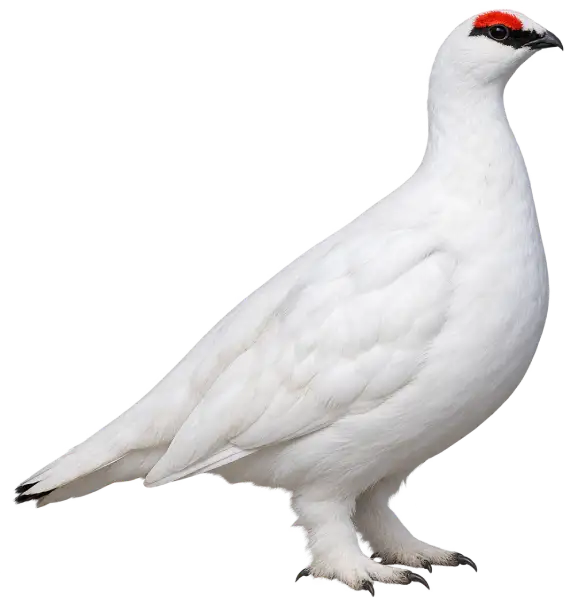
Hardy Arctic gamebird that changes its plumage to match the seasonal snow.

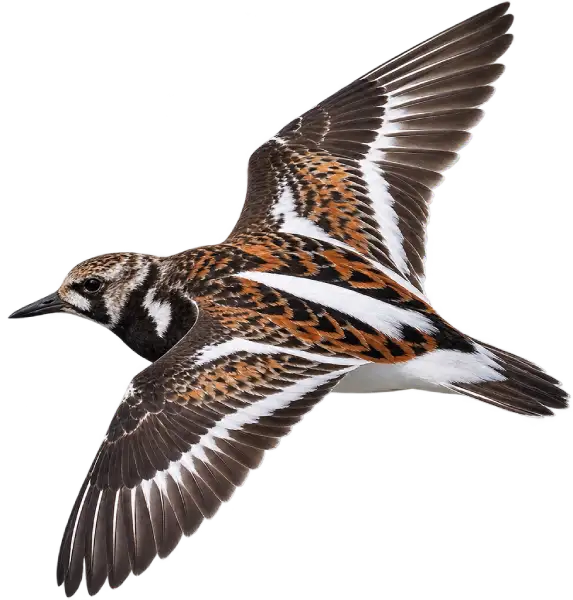
Stocky shorebird recognized by its habit of flipping stones to find hidden prey.
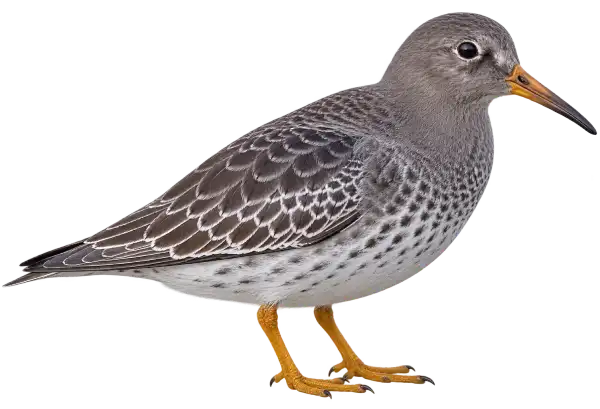
Resilient coastal wader that overwinters on rocky, wave-battered northern shores.
Common Questions About Black Guillemots
Sources
- Wikipedia, "Black guillemot" (primary source for this entry)
- Cornell Lab of Ornithology, All About Birds and Birds of the World species accounts
- Dehnhard, N. et al. (2023), "Foraging behaviour of black guillemots at three Norwegian sites during the breeding season", Marine Biology 170(7)
- Johnston, D. T. et al. (2020), "Camera traps reveal predators of breeding Black Guillemots", Seabird 32
- Hof, A. R., Crombag, J. A. H. M. & Allen, A. M. (2018), "The ecology of Black Guillemot chicks in the Baltic Sea region", Bird Study 65(3)
- Selous, E. (1905), The Bird Watcher in the Shetlands
- Jobling, J. A. (2010), The Helm Dictionary of Scientific Bird Names
- BirdLife International (2018), IUCN Red List: Cepphus grylle
Last reviewed: July 2026.