Tufted Puffin (Fratercula cirrhata)
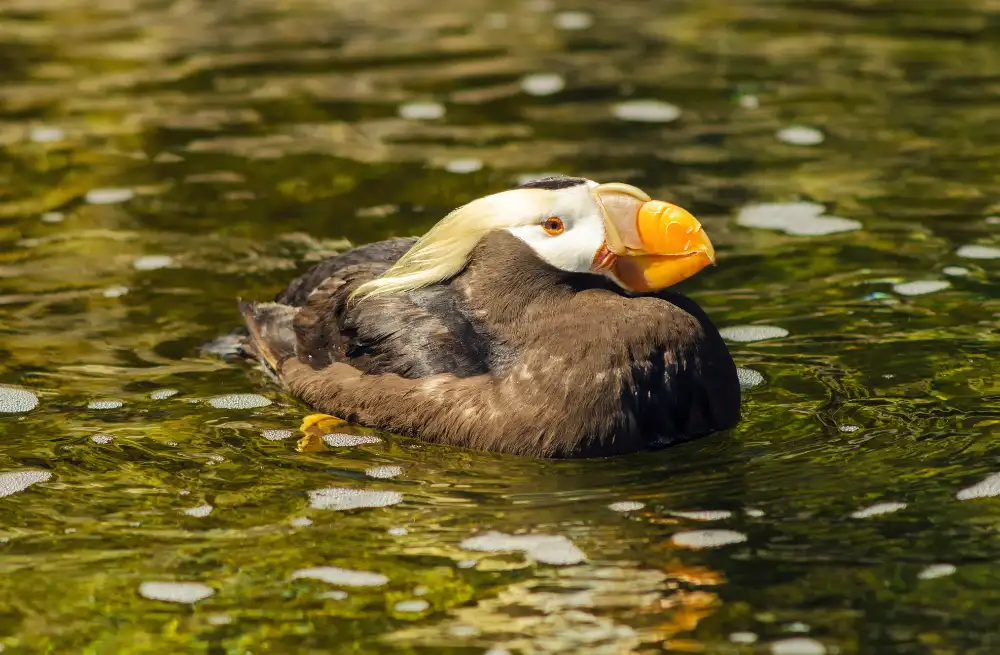
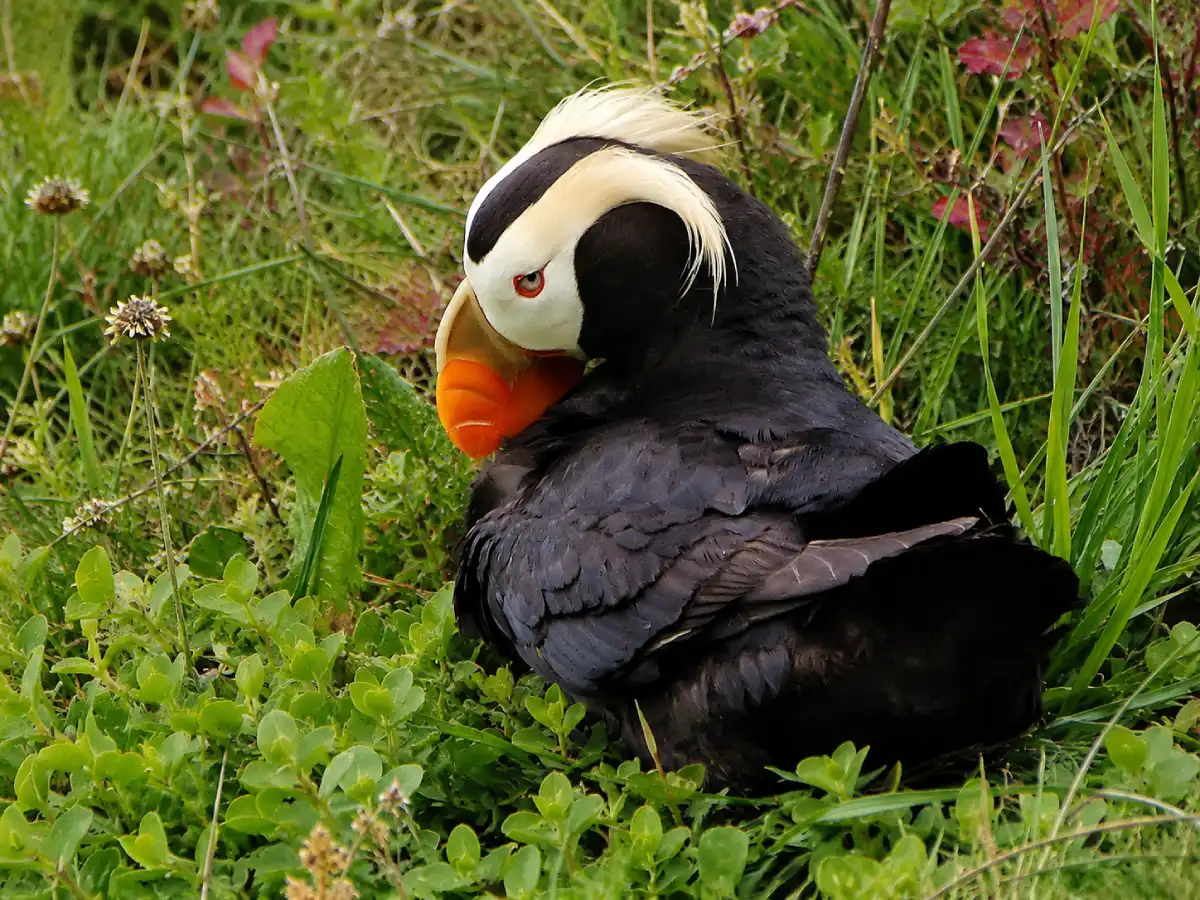
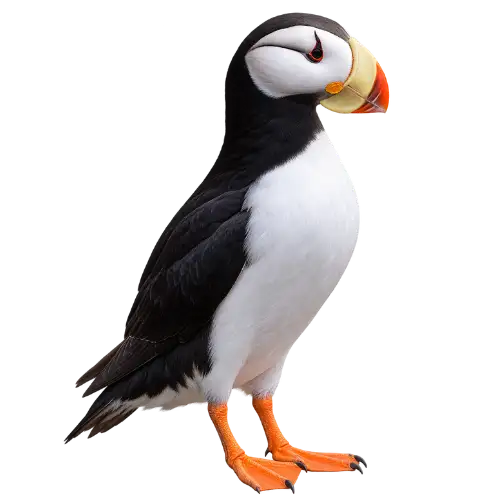
Unlike the colorful Atlantic Puffin, the Tufted Puffin has striking black plumage, a bold white face, a bright orange bill, and elegant golden plumes that appear during the breeding season. It spends most of its life far out in the North Pacific and comes ashore only to nest in burrows on remote coastal islands.
Species Profile
Scientific Classification
1. Naming & Taxonomy
Peter Simon Pallas first described the species in 1769.
The genus name Fratercula comes from Medieval Latin for friar, a reference to black-and-white plumage resembling monastic robes. The specific name cirrhata is Latin for curly-headed, from cirrus, a curl of hair, and refers to the tufts.
The Name "Puffin" Originally Belonged to a Different Bird
This is a genuinely odd piece of etymology. "Puffin," in the sense of puffed or swollen, was first applied to the fatty, salted meat of young Manx Shearwaters, an unrelated species once known as the Manks puffin. The word is Anglo-Norman, appearing in Middle English as pophyn or poffin, and it described cured carcasses rather than living birds.
Thomas Pennant applied it formally to the Atlantic Puffin in 1768, possibly because of the similar nesting habits, and it was later extended to the Pacific species.
An Unsettled Placement
The Tufted Puffin may be more closely related to the Rhinoceros Auklet than to the other two puffins, and it is sometimes placed in its own monotypic genus, Lunda.
There is also a historical curiosity in the synonym list. Juvenile Tufted Puffins look so much like Rhinoceros Auklets that they were once described as a separate species in their own genus, Sagmatorrhina lathami, meaning Latham's saddle-billed auk.
2. Identification & Appearance
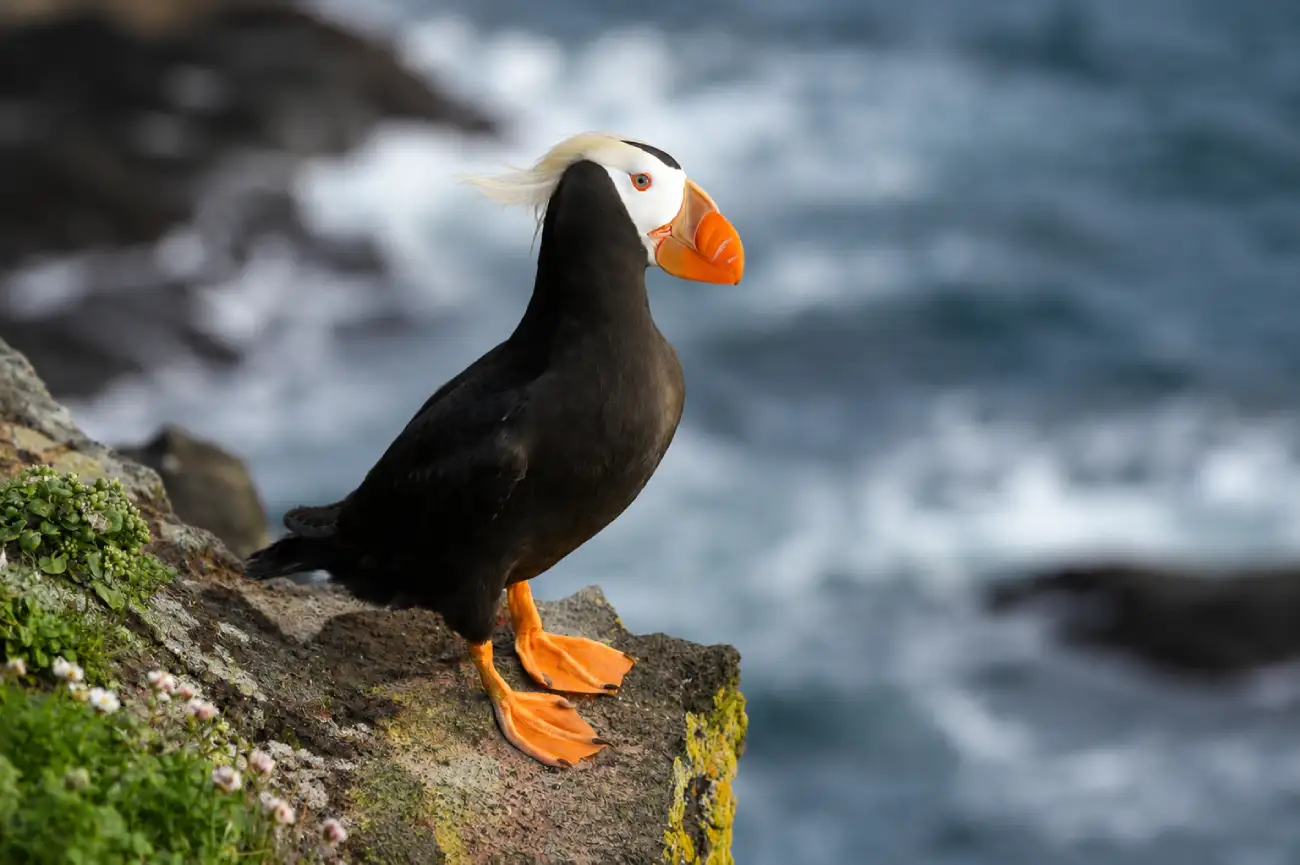
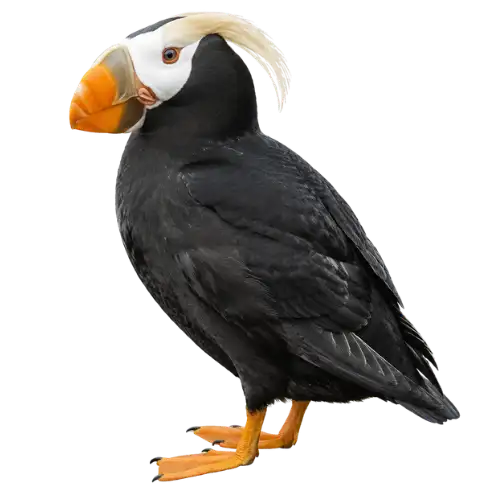
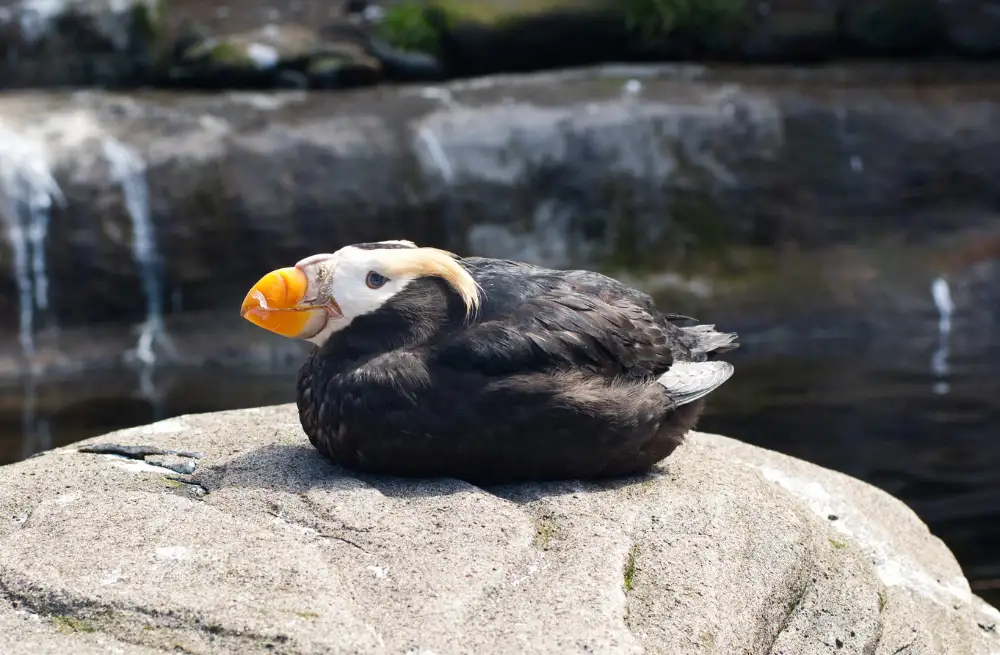
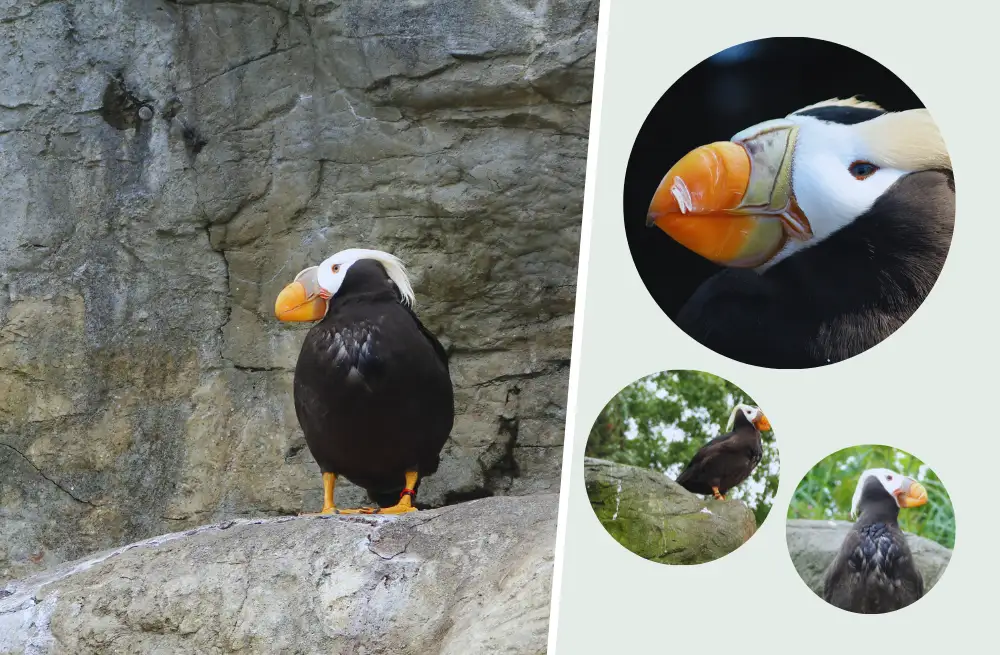
Adults are primarily black with a white facial patch and a very thick bill, mostly red with some yellow and occasional green markings. Western Pacific birds run somewhat larger than eastern Pacific ones, and males are slightly larger than females.
Breeding Versus Winter
The transformation is dramatic and worth understanding, because a winter bird looks like a different animal.
In summer, both sexes grow the yellow tufts that give the species its name, the face turns bright white, and the feet become bright red. After the breeding season the tufts moult away, the face goes grey, and the plumage, bill and legs all lose their lustre.
Juveniles
Similar to winter adults but with a grey-brown breast shading to white on the belly, and a shallow yellowish-brown bill. They look very like a Rhinoceros Auklet without the horn.
3. Built for Swimming, Not Flying
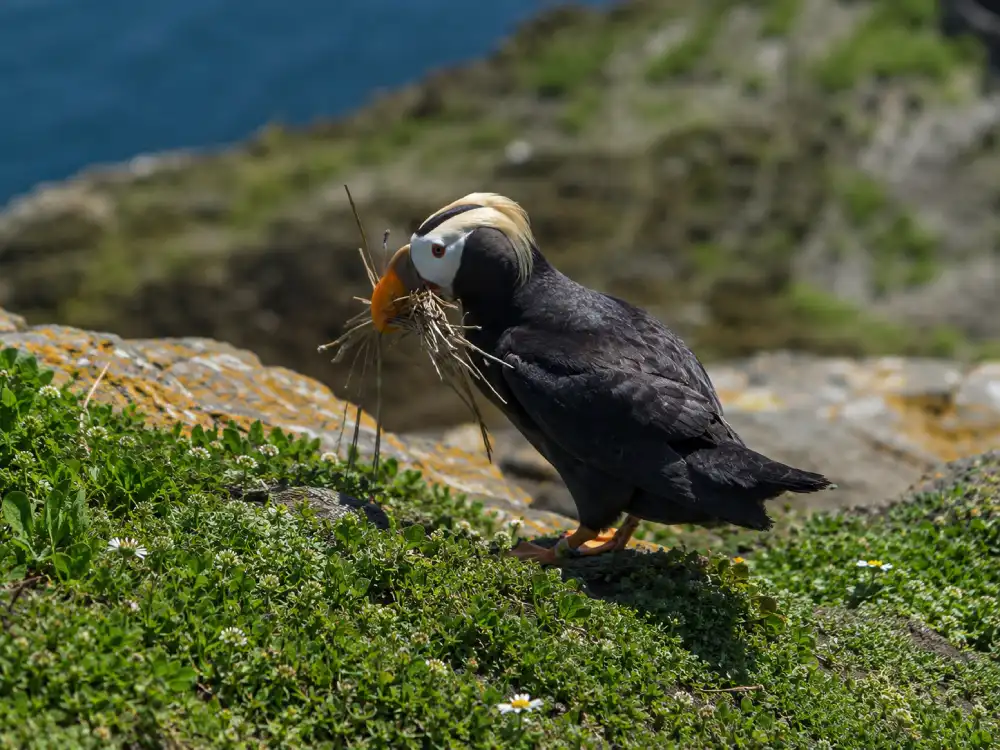
The wings are short, which is the defining compromise of the auk family. They are adapted for diving, underwater swimming and pursuing prey rather than for gliding, which this bird cannot do at all.
The cost is paid in muscle. Tufted Puffins carry thick, dark, myoglobin-rich breast muscles built for a fast and aerobically demanding wingbeat, which they can nonetheless sustain for long periods.
It also explains the nesting habitat. The birds need colonies high enough to launch from, because getting airborne from flat ground or from water is hard work.
4. Range & Habitat
Fratercula cirrhata · Distribution at a glance
Pelagic-
 Rocky Sea Cliffs
-
 Grassy Coastal Cliffs
-
 Remote Offshore Islands
-
 Open Pacific Ocean
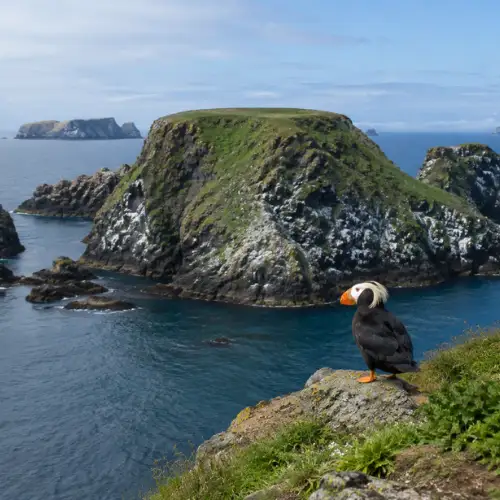
Preferred colonies are islands or cliffs that are hard for predators to reach, close to productive water, and high enough for easy take-off. The ideal is steep ground with soft soil and grass to dig into. Audubon notes the species prefers treeless islands throughout its range.
The southern edge of the range has retreated. The birds once nested in small numbers as far south as the northern Channel Islands off southern California, but the last confirmed sighting there was in 1997.
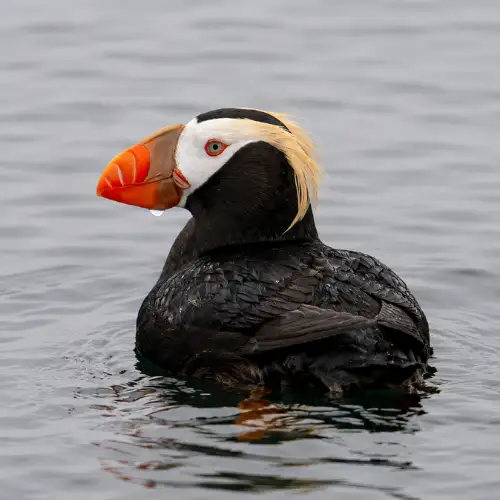
In winter they are almost entirely pelagic. Cornell notes that most of the population winters over very deep water far out in the central North Pacific, and that even during breeding some birds commute over 60 miles to reach productive foraging grounds on the continental shelf.
5. Diet
Fish and marine invertebrates, taken by diving from the surface. The composition varies sharply with age and location.
Adults depend largely on invertebrates, especially squid and krill. Nestlings are fed differently depending on where the colony sits: those at coastal colonies get mostly fish such as rockfish and sandlance, while those at colonies near pelagic waters get more invertebrates.
One detail hints at how they hunt. Demersal fish, which live on or near the seabed, turn up in the diet of most nestlings, which suggests the adults are feeding to some extent on the ocean bottom.
Like other puffins, they can hold a considerable number of small fish crosswise in the bill and carry the load back to the chick.
6. Breeding & Nesting
Fratercula cirrhata · Breeding at a glance
Colonial NesterThe burrow is lined with vegetation and feathers. Where the soil will not take a burrow, the birds use a crevice between rocks instead.
Courtship involves skypointing, strutting and billing. The single egg is pure white or pale buff without gloss, and often carries barely perceptible dull purplish shell markings.
The species has an unusually long juvenile phase at sea. Young birds may live entirely on the open ocean until they are about three, returning to land only to breed, and typically at the colony where they hatched.
One oddity in the records. The oldest recorded Tufted Puffin was six years old, banded and recovered in Alaska. That is far short of typical estimates for the species and almost certainly reflects how little banding has been done, rather than a genuinely short life.
7. Voice
Almost silent. Audubon describes the species as quiet except for occasional growling notes given around the nest site.
8. Predators & Threats
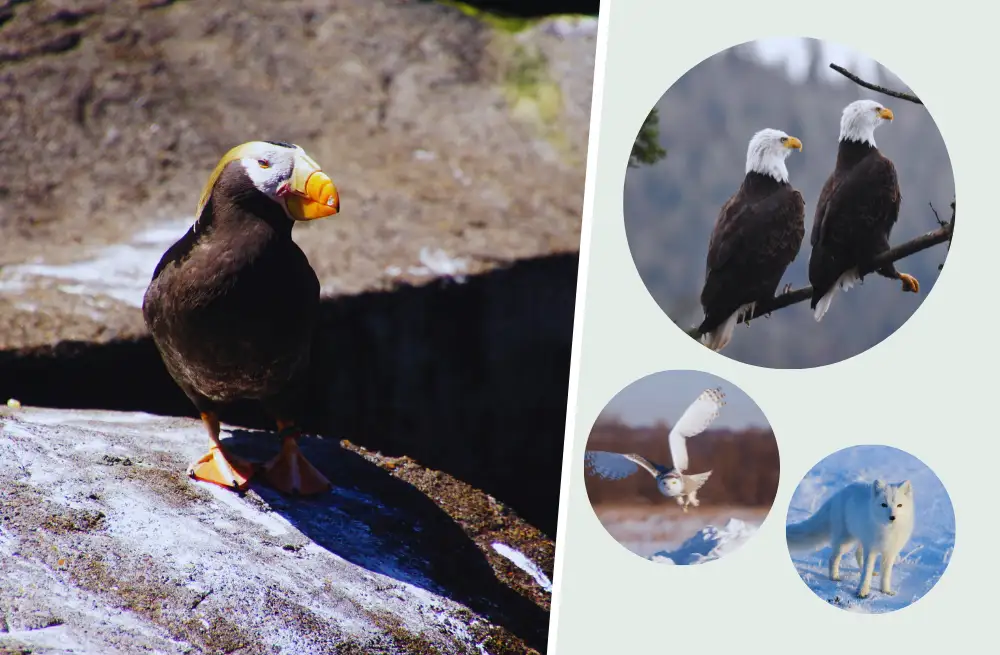
Adults are taken by Snowy Owls, Bald Eagles and Peregrine Falcons, and by Arctic Foxes, which appear to prefer puffins over other birds.
Two nesting behaviours counter this. Choosing inaccessible cliffs and mammal-free islands keeps terrestrial predators out, and laying the egg deep in a burrow protects it from egg-scavengers such as gulls and ravens.
A more modern threat appeared between October 2016 and January 2017, when a mass die-off of puffins occurred at St. Paul Island, Alaska. It has been attributed to ecosystem changes driven by climate change.
9. People & Culture
The Aleut and Ainu peoples of the North Pacific traditionally hunted Tufted Puffins for food and feathers. Skins were made into hard-wearing parkas worn feather side in, and the silky tufts were sewn into ornamental work. The Ainu name for the bird is Etupirka. Harvesting is now illegal or discouraged throughout the range.
On the Russian Pacific coast the bird is called toporok, meaning small axe, a reference to the shape of the bill. It gives its name to one of its main breeding sites, Kamen Toporkov, or Tufted Puffin Rock, an islet off Bering Island.
10. Conservation
The IUCN lists the species as Least Concern, based on a 2020 assessment, and Cornell rates it Low Concern.
Regional protection is a different picture, particularly in Puget Sound, where the species has become scarce. Washington State's Department of Natural Resources established aquatic reserves around Smith and Minor Islands covering over 36,000 acres of tidelands and seafloor, an area that also holds the largest kelp beds in Puget Sound. Protection Island, closed to the public, holds one of the last two puffin nesting colonies in Puget Sound.
Similar Species
Iconic seabird famous for its vibrant, multi-colored beak.
Read More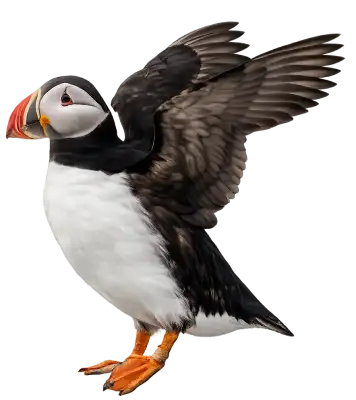

Penguin-like diver with a slender, pointed bill.
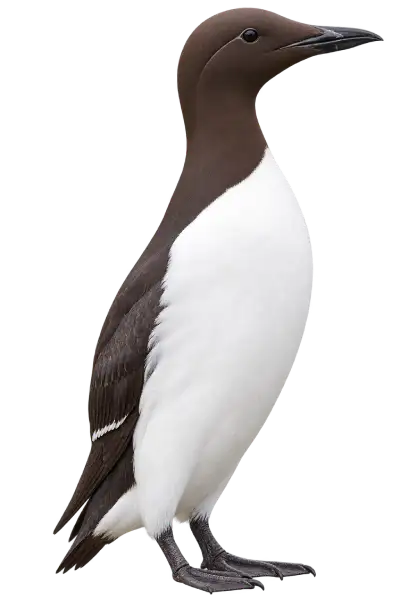

Stocky cliff-nester recognized by a distinct white bill stripe.
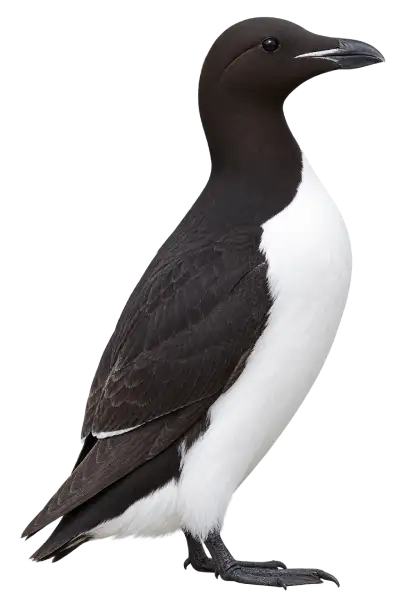

A robust, black-and-white seabird recognized by its thick, blunt bill.
Read More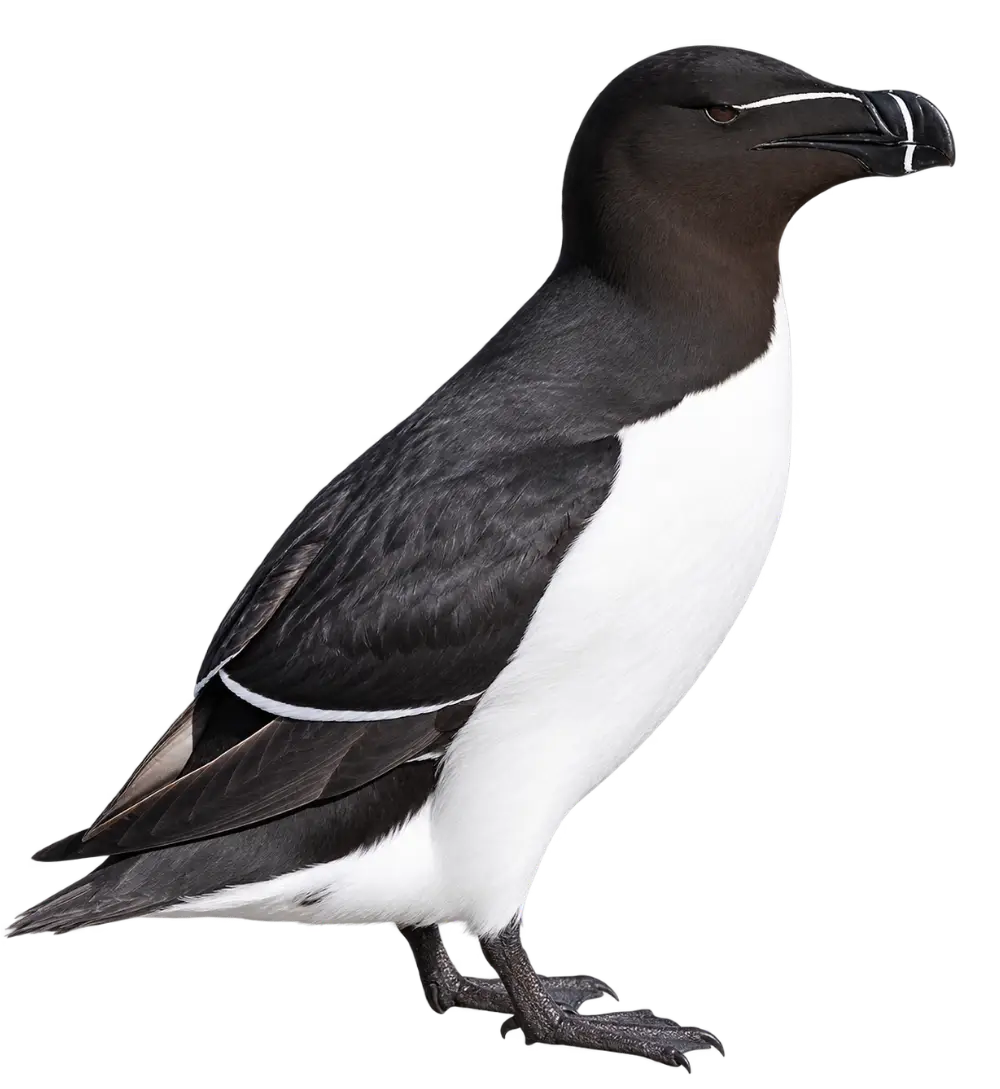
Striking black seabird with large white wing patches.
Read More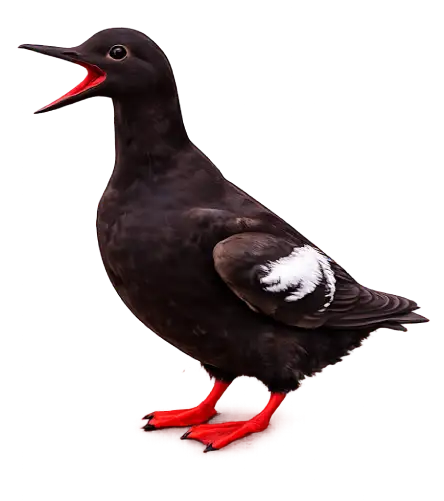
A striking coastal seabird with solid black plumage and prominent white wing patches.
Read More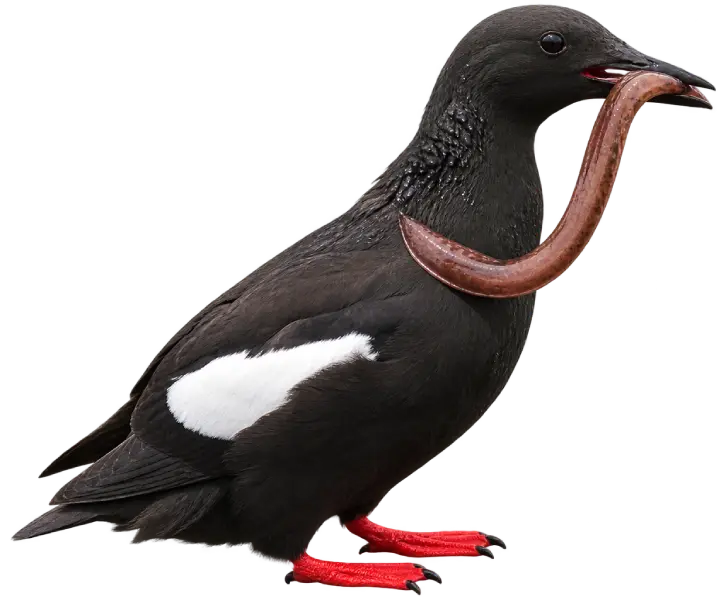
A majestic pelagic seabird recognized by the distinctive dark stripe across its eyes.
Read More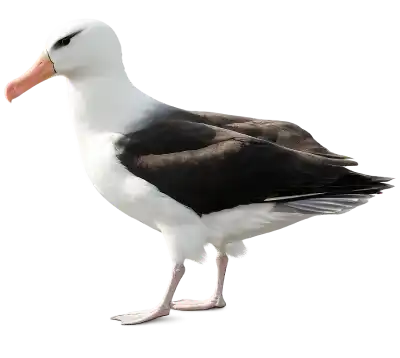
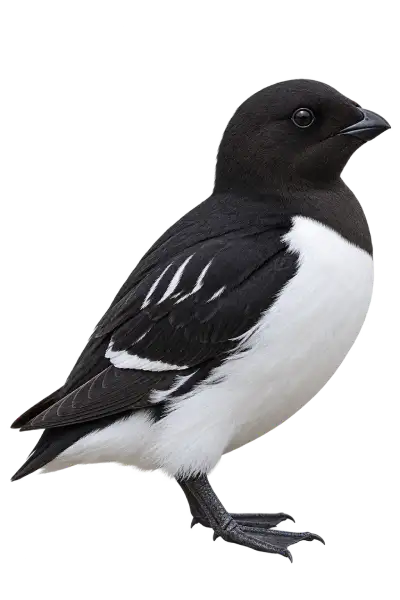
Tiny, plump Arctic seabird that gathers in massive flocks.

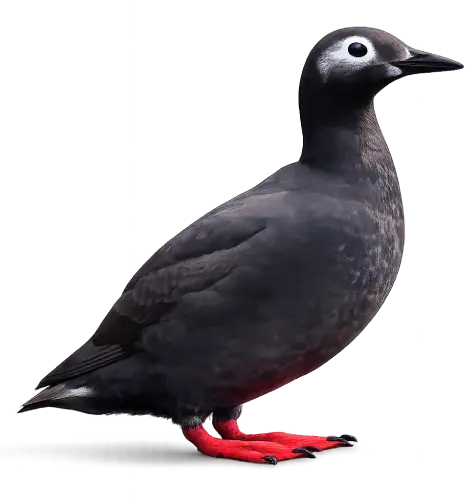
Pacific seabird known for distinct white eye-rings.

Small seabird that remarkably nests in old-growth forests.
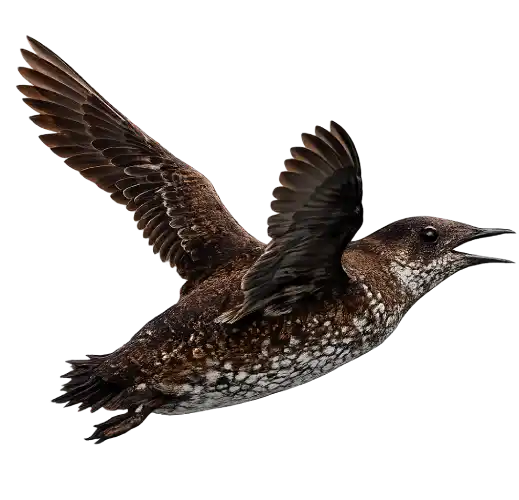
A small, chunky Pacific seabird with a distinctive pale spot at the base of its bill.
Read More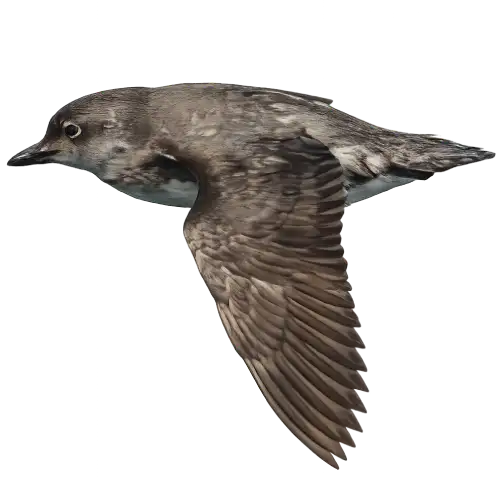
Distinctive seabird named for the fleshy horn above its eyes.
Common Questions About Tufted Puffins
Sources & References
- Tufted puffin — species article
- IUCN Red List assessment for Fratercula cirrhata
- Tufted Puffin field guide entry
Last reviewed July 2026.