Northern Flicker (Colaptes auratus)
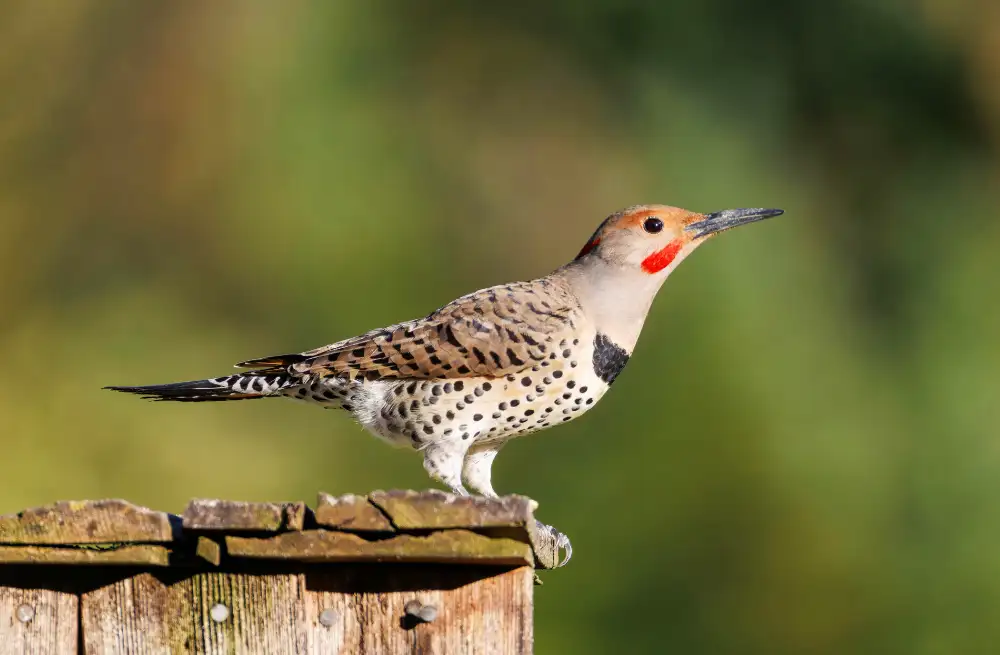
Unlike most woodpeckers, the Northern Flicker spends much of its time foraging on the ground instead of clinging to tree trunks. Its favorite meal is ants, a diet that makes this familiar bird stand out from nearly every other woodpecker in North America.
Species Profile
Scientific Classification
1. History & Background
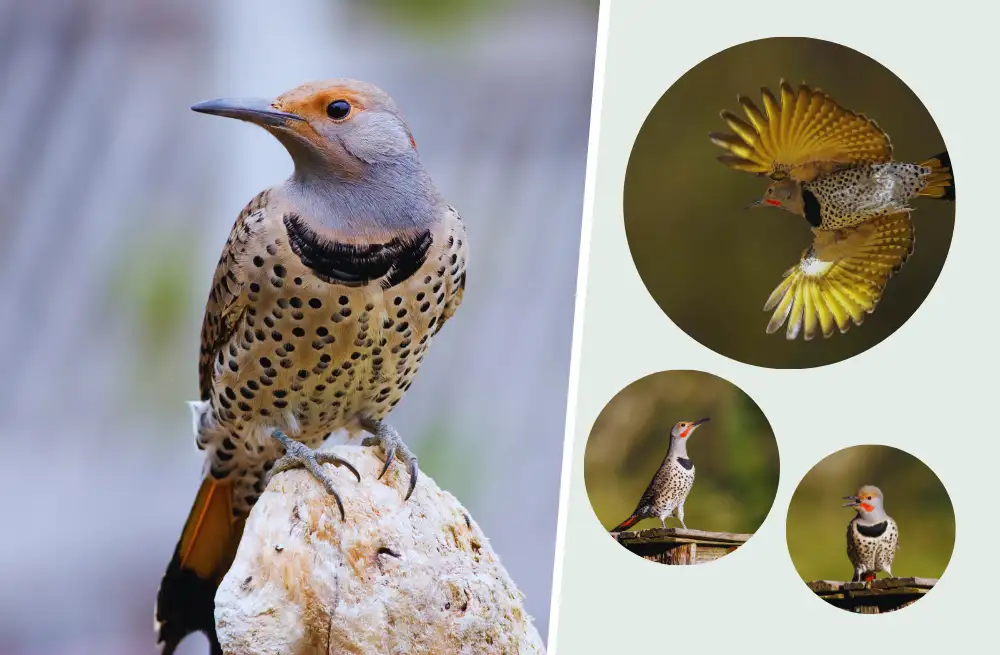
Mark Catesby described and illustrated the bird between 1729 and 1732, calling it the "Gold-winged Wood-pecker" and giving it the Latin Picus major alis aureis, meaning roughly "large woodpecker with golden wings."
Linnaeus included it in the tenth edition of Systema Naturae in 1758 and named it Cuculus auratus, citing Catesby. That first word is not a typo: he placed it in the cuckoo genus. The type locality is South Carolina.
The current genus came later. Nicholas Aylward Vigors introduced Colaptes in 1825 with this species as the type, and it now holds 14 extant New World woodpeckers. Colaptes derives from Greek kolaptes, "one who pecks"; auratus is Latin for "gilded" or "ornamented with gold," a reference to the golden underwings of the eastern form.
More Than a Hundred Names
Few North American birds have collected so many folk names. Recorded ones include yellowhammer, clape, gaffer woodpecker, harry-wicket, heigh-ho, wake-up, walk-up, wick-up, yarrup and gawker bird. Most are attempts to imitate its calls, which tells you how distinctive the voice is.
Yellowhammer is the one with a life of its own. It became a nickname for Confederate soldiers from Alabama during the Civil War, and the yellow-shafted flicker is now Alabama's state bird. It should not be confused with the Eurasian Yellowhammer, Emberiza citrinella, which is a bunting and unrelated.
2. The Subspecies Question
This is where most online profiles go wrong, so it is worth setting out clearly.
What you will see claimed: two subspecies, five, nine, ten or thirteen, depending on the page. All of these have been true at some point, which is why they are still circulating.
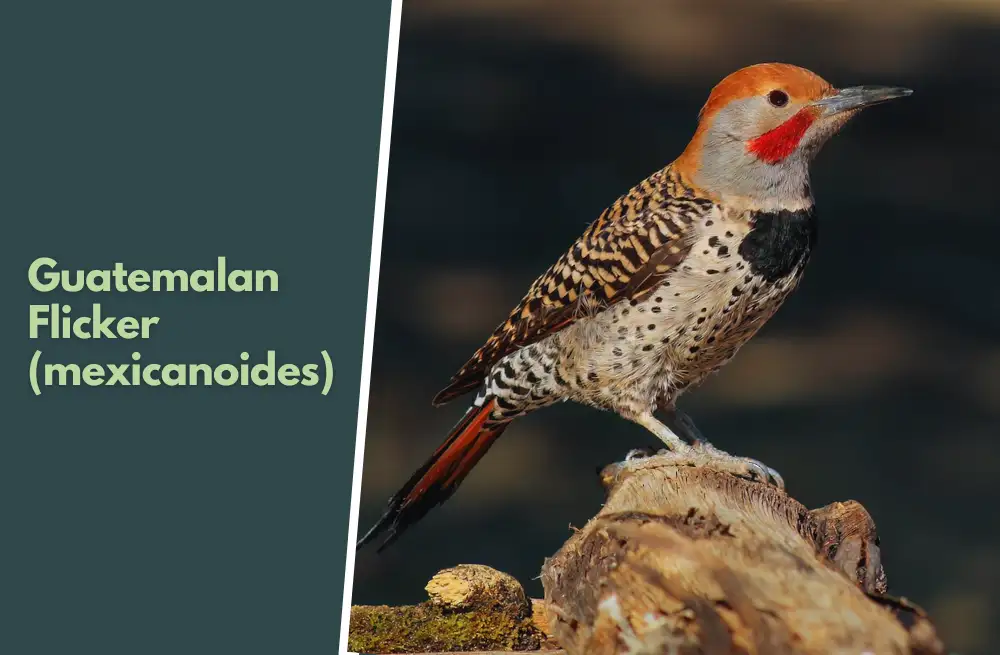
What actually happened. Through much of the twentieth century, three separate species were recognised: the Yellow-shafted Flicker, the Red-shafted Flicker and the Gilded Flicker. Because all three hybridised and produced fertile young, the American Ornithologists' Union lumped them into a single species, Colaptes auratus, in 1982. The Gilded Flicker was then split back out as Colaptes chrysoides in 1995. In 2024 the Guatemalan Flicker, previously the subspecies mexicanoides, was also elevated to full species status.
Where that leaves things. Wikipedia lists ten subspecies, one of them extinct and possibly invalid. Subtract the Guatemalan Flicker and you are at nine described, of which eight are extant. A recent genomics paper refers to as many as thirteen described subspecies and five morphological groups. Cornell states plainly that systematics in the Colaptes auratus complex are unsettled.
The practical answer. For field purposes there are two forms that matter, and they are what everyone actually means:
| Yellow-shafted | Red-shafted | |
|---|---|---|
| Range | Eastern and far northern North America | Western North America |
| Underwing and tail shafts | Yellow | Red |
| Male's moustache | Black | Red |
| Nape patch | Red bar present | Absent |
| Face and crown | Beige face, grey cap | Grey face, beige cap |
Where the two meet, they interbreed. The hybrid zone runs down the Great Plains from Alaska to northern Texas, following the rain shadow of the Rockies, and it has become one of the most studied natural laboratories for what happens when two forms come back into contact.
One naming oddity. The red-shafted subspecies is C. a. cafer, the result of an error by Johann Gmelin in 1788, who believed the bird came from South Africa. The name derives from a term now regarded as a racial slur. A proposal to rename it lathami went to the American Ornithological Society, which as of September 2018 declined to support the change under the rules of nomenclatural priority.
3. Identification & Appearance
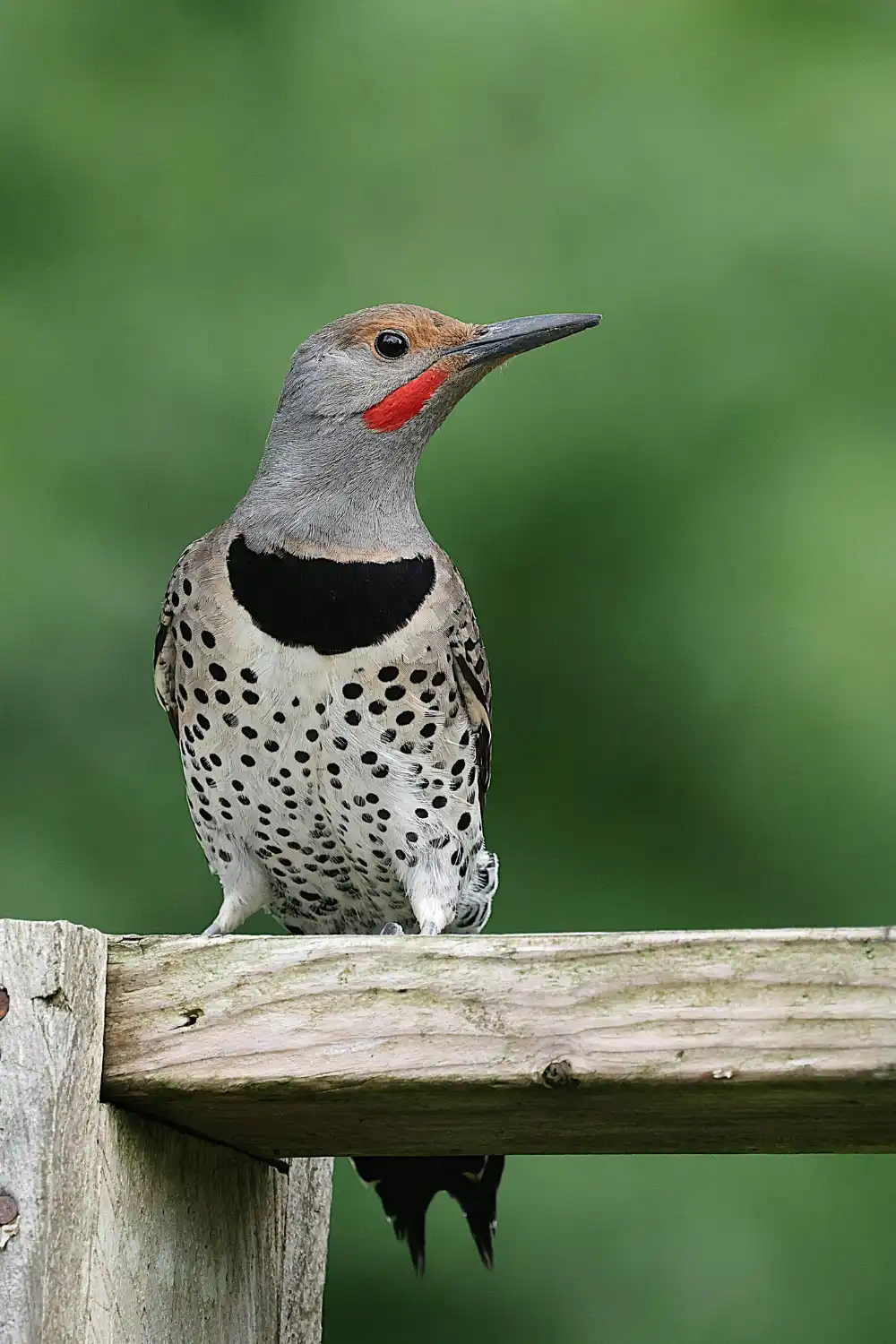
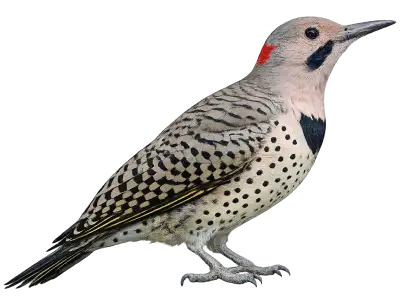
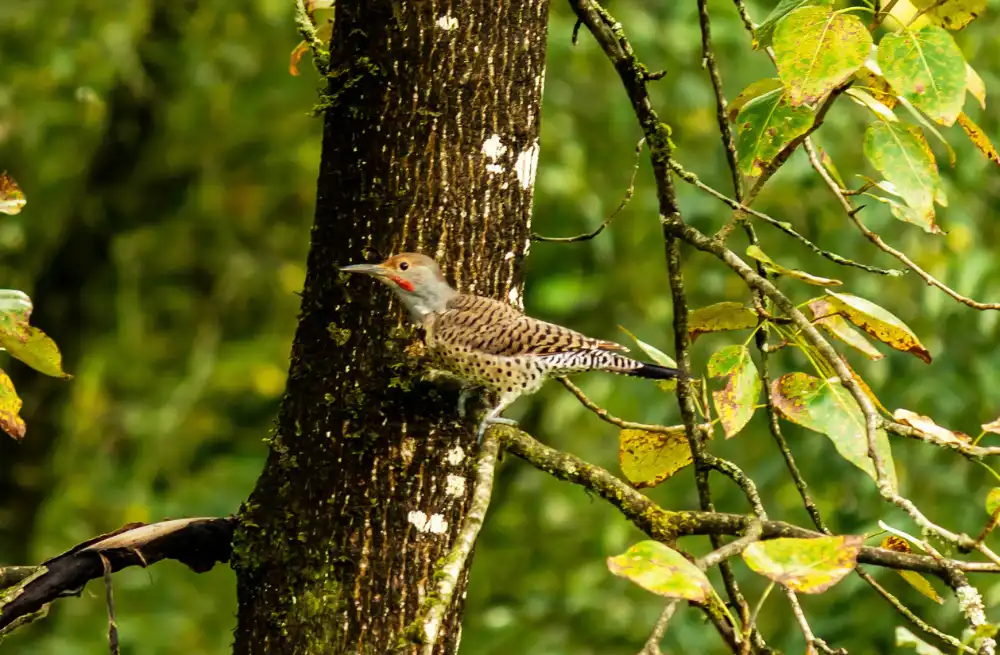
Adults are brown with black barring across the back and wings, which is unlike any other North American woodpecker. A black crescent sits like a necklace across the upper breast, and the beige lower breast and belly are covered in black spots.
Two marks do the identification work at distance. The rump is bright white and flashes conspicuously in flight, and the underwings and undertail glow yellow or red depending on the form.
Males carry a moustachial stripe at the base of the bill, black in the east and red in the west. Females lack it entirely. That stripe is the only strongly sex-linked plumage trait in the species.
Size varies geographically in a clean pattern: the largest birds come from the far north, around Alaska and Labrador, and the smallest from Grand Cayman.
4. Range, Habitat & Migration
Colaptes auratus · Distribution at a glance
Partial Migrant-
 Open Woodlands
-
 Forest Edges
-
 Parks & Golf Courses
-
 Meadows
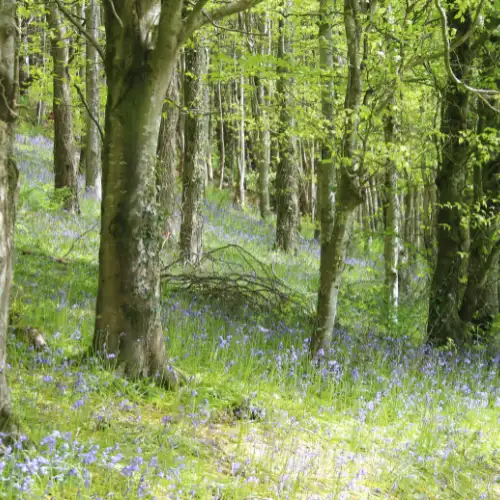
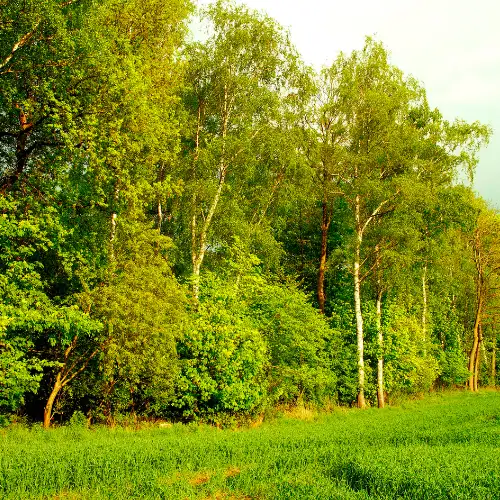
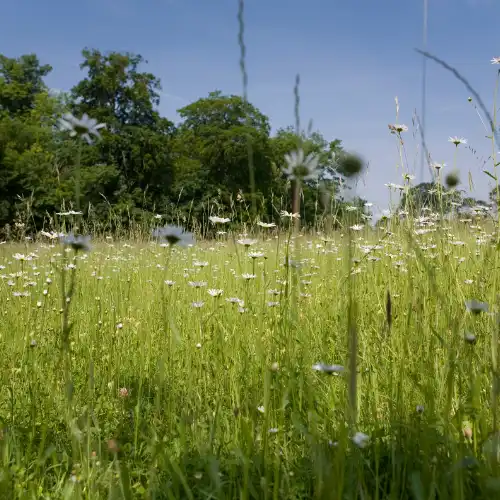
Open habitat with scattered trees suits it best, which is a consequence of ground feeding. It needs bare or short ground to forage on and trees to nest in.
One of the Few Migrating Woodpeckers
Most woodpeckers hold territory year-round. Flickers are partial migrants, and the reason ties back to diet: ground prey is unreachable under snow. Northern breeders travel farthest, sometimes converging with southern birds at shared wintering sites.
Migrating birds move north around the beginning of April and return between September and October. Eastern and western populations are divided by the Rockies and follow separate routes. Birds from the Canadian prairies and Dakotas winter in Texas, Oklahoma and Arkansas; those from southern Ontario to New England winter from eastern Texas to the Carolinas; those from British Columbia and the Pacific Northwest winter from central California to Baja.
Two details stand out. Females tend to winter farther north than males, which suggests the split relates to breeding roles rather than body size alone. And flickers keep sleeping in cavities even while travelling: geolocator work found around 75% of birds spent migration nights inside a cavity, in places they had never been before.
5. Diet & Foraging
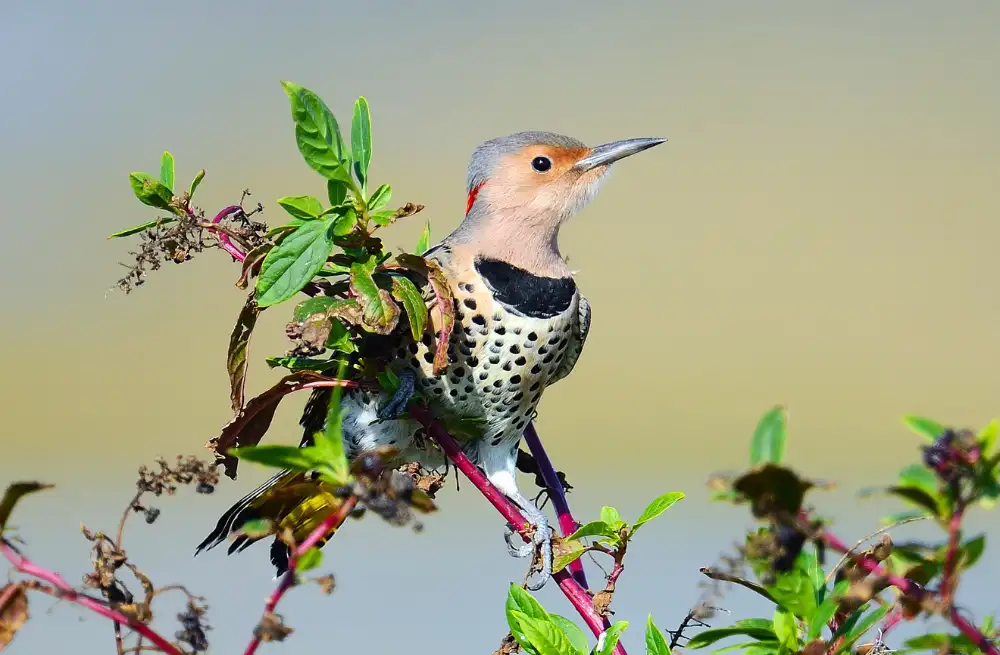
Flickers are the only North American woodpeckers that regularly feed on the ground, and the diet explains why.
Ants alone can make up 45% of what they eat. They break into underground ant colonies by hammering at soil the way other woodpeckers drill wood, and their tongue can extend two inches beyond the bill tip to reach the larvae. They have also been recorded breaking apart cow dung for the insects inside.
Beyond ants, the diet includes flies, butterflies, moths, beetles and snails, plus fruit, berries and seeds, especially in winter: poison ivy, poison oak, dogwood, sumac, wild cherry, grape, bayberry, hackberry, elderberry, sunflower and thistle. They are also a natural predator of the European corn borer, an invasive moth that costs US agriculture over a billion dollars a year.
Anting
Flickers do not only eat ants, they bathe in them. Anting is a behaviour where the bird deliberately applies ants, or lets them crawl through its feathers, using the formic acid to help control parasites during preening.
6. Voice & Behaviour
The best-known call is a long, laughing ki ki ki ki, sustained and far-carrying. Between paired birds there is a rhythmic wick-a wick-a wick-a, used in courtship and, directed at another male, as a territorial signal.
Like other woodpeckers, flickers drum to communicate rather than to feed, and the goal is volume. Metal gutters, chimney caps and siding all work better than wood, which is why a flicker on a house at dawn is a common complaint.
Territorial disputes are largely display. Two birds will face off with bill-pointing, head swinging and head bobbing, spreading their wings and fanning their tails to flash the coloured shafts.
The flight is strongly undulating, a burst of flaps followed by a glide, which gives the roller-coaster path typical of the family.
7. Breeding & Nesting
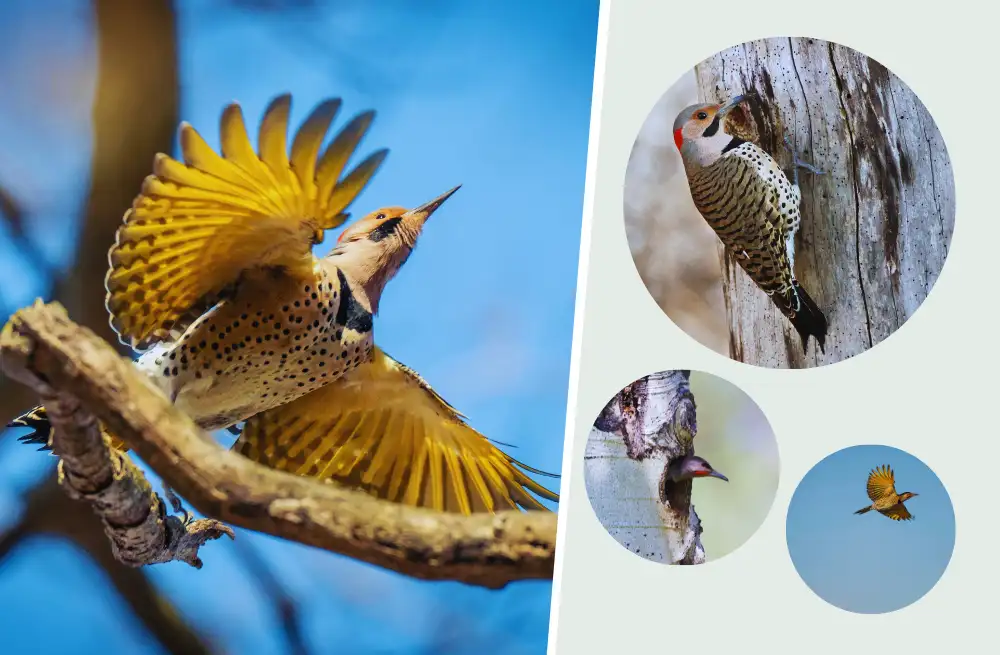
Colaptes auratus · Breeding at a glance
Seasonally MonogamousBoth sexes excavate. The entrance hole runs roughly 2 to 4 inches across, the cavity widens at the base to hold the eggs and sitting adult, and the interior is bare except for a bed of wood chips. Entrances often face east or southeast. Nestlings begin clinging to the cavity walls rather than lying on the floor at around 17 days old.
The eggs are the second-largest of any North American woodpecker, beaten only by the Pileated.
Both parents incubate, with the male sitting overnight, and the young are fed by regurgitation. Pairs stay together through the breeding season and separate afterwards.
Unusually for a woodpecker, flickers frequently reuse cavities rather than cutting new ones each year, and pairs show strong fidelity to a specific hole. They will also take over old earthen burrows dug by Belted Kingfishers or Sand Martins, and will use nest boxes of the right size. They can also excavate into buildings, particularly stucco and soft wooden siding.
Survival
A six-year capture-recapture study found only one or two birds in every 300 adults were seven years or older, matching a modelled seven-year survival rate of around 0.6%. There was no significant difference between male and female survival. The oldest known yellow-shafted bird reached 9 years 2 months, the oldest red-shafted 8 years 9 months.
8. Conservation & Threats
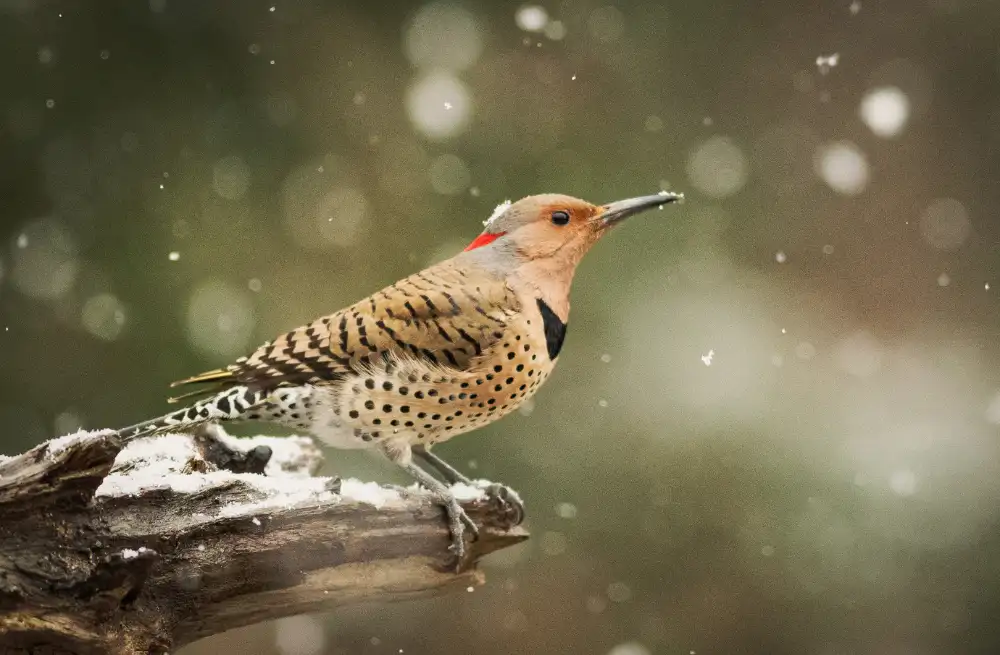
The IUCN lists the Northern Flicker as Least Concern, and it remains widespread and familiar.
Its main documented pressure is competition for nest cavities. European Starlings frequently drive flickers away from excavated holes, the same problem facing the Red-headed and Red-bellied Woodpeckers.
Nest predators include Cooper's Hawks, Sharp-shinned Hawks, raccoons, squirrels and snakes. Adults are taken by larger raptors.
There is an ecological point worth making. Flickers are prolific excavators, and abandoned flicker cavities become homes for a long list of other cavity nesters that cannot dig their own.
9. Similar Species
- Gilded Flicker: Split off as a separate species in 1995. Yellow shafts with a red moustache and a cinnamon crown, confined largely to Sonoran Desert saguaro country.
- Guatemalan Flicker: Elevated to species status in 2024. Highland Central America, from southern Mexico to Nicaragua.
- Red-bellied Woodpecker: Also barred on the back, but black and white rather than brown, with a red crown and no black breast crescent.
- Yellow-bellied Sapsucker: Similar size, but patterned in black and white with a red forehead, and no white rump flash.
Common Questions About Northern Flickers
Sources & References
- Northern flicker — species article
- IUCN Red List assessment for Colaptes auratus
- Northern Flicker call recording, XC697755
- Northern Flicker systematics and subspecies
Last reviewed July 2026.