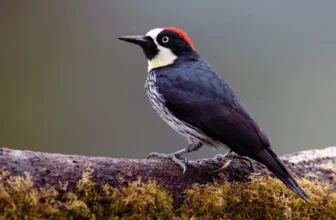
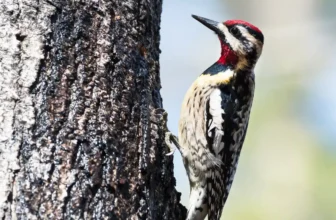
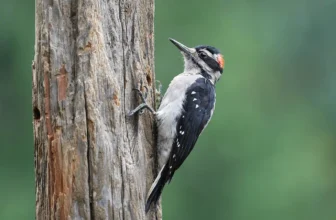
Red-bellied Woodpecker (Melanerpes carolinus)
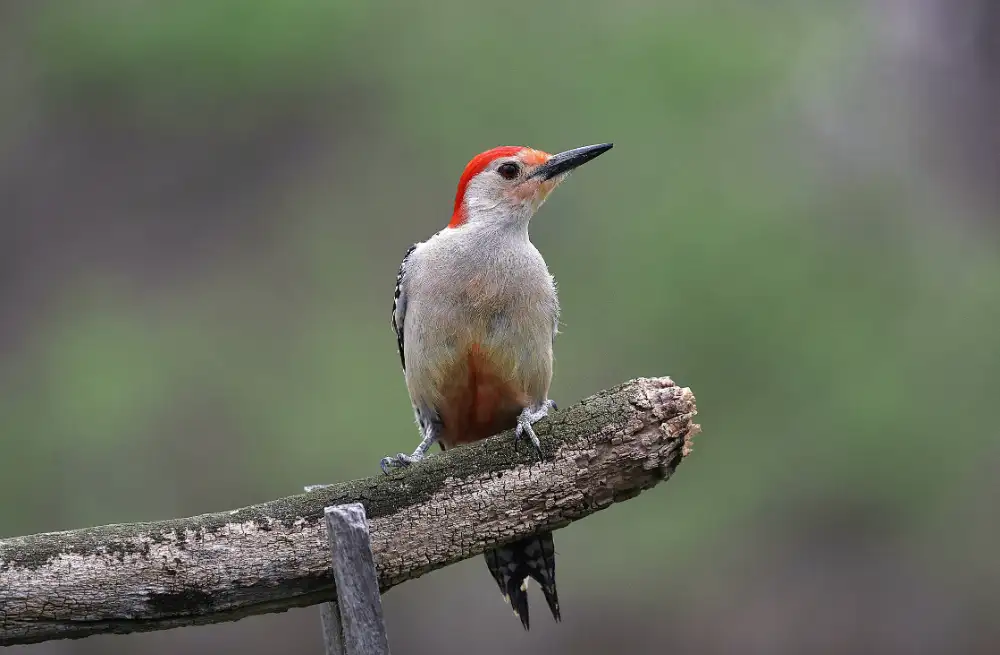
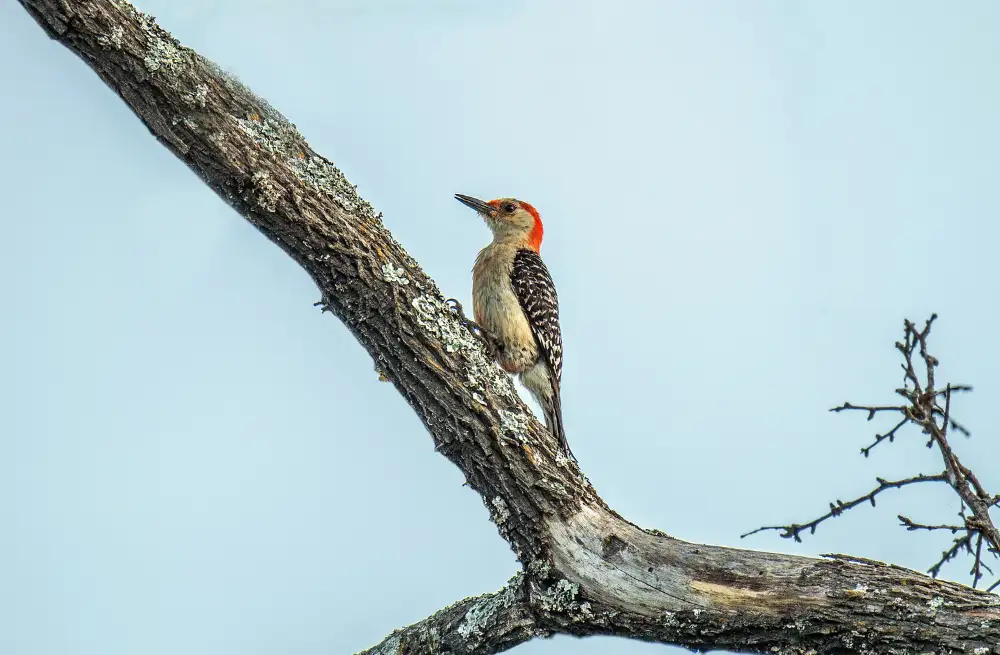
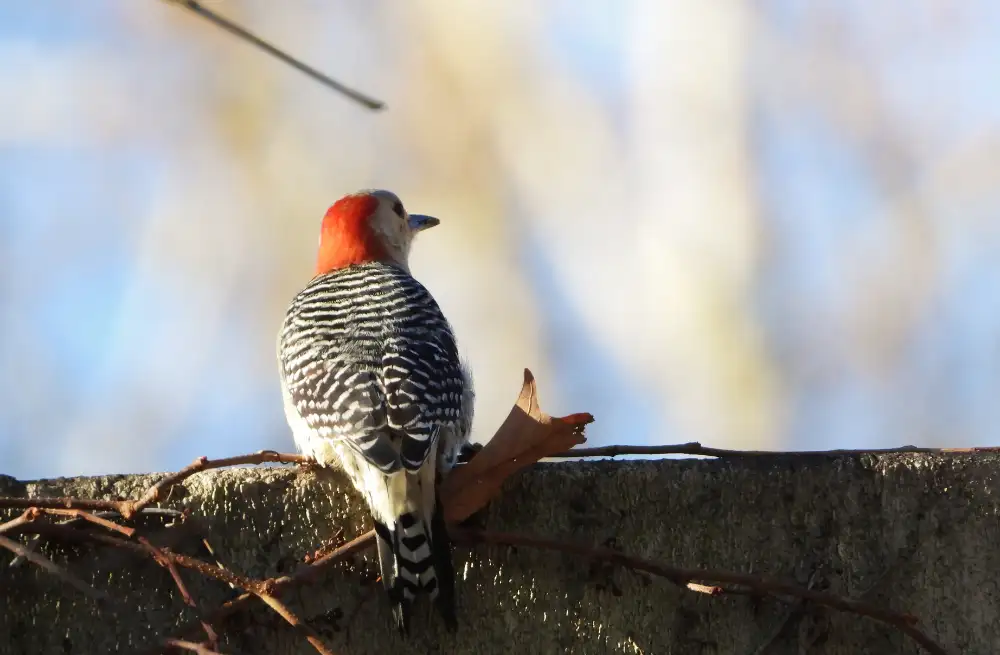
Despite its name, the Red-bellied Woodpecker is best recognized by its brilliant red crown and striking black-and-white barred back. The reddish wash on its belly is subtle and often difficult to see, making the name somewhat misleading.
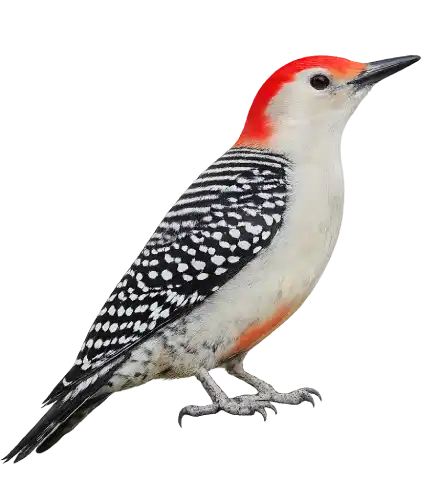
Species Profile
Scientific Classification
History & Background
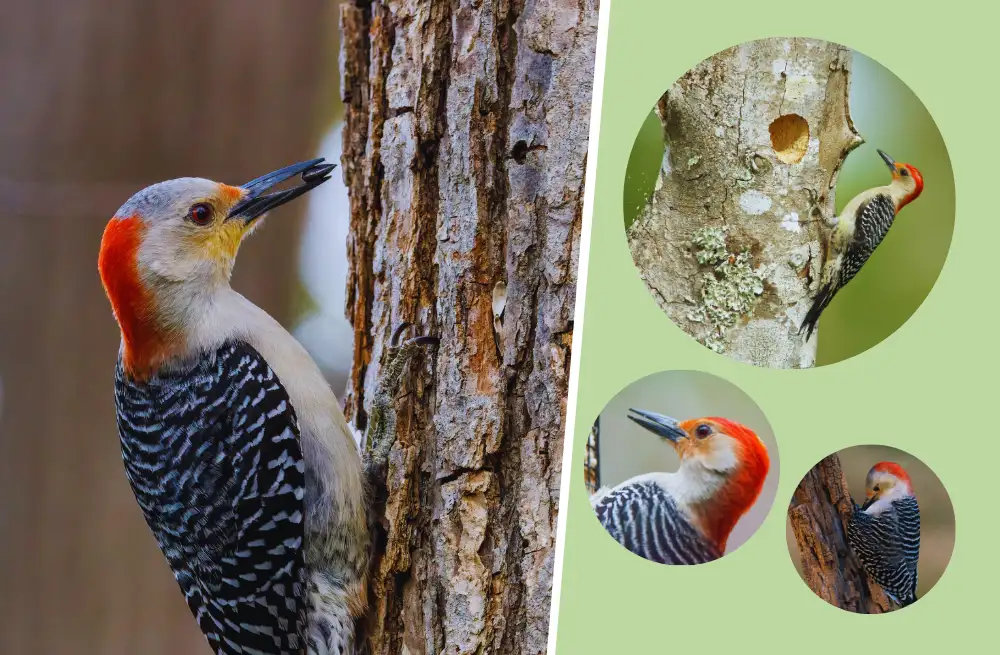
The English naturalist Mark Catesby described and illustrated the bird between 1729 and 1732 in The Natural History of Carolina, Florida and the Bahama Islands. He called it "The Red-bellied Wood-pecker" and gave it the Latin name Picus ventre rubro, literally "woodpecker with a red belly."
When Carl Linnaeus produced the tenth edition of Systema Naturae in 1758, he included the species, coined the binomial Picus carolinus, and cited Catesby's plate as his source. He listed the type locality only as America septentrionali, North America. That was later narrowed to South Carolina.
The modern genus Melanerpes was introduced by the English ornithologist William Swainson in 1832 and now holds 24 species. The Red-bellied Woodpecker is monotypic: no subspecies are recognised anywhere across its range.
The name has been causing confusion ever since Catesby. It survives because early ornithologists worked with specimens in the hand, where the reddish belly wash is perfectly visible. In a tree, with the bird pressed against the trunk, it usually is not.
Identification & Appearance
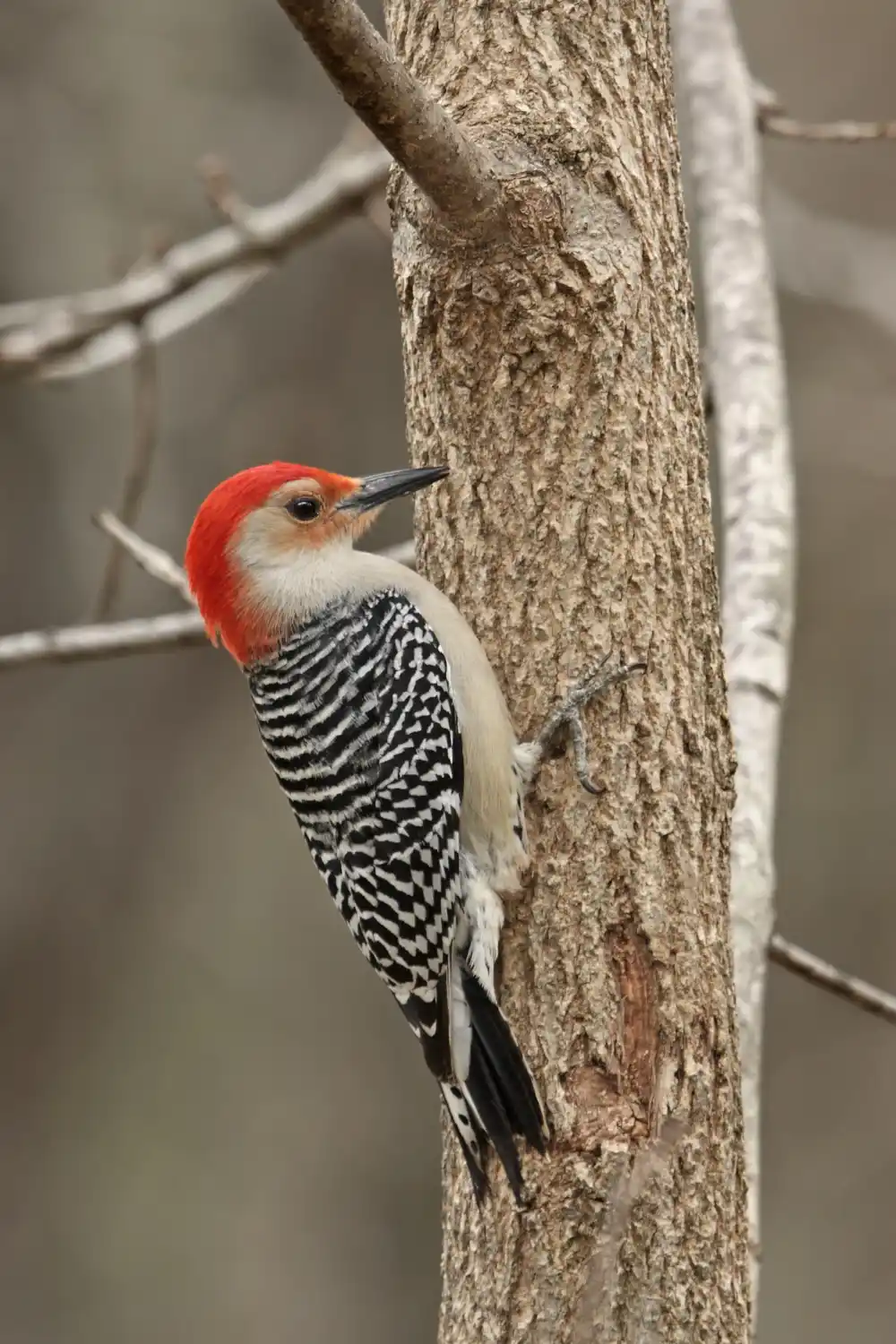
The Back Is the Field Mark
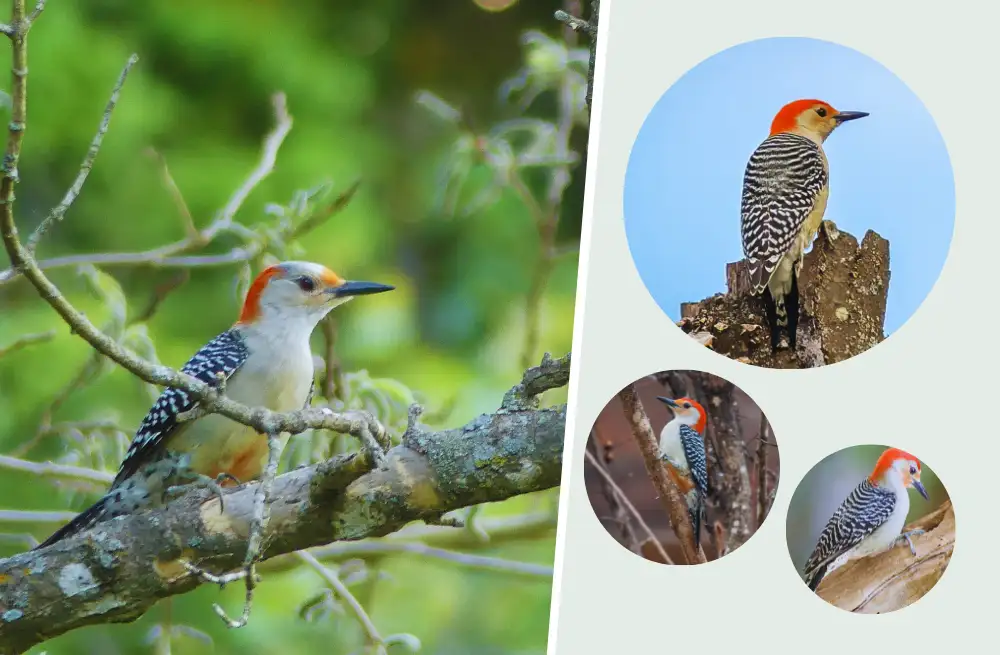
Crisp black-and-white barring across the back, wings and tail, often described as a zebra pattern. Face and underparts are plain light grey. In flight, white patches show at the base of the primaries and a white rump becomes visible.
Telling Males From Females
Males have red running continuously from the bill over the crown to the nape. Females have red on the nape only, plus a separate small patch above the bill, with grey in between. Males also average about 8 to 9 percent larger than females, with a longer bill and a longer, wider tongue.
Juveniles
Similar to adults but with no red on the head at all, and a horn-coloured rather than black bill.
The Red Belly Problem
The reddish tinge sits low on the underside and is genuinely difficult to see in the field, even with good binoculars, because the bird is usually pressed flat against a trunk. Do not use it for identification.
Not the Red-headed Woodpecker
A different species in the same genus. The Red-headed has an entirely red head and neck, a solid black back with no barring, and a clean white belly. If you can see barring on the back, you are looking at a Red-bellied.
Range & Habitat
Melanerpes carolinus · Distribution at a glance
Resident-
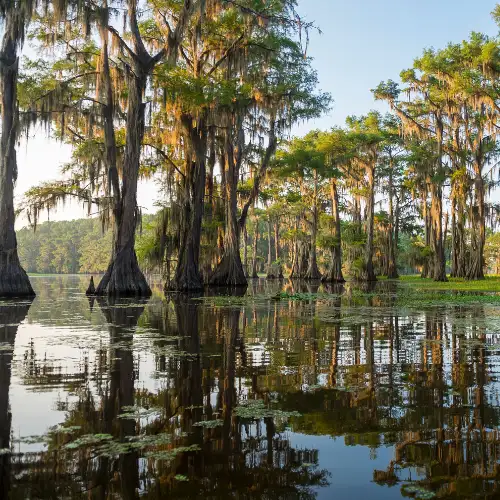 Hardwood Forest
-
 Mixed Pine-Hardwood
-
 Wooded Wetlands
-
 Great Plains Edge
This is one of North America's great habitat generalists. It uses mature hardwood forest, mixed pine-hardwood, pine flatwoods, bottomland timber, swampy woods, riparian forest, tropical hammocks, mangroves and urban parks. Deciduous forest is the classic breeding habitat, but the list of places it will accept is long.
The range has been expanding steadily northward in recent decades, which is one of the more visible distribution shifts among eastern North American birds.
Diet & Foraging
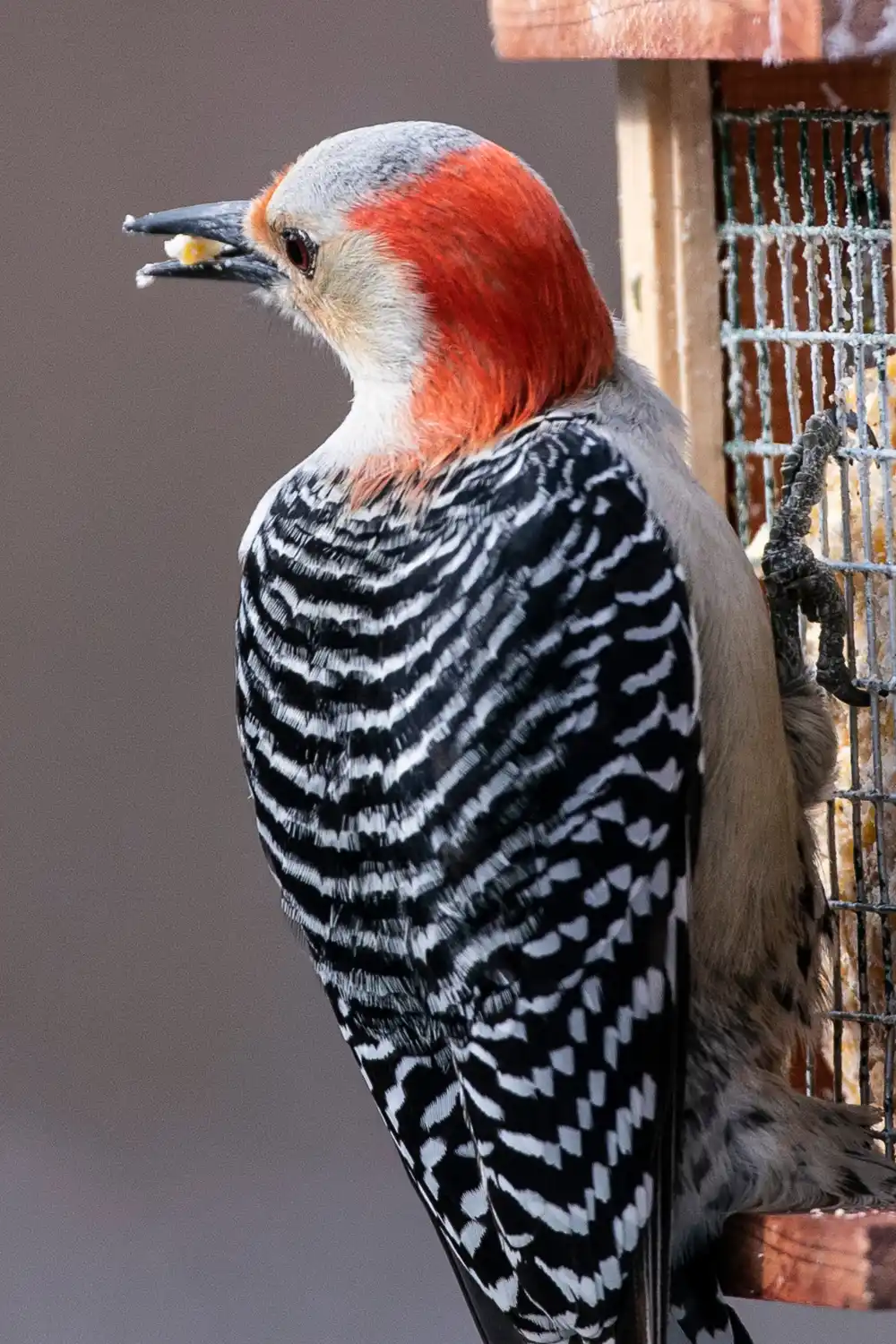
Omnivorous and opportunistic, taking insects, fruit, nuts and seeds. Unusually for a woodpecker, fruit often makes up more of the diet than insects. It works bark crevices with its bill as a chisel and extracts prey with a long tongue, but it seldom excavates deeply for insects the way more specialised woodpeckers do, and it rarely catches insects in flight.
Between 20 and 69 percent of foraging time is spent on dead or decaying trees, depending on the study and the habitat.
Food Caching
It stores food, wedging berries, acorns and nuts deep into natural crevices in bark, fence posts and other wood. Caching keeps the food out of reach of competitors and provides winter reserves.
Two Notable Behaviours
It is a significant predator of the invasive emerald ash borer in the American Midwest, and has been recorded removing up to 85 percent of borer larvae from a single infested ash tree.
Less charmingly, in parts of its range it raids the nest boxes of Wood Ducks and eats the eggs.
At feeders it takes suet, peanuts and sunflower seed, and it will push aside most other species. Blue Jays are the usual exception.
Voice & Drumming
A noisy bird with a varied vocabulary. The best-known call is a rolling churr-churr-churr, sometimes written thrraa-thrraa-thrraa, with an alternating br-r-r-r-t. A low grr, grr passes between paired birds from courtship through the end of the breeding season. In conflicts with other Red-bellieds the call becomes a loud chee-wuck, chee-wuck. Nestlings beg with a high pree-pree-pree and keep using it for a while after fledging.
Drumming runs to roughly six taps. Males drum and call more often than females, though both do. Drumming serves both to attract mates and to settle disputes, while soft tapping maintains the pair bond.
In towns they will drum on whatever resonates best, including aluminium roofs, metal guttering and transformer boxes.
Breeding & Nesting
Melanerpes carolinus · Breeding at a glance
MonogamousPairs are monogamous, hold a territory year-round and show high site fidelity, often returning to the same tree in successive years while excavating a fresh cavity each time, frequently just below the previous one.
How the Nest Gets Chosen
The male picks the site and starts excavating, then tries to win the female's approval by calling and tapping softly on the wood around the hole. If she accepts, she taps back and helps finish the cavity. Entering the hole is the signal that the site is settled.
Cavities go into dead trees, old stumps, or living trees with soft wood such as elm, maple or willow. Finished holes run roughly 9 to 13 inches deep, with a living chamber of about 3.5 by 5 inches. There is no lining beyond the bed of wood chips left over from excavation, and the eggs are laid straight onto it. The area around the nest is marked with drilled holes that warn other birds off.
Raising the Brood
Both parents incubate, with the male taking the night shift. Young hatch naked, blind and helpless, are fed by both parents, and fledge at 24 to 27 days. Parents may keep feeding them for six weeks or more afterwards. Juveniles stay in their natal area for around 27 weeks before dispersing, and some return there to breed.
Predators and Competitors
Adults are taken by Sharp-shinned and Cooper's Hawks, black rat snakes and house cats. Eggs and nestlings are taken by owls, Pileated and Red-headed Woodpeckers, grey and fox squirrels, and grey rat snakes. Red-bellieds defend their nests aggressively and will attack a predator that comes too close.
Their most persistent problem is not a predator at all. European Starlings evict them from finished cavities, and studies have reported starlings taking a substantial share of excavated nests, which reduces breeding success.
Conservation & Threats
The IUCN lists the species as Least Concern, and it is common and expanding its range northward. That said, the population is not threat-free.
It depends on large trees and standing dead wood for both nesting and foraging. In heavily deforested areas the birds will sometimes make do with gardens, but for the most part they simply are not present in any numbers. Removal of dead trees, in forestry and in tidy suburban landscaping alike, has been linked to reduced breeding success.
There is a wider ecological point here. As a cavity excavator, the Red-bellied Woodpecker creates holes that squirrels, bats and other cavity-nesting birds go on to use. Losing woodpeckers from a woodland removes housing for a long list of other species.
Similar Species
- Red-headed Woodpecker: Same genus, entirely red head and neck, solid black unbarred back, clean white belly. The most common misidentification by far.
- Northern Flicker: Barred back, but brown-toned, with a black chest crescent and spotted underparts. Often feeds on the ground.
- Golden-fronted Woodpecker: Very similar zebra back, but with golden-yellow rather than red on the nape. Ranges meet in central Texas.
- Hairy and Downy Woodpeckers: Both have a solid white back stripe rather than full barring, and are black and white with no red cap in females.
Common Questions About Red-bellied Woodpeckers
Sources & References
- Red-bellied woodpecker — species article
- IUCN Red List assessment for Melanerpes carolinus
- Red-bellied Woodpecker call recording, XC698879
- Red-bellied Woodpecker life history
Last reviewed July 2026.