Little Auk (Alle alle)
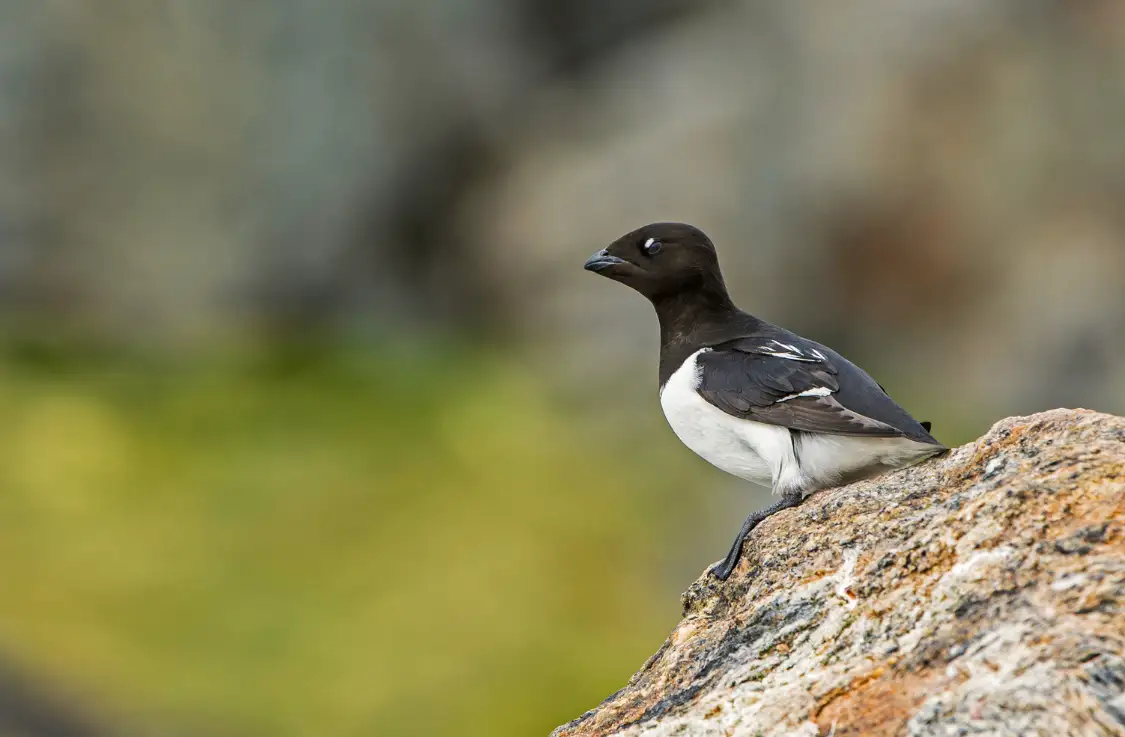
A seabird the size of a starling that can eat tens of thousands of tiny animals a day, feeds by suction like a miniature whale, and carries a name twice borrowed from a duck it isn’t related to, all because Linnaeus got confused.
It breeds in enormous Arctic colonies, packed onto rocky slopes and scree, then spends the rest of the year at sea. When powerful November gales hit, tens of thousands can be driven past the British coast in a single day.
Species Profile
Scientific Classification
Global Conservation Status
Though currently one of the most abundant seabirds with over 30 million individuals, they face severe future threats. Climate modeling warns that up to 94% of their Arctic breeding areas could become unsuitable as warming disrupts their food supply.
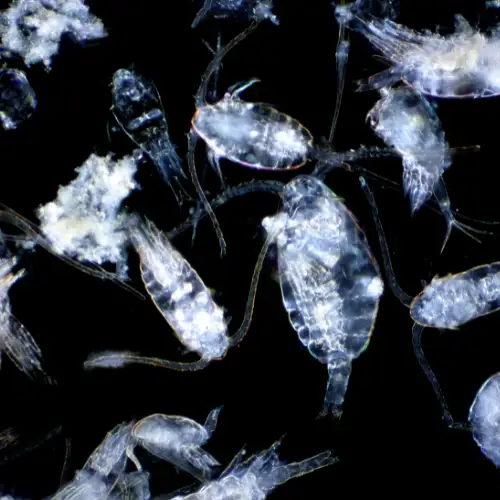
Food Scarcity
Warming ocean temperatures and shifting currents drastically alter the availability of the copepods they rely on, forcing longer foraging flights.
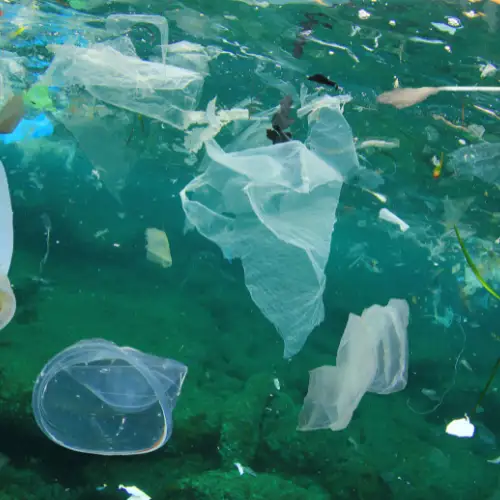
Marine Pollution
Oil spills, plastics, and chemical runoff pose severe risks to these seabirds during their vulnerable wintering months at sea.
Fishing Bycatch
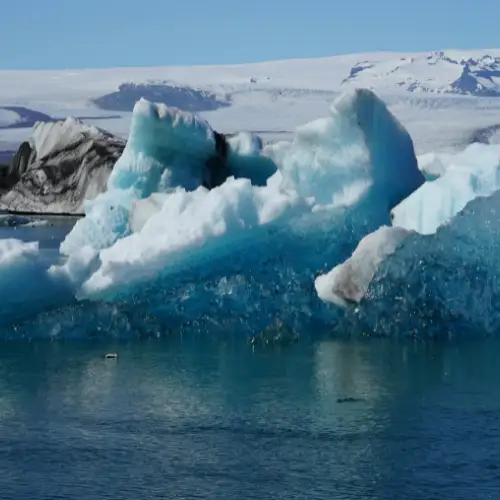
As feeding areas increasingly overlap with commercial fisheries, fatal net entanglements have become a growing threat.
Behavioral Plasticity Noted
Research shows Little Auks can temporarily buffer climate impacts by altering foraging behavior, masking long-term population strain.
Suction Feeding Discovered
Scientists publish the "Almost like a whale" study, revealing their unique, visually-guided suction method for eating copepods.
Habitat Loss Modeling
BirdLife modeling projects a worst-case scenario where 94% of current Arctic breeding sites become unsuitable due to shifting ice and prey.
Colony Protection
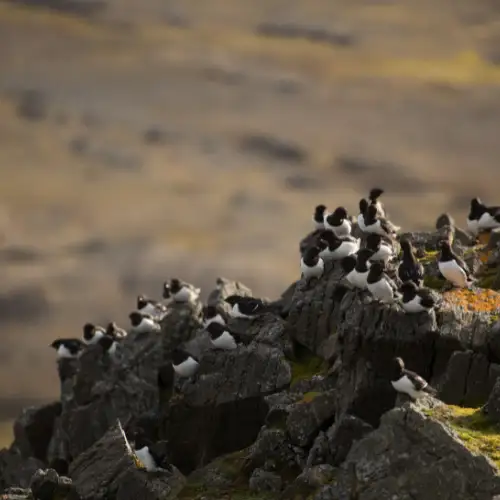
Establishing strict sanctuaries around Arctic scree slopes to protect massive breeding grounds from disturbance.
Activity Zoning
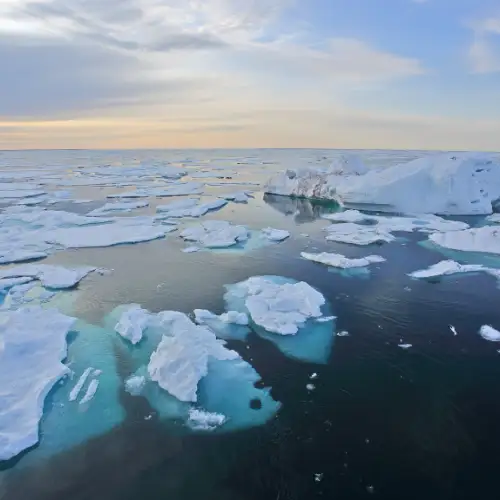
Managing and restricting commercial shipping and fishing lanes that overlap with critical nearshore foraging areas.

Spill Prevention
Enforcing rigorous maritime regulations in the North Atlantic to mitigate the devastating risks of oil and chemical spills.

Ecosystem Tracking
Continuously monitoring both Auk populations and plankton supplies to detect early warning signs of ecosystem collapse.
Birds that have adapted to life within the marine environment, spending significant time out on the open ocean and coming to land primarily to breed.
A diverse order of birds encompassing shorebirds, gulls, and auks, typically found near water and exhibiting a wide variety of feeding and breeding behaviors.
A family of web-footed diving seabirds, such as auks, murres, and puffins, known for their compact bodies and their incredible ability to "fly" underwater to catch prey.
A monotypic genus containing only the Little Auk (Dovekie). They are uniquely small among auks and heavily specialized for feeding on tiny marine life.
An animal that feeds primarily on zooplankton. For the Little Auk, this means hunting nutrient-rich copepods in icy, frigid Arctic waters.
The extreme northern regions characterized by extensive sea ice, glaciers, and bitter cold, providing a pristine, predator-scarce environment for summer breeding.
Birds that lay their eggs deep within rocky crevices or scree slopes, providing vital protection against harsh weather and opportunistic predators like Arctic foxes.
An IUCN conservation category assigned to species that are widespread and abundant, facing no immediate threat of severe decline or global extinction.
1. Naming & Taxonomy
Linnaeus formally described the species in 1758 in the tenth edition of Systema Naturae, placing it with the other auks as Alca alle. He gave the type locality as the Ocean of Arctic Europe and America, since narrowed to Scotland.
The genus came later. Alle was introduced in 1806 by the German naturalist Heinrich Friedrich Link, and the Little Auk is its only member. The species was formerly placed in Plautus, a name suppressed by the International Commission on Zoological Nomenclature in 1973.
Named After a Duck, Twice, by Accident
This is the best etymology in the auk family, and it rests on an error.
Allē is the Sami word for the Long-tailed Duck, Clangula hyemalis. It is onomatopoeic, imitating the call of the drake. Linnaeus was not particularly familiar with the winter plumages of either bird and appears to have confused the two species.
The result is a seabird whose scientific name, repeated for both genus and species, is a Sami imitation of a duck call belonging to an entirely unrelated bird.
Two Names in Two Places
The species is called Little Auk in Europe and Dovekie in North America. Both are current, and neither is wrong.
Older names include rotch and rotche, bullbird, and sea dove, though the last of those sometimes refers to the Black Guillemot instead. On the south coast of Newfoundland it is known colloquially as the bully bird or the ice bird.
You may see "dovekie" explained as dove meaning to dive and kie meaning little. That is folk etymology. The word is a double diminutive built from dove, -ock and -ie, and the bird is not related to doves either.
2. Identification & Appearance
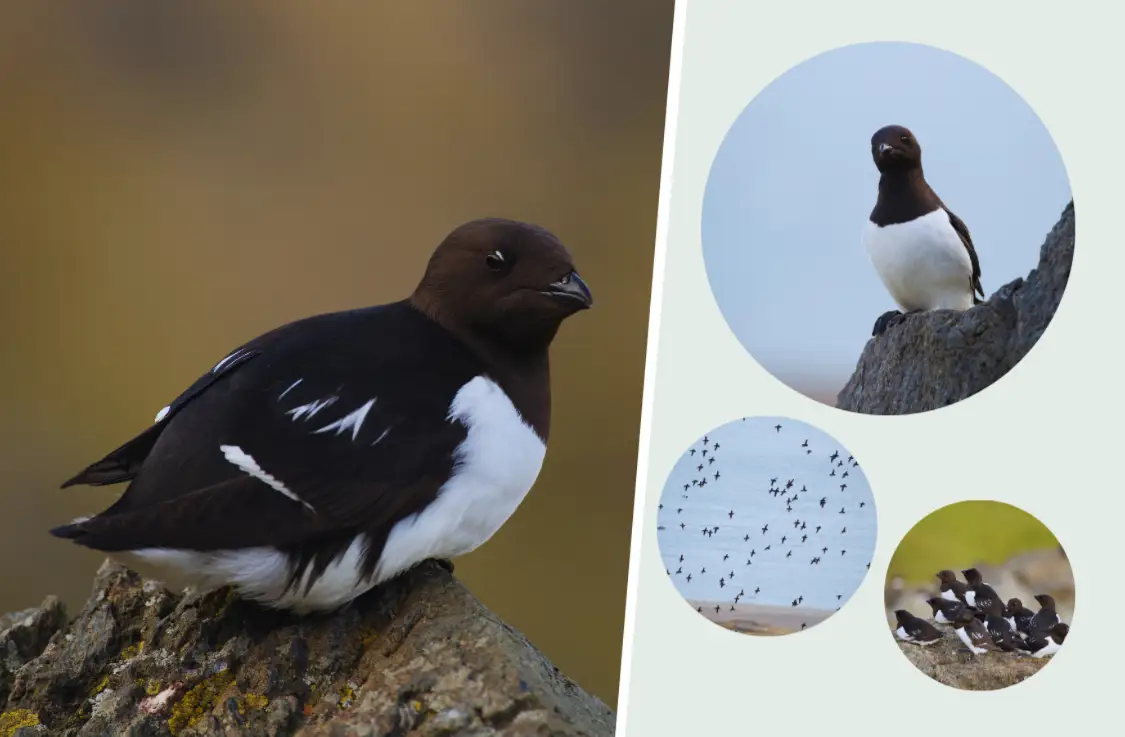
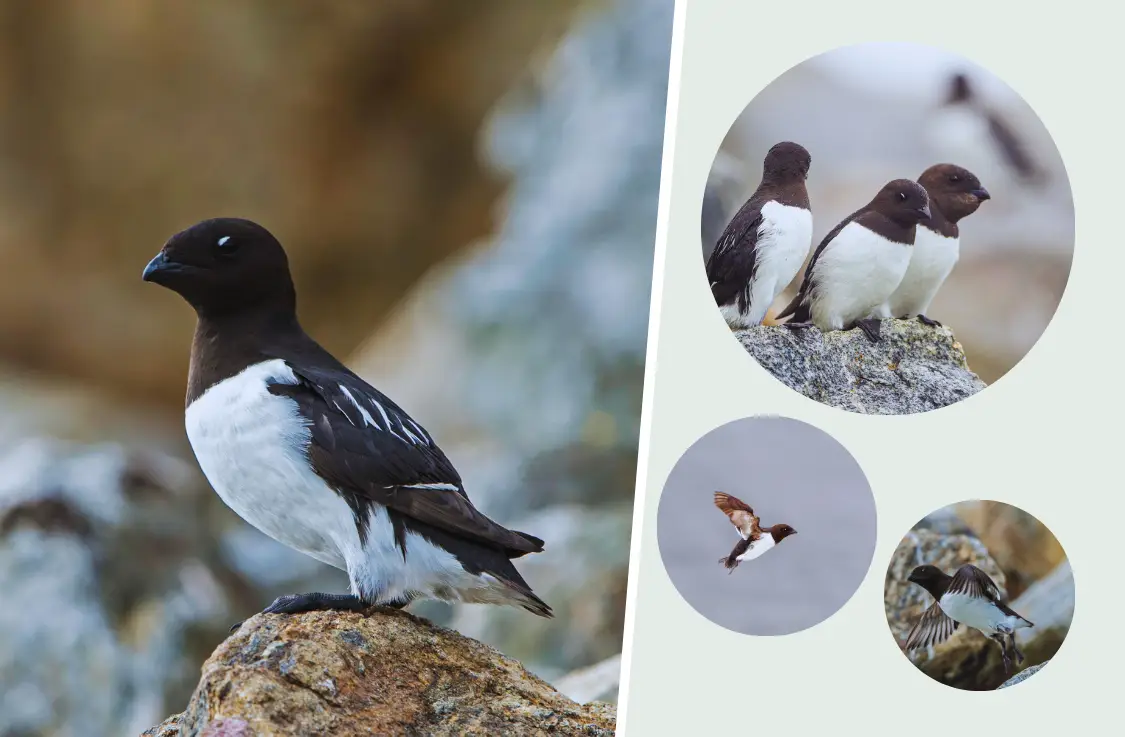
Size is the identification. This is the only Atlantic auk of its size, roughly half the size of an Atlantic Puffin. Nothing else in the North Atlantic looks like a miniature auk.
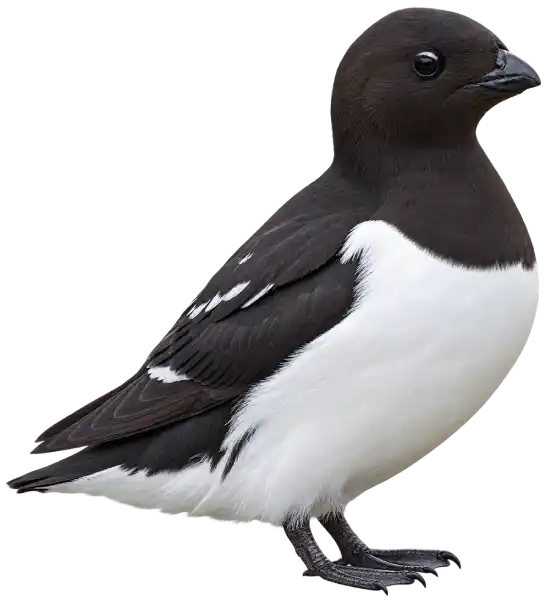
In breeding plumage the head, neck, back and wings are black, with a white trailing edge to the secondaries and white fringes on the scapulars. The underparts are pure white. The bill is short and stubby, quite unlike the deep blade of a Razorbill or the slab of a puffin, and the tail is small, black and rounded.
In winter the lower face and fore neck turn white, which changes the look of the bird considerably and is the plumage most people in Britain and eastern North America will encounter.
The flight is fast and direct, with rapid whirring wingbeats, a consequence of very short wings.
Subspecies
Two are accepted, differing mainly in size, with polaris marginally the larger.
- A. a. alle (Linnaeus, 1758) — Baffin Island, northwest and east Greenland, north Iceland, Jan Mayen, Svalbard and Novaya Zemlya.
- A. a. polaris Stenhouse, 1930 — Franz Josef Land, and perhaps from Severnaya Zemlya east to St. Lawrence Island in the Bering Sea.
A note on Iceland. Sources conflict here, including within Wikipedia itself. The subspecies listing includes north Iceland in the range of A. a. alle, while the same article states that the species formerly bred on Grímsey just north of Iceland and is now locally extinct there. Older secondary sites, copying an earlier version of the article, list Iceland without qualification. Treat any Icelandic breeding as marginal or historical rather than established.
3. Range & Habitat
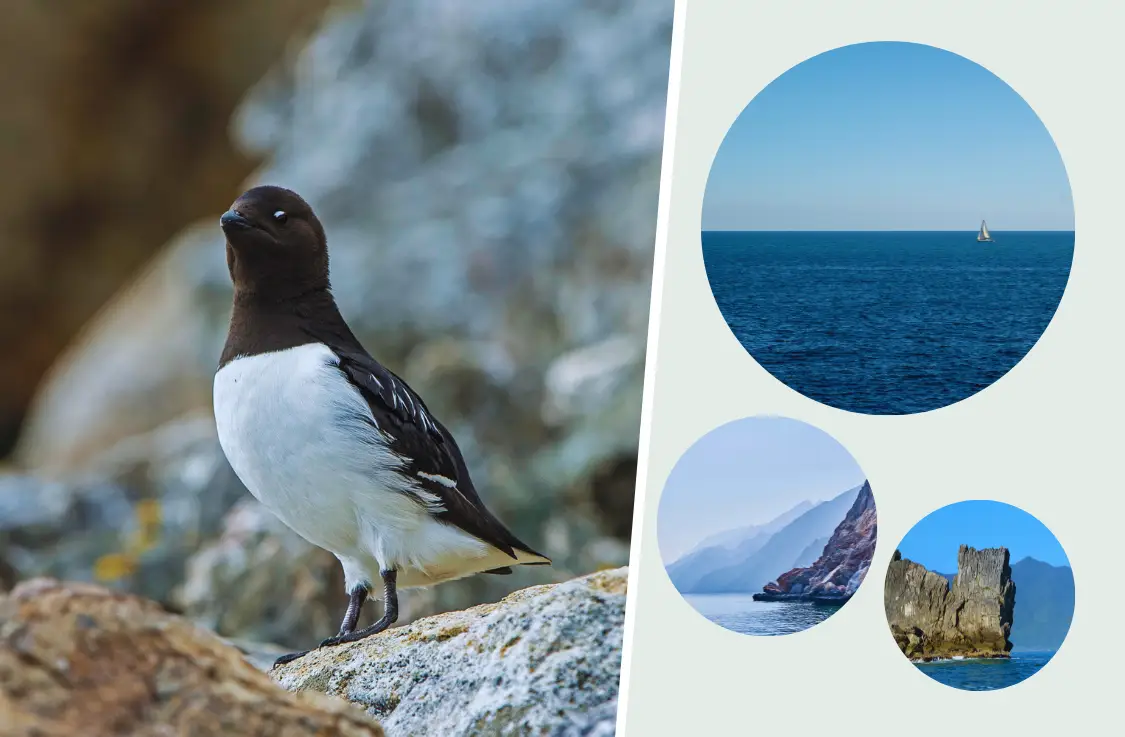
| Breeding range | Islands of the high Arctic, North Atlantic |
| Core areas | Greenland, Svalbard, Novaya Zemlya, Franz Josef Land |
| Bering Sea outposts | Little Diomede Island, with birds thought to breed on King, St. Lawrence, St. Matthew and the Pribilofs |
| Winter range | Widely across the Arctic and North Atlantic, largest numbers near the pack ice edge |
| Southern winter limit | Northern Britain in the east, Nova Scotia in the west |
| Breeding habitat | Scree slopes on marine cliffsides |
Colonies are enormous and sit on scree, the loose rock slopes below Arctic cliffs, where the gaps between boulders provide nest cavities. Outside the breeding season the birds disperse over polar seas and broken pack ice.
All Little Auks migrate south for winter into the northern North Atlantic. The species is common in the Norwegian Sea.
Wrecks
This is the phenomenon most British and Canadian readers will know the bird for.
Late autumn storms can carry Little Auks well south of their normal wintering range, or push them into the North Sea, producing what ornithologists call a wreck: large numbers driven off course, appearing at sea and occasionally inland.
The British record came at the Farne Islands in Northumberland after strong northerly gales in November 2007. On the 9th, 18,381 birds were counted flying north. On the 11th, 28,803. They are also sometimes blown ashore in Newfoundland, where their size and upright stance lead to them being described as pint-sized penguins.
4. Diet & Foraging
The numbers here are extraordinary for a bird this small.
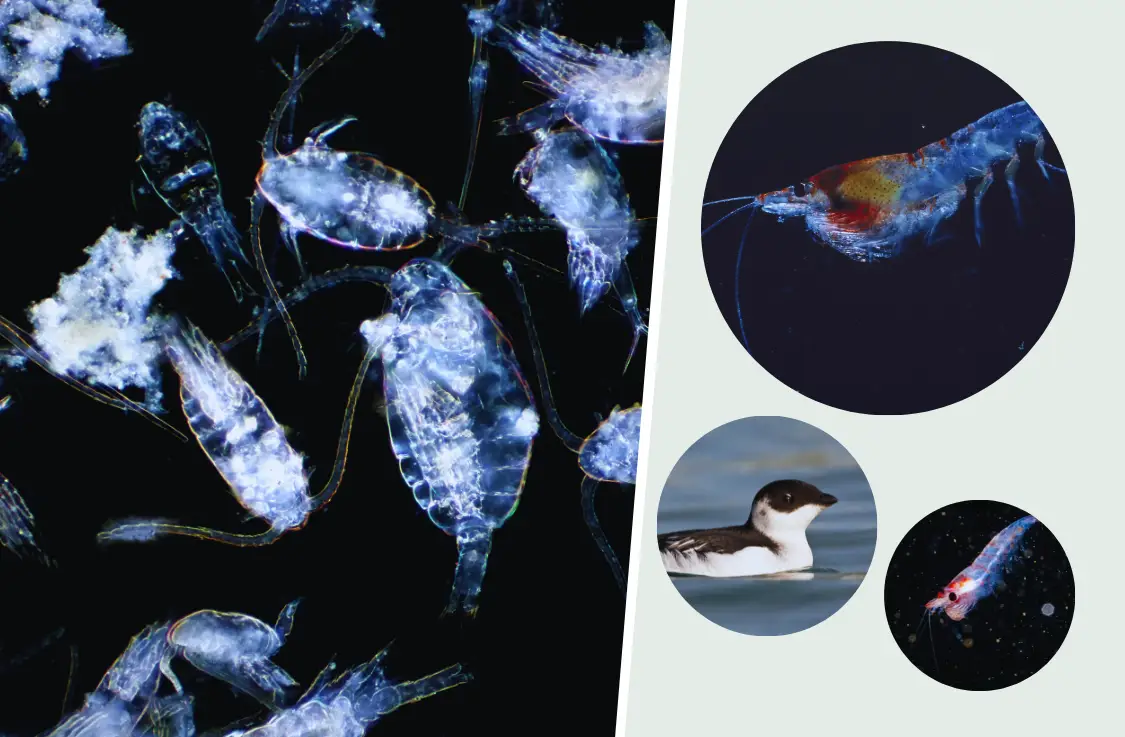
Sixty thousand copepods a day. Little Auks eat mainly crustaceans, especially copepods, and a 150 g bird requires roughly 60,000 individual copepods daily, equivalent to about 30 g of dry food. They also take small invertebrates such as molluscs, and small fish.
It feeds like a whale. For a long time the assumption was filter-feeding, as in baleen whales and some other planktivores. Work published in 2018 showed otherwise: the Little Auk uses visually-guided suction feeding, targeting individual prey items and drawing them in. The paper reporting it was titled "Almost like a whale", and it was the first evidence of suction feeding in any seabird.
During the breeding season they feed close to shore. In winter they work ice edges and coastlines.
5. Voice
Noisy at the colony, silent at sea.
Breeding birds produce a variety of twitters and cackling calls. Away from the colony, and through the winter, the species is essentially quiet.
6. Breeding & Nesting
Alle alle · Quick Facts
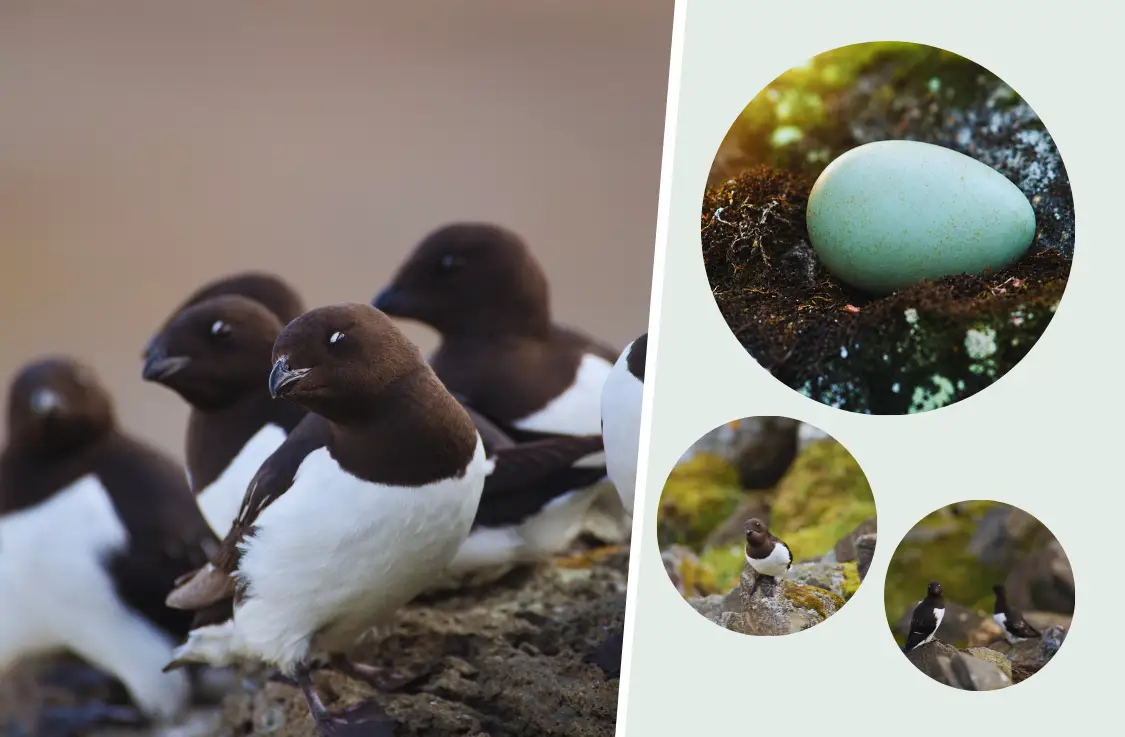
High Site FidelityLittle Auks are monogamous with high nest-site fidelity, so the same pair often returns to the same cavity year after year.
Both parents incubate, and they do so in roughly equal shares, which is not universal among seabirds. Chicks begin hatching at around 28–31 days.
A hatchling weighs about 21 g and cannot regulate its own temperature. It is brooded for roughly five days until it can, after which the parents attend only to feed it.
Fledging happens synchronously across the colony, usually at night. Leaving en masse and in darkness is the same anti-predator strategy the puffins use, and for the same reason.
7. Predators
At the colony, the main threats are the Glaucous Gull and the Arctic Fox, with other gulls and raptors also taking birds. Polar Bears have been reported feeding on Little Auk eggs, which is an unusual enough behaviour to be worth recording.
8. People & Culture
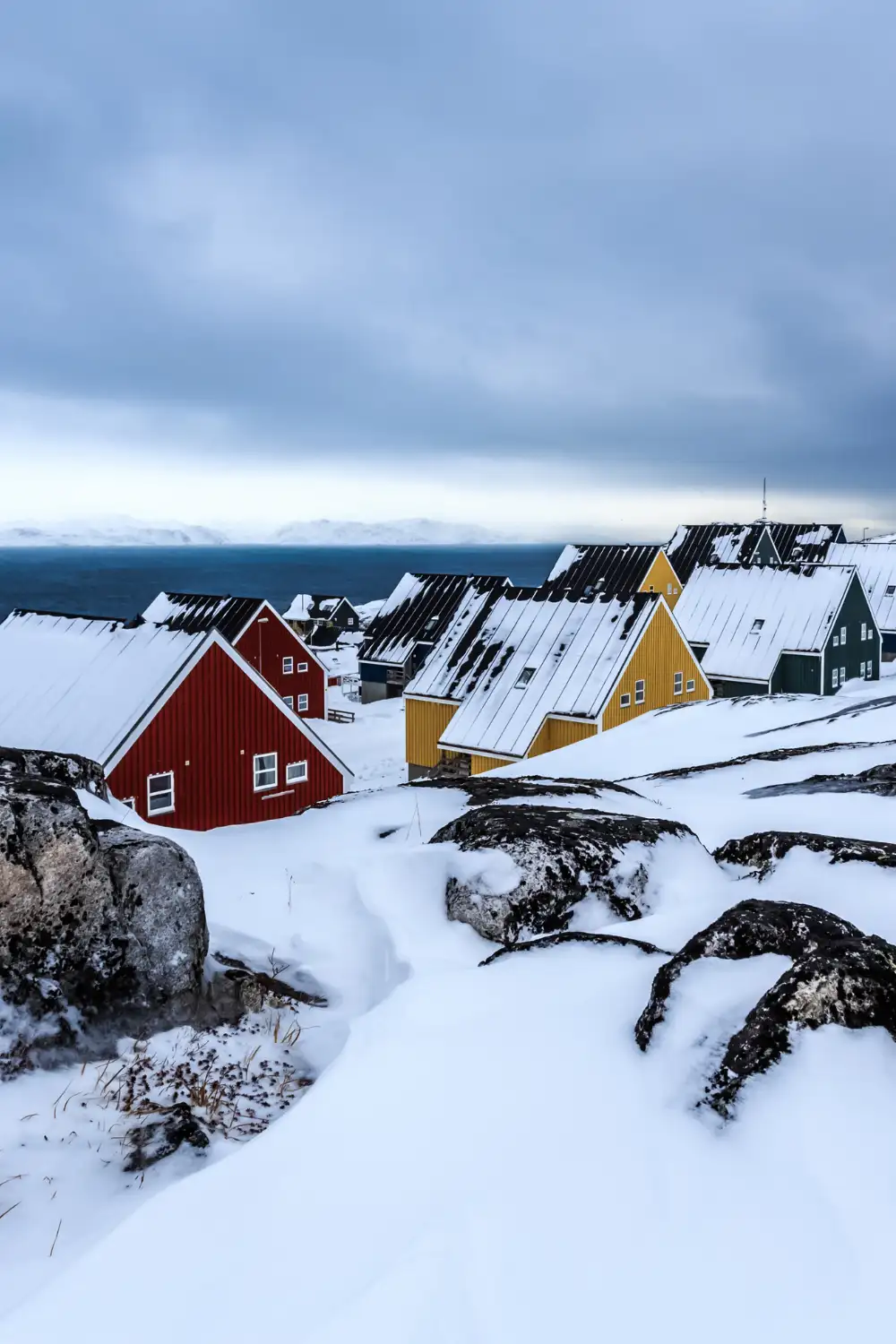
The Little Auk has been an important food source for Inuit communities in Greenland, Baffin Island and Labrador, and in parts of its southern range in eastern Canada. Its habit of feeding near shore in both summer and winter is what made it reliably catchable.
Kiviaq
The best-known preparation, and one of the more remarkable food traditions anywhere.
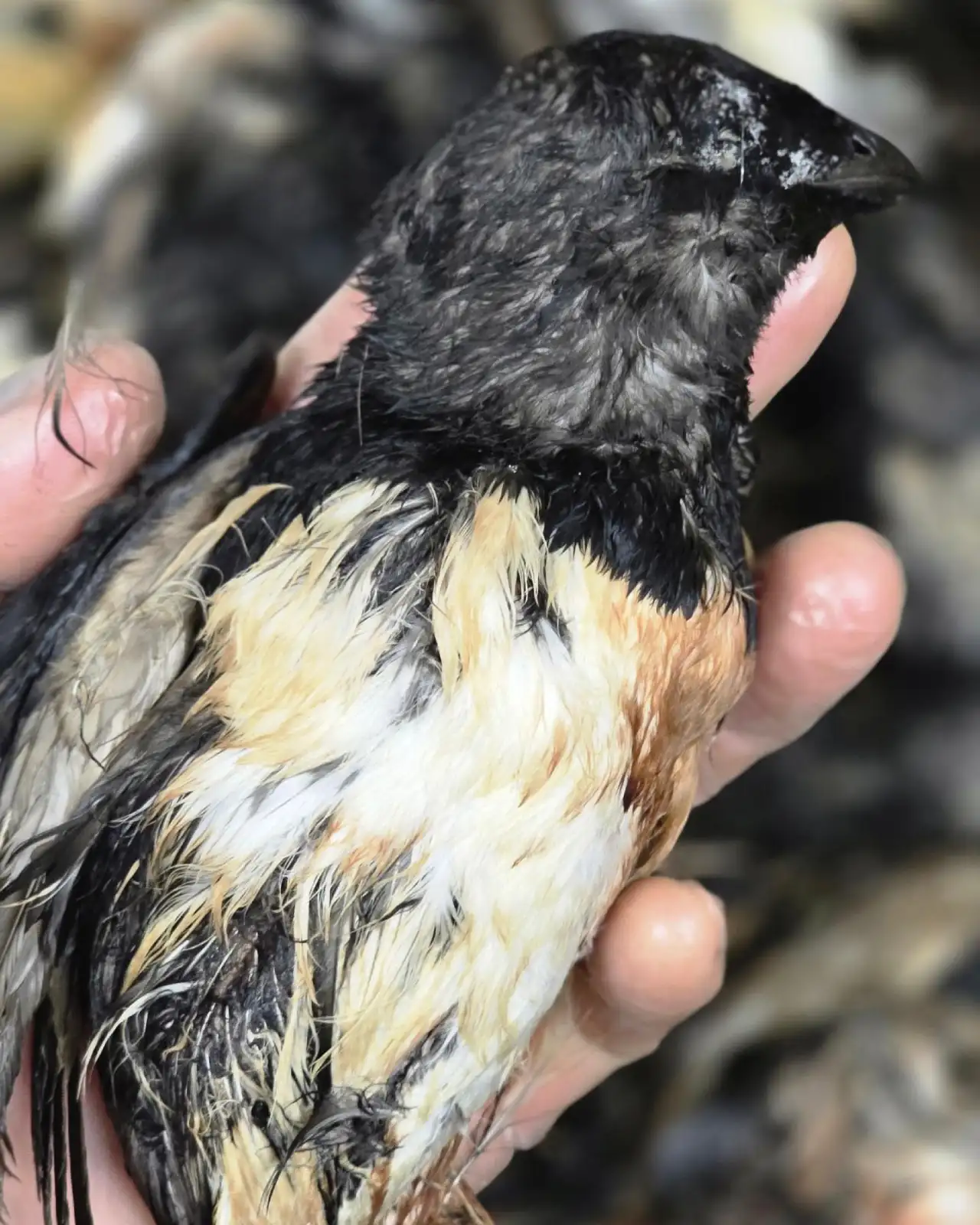
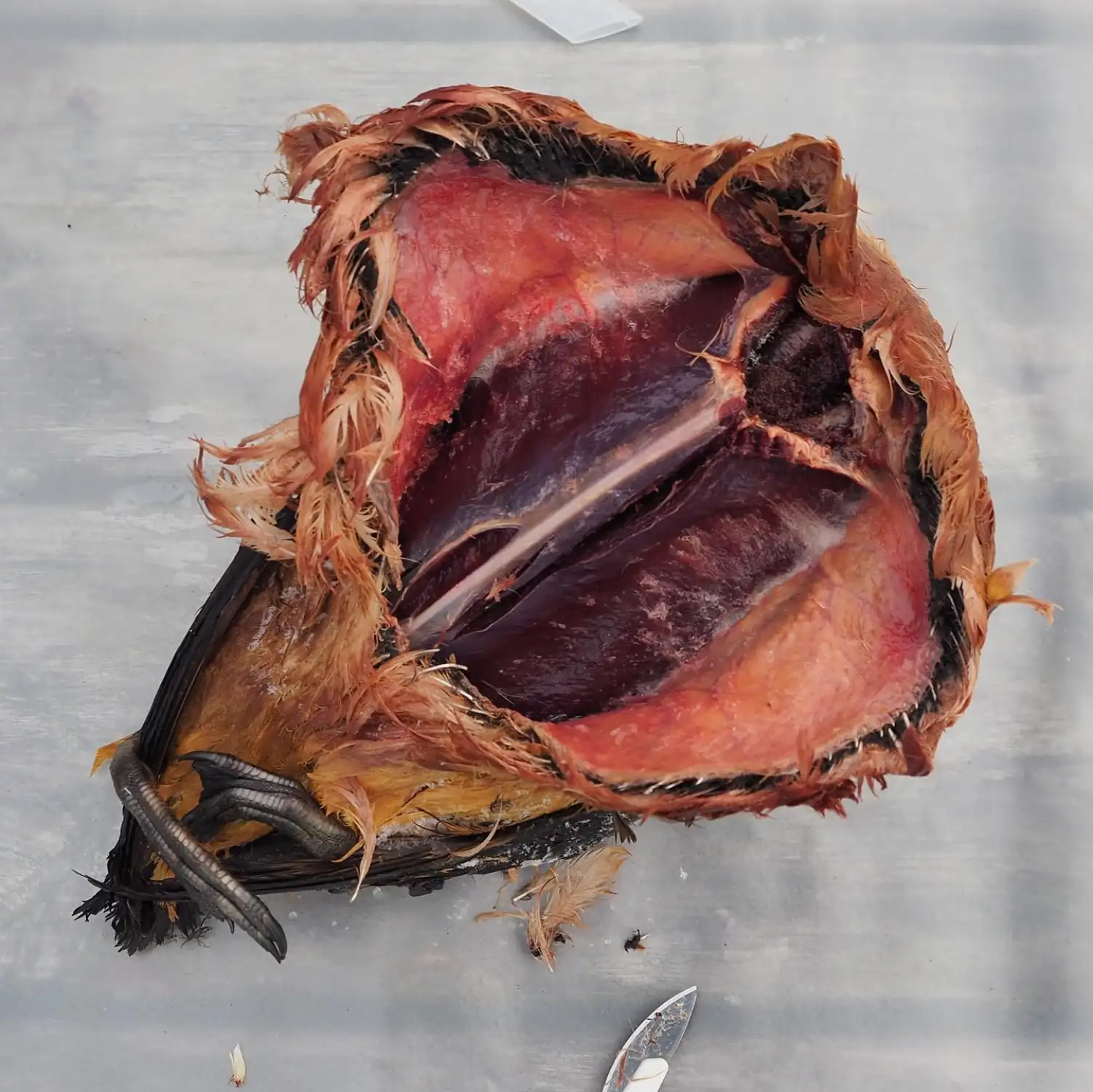
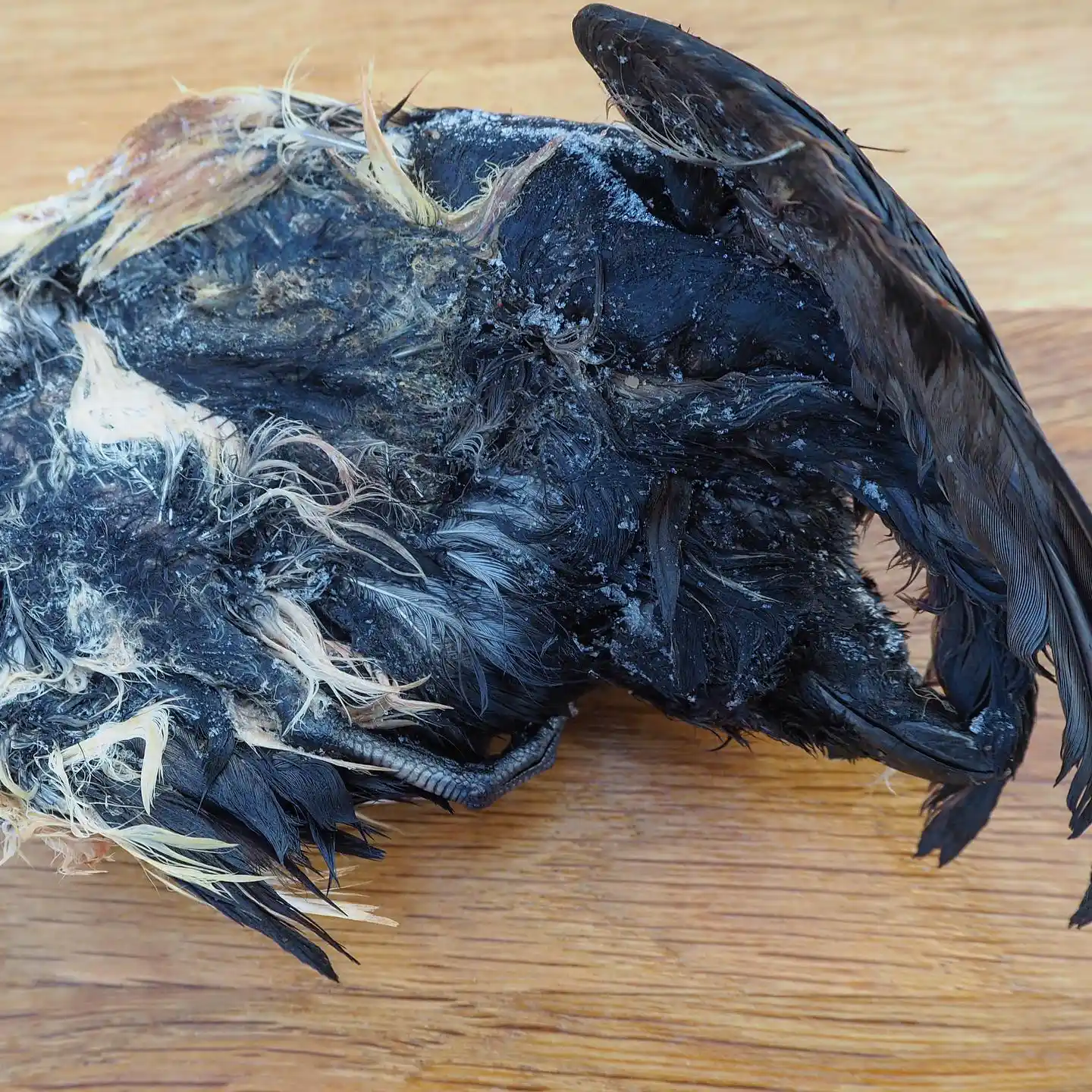
A sealskin is stuffed with 300 to 500 Little Auks, sealed airtight with seal fat, and left under a pile of rocks to ferment for anywhere from three to eighteen months. The birds are caught in spring and eaten through the winter, turning a seasonal glut into a year-round food supply.
It is not without risk. The death of the Danish-Greenlandic explorer Knud Rasmussen is attributed to food poisoning from kiviaq.
Newfoundland
On the south coast the birds were shot with BB pellets on ice pans, stuffed with savoury dressing and oven-baked. A meal ran to five or six birds per person. It was a food of last resort against winter starvation in the outport communities. A comparable subsistence hunt for murres continues in Newfoundland and Labrador today.
Similar Species
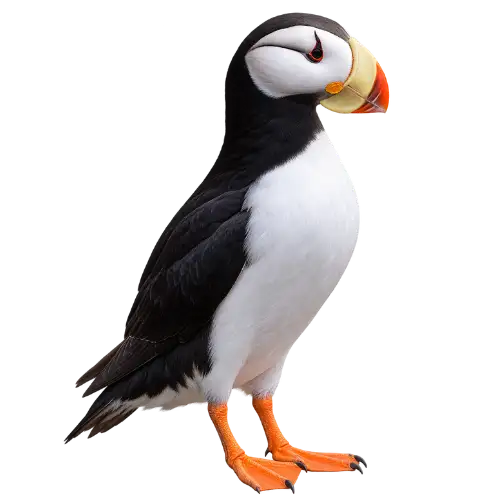
Iconic seabird famous for its vibrant, multi-colored beak.
Read More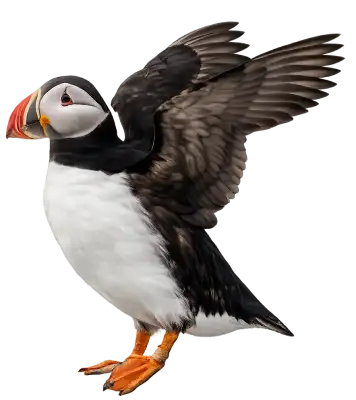
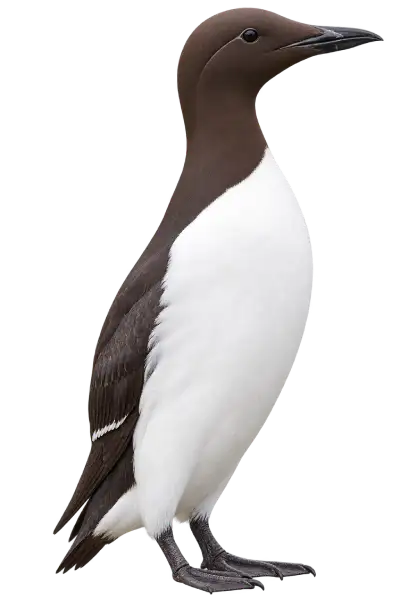
Penguin-like diver with a slender, pointed bill.

Stocky cliff-nester recognized by a distinct white bill stripe.
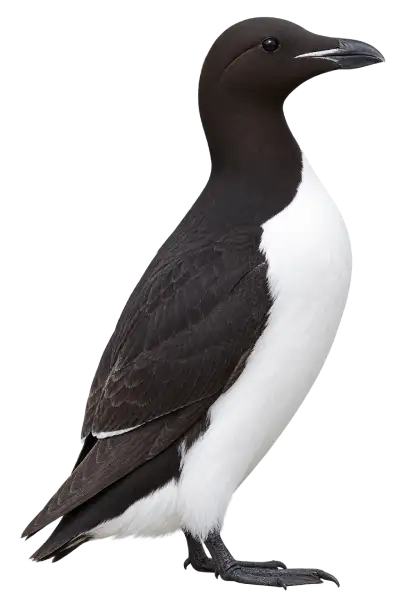
A robust, black-and-white seabird recognized by its thick, blunt bill.
Read More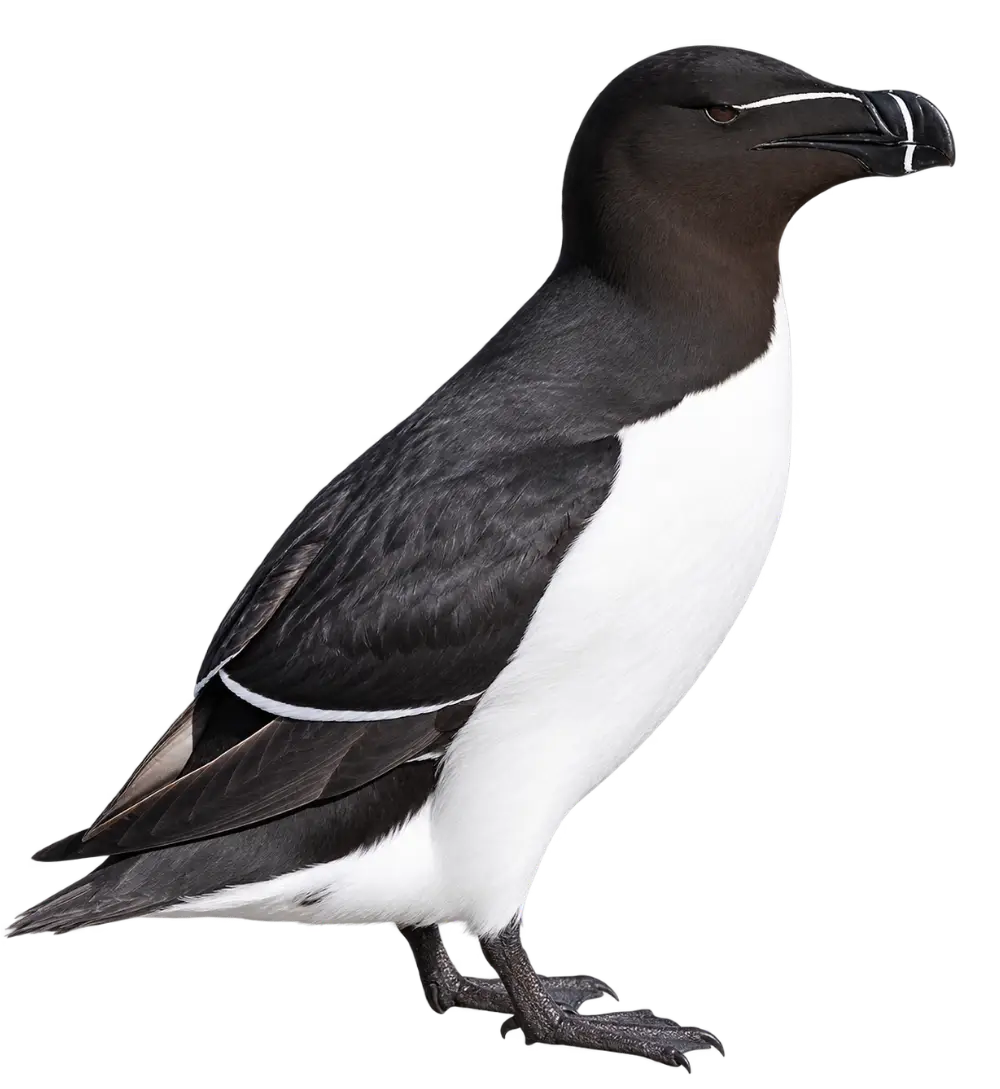
Pelagic bird sporting sweeping golden head plumes.
Read More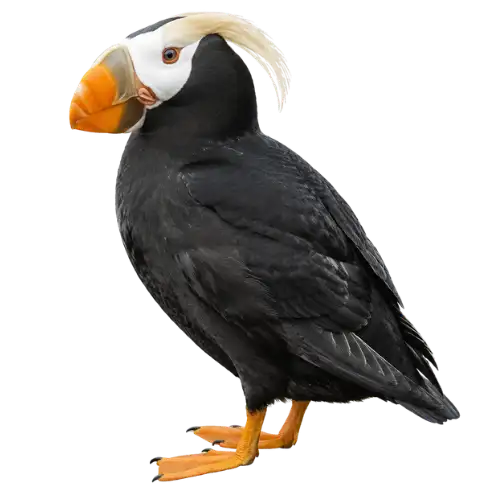
Nocturnal forager with a prominent pale bill horn.
Read More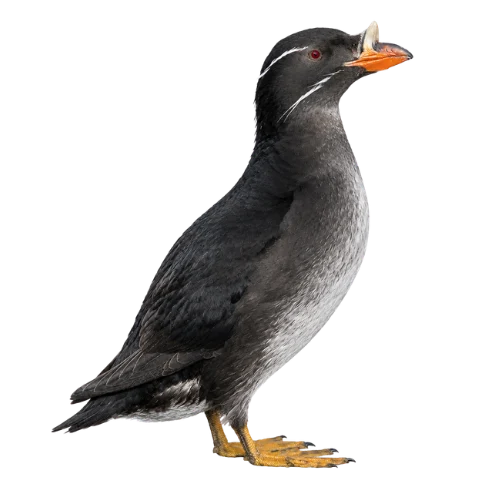
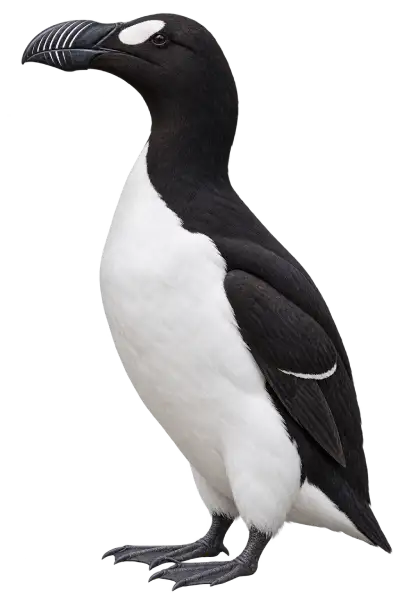
Massive, flightless seabird driven to extinction in the 1800s.
Pacific seabird known for distinct white eye-rings.
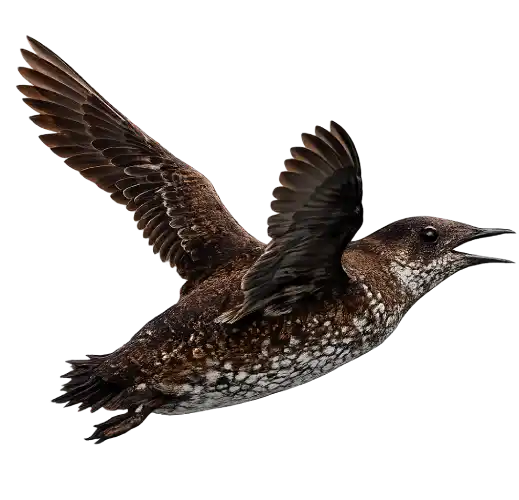
Small seabird that remarkably nests in old-growth forests.
Striking black seabird with large white wing patches.
Read More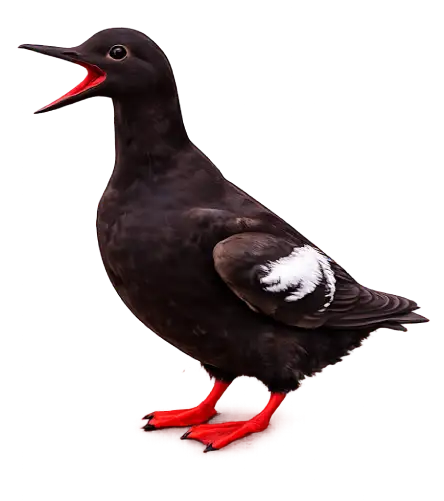
Distinctive seabird named for the fleshy horn above its eyes.
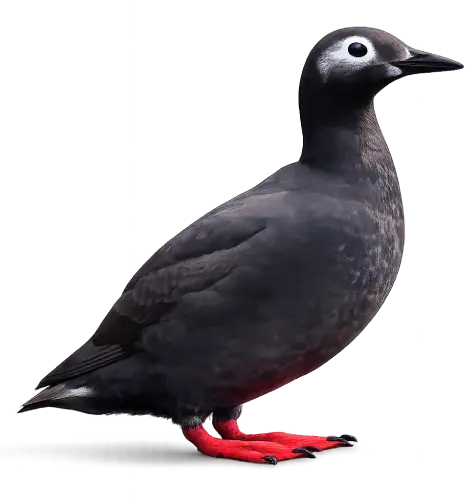
Striking dark seabird known for its bold white wing patch and bright red legs.
Read More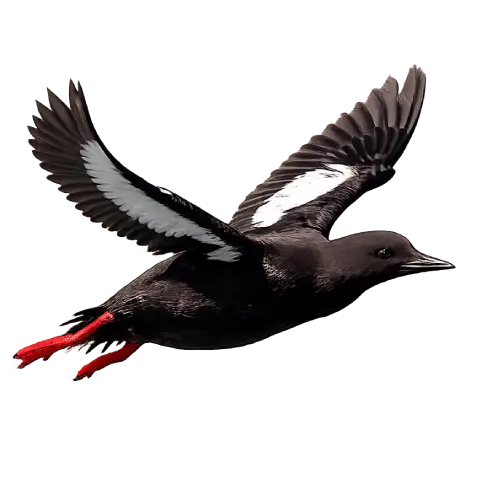
Large, graceful seabird known for its dark eye stripe and impressive wingspan.
Read More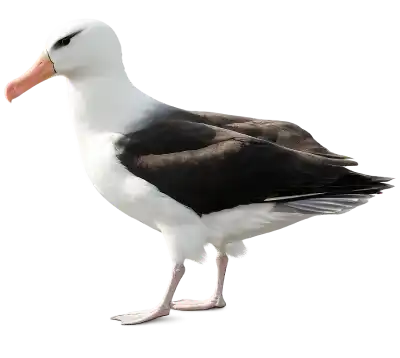
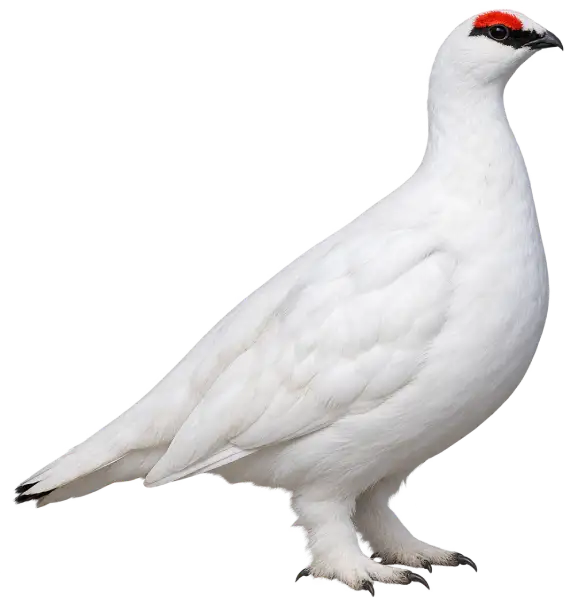
Hardy Arctic gamebird that changes its plumage to match the seasonal snow.
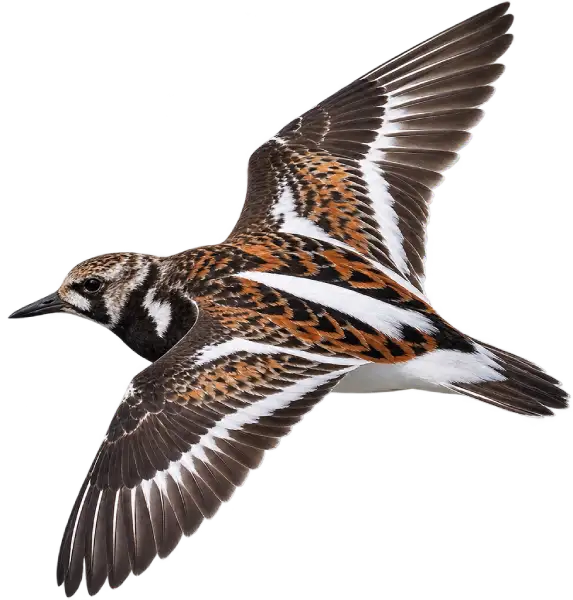
Stocky shorebird recognized by its habit of flipping stones to find hidden prey.
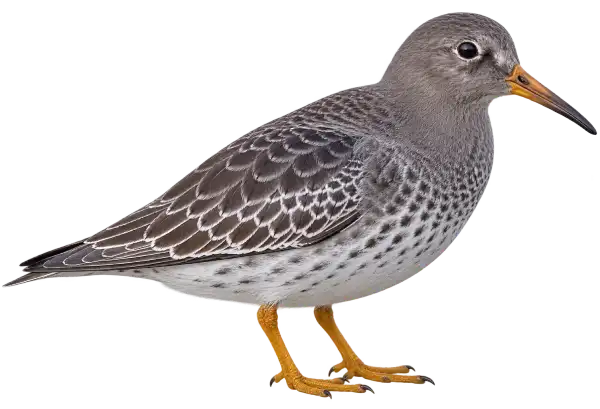
Resilient coastal wader that overwinters on rocky, wave-battered northern shores.
Common Questions About the Little Auk
Sources
- Wikipedia, "Little auk" (primary source for this entry)
- Montevecchi, W. A. & Stenhouse, I. J. (2002), "Dovekie (Alle alle)", in The Birds of North America No. 701
- del Hoyo, Elliott & Sargatal, eds. (1996), Handbook of the Birds of the World, Vol. 3
- Enstipp, M. R., Descamps, S., Fort, J. & Grémillet, D. (2018), "Almost like a whale: first evidence of suction feeding in a seabird", Journal of Experimental Biology 221(13)
- Harding, A. M. A. et al. (2009), "Estimating prey capture rates of a planktivorous seabird, the little auk", Polar Biology 32(5)
- Grémillet, D. et al. (2012), "Little auks buffer the impact of current Arctic climate change", Marine Ecology Progress Series 454
- Jobling, J. A. (2010), The Helm Dictionary of Scientific Bird Names
- BirdLife International (2018), IUCN Red List: Alle alle
- Cornell Lab of Ornithology, All About Birds, Dovekie
Last reviewed: July 2026.