Pigeon Guillemot (Cepphus columba)
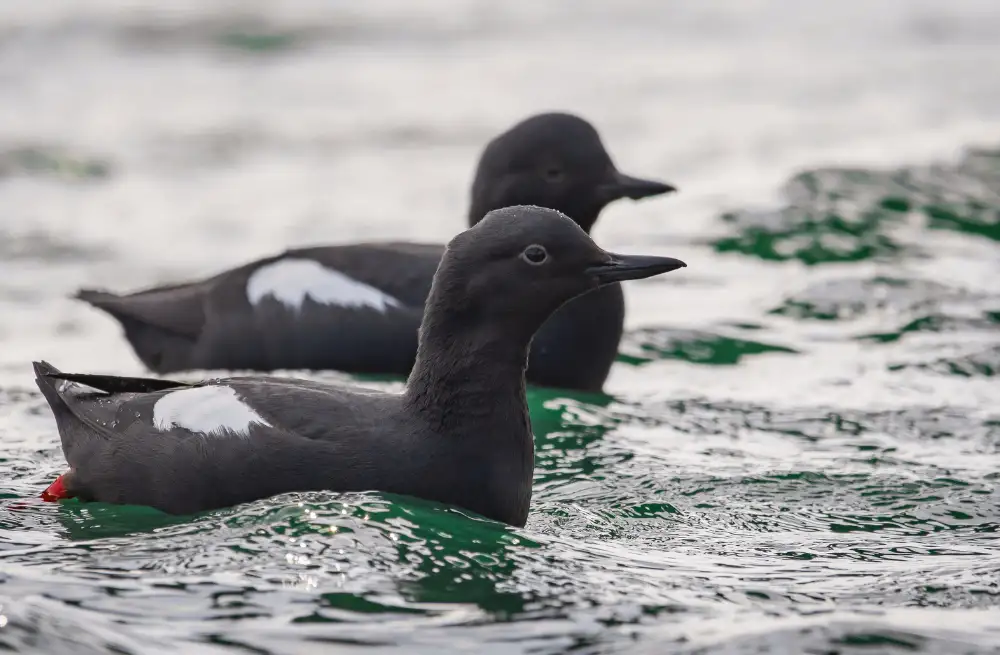
The Pigeon Guillemot is a Pacific seabird known for its bold white wing patches and bright red feet. It “flies” underwater in pursuit of fish, nests in rocky cavities, and is one of the most adaptable members of the auk family.
Species Profile
Scientific Classification
Similar Species
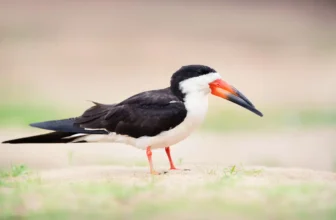
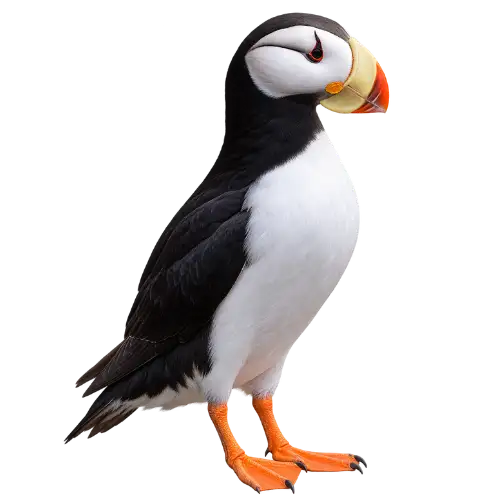
Iconic seabird famous for its vibrant, multi-colored beak.
Read More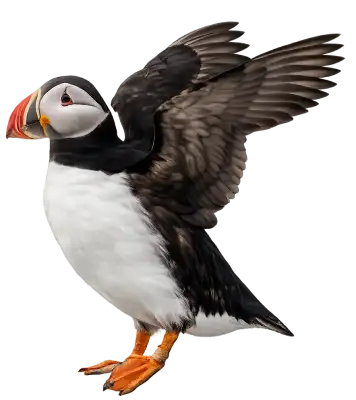

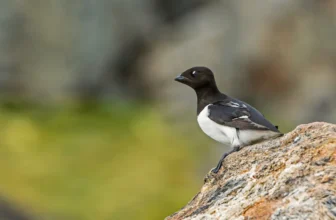
Penguin-like diver with a slender, pointed bill.
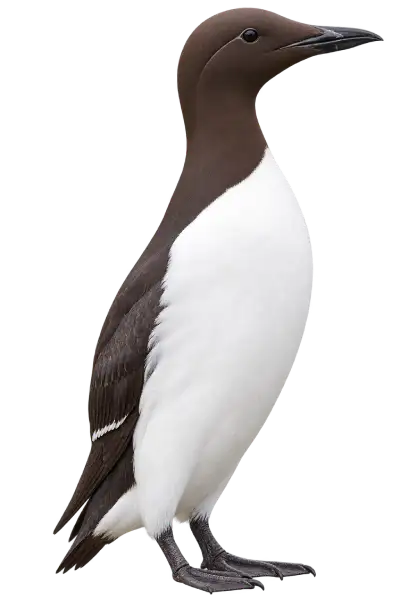

Stocky cliff-nester recognized by a distinct white bill stripe.
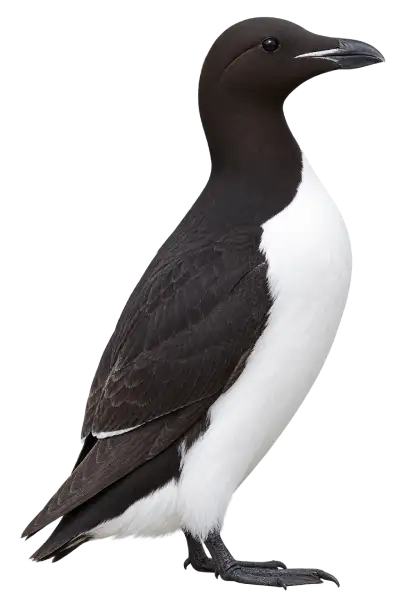

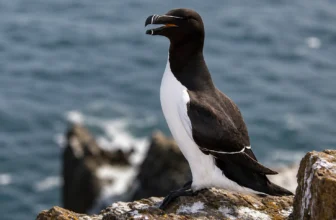
A robust, black-and-white seabird recognized by its thick, blunt bill.
Read More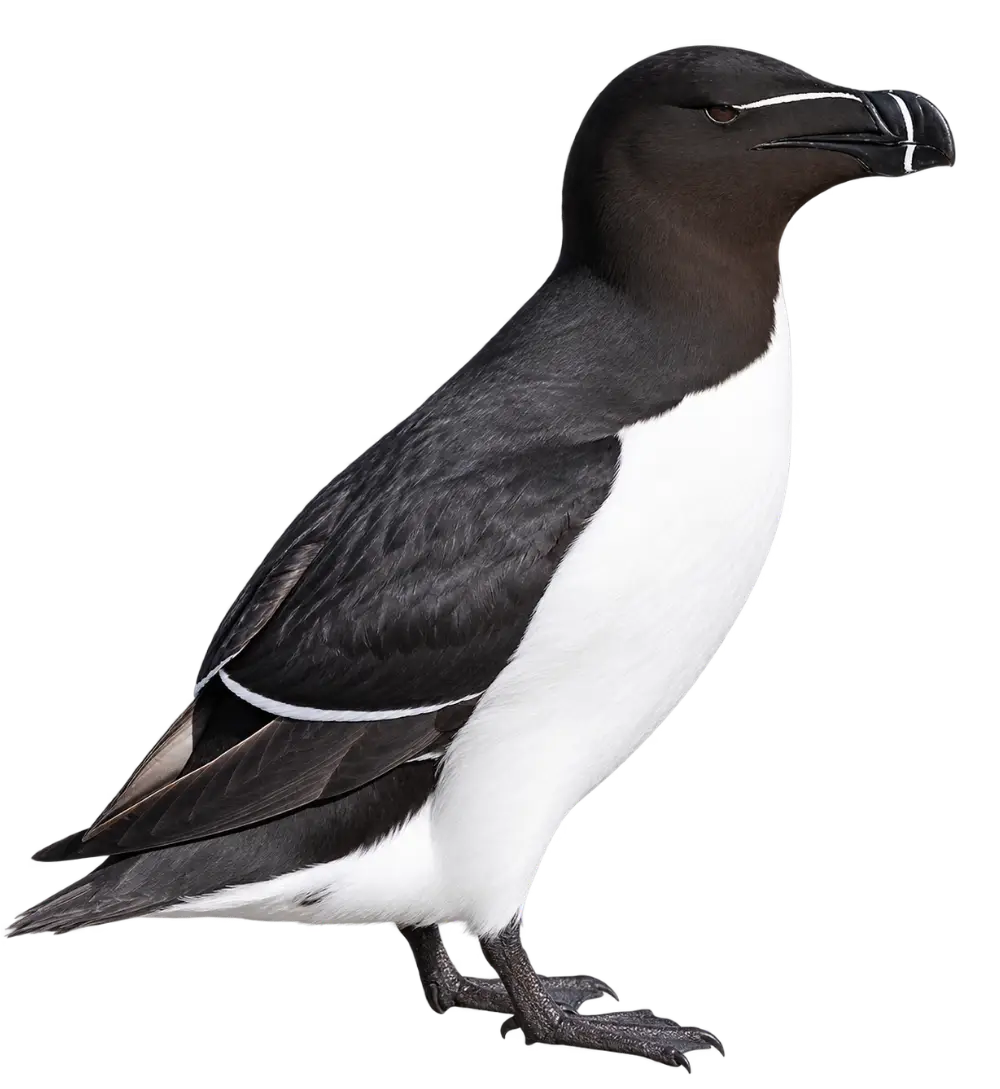
Pelagic bird sporting sweeping golden head plumes.
Read More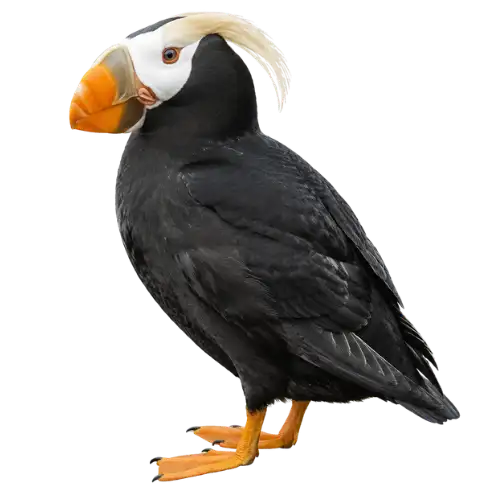
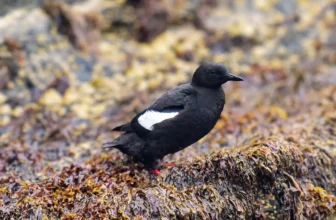
A striking coastal seabird with solid black plumage and prominent white wing patches.
Read More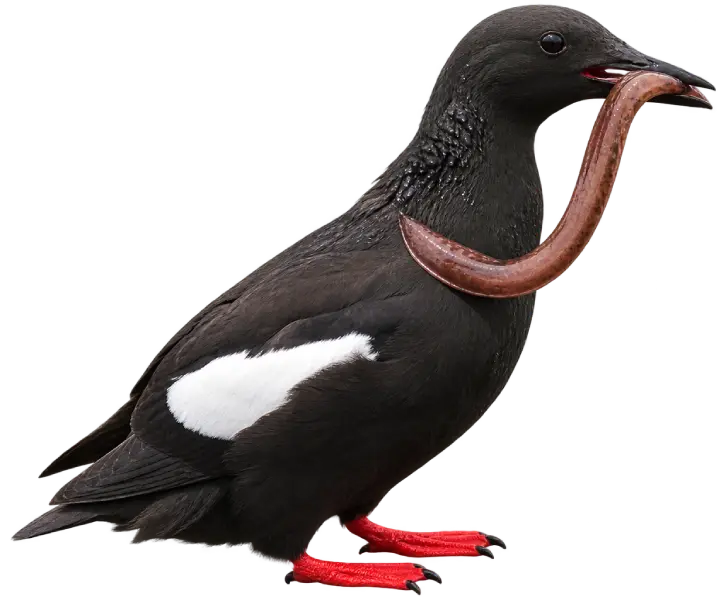
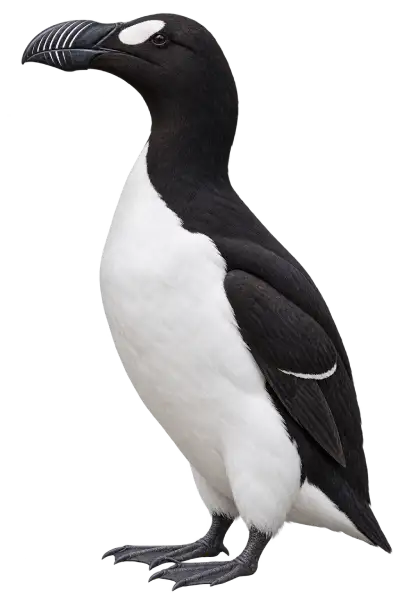
Massive, flightless seabird driven to extinction in the 1800s.
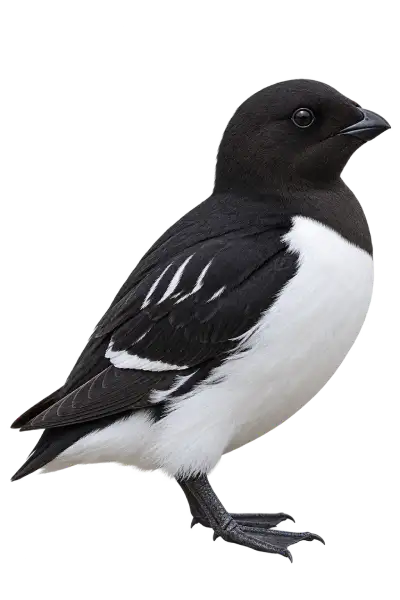
Tiny, plump Arctic seabird that gathers in massive flocks.

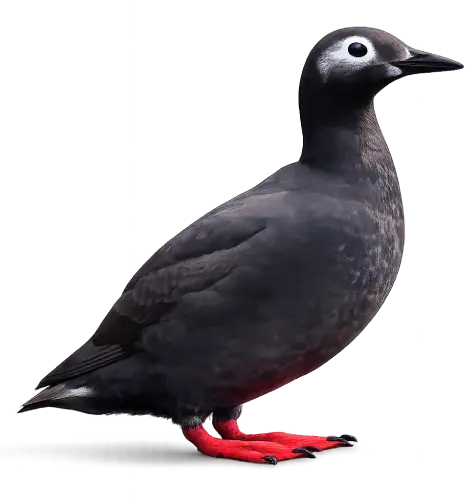
Pacific seabird known for distinct white eye-rings.

Small seabird that remarkably nests in old-growth forests.
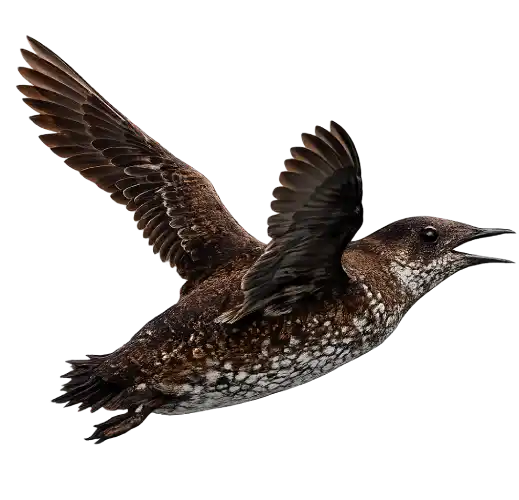
A small, chunky Pacific seabird with a distinctive pale spot at the base of its bill.
Read More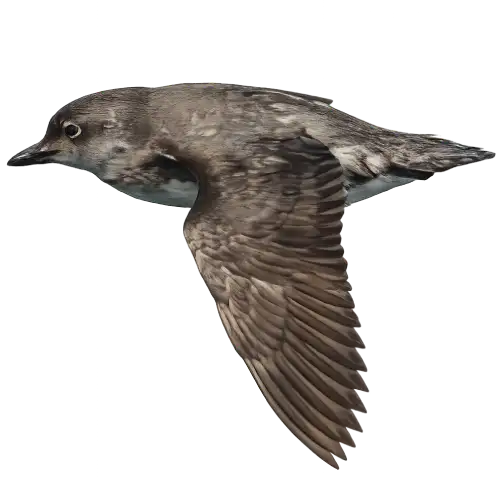
Distinctive seabird named for the fleshy horn above its eyes.
1. Naming & Taxonomy
Peter Simon Pallas described the species in 1811, in the second volume of his Zoographia Rosso-Asiatica. The type locality is Kamchatka and the Bering Straits.
It is one of three species in Cepphus, alongside the Black Guillemot of the Atlantic and the Spectacled Guillemot of the western Pacific.
The Closest Relative Is Not the Obvious One
This is worth getting right, because the resemblance misleads.
The Pigeon Guillemot looks almost exactly like the Black Guillemot, and the two are treated as a superspecies. But that classification rests on physical description. Genetically, the Pigeon Guillemot and the Spectacled Guillemot are sister species, and the Black Guillemot is basal within the genus. The lookalike is the more distant relative.
Where Cepphus sits in the wider family is also unsettled. A 1996 study using mitochondrial DNA placed the genus closest to the Synthliboramphus murrelets. An alternative arrangement proposed in 2001, using genetic and morphological evidence together, made it sister to the murres, Razorbill, Little Auk and Great Auk.
Five Subspecies, Five Etymologies
The names are unusually varied, and each one records something different.
- C. c. columba Pallas, 1811 — northeast Siberia through the Bering Sea
- C. c. snowi (Stejneger, 1897) — northern and central Kuril Islands. Named for Captain Henry James Snow, a British seaman and hunter.
- C. c. kaiurka (Portenko, 1937) — Commander Islands to the west-central Aleutians. From the Russian kachurka, petrel.
- C. c. adiantus (Storer, 1950) — central Aleutians to Washington. From the Greek adiantos, "unwetted".
- C. c. eureka (Storer, 1950) — Oregon and California. From the state motto of California, from the Greek heurēka, "I have found it".
The species name has a double root. Columba derives both from the Icelandic klumba, meaning auk, and the Latin columba, meaning pigeon. Pallas noted in his description that the common name for the related Black Guillemot was Greenland dove, which is presumably what pushed him toward the pigeon reading.
Cepphus itself comes from the Greek kepphos, an unidentified pale waterbird mentioned by Aristotle and other classical writers, later variously read as a gull, an auk or a gannet.
Subspecies Variation
Bill and wing measurements are larger in the southern subspecies and smaller further north. The amount of white on the outer primaries and underwing coverts increases in northern subspecies, with one exception: in C. c. snowi the white is reduced or absent altogether.
2. Identification & Appearance
Cepphus columba · Identification & Appearance
Least ConcernSummer
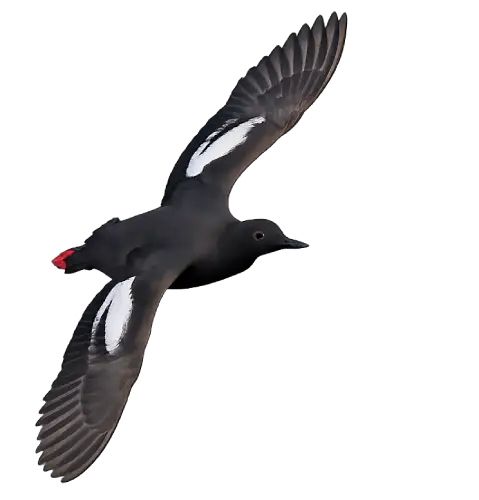
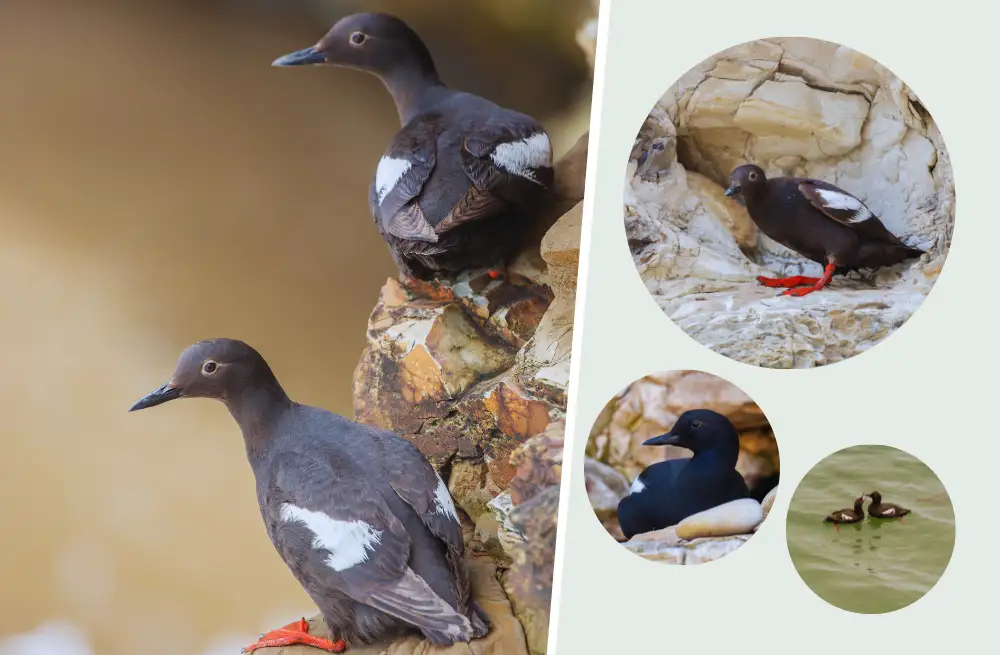
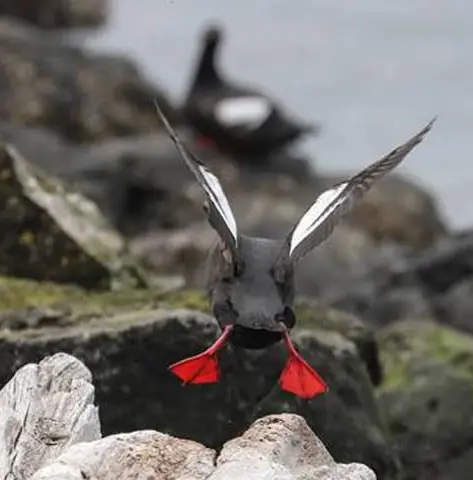
Mostly dark brown with a black iridescent sheen, and a white wing patch broken by a brown-black wedge. That wedge is the single most useful mark on the bird.
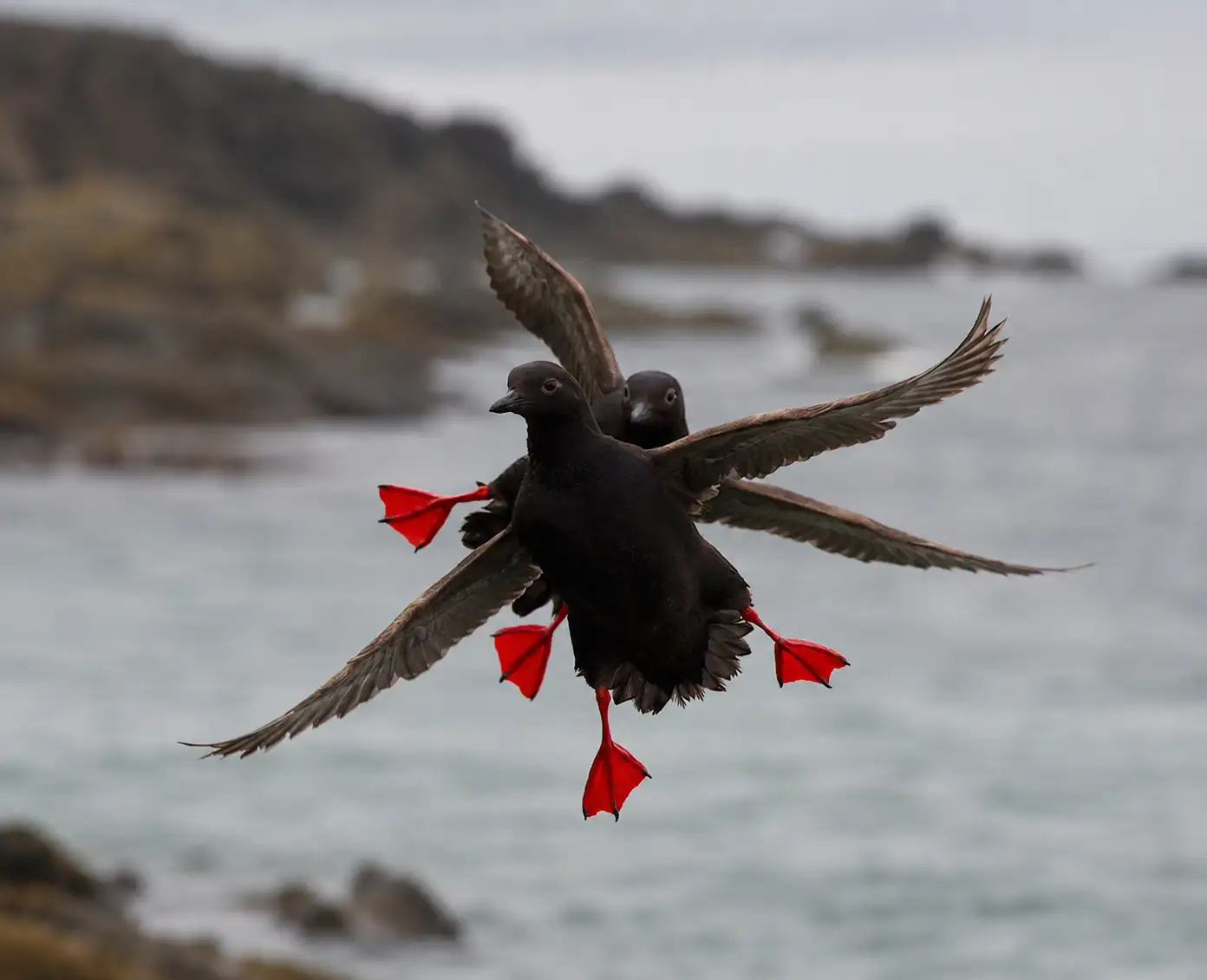
The legs and feet are red with black claws, the bill long and black, and the inside of the mouth red. The iris is brown, ringed by a thin unbroken white eye-ring.
Winter
A very different bird. The upperparts turn iridescent black, often with black feather fringes producing a scalloped look, while the underparts and rump go white. The forehead, crown, lores, eye line and ear coverts are black with white tips, though where those tips are narrow the head can still look black.
In every plumage the underwings stay plain and dark.
The Moult Grounds It
Adults moult into winter plumage between August and October. The process takes about a month and leaves the bird unable to fly for roughly four weeks. They moult back into breeding plumage between January and March.
Juveniles
Similar to a winter adult but with brown-tipped underpart feathers giving a barred appearance, more brown above, a smaller wing patch and grey-brown legs. The brown underpart feathers are lost at the first moult, two to three months after fledging. First-summer birds lack the glossy sheen of adults.
Telling It From a Black Guillemot
Larger, with a dusky-grey underwing, and above all the dark brown wedge cutting into the white wing patch. The Black Guillemot's patch is unbroken. The ranges barely overlap, so location settles most cases, but the wedge is definitive.
3. Built for Diving, Not Flying
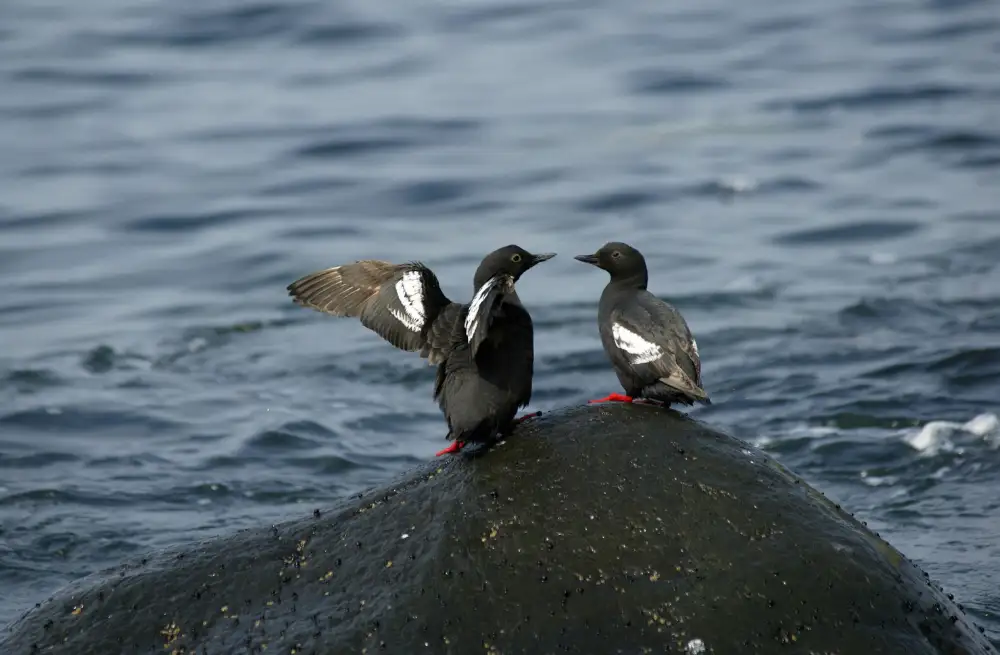
The wings are shorter and rounder than other auks', which is a straightforward trade: better underwater, worse in the air.
Take-off is hard. In calm conditions the bird struggles to get airborne without a runway across the water.
But it is fast once up. Recorded at 77 km/h (48 mph), roughly 20 km/h faster than the Black Guillemot.
It swims with everything. On the surface it uses its feet. Diving, propulsion comes from the wings, beating at about 2.1 times per second, and unusually for an auk, from the feet as well. Birds have been recorded travelling 75 m horizontally on a single dive.
Ashore it walks well, holds itself upright, and often rests down on its tarsi.
4. Range & Habitat
Cepphus columba · Range & Habitat
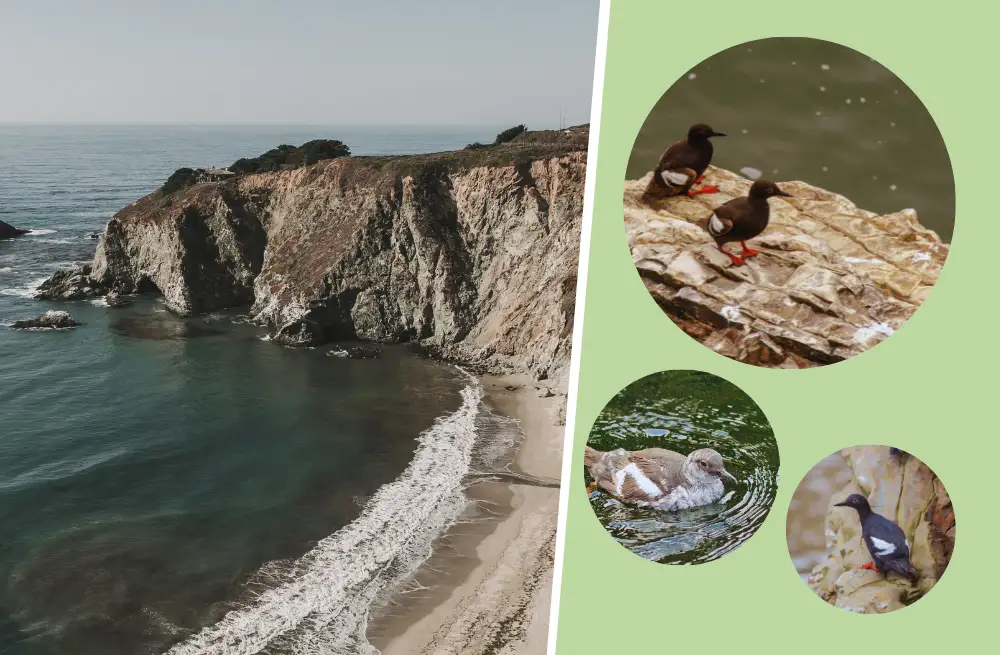
Coastal ResidentThe species is philopatric, generally returning to breed at the colony where it hatched, though not invariably: a chick ringed in the Farallon Islands off California was later recorded breeding in British Columbia.
Movement is modest and sometimes counterintuitive. In the north, some birds shift south ahead of advancing sea ice, while others stay in leads and holes some distance from the ice edge. Further south, birds banded in central California have been recorded moving north as far as Oregon and British Columbia.
Breeding sites are flexible, with protection from predators mattering more than the specific setting. Offshore islands are used more often than coastal cliffs. Sandy-bottomed water is avoided, since it does not offer the right feeding habitat. In the Bering Sea and Alaska the birds feed in openings in the ice.
5. Foraging & Diet
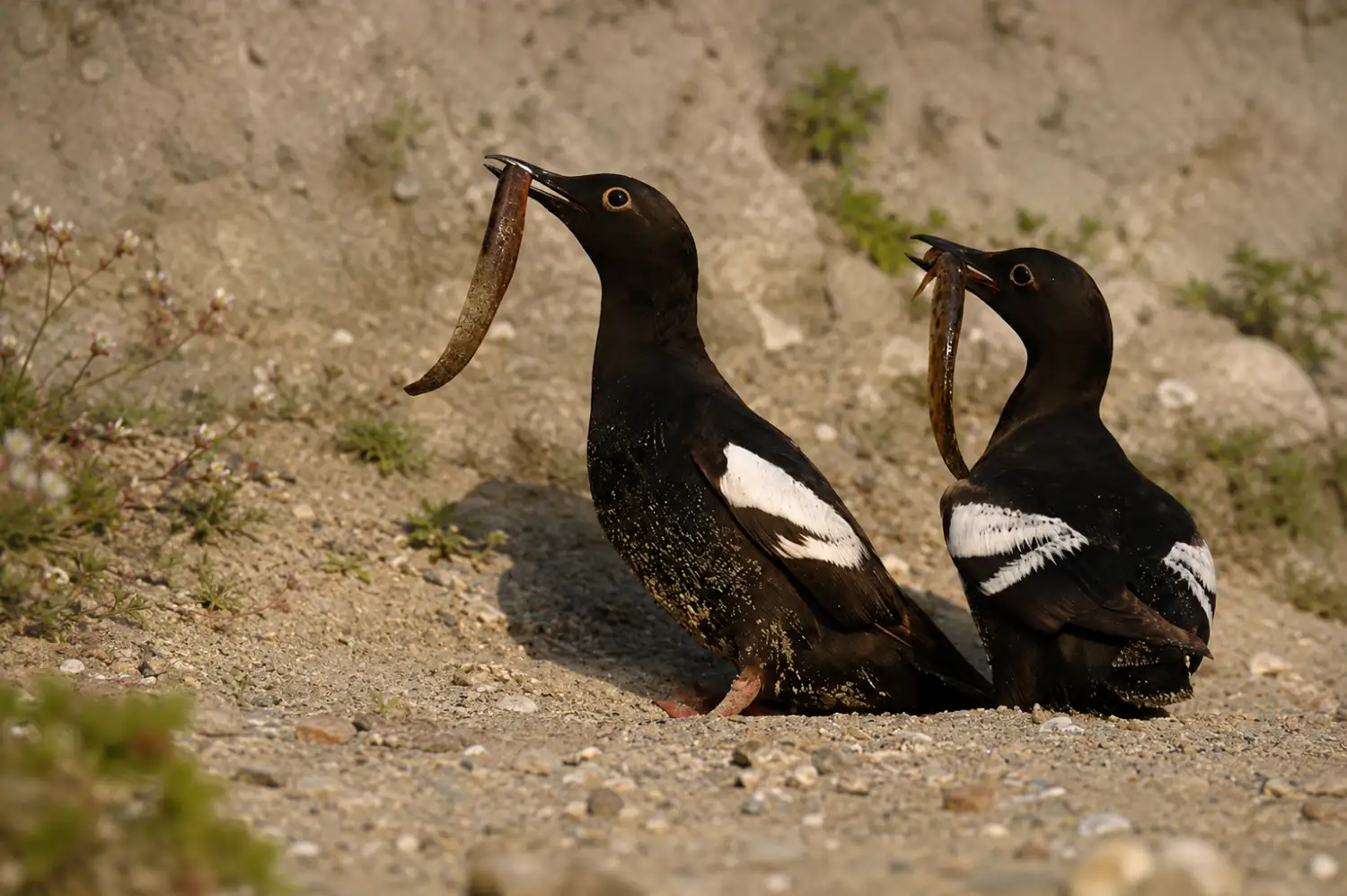
It hunts upside down. This is the behaviour that separates the Pigeon Guillemot from auks in other genera. It hangs inverted above the seafloor, probing with its head for prey, holding position with its feet and wings.
It stays close. During the breeding season, foraging happens within about 1 km of the colony.
Dive numbers. Depths from 6 to 45 m, preferring 15 to 20 m. Dives run from 10 to 144 seconds, averaging 87, with roughly 98 seconds between them. When feeding on sandlance shoaling at the surface, dives of just two to ten seconds are typical.
The diet is mainly benthic: sculpins, sandfish, cod and capelin, plus shrimp and crabs including the pygmy rock crab, and occasionally polychaete worms, gastropods, bivalves and squid. Invertebrates feature more in winter. Composition varies enormously with location, season and year as ocean conditions shift prey availability.
Chicks get a fishier diet than adults, with rockfish prominent. This matters: adults that specialise in high-lipid prey when provisioning raise chicks that grow faster and have greater reproductive success.
An adult needs about 90 g of food a day, roughly 20% of its own body weight, and doubles its fishing rate once there are nestlings to feed.
6. Voice & Display
An exceptionally vocal bird in the breeding season, with several calls tied to specific displays.
The hunch-whistle. Tail slightly raised, wings held slightly out, head thrown back 45 to 90 degrees while whistling, then snapped back to horizontal. It advertises ownership of a territory.
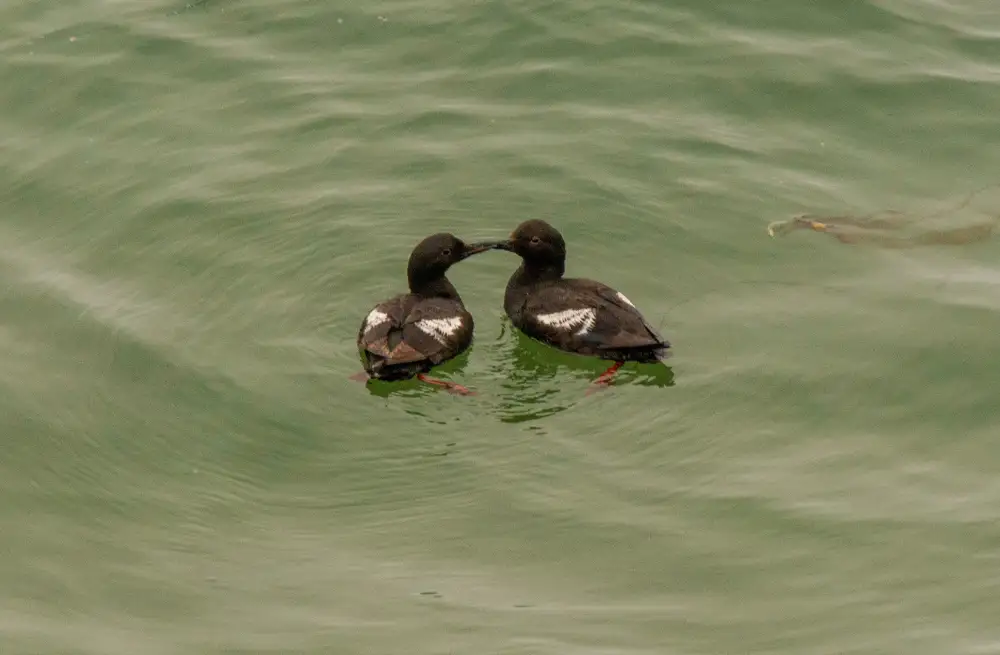
The trill. The same message at longer range. Given singly, or as a duet between a pair, in which case it also reinforces the pair bond.
The trill-waggle. Tail raised, wings opened, neck and head feathers ruffled, followed by a waggling of the outstretched neck and head. This one is antagonistic, and in a group it often comes immediately before an attack.
Low whistles. Deeper than hunch-whistles, with less head movement, given by unpaired males trying to attract a mate.
Beyond those, mates exchange seeps and cheeps, and birds scream in the presence of predators.
7. Breeding & Nesting
Cepphus columba · Breeding & Nesting
Summer BreederAny Cavity Will Do
Nests go in rocky cavities near water, but the species is opportunistic to an unusual degree, using caves, the disused burrows of other seabirds, and on record even old bomb casings. Nest heights range from about 1 m to 55 m above sea level.
Pairs defend a small territory of 1 to 4 m² around the nest entrance, with most of the defending done by the male, and generally reuse the site in following years unless the mate fails to return.
Foreign eggs are removed. There is occasional nest competition with Cassin's Auklet, which the guillemot usually settles by ejecting the eggs. It loses the same contest to larger birds, with Tufted Puffins and Rhinoceros Auklets both recorded evicting Pigeon Guillemots from crevices. Interestingly, the species avoids cavities containing gull eggs, particularly Western Gull.
Colonies Follow the Tide
Nesting density ranges from a single pair to dense colonies. Attendance at the colony is daytime only, and it tracks the tide: more birds present at high water, fewer at low. The likely reason is that prey on the seabed is more accessible at low tide, so that is when the adults are away feeding.
Pair Bonds and Water Games
Pairs form long-term bonds and usually reunite each year, though divorce occurs. How the bond forms in the first place is poorly understood.
Two behaviours are thought to be involved. Water games, a form of play in which birds chase one another on and under the surface at sea. And duet-trilling, in which a pair calls together. The red mouth may itself be a sexual signal.
The Chick
Brooded continuously by both parents for three days, then at intervals for another two to four, after which it can control its own temperature. Both parents feed it, bringing single fish held in the bill, most often in the morning.
Fledging is a clean break. The chick leaves the colony and flies out to sea, receives no further care, and is immediately independent. Shortly afterwards the adult leaves too.
Young birds do not breed for at least three years after fledging, and most wait until four. Two- and three-year-olds may visit the colony before they are sexually mature, arriving after the breeding birds have settled.
Adults that reach maturity have an average life expectancy of 4.5 years. The oldest recorded individual lived 14.
8. Predators
Avian predation is the commonest cause of egg loss. Northwestern Crows take both eggs and chicks regularly, and Glaucous-winged Gulls, stoats and garter snakes also raid nests. Raccoons take eggs, chicks and adults alike.
Adults are hunted by Bald Eagles, Peregrine Falcons, Great Horned Owls and Northern Goshawks.
In the water the list becomes more unusual: Pigeon Guillemots have been recorded taken by orca and by giant Pacific octopus.
9. Conservation
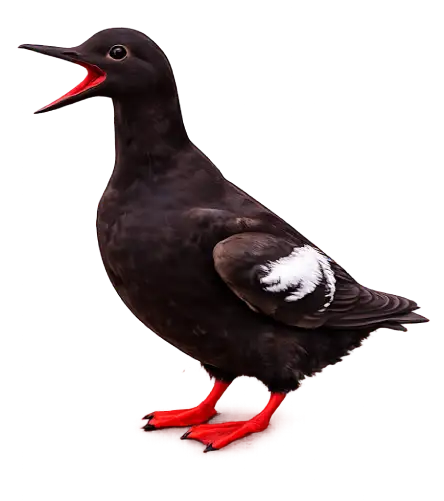
The global population is classified as stable at approximately 470,000 individuals. While widespread across the North Pacific, localized colonies remain highly vulnerable to changing ocean conditions and human impacts.

Extreme vulnerability to coastal oiling due to their nearshore foraging and surface-resting habits.
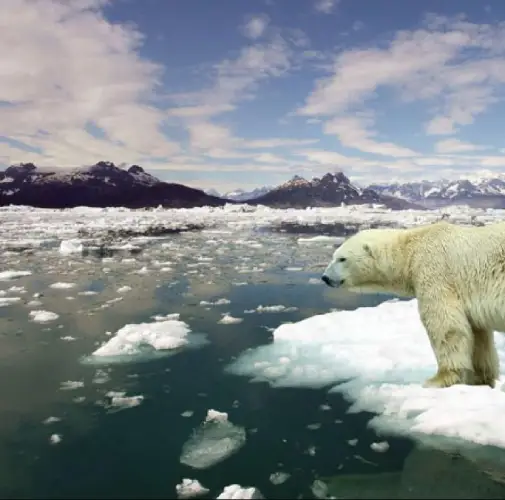
Rising sea temperatures alter the distribution and abundance of crucial benthic forage fish.
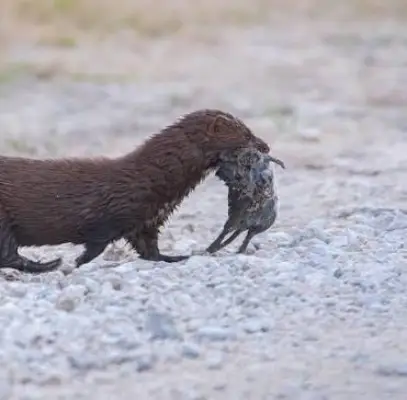
Invasive species (like rats and mink) devastate nesting colonies on historically predator-free islands.
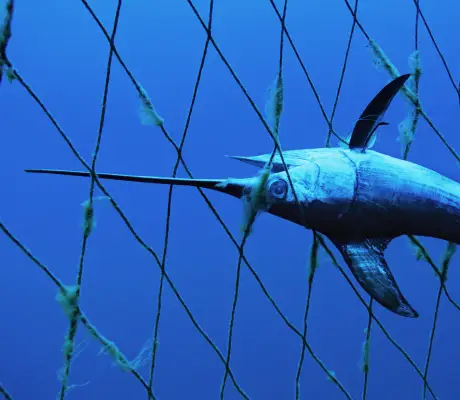
Susceptible to entanglement in nearshore gillnets and sustainable fishery conflicts.
An estimated 2,000–6,000 individuals were lost to acute oiling in Prince William Sound, demonstrating extreme vulnerability to historic spills.
Extensive designation of coastal MPAs along the Pacific Coast provided legal buffers for critical shallow-water foraging habitats.
Multi-year restoration projects successfully removed introduced mink from key Alaskan nesting islands, sparking rapid colony recovery.
Thanks to active management and habitat monitoring, the global population remains robust at ~470,000, though local fluctuations persist.
Occurs in numerous protected reserves across its extensive North Pacific breeding range, securing critical shallow-water foraging zones.
Implementation of nearshore fishing regulations to dramatically reduce accidental gillnet entanglement and bycatch rates.
Strict surveillance of breeding islands to rapidly detect and eradicate invasive mammals before they decimate local populations.
The listing rests on a large, stable population across an enormous range.
One threat does not apply. Unlike many seabirds, plastic ingestion does not appear to be a problem for the Pigeon Guillemot.
Common Questions About Pigeon Guillemots
Sources
- Wikipedia, "Pigeon guillemot" (primary source for this entry)
- Ewins, P. J. (1993), "Pigeon Guillemot (Cepphus columba)", in The Birds of North America
- Nettleship, D. N. (2017), "Pigeon Guillemot", in Handbook of the Birds of the World Alive, Lynx Edicions
- Friesen, V. L., Baker, A. J. & Piatt, J. F. (1996), "Phylogenetic relationships within the Alcidae inferred from total molecular evidence", Molecular Biology and Evolution 13(2)
- Nelson, D. A. (1984), "Communication of Intentions in Agonistic Contexts By the Pigeon Guillemot", Behaviour 88(1)
- Nelson, D. A. (1985), "The Syntactic and Semantic Organization of Pigeon Guillemot Vocal Behavior", Zeitschrift für Tierpsychologie 67
- Golet, G. H. et al. (2000), "Adult prey choice affects chick growth and reproductive success in pigeon guillemots", The Auk 117(1)
- Clowater, J. S. & Burger, A. E. (1994), "The diving behaviour of pigeon guillemots off southern Vancouver Island", Canadian Journal of Zoology 72(5)
- Seiser, P. E. et al. (2000), "Comparison of pigeon guillemot blood parameters from oiled and unoiled areas of Alaska eight years after the Exxon Valdez Oil Spill", Marine Pollution Bulletin 40(2)
- BirdLife International (2018), IUCN Red List: Cepphus columba
Last reviewed: July 2026.