Red-headed Woodpecker (Melanerpes erythrocephalus)
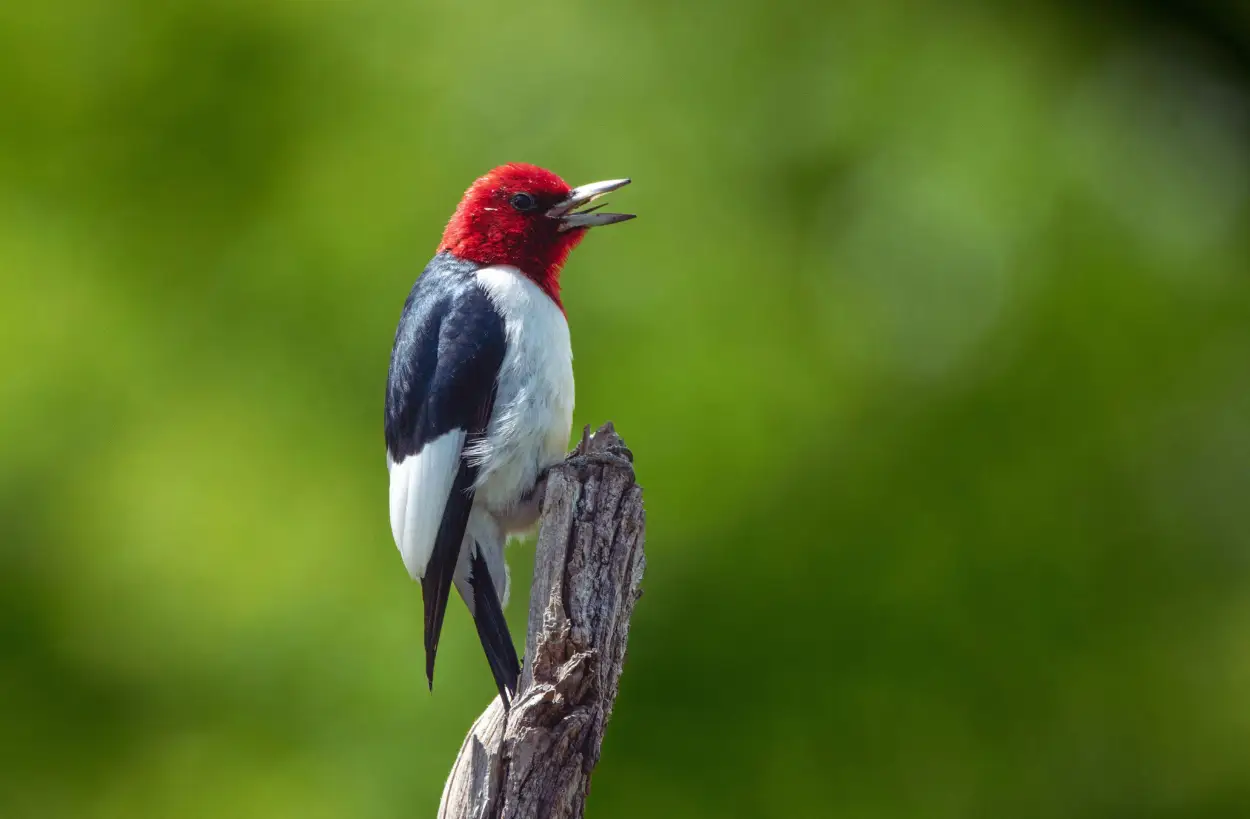
Few North American birds are as instantly recognizable as the Red-headed Woodpecker.
Its vivid crimson head stands out against its glossy black back and white underparts, giving it one of the boldest color patterns of any North American woodpecker.
It is a striking bird to see, whether perched on a dead tree, flying across an open field, or searching for food.
Species Profile
Scientific Classification
Global Conservation Status
Known for its unmistakable crimson head, this cavity nester faces steep long term declines. The primary driver is the systematic removal of standing dead wood across North America, which has resulted in a severe 54% population drop since 1966.
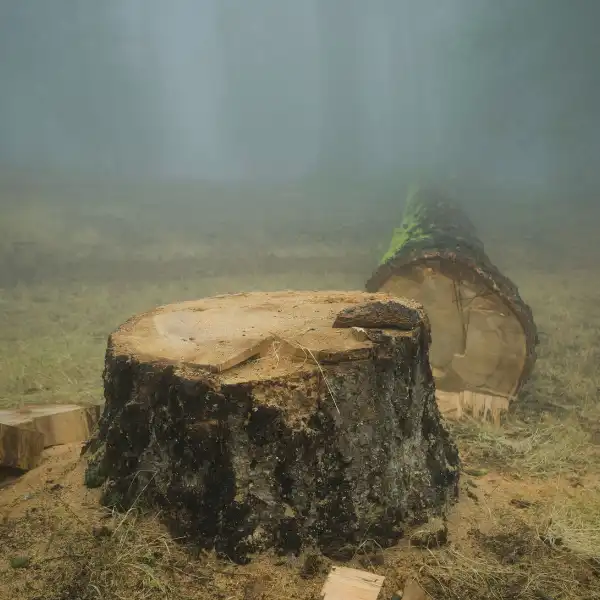
Habitat Loss
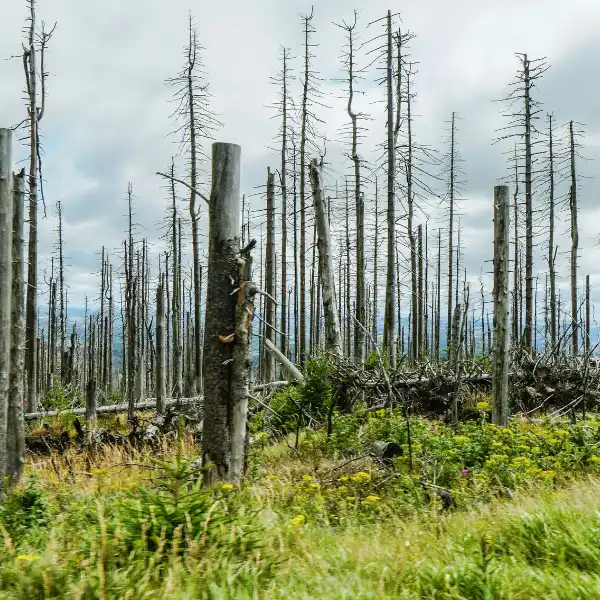
Removing standing dead timber destroys their primary nesting sites and crucial acoustic drumming posts.
Food Scarcity
Fewer mature nut bearing trees heavily limits their ability to cache enough food for winter survival.
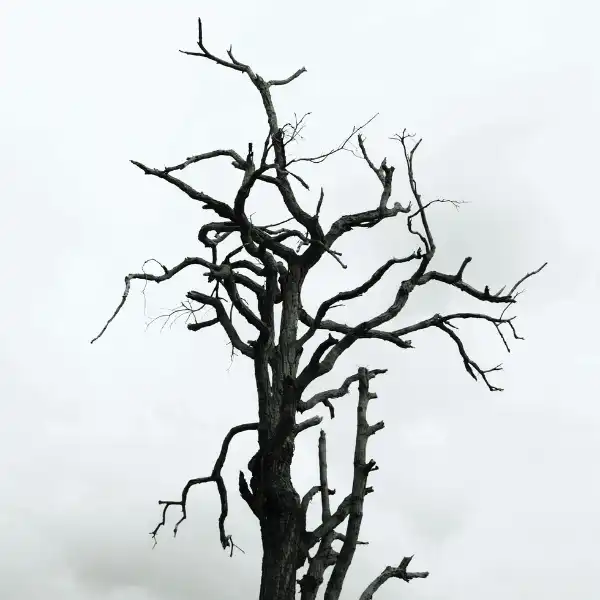
Clearing Snags
Dead trees are frequently cut down for aesthetics or safety, which unintentionally erases vital woodpecker habitat.
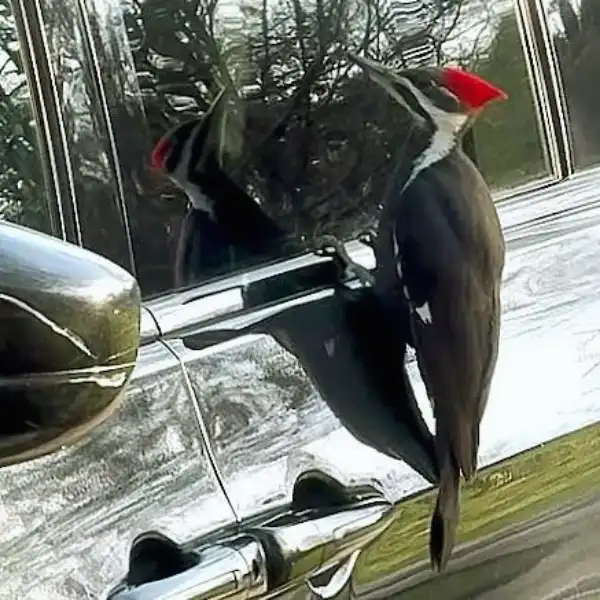
Vehicle Collisions
Their unique habit of swooping low to catch insects along roadsides leads to frequent and fatal strikes.
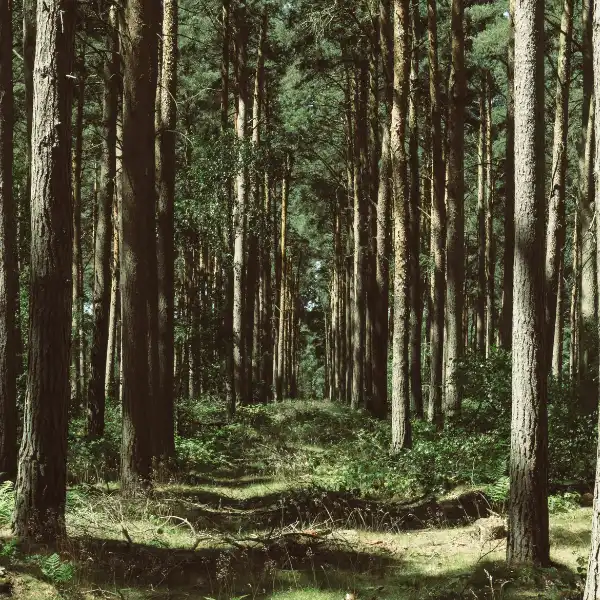
Fragmentation
Dividing woodlands into isolated patches separates breeding pairs and reduces overall genetic diversity.
Initial Documentation
Mark Catesby officially illustrates the bird in his Natural History volumes, noting its completely red head.
Genus Creation
William Swainson specifically creates the genus Melanerpes to successfully classify this highly distinctive bird.
Tracking Begins
The North American Breeding Bird Survey establishes initial population baselines, marking the start of its recorded decline.
Conservation Action
Uplisted to Near Threatened as declines steepened. Recent habitat management has stabilized some regional pockets, though the historical loss remains severe.
Snag Retention Programs
Educating landowners and parks to intentionally leave dead trees standing, which provides crucial nesting cavities and food storage sites.
Prescribed Burns
Using controlled fires to clear out dense underbrush naturally restores the open oak savanna ecosystems this species requires.
Roadside Mitigation
Adjusting highway mowing schedules reduces insect swarms near traffic, ultimately lowering the risk of fatal vehicle collisions.
Cavity Competition Control
Monitoring nest sites and managing invasive European Starling populations stops them from aggressively taking over excavated woodpecker holes.
Birds known for strong bills used in drumming and foraging on trees, zygodactyl feet (two toes forward, two back), and stiff tail feathers used to prop themselves against trunks.
An order of mostly arboreal birds encompassing woodpeckers, toucans, puffbirds, and barbets, largely characterized by their specialized feet adapted for climbing.
The true woodpeckers, piculets, and wrynecks. This family exhibits unique anatomical shock-absorbing adaptations to prevent brain damage during intense pecking.
A genus of medium-sized New World woodpeckers often displaying highly contrasting, brightly colored plumage—predominantly black, white, and striking patches of red.
A highly varied diet. Red-headed Woodpeckers uniquely catch insects in mid-air (flycatching) and heavily cache acorns and beech nuts in tree crevices for winter survival.
They prefer open deciduous forests, groves, agricultural edges, and orchards. Dead timber and snags are an absolute requirement for their nesting and roosting cavities.
Highly defensive of their foraging areas and nesting sites. They fiercely guard their winter acorn caches, actively driving away other woodpeckers, jays, and nuthatches.
An IUCN classification for abundant species. However, it's worth noting that Red-headed Woodpecker populations have historically declined due to the removal of dead trees.
1. History & Background
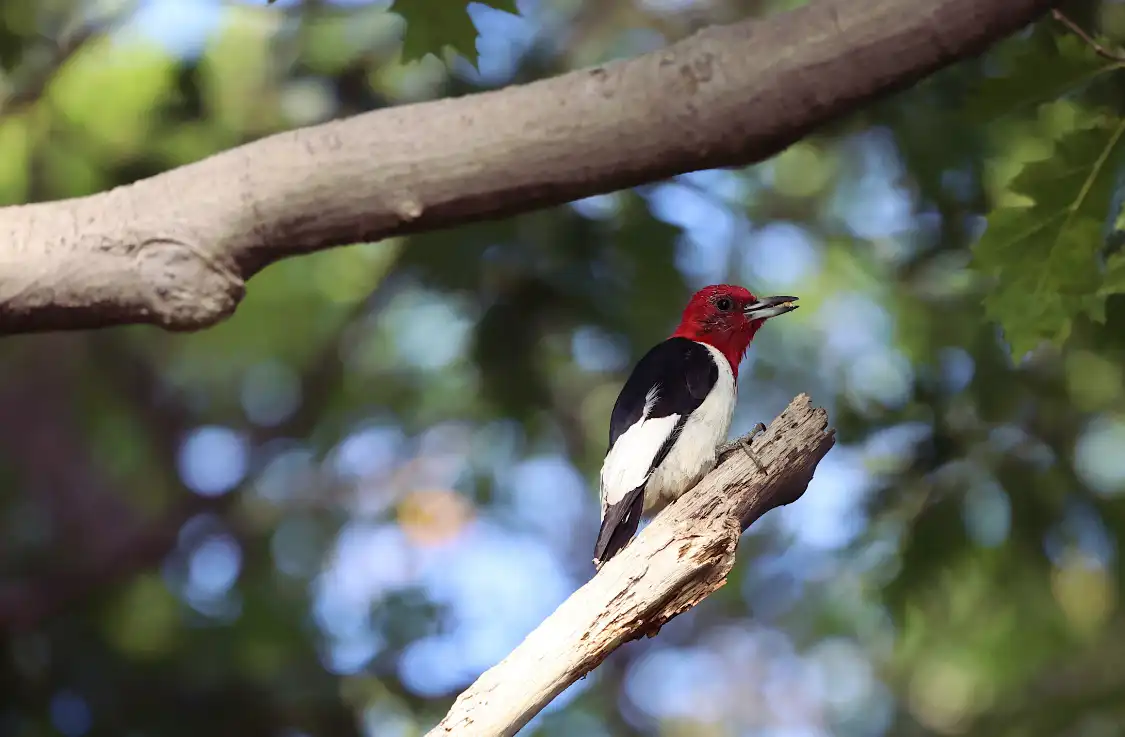
Mark Catesby described and illustrated the species between 1729 and 1732 in The Natural History of Carolina, Florida and the Bahama Islands. He called it "The Red-headed Wood-pecker" and gave it the Latin Picus capite toto rubro, meaning "woodpecker with an entirely red head."
Carl Linnaeus included it in the tenth edition of Systema Naturae in 1758, coined the binomial Picus erythrocephalus, and cited Catesby's plate. The type locality is South Carolina.
The epithet is a straight description. Erythrocephalus combines Classical Greek eruthros, red, with kephalos, headed.
One detail is worth flagging, because it makes this species the anchor of its whole genus. When William Swainson introduced Melanerpes in 1832, he created it specifically to accommodate the Red-headed Woodpecker. The genus now holds 24 species, all of them grouped around this one. Like its close relative the Red-bellied, it is monotypic, with no subspecies recognised.
The bird has collected a long list of folk names over the years, including white-shirt, half-a-shirt, shirt-tail bird, tricolored woodpecker, jellycoat and flag bird.
2. Identification & Appearance
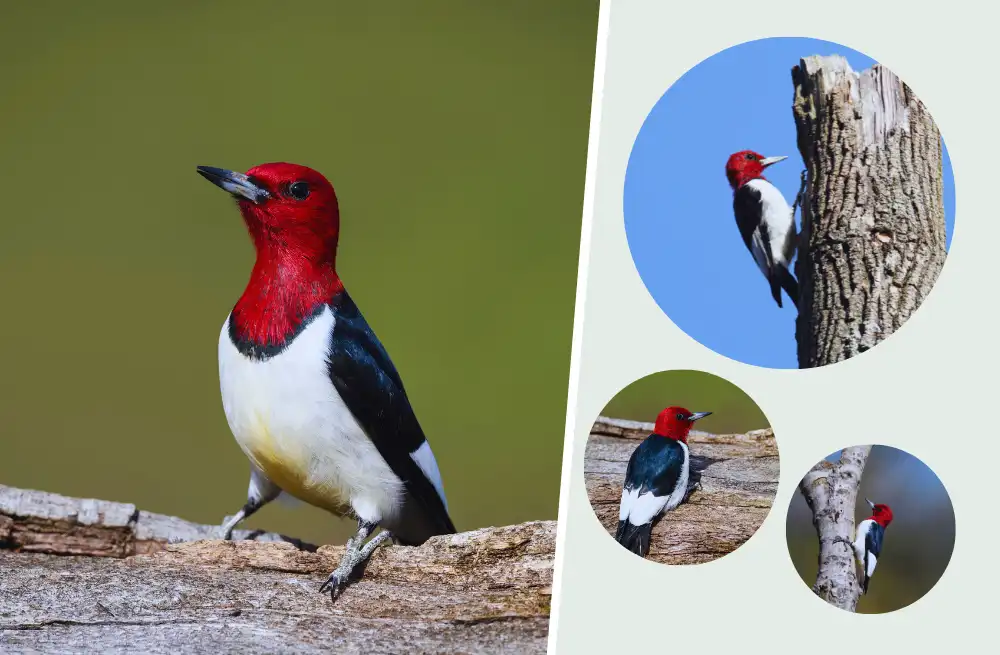
Melanerpes erythrocephalus · Quick Facts
Sexually MonomorphicThree Blocks of Colour
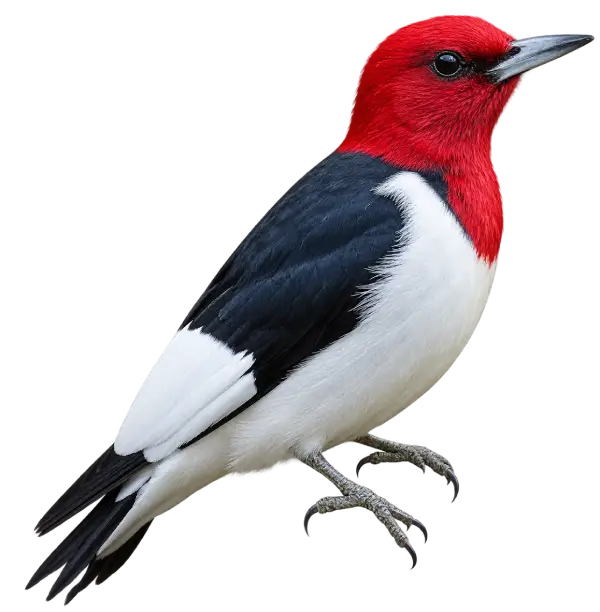
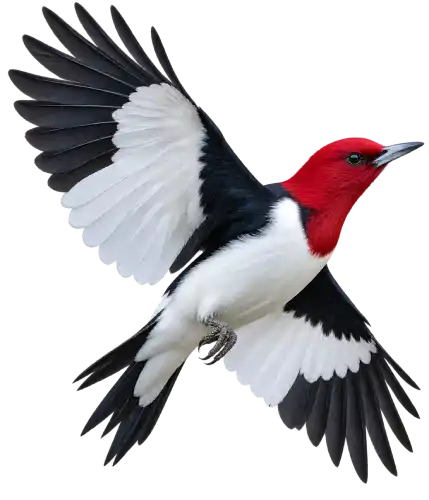
Adults are tricoloured and unmistakable: a red head and neck, a solid black back and tail, and a white belly and rump. The wings are black with white secondaries, which produce large square white patches, obvious in flight. The colours sit in clean blocks rather than the intricate patterning most woodpeckers carry, and the whole bird is crimson above the shoulders.
Males and Females Look Identical
This is one of the best examples of a sexually monomorphic woodpecker. Adult males and females cannot be told apart in the field. If you want to sex one, you need a bird in the hand and a specialist.
Juveniles
Same overall pattern and the same white wing patches, but the head is grey or buffy brown rather than red. It turns red after the first moult. Young birds are frequently mistaken for a different species.
Not the Red-bellied Woodpecker
The two are close relatives of similar size and are constantly confused. The back settles it. A Red-headed has a solid black back with big white wing patches. A Red-bellied has a finely barred black-and-white back and only an orange-red crown and nape, not a fully red head.
3. Range & Habitat
Melanerpes erythrocephalus · Detailed Distribution & Ecology
Open Woodland Specialist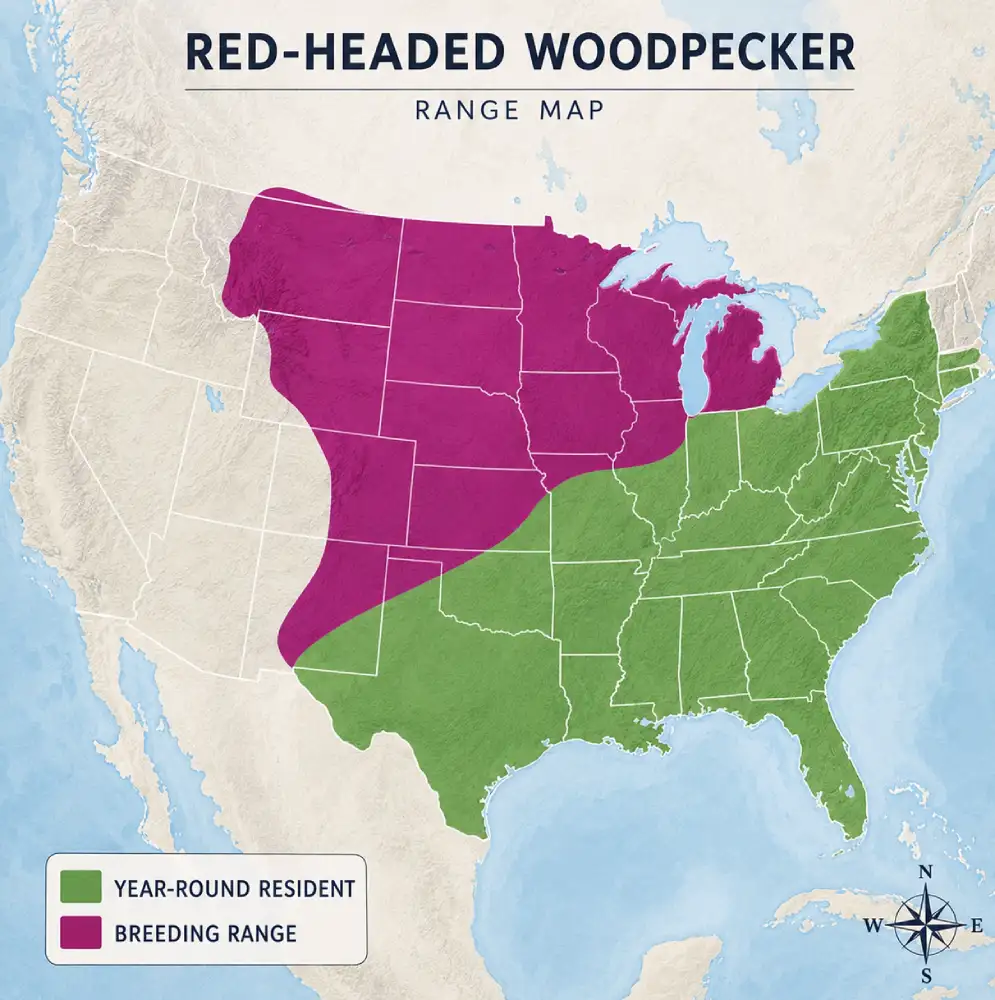
America
Migrant
& Savannas
-
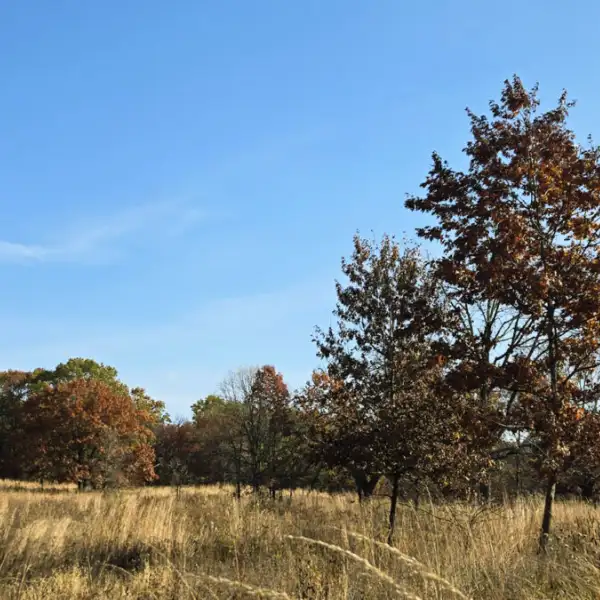 Oak Savannas
Widely spaced trees over grass provide the perfect mix of open airspace and hunting perches.
Oak Savannas
Widely spaced trees over grass provide the perfect mix of open airspace and hunting perches. -
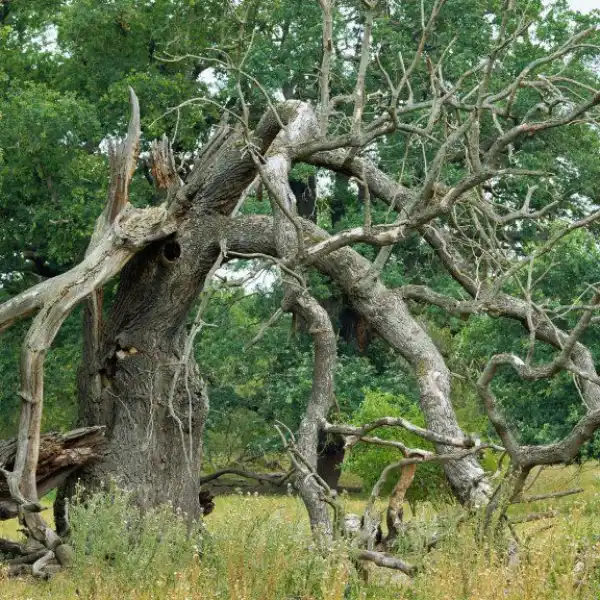 Dead Snags
Standing dead timber is essential. They use it for nesting cavities and tightly packing stored food.
Dead Snags
Standing dead timber is essential. They use it for nesting cavities and tightly packing stored food. -
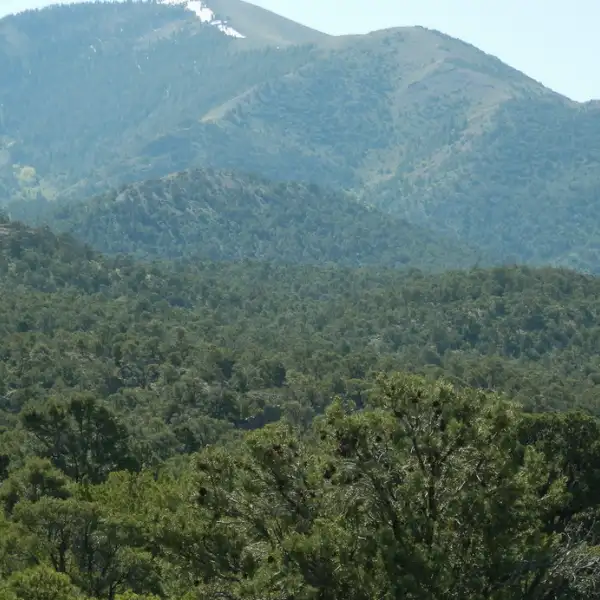 Nut Forests
Mature beech and oak forests supply the heavy nut crops they absolutely need to survive cold winters.
Nut Forests
Mature beech and oak forests supply the heavy nut crops they absolutely need to survive cold winters. -
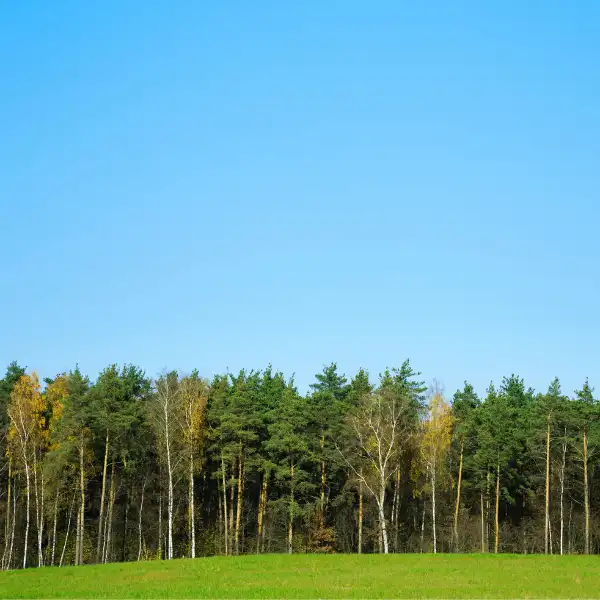 Forest Edges
They avoid dense canopy interiors, preferring the open borders where woodland meets clear fields.
Forest Edges
They avoid dense canopy interiors, preferring the open borders where woodland meets clear fields. -
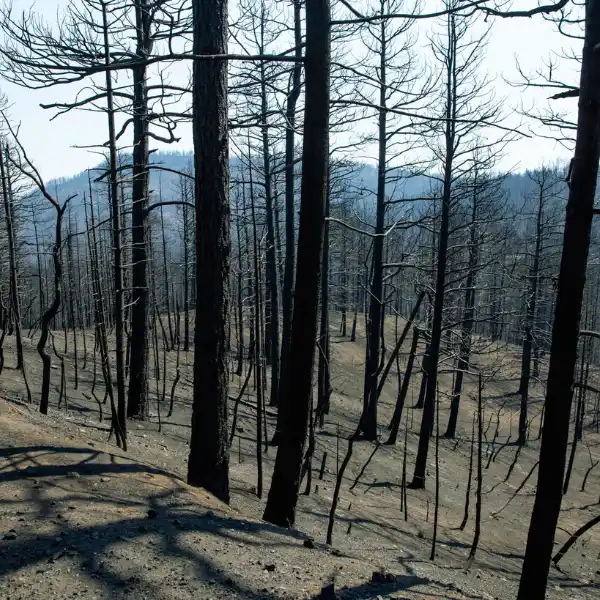 Burned Woods
Recently burned areas clear out the thick underbrush and create the dead wood they prefer to live in.
Burned Woods
Recently burned areas clear out the thick underbrush and create the dead wood they prefer to live in.
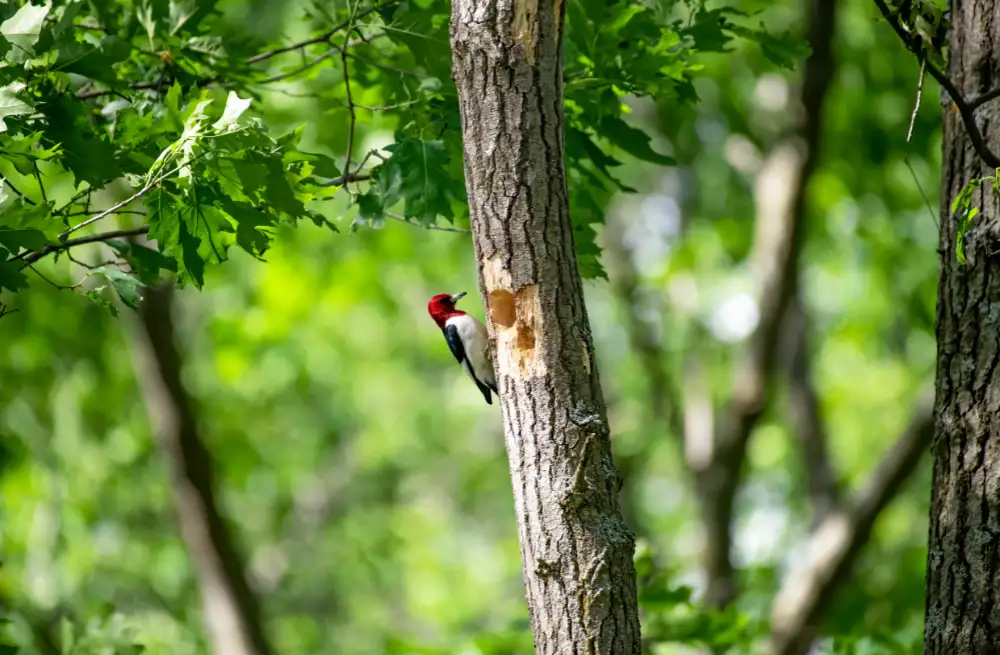
The habitat preference is specific and important: open country with scattered large trees rather than closed forest. Oak and oak-pine savanna is the original template. In practice that means deciduous woodland, river bottoms, forest edges and clearings, orchards, parks, grasslands with scattered trees, golf courses, recently burned woodland and rural yards. What it consistently avoids is dense closed-canopy forest.
Standing dead wood matters as much as the trees themselves. The species shows a marked preference for nesting in barkless snags.
Winter habitat resembles the breeding habitat, but with a twist. Winter distribution tracks food rather than geography, and specifically the acorn crop. Historically it followed the nut crop in the great American beech forests. That dependence is why the species turns up in numbers some winters and is nearly absent in others, a pattern that baffled ornithologists in the early 1900s.
4. Diet & Foraging
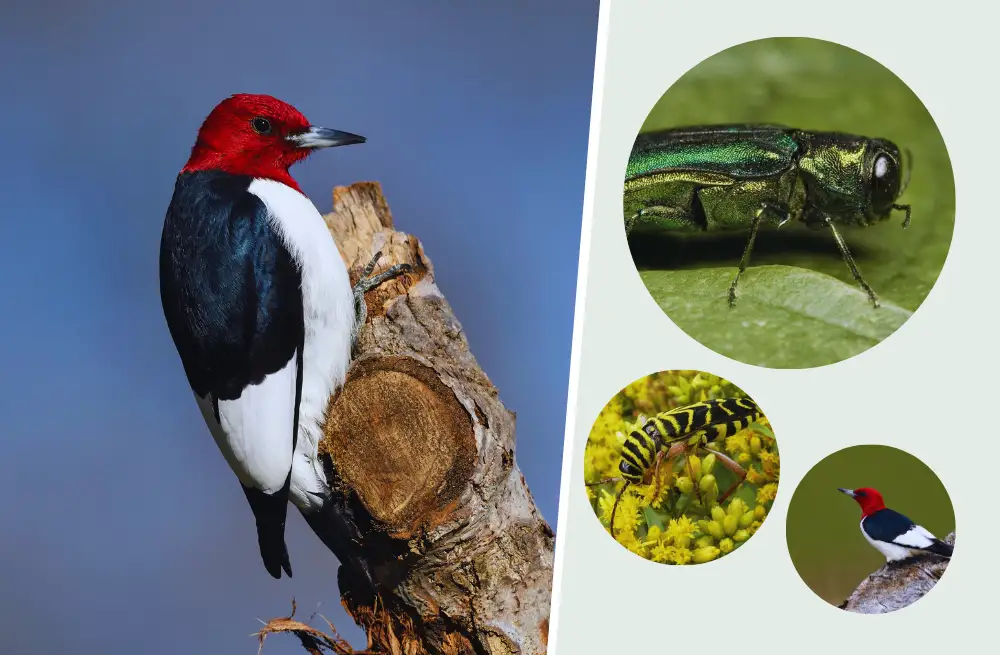
Omnivorous and unusually flexible. The diet takes in insects, seeds, fruit, berries and nuts, plus the occasional small rodent and the eggs of other birds. Roughly two-thirds of it is plant matter.
The Best Flycatcher in the Family
Where most woodpeckers hammer and probe, this one hunts on the wing. Cornell describes it as the most expert and persistent flycatcher among woodpeckers, sallying out from a perch to take insects in mid-air. It forages far more than it excavates.
One of Four Woodpeckers That Store Food
Food caching is rare in the family. Only four species do it commonly: the Red-headed, the Acorn Woodpecker, the Downy and the Red-bellied. Red-headeds stuff food into tree cavities, bark crevices and under loose bark, which is what carries them through winter.
5. Voice & Behaviour
The usual call is a rolling tchur-tchur, often described as a raucous, far-carrying queek with a raspy churr behind it. The drum is short and rapid.
More gregarious than most woodpeckers, and often found in family groups outside the breeding season. Also genuinely aggressive on territory. Pairs have been recorded destroying the nests and eggs of other birds within their patch, which is worth knowing before treating this as a gentle backyard visitor.
6. Breeding & Nesting
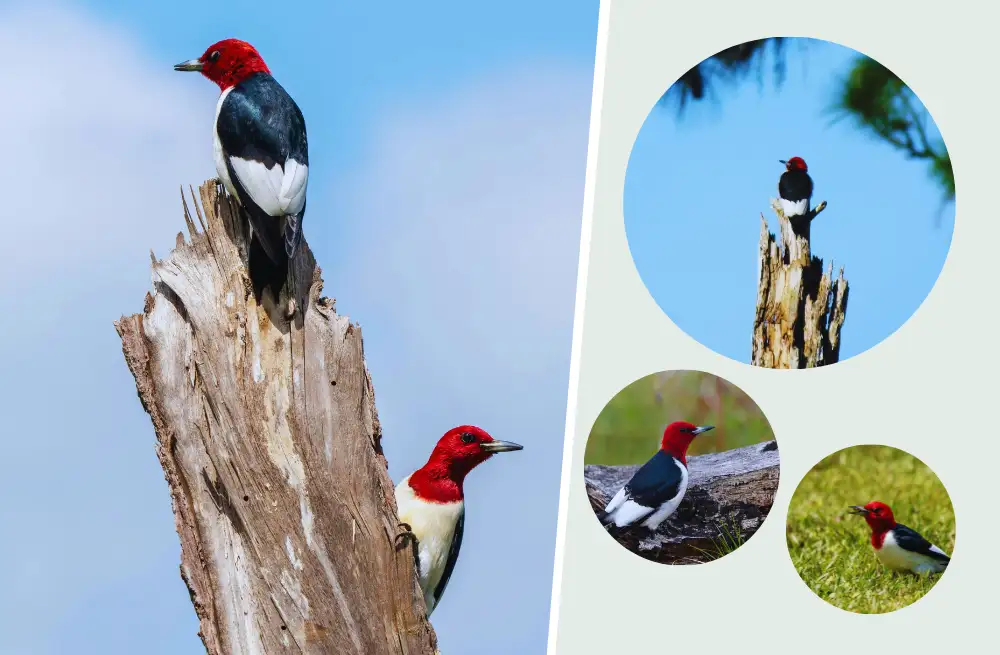
Melanerpes erythrocephalus · Breeding & Nesting
Primary Cavity NesterThe male sets up a territory and starts calling and drumming to attract a mate. Pairs are believed to be mostly monogamous and may stay together across several breeding seasons, though polygyny has been reported and the picture is not fully settled.
The Female Picks the Site
She chooses the nesting cavity and signals her choice by tapping on it. The site might be a natural hollow, the cavity the male used over winter, one used the previous season, a fence post, a utility pole or a dead tree. If no cavity exists, both birds excavate, with the male doing most of the work.
Raising the Brood
The female incubates by day and the male takes the night shift. Both feed the young, which stay in the nest for 27 to 31 days. Fledglings leave as capable flyers and mostly feed themselves within a couple of weeks. Any that linger too long get chased out of the territory by their parents.
A second brood may follow, sometimes in the same cavity but often in a freshly cut one, and parents will manage it while still tending fledglings from the first.
8. Similar Species
- Red-bellied Woodpecker: The main confusion. Barred black-and-white back, red only on the crown and nape, no white wing patches.
- Acorn Woodpecker: Also caches food and has a red crown, but with a clown-like white face pattern and a western range that barely overlaps.
- Pileated Woodpecker: Much larger, with a red crest rather than a fully red head, and a mostly black body.
- Juvenile Red-headed: Worth naming separately, since the grey head fools people into searching for a different species entirely.
Common Questions About the Red-headed Woodpecker
Sources
- Wikipedia, "Red-headed woodpecker"
- BirdLife International (2018), IUCN Red List: Melanerpes erythrocephalus
- Cornell Lab of Ornithology, All About Birds and Birds of the World species accounts
- National Audubon Society Field Guide, Red-headed Woodpecker
- Animal Diversity Web, Melanerpes erythrocephalus
- American Bird Conservancy species profile
- USGS Patuxent Wildlife Research Center, Breeding Bird Survey trend data 1966–2015
Last reviewed: July 2026. Conservation statuses are reassessed periodically and should be rechecked.