Black Rosy-Finch (Leucosticte atrata)
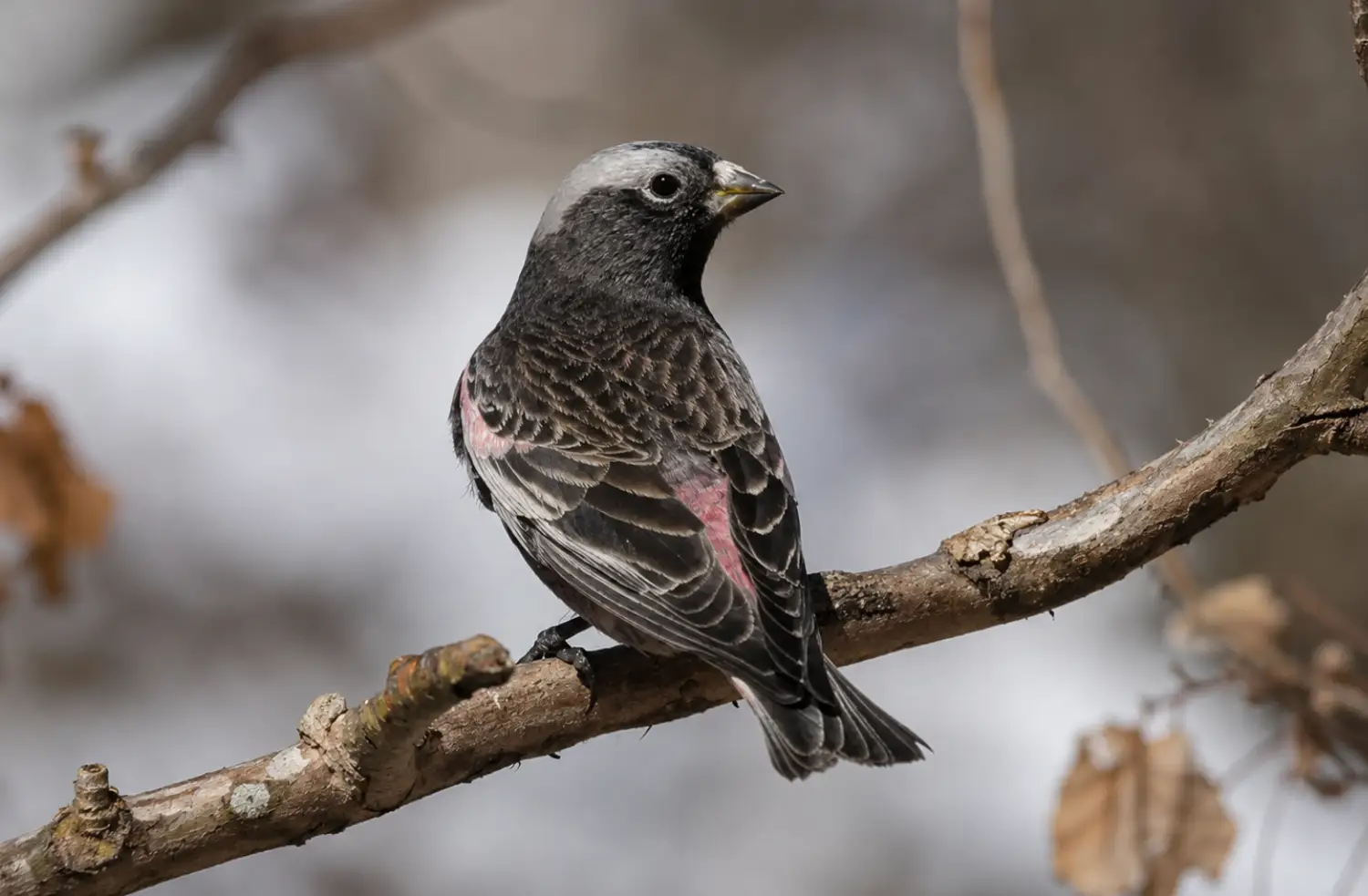
The Black Rosy-Finch is a species of passerine bird in the finch family, Fringillidae. It is native to alpine areas above the treeline in the western United States and is the most range-restricted member of its genus, Leucosticte. The species was first classified by American ornithologist Robert Ridgway in 1874.
Scientific Classification
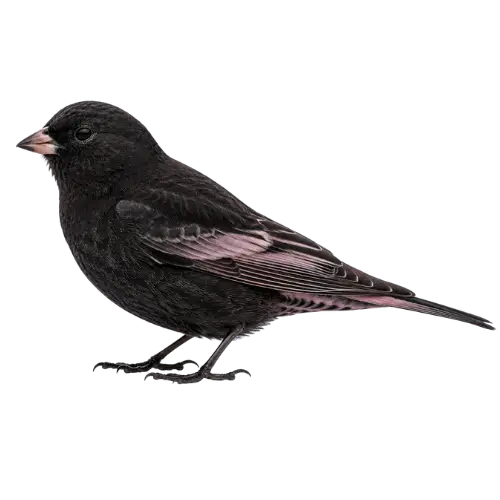
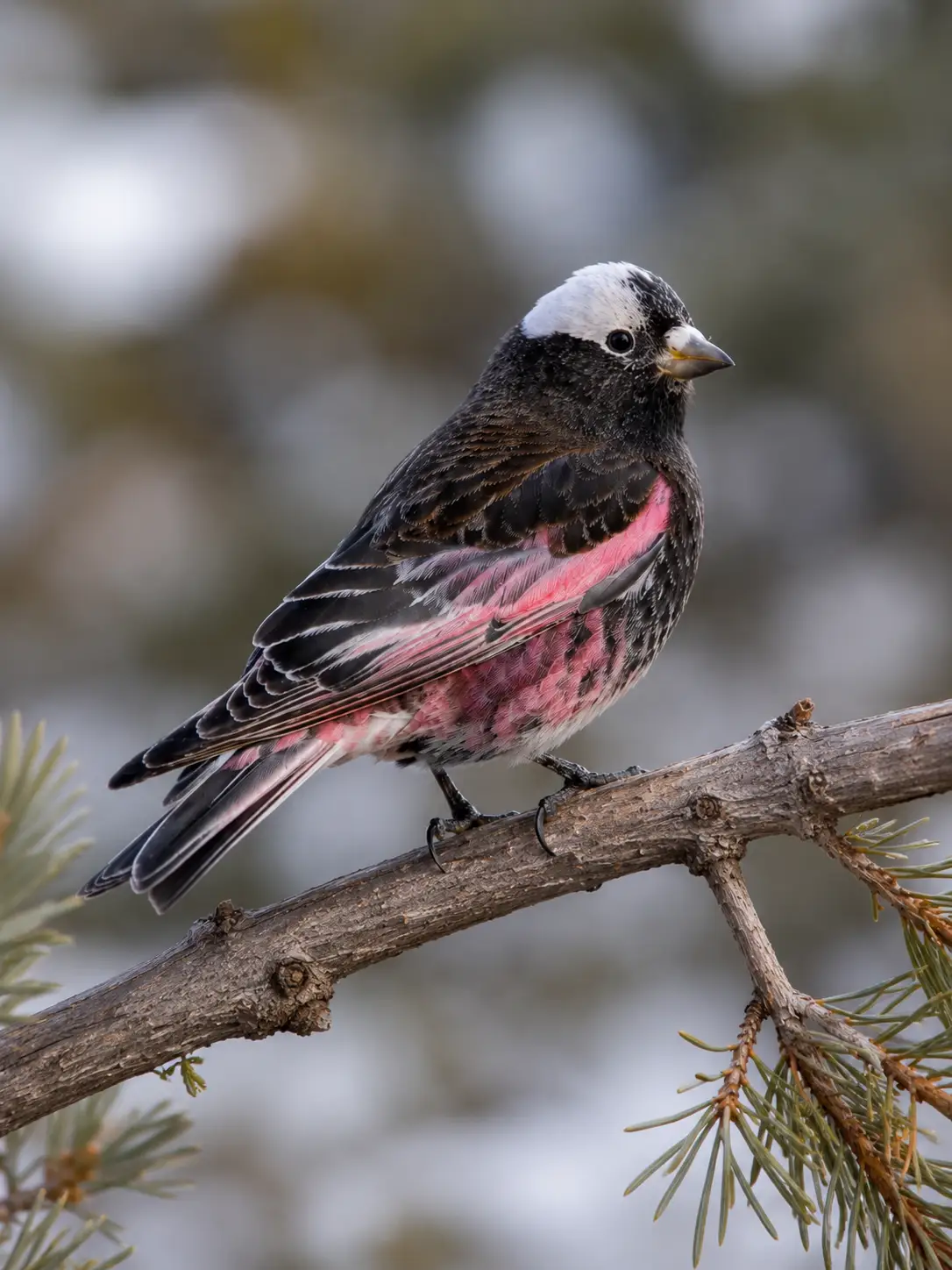
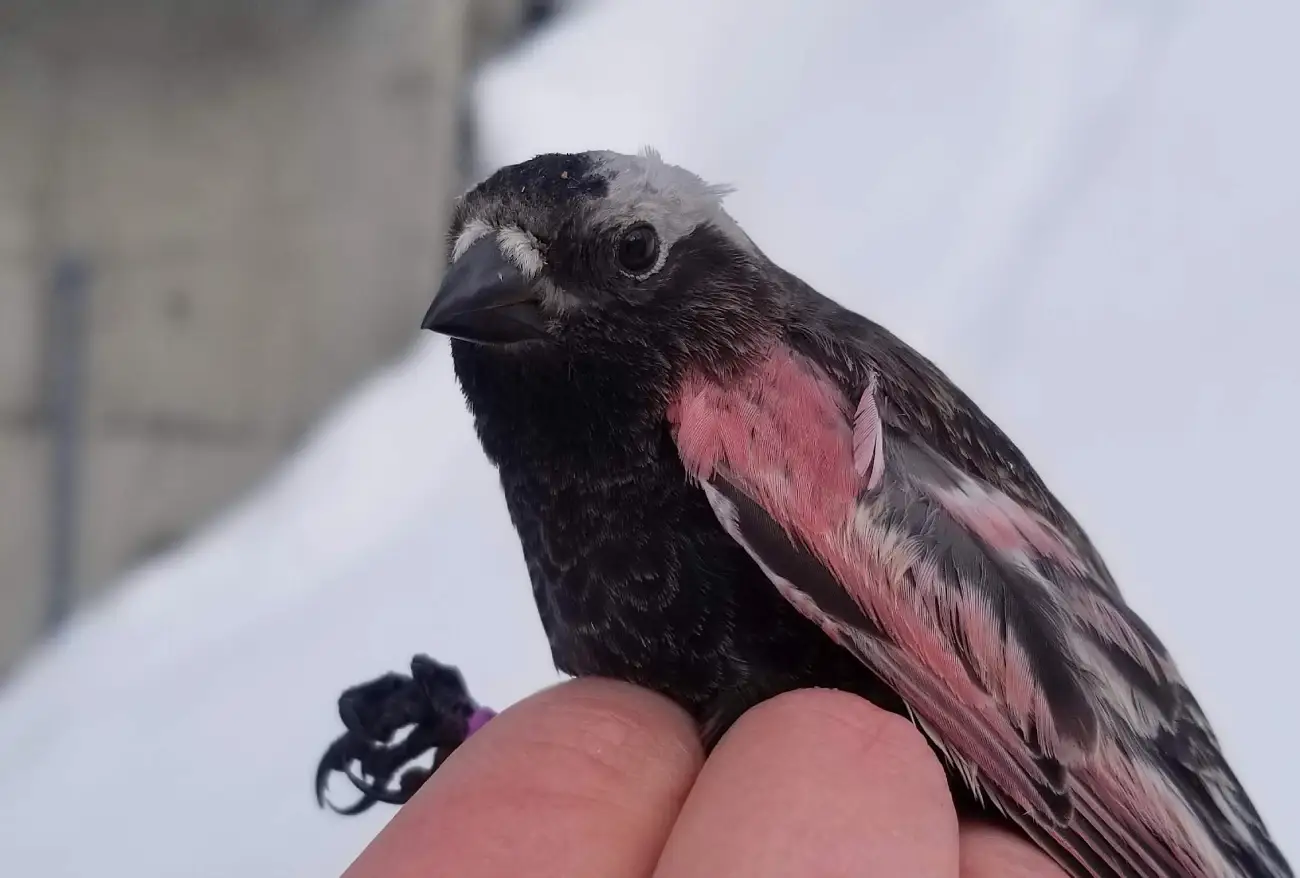
Deep black head, back, and breast contrasting with vibrant pink washes across the wings, rump, and belly, accented by a silvery-gray patch across the back of the crown.
Taxonomy
The Black Rosy-Finch belongs to the genus Leucosticte, commonly known as the mountain finches, which includes three North American species and four Asian species. Its two closest North American relatives are the Gray-crowned Rosy-Finch (L. tephrocotis) and the Brown-capped Rosy-Finch (L. australis).
Between 1983 and 1993, all three North American rosy-finches were classified as a single species along with the Asian Rosy-Finch (L. arctoa). This classification was later reversed, and the species were split apart again.
Mitochondrial DNA evidence has since confirmed that all of the rosy-finches are very closely related, which explains why the different species are often confused with one another in the field. No subspecies of the Black Rosy-Finch are currently recognized.
Multilingual Nomenclature
Common regional names for Leucosticte atrata across major ornithological reference works



Description
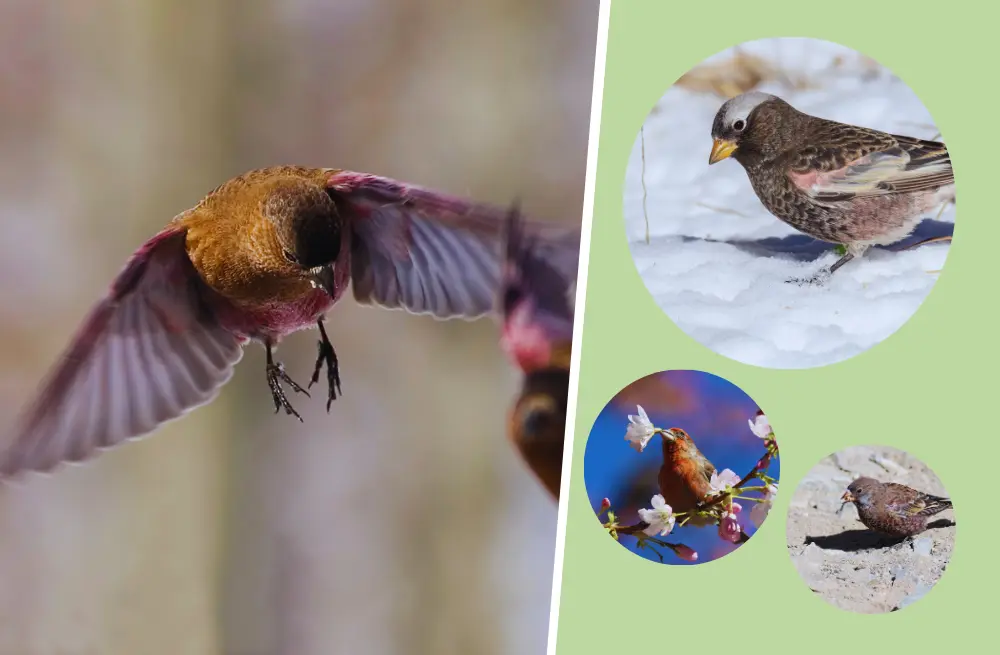
Adult Black Rosy-Finches are black across the head, back, and breast, with pink coloring on the belly, rump, and wings. A patch of gray marks the back of the head. The legs are short and black, and the tail is long and forked. The bill is black during the breeding season and turns yellow in winter.
Females are similar to males but duller and browner, with less pink. Juveniles are plainer overall and lack much of the adult coloring.
Average length is about 6 to 7 inches, with a wingspan of roughly 13 to 14 inches and a weight between 1 and 1.4 ounces.
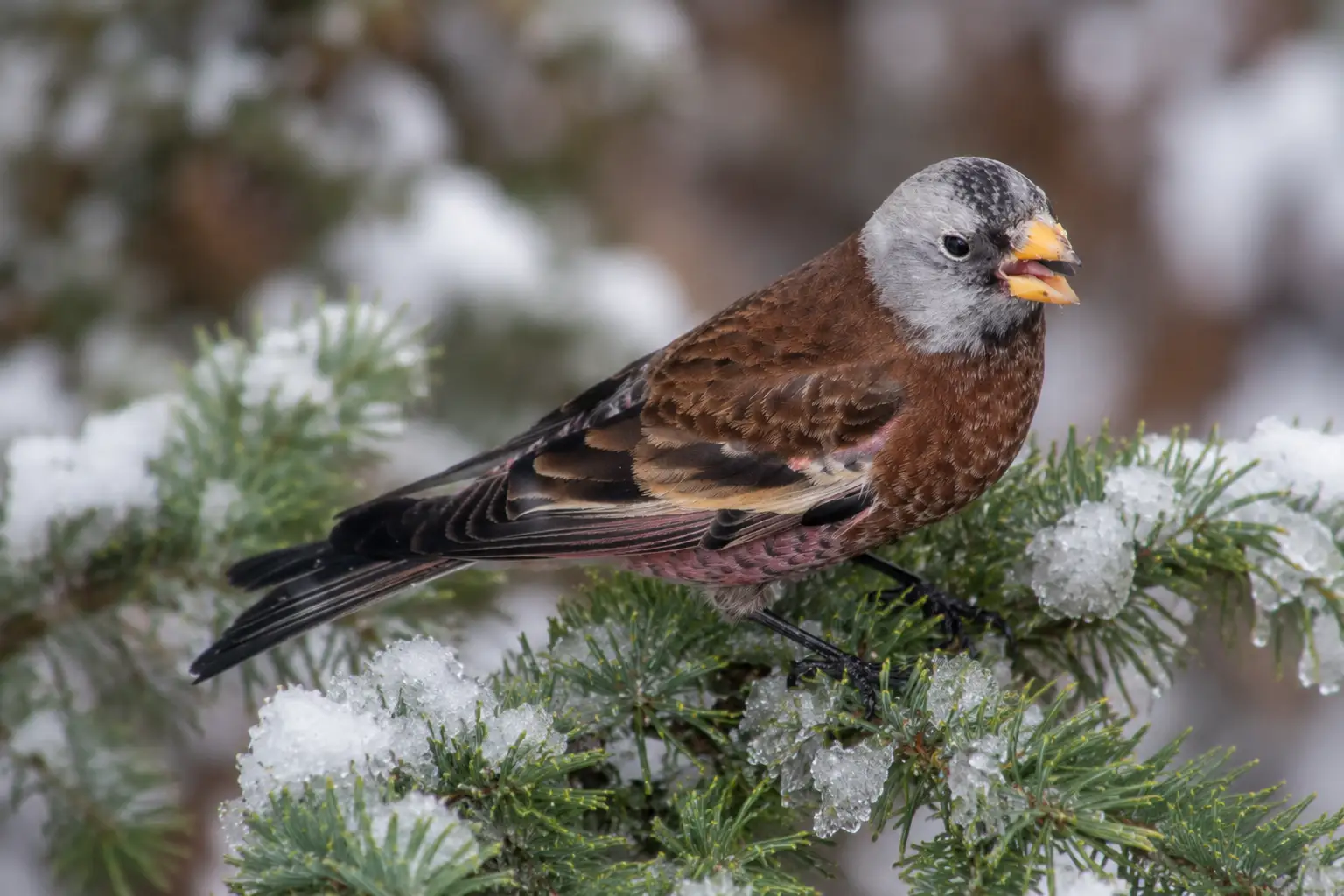
The species can be distinguished from its two closest relatives by plumage. The Gray-crowned Rosy-Finch has a brown body instead of black. The Brown-capped Rosy-Finch lacks the gray patch on the back of the head. The Black Rosy-Finch is the only one of the three with both a black body and the gray head patch.
Where Does the Black Rosy-Finch Live?
The Black Rosy-Finch lives higher up than almost any other songbird in North America. It breeds above the treeline, in the kind of terrain most hikers only pass through on their way to a summit: bare rock, scree slopes, cliffs, and patches of snow that never fully melt. You won’t find it in forests or meadows. It needs open, cold, high-elevation ground to survive.
Its core range sits where Montana, Idaho, and Wyoming come together, with more birds scattered through parts of Nevada and Utah. Geographically, it sits right between its two closest relatives. The Gray-crowned Rosy-Finch takes the mountains to the north and west, the Brown-capped Rosy-Finch holds Colorado to the south and east, and the Black Rosy-Finch fills the range in between.
Because its breeding grounds are so hard to reach, this bird is barely studied compared to most North American species. Researchers have only physically located and examined a handful of its nests, ever. Utah wildlife officials have even flagged it as a species they know too little about to properly protect.
Winter is the one time it comes down to meet people halfway. Most birds don’t travel far, just down to lower valleys and a bit further south, where flocks show up around feeders and open fields. Once spring arrives, usually by April, they head straight back up to the peaks.
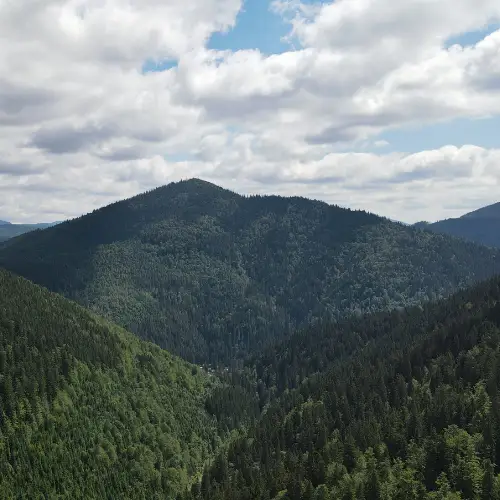
A specialized, cold-hardy passerine adapted to severe alpine tundra ecosystems, foraging along the edges of retreating snowfields above the tree line.
Encompasses all feathered, winged, bipedal, endothermic (warm-blooded), egg-laying, vertebrate animals globally.
The perching bird order containing over half of all bird species. Characterized by a specialized anisodactyl foot arrangement (three toes forward, one back) designed for perching.
The true finch family. Known for stout, conical bills optimized for seed cracking, strong skull structures, and bounding flight patterns.
A genus of rosy-finches specialized for mountain and arctic habitats, characterized by dark body plumages mixed with silvery crown patches and pinkish-rose wing highlights.
The binomial scientific name. The specific epithet “atrata” derives from Latin for “clothed in black,” referring to its distinctive dark body plumage.
Feeds primarily on seeds blown onto snowfields from alpine grasses and weeds, supplemented seasonally with windblown insects gathered along snow margins during breeding months.
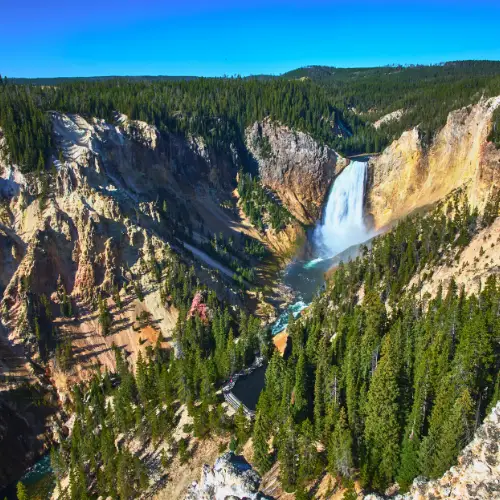
Nests on high-elevation cliff faces and talus slopes in the Rocky Mountains (Idaho, Montana, Wyoming, Utah). Moves to lower mountain valleys only during harsh winter weather.
IUCN status assessed as Endangered/Declining due to climate warming shrinking its delicate alpine snowpack habitat and high-elevation nesting zones.
Behavior
Feeding
Black Rosy-Finches forage mainly on the ground, walking and hopping rather than perching, and will occasionally fly up to catch insects in the air. Their diet consists mainly of seeds from weeds and grasses, along with insects. They frequently feed at the edges of melting snow, where thawing ground exposes old seeds and new plant shoots. Birds typically feed in small flocks and sometimes mix with Gray-crowned Rosy-Finches where their ranges overlap.
Breeding
During the breeding season, males defend their mate’s territory rather than a fixed nest site, following and guarding the female wherever she goes. This behavior is shared by all three North American rosy-finch species.
Both males and females develop gular pouches, small pouches of skin in the throat, during the breeding season. These pouches are used to carry food back to the chicks. Among North American birds, this trait is otherwise found only in one other genus, Pinicola, the pine grosbeaks.
Nests are built in cavities on cliff faces, and sometimes in mine shafts, caves, or building rafters. The nest is a cup made of grass and stems, lined with finer grass, hair, and feathers.