
The Shetland Duck (Anas platyrhynchos domesticus)
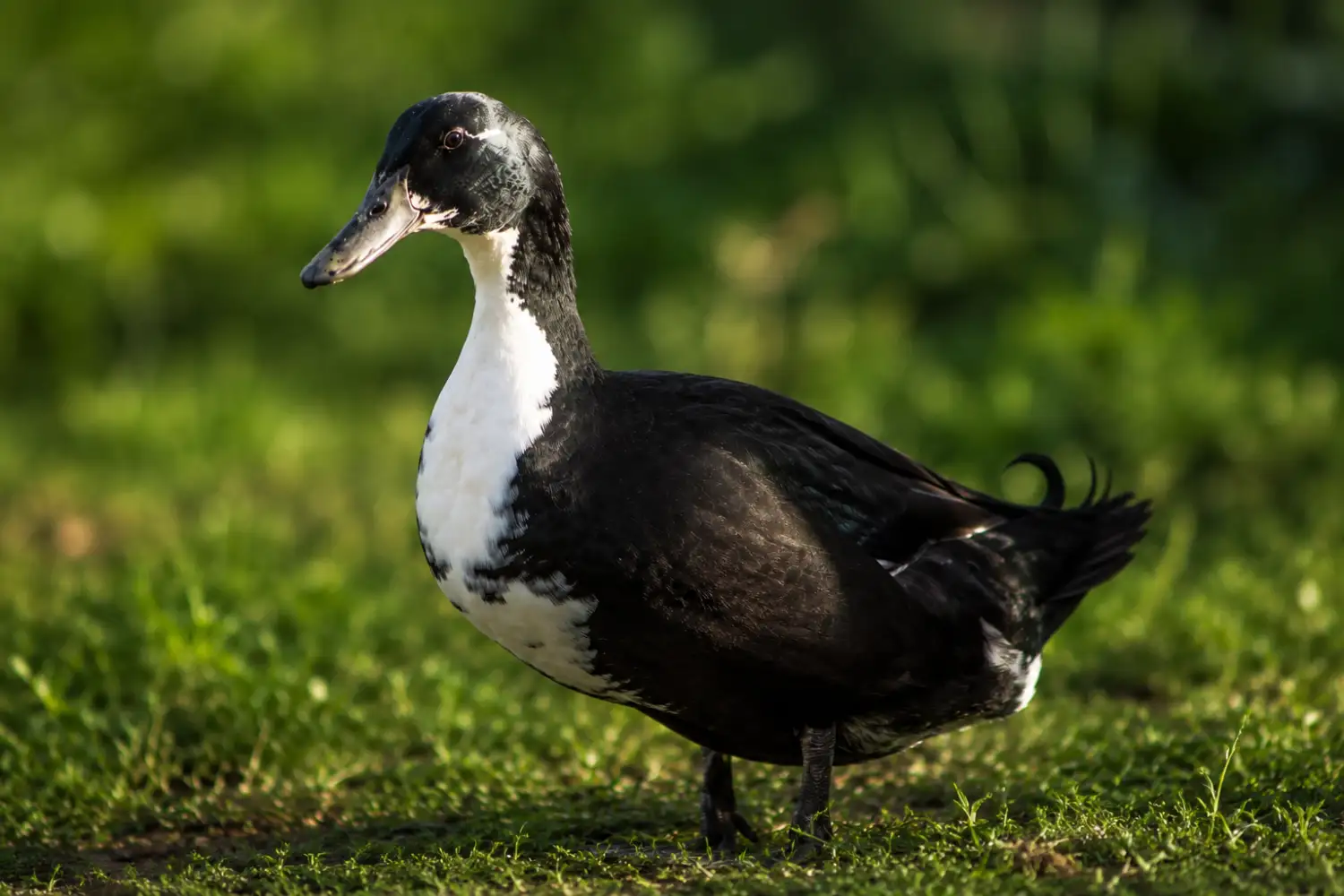
If you appreciate hardy, self-sufficient heritage livestock, the Shetland Duck is worth a closer look. It is one of the rarest domestic ducks in the world, and one of the few still doing the same job it was bred for centuries ago.
Breed Identity
Scientific Classification
Breed is not a taxonomic rank. The classification below is that of the ancestral wild species from which all domestic ducks except the Muscovy descend.
On the status above: Critical refers to the Shetland breed, listed as a priority breed by the Rare Breeds Survival Trust on its 2025–26 watchlist and added to The Livestock Conservancy’s Conservation Priority List in 2026. Fewer than 3,000 purebred birds are estimated worldwide, most of them in the United Kingdom, with under 200 in the United States. This is not an IUCN assessment. The ancestral species, the Mallard, is classified as Least Concern.
Population figures: The Livestock Conservancy
1. History & Background
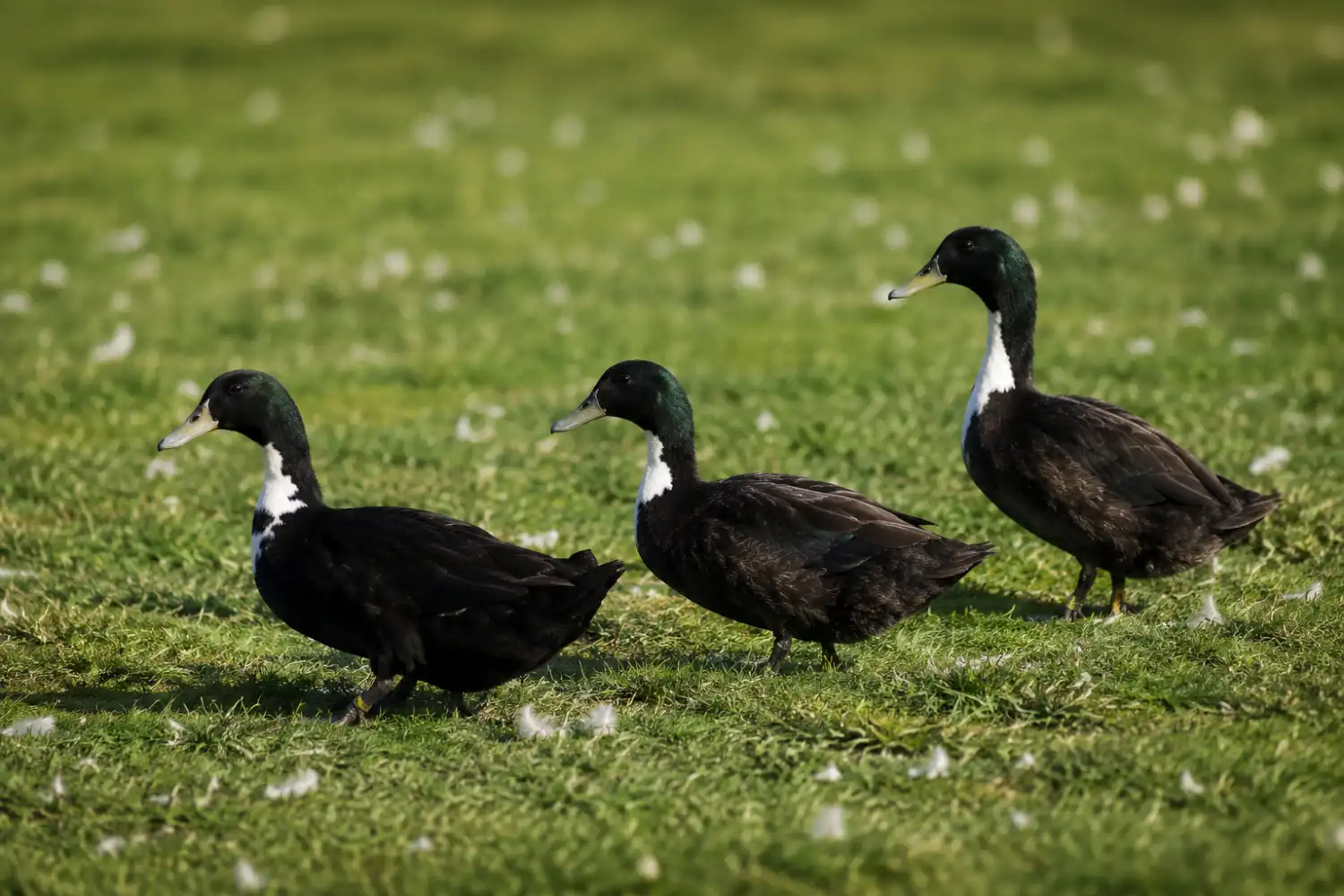
The Shetland Duck is a traditional Scottish landrace breed that developed over centuries in the damp, windswept environment of the Shetland Islands.
Rather than being selectively bred for show benches or high-volume industrial farming, these birds evolved alongside island crofters. They were kept to forage for their own feed along coastal shores, salt marshes, and damp pastures. By the late 20th century, as modern duck breeds took over commercial farming, pure Shetland numbers collapsed.
The breed was widely believed extinct by the early 1990s until surviving stock was located in Shetland, and a 2002 estimate put the entire population at just 60 to 100 birds. Recovery is credited largely to the Isbister family at Burland Croft on the island of Trondra, who rebuilt a breeding population and distributed birds to smallholders across Britain.
Its precise ancestry is undocumented. The plumage pattern links it to the northern European group of black and white ducks, particularly the Swedish Blue and the Pomeranian. A widely repeated claim that Viking settlers introduced the founding stock has no supporting record and is better treated as island tradition than history.
Often Mistaken For
Three black duck breeds commonly confused with the Shetland.

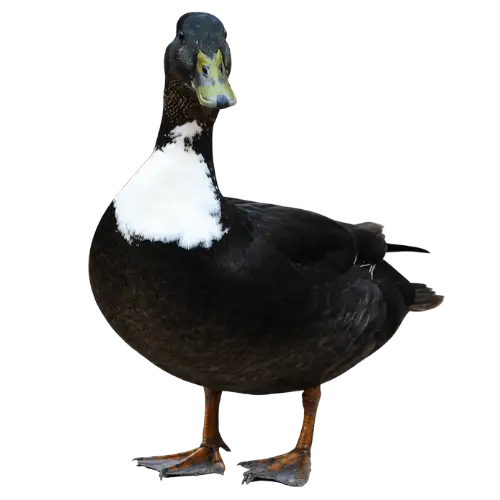

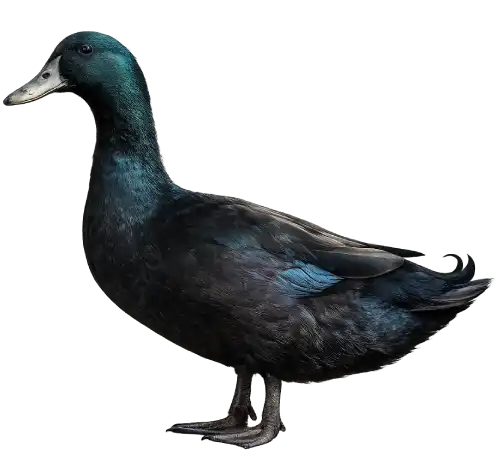

2. Breed Characteristics & Standards
Breed Characteristics & Standards
Anas platyrhynchos domesticus · Domestic breed of the Mallard
Plumage
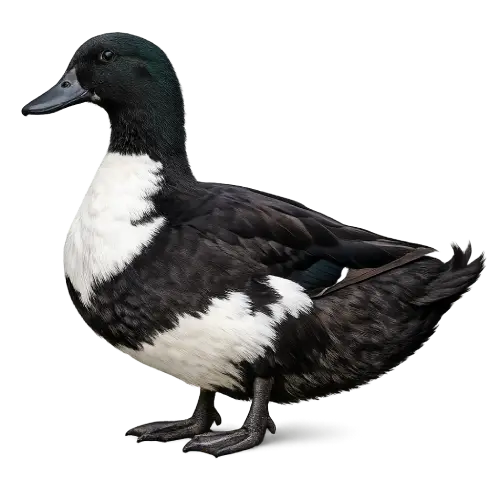
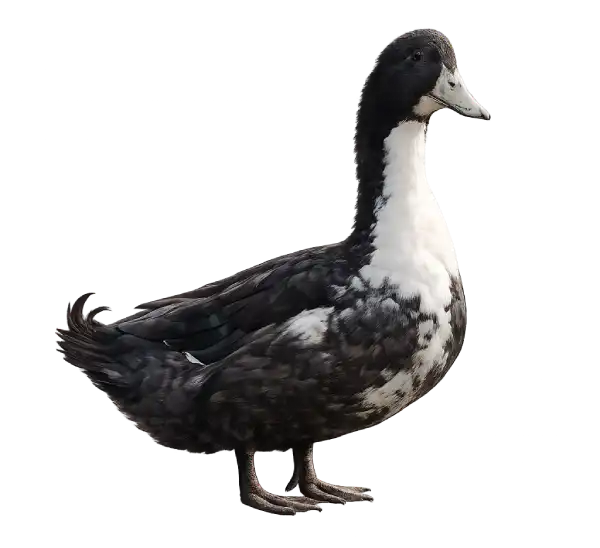
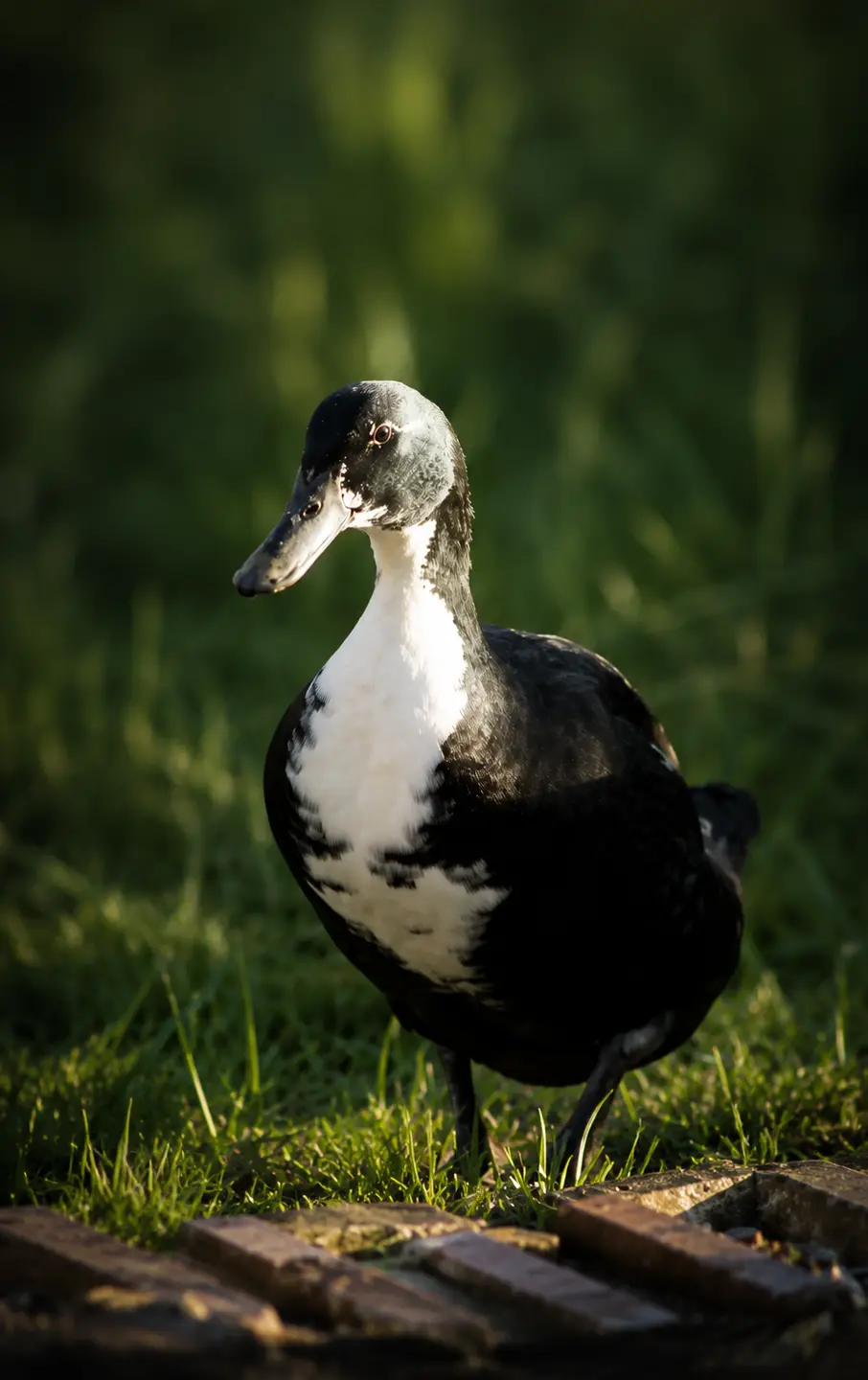
Shetlands are glossy black all over. In direct sunlight the feathers throw a green and blue sheen, much like a Cayuga. The breed’s defining mark is a white bib that starts under the beak and runs down the chest. Some birds also carry small white flecks on the head.
Size and Build
Compact and light-framed, only slightly bigger than a Mallard. Drakes reach about 2.0 kg, ducks about 1.8 kg.
They Turn White With Age
Shetlands grow white feathers as they get older, most noticeably in females. A duck that started with a neat bib can be largely white after a few seasons, and a few end up almost entirely white. This is normal. It is not a fault, and it does not mean the bird has been crossed.
Telling Drakes From Ducks
The plumage is nearly identical, so check the bill and legs. Ducks have both in black. Drakes often show a bill tinged with yellow or olive, and may carry some orange on the legs.
One Warning Sign
White primary feathers on the wings are the marking to watch for. They point to Black Swedish ancestry rather than pure Shetland breeding.
3. Production & Utility
While not a commercial meat or heavy egg bird, the Shetland Duck offers a very balanced output for a small-scale flock:
- Egg Output: Expect moderate, consistent laying (roughly 120 to 150 eggs per year). Output varies sharply by bloodline, and older breeder records report as few as 30 to 40 eggs from some backgrounds.
- Egg Appearance: Medium-to-large eggs, typically white, though grey and occasional green tones occur. The breed does not lay blue eggs, despite that claim appearing on several secondary sources.
- Egg Quality: Richer and stronger in flavour than hen eggs, with a noticeably viscous white. Well suited to baking and savoury cooking.
- Meat Quality: Lightly built, but historically raised as a dual-purpose croft bird for home use. The flesh is dark and full-flavoured, and because birds are usually mature before slaughter, slow moist cooking suits it best.
- Broodiness: High. Hens sit reliably and mother well, allowing flocks to reproduce without an incubator.
- Incubation Period: 28 days, standard for domestic duck breeds.
4. Pasture Behavior & Land Management
Where the Shetland Duck truly excels is foraging efficiency and parasite control.
- Natural Pest Control: On traditional island farms, ducks and geese were run over pasture to clear the tiny mud snails that host the liver fluke parasite, reducing infection pressure on sheep and cattle grazing the same ground. This is a long-standing crofting practice rather than a Shetland-specific trait, and the effect is a reduction in risk rather than eradication.
- Hardiness: Built for maritime climates, cold winds, and wet ground. Cold tolerance is excellent and rarely a limiting factor.
- Foraging Style: Highly active, alert, and capable of finding a large portion of their diet on open range, including shoreline and marshland forage.
5. Temperament & Behavior
Shetlands are calm and easy around people, but they are never still. Keepers describe the same bird again and again: busy from first light to dusk, working the grass, the mud and the edge of any water it can reach. That restlessness is exactly what crofters selected for, and it is what makes the breed such an efficient forager.
Most stay on the ground. The frame is light enough that the occasional bird gets airborne for a short burst, so a reasonable fence is worth having, but this is not a breed that will clear a hedge and vanish. Noise is moderate, and as with every duck breed the loud quack belongs to the female. Drakes manage little more than a hoarse rasp.
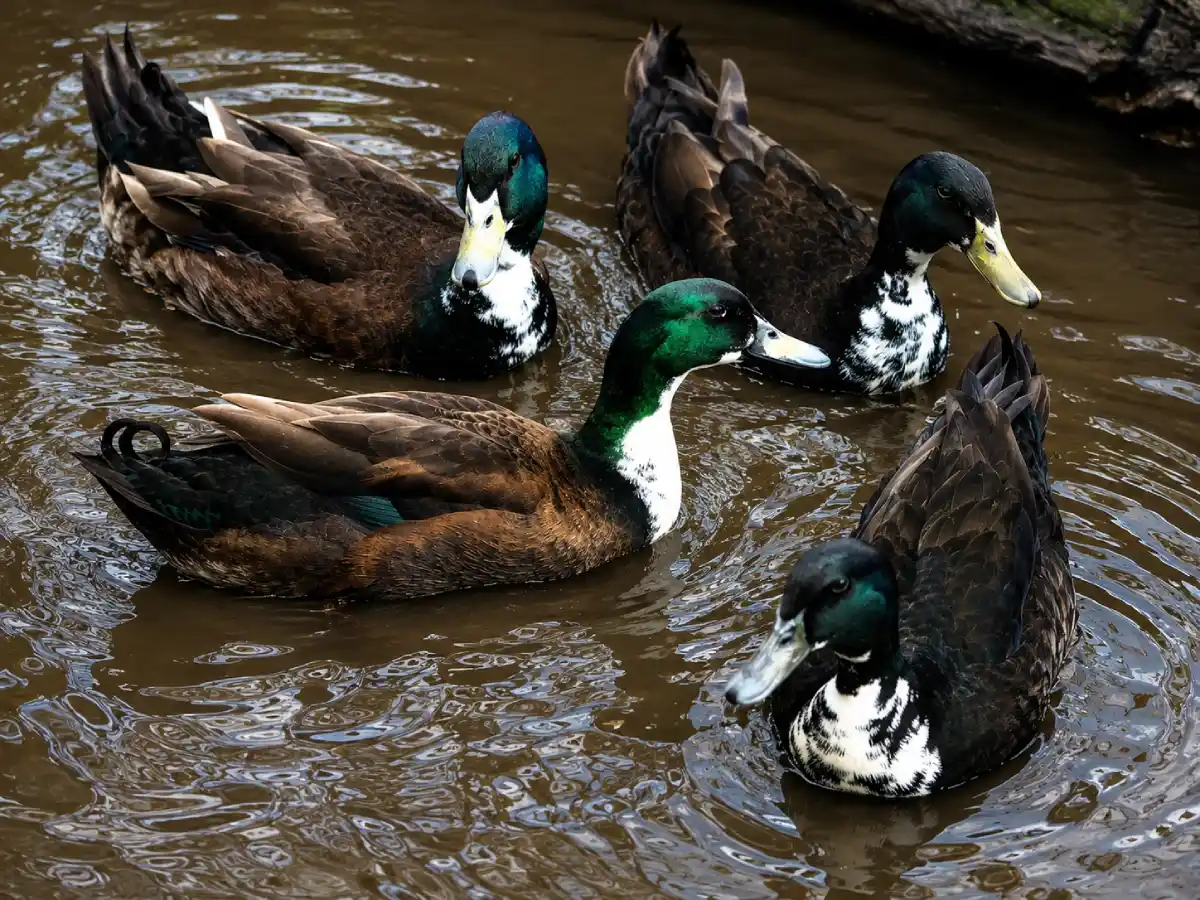
Telling the sexes apart takes a closer look, because the plumage is near-identical. The bill is the most reliable field clue: black in the duck, tinged with olive or yellow in the drake, who may also carry some orange on the legs. Voice settles it at a distance, and once a drake matures, the curled feathers at the top of his tail remove all doubt.
The breed also has a reputation for lasting. Accounts of birds reaching their late teens are common enough to take seriously, though they come from individual keepers rather than any recorded average, so treat it as a good sign rather than a promise.
6. Housing & Care Requirements
- Water: Clean water deep enough for the bird to submerge its head and clear its nostrils and eyes. A pond is ideal but not required.
- Shelter: Dry, well ventilated housing with secure night-time protection from foxes and other predators. Damp bedding and poor airflow cause far more problems than low temperatures.
- Feed: A standard waterfowl ration appropriate to age, with added niacin for ducklings. On adequate range, foraging supplies a significant share of the diet.
- Space: Performs best with genuine access to grass and wet ground. Confinement in a small run without forage suits this breed poorly.
- Common Health Issues: Standard waterfowl concerns, chiefly internal parasites and mites where ground is wet and hygiene slips.
7. Conservation & Sourcing
| Rare Breeds Survival Trust | Priority breed, 2025 to 2026 watchlist |
| Livestock Conservancy | Added to the Conservation Priority List, 2026 |
| Global population | Fewer than 3,000 purebred birds (2025) |
| US population | Fewer than 200 birds |
| DAD-IS (FAO) | Unknown, no data reported since 2002 |
The breed faces three linked risks: a very small population, no central registry to verify stock, and lookalike black-and-white breeds that invite misidentification and crossing. Only the last is within a keeper’s control.
With no formal standard, a Shetland is confirmed by breeder records and known lineage, not by appearance. A flock of black ducks with white bibs is not automatically a flock of Shetlands. Buy from breeders who know their lines, keep breeding groups away from other bibbed black breeds, and keep your own records.


