Rufous-bellied Thrush
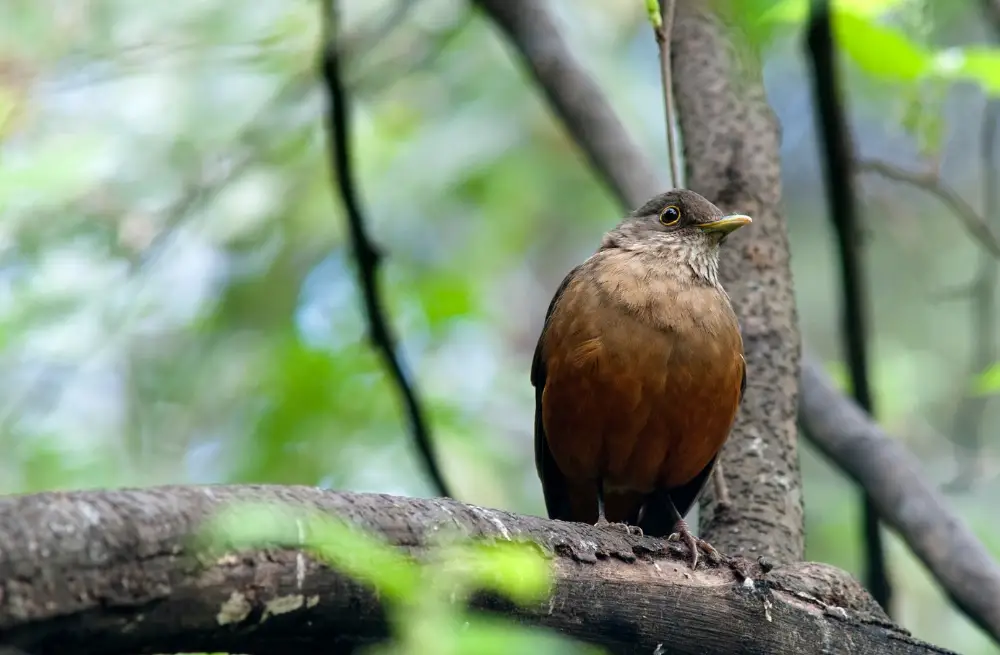
The Rufous-bellied Thrush (Turdus rufiventris) is a medium-sized South American songbird commonly found in forests, gardens, and urban areas across Brazil and nearby countries. Known for its warm orange belly and beautiful, flute-like song, it is recognized as the national bird of Brazil. First described in 1818, this adaptable thrush thrives in both natural habitats and city environments.
Rufous-bellied Thrush (Sabiá-laranjeira) At a Glance
Rufous-bellied Thrush
Taxonomy & Conservation
Scientific classification and conservation status of one of South America’s most recognizable thrushes.
1. How to Identify Them (Field Marks)
The Rufous-bellied Thrush does not look exotic at first. No neon feathers. No dramatic crest. No tropical chaos exploding from a tree branch. Just brown, orange, and confidence.
But once you actually stop and watch one for a minute, you start understanding why people get attached to this bird.
Adults
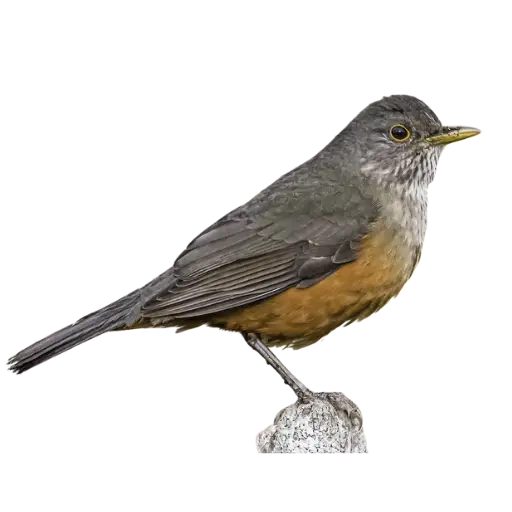
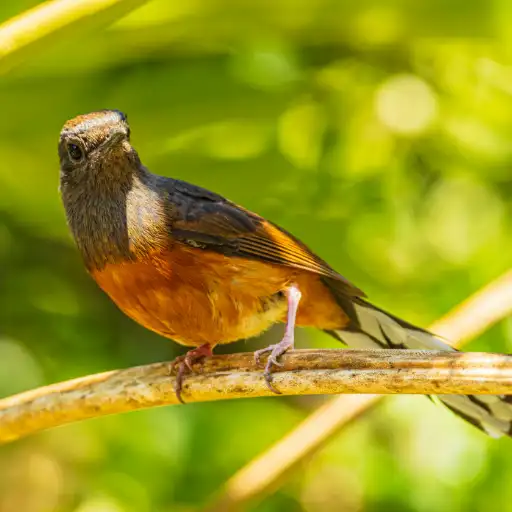
The main feature is the belly. A deep warm orange that almost glows during early morning light. The upperparts stay much duller, usually olive-brown or grey-brown, which makes the contrast stand out immediately.
The throat is pale with faint dark streaks, and the bill is bright yellow. Same with the eye-ring. When sunlight hits the face correctly, the yellow becomes surprisingly striking.
They also carry themselves in a very upright way. Alert. Serious-looking. Like they are constantly late for an important meeting.
Juveniles
Young birds are much messier.
Instead of the clean orange underparts adults have, juveniles show heavy spotting across the chest and softer brown tones overall. The plumage looks unfinished somehow.
Honestly, they look like someone started painting an adult thrush and stopped halfway through.
The Rufous-bellied Thrush is known for its rich flute-like song, often heard before sunrise across Brazilian neighborhoods and forest edges.
Unlike many native birds, this species adapted extremely well to gardens, city parks and suburban environments.
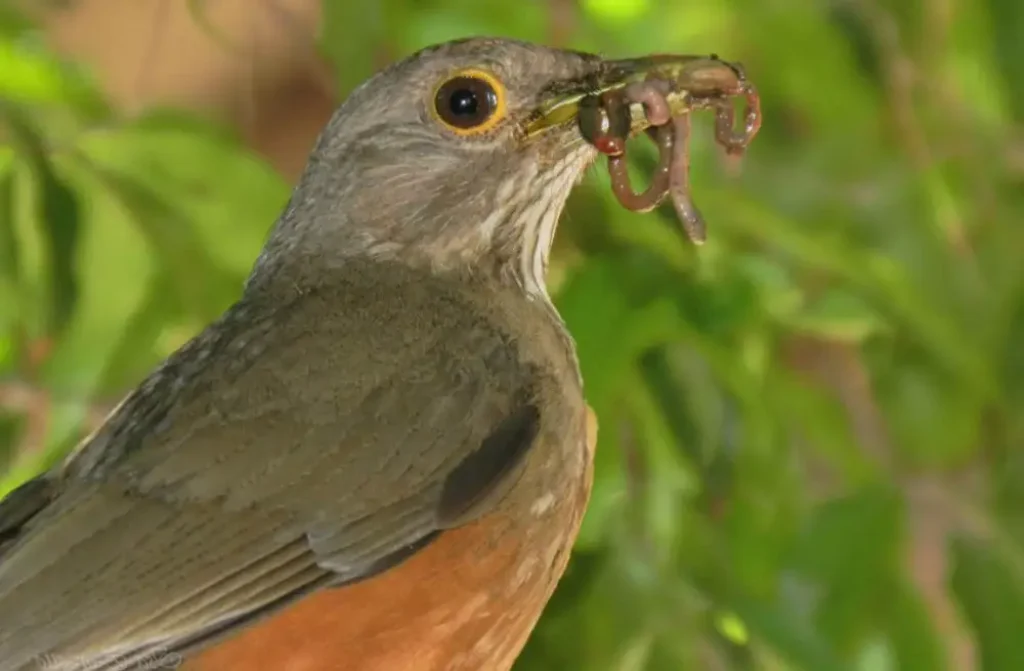
Rufous-bellied Thrushes spend much of their time hopping through grass and leaf litter searching for worms and insects.
Besides insects and worms, the species feeds heavily on berries and native fruits, helping regenerate forests naturally.

The species naturally occurs throughout the Atlantic Forest biome, one of the richest biodiversity hotspots on Earth.
Most intense singing activity happens before sunrise, especially during breeding season when males defend territories.
Despite their calm appearance, Rufous-bellied Thrushes aggressively chase away rival birds during nesting season.
The Rufous-bellied Thrush maintained stable populations while many forest birds declined in urban regions.
In Motion
Most people notice them on the ground first.
They move in quick hops or short little runs through grass and leaf litter, then suddenly freeze with their head tilted sideways.
A second later, worm gone.
Very efficient system.
2. The Sound: Songs vs. Calls
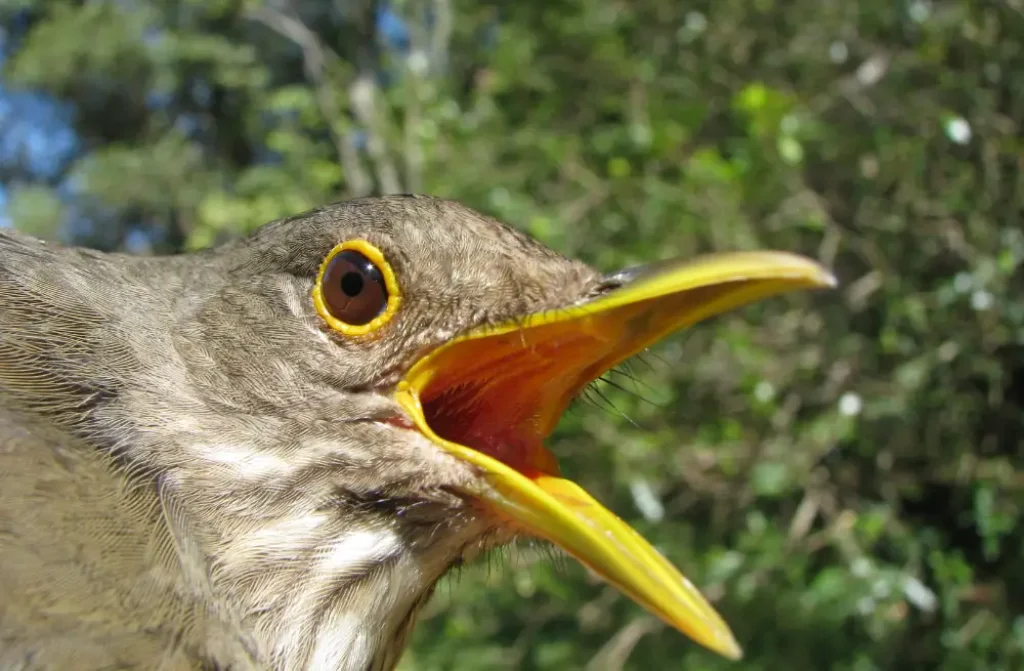
This is the part where the Rufous-bellied Thrush completely takes over the neighborhood.
The Song
If you have ever woken up absurdly early in Brazil because a bird outside sounded like it was performing a flute solo at sunrise, there is a good chance this was the species responsible.
The song is rich, slow, and melodic. Long whistles. Clean pauses. Repeated phrases drifting through streets before dawn.
And they LOVE singing early.
Not sunrise early. Before sunrise early.
One bird starts singing. Another answers from a few blocks away. Then suddenly the entire neighborhood sounds cinematic.
Slightly annoying when you want to sleep in.
Still beautiful though.
Calls
Their regular calls are much sharper and more practical sounding.
When alarmed or irritated, they produce quick metallic notes, usually something like “tuck-tuck-tuck” or dry chattering sounds. If a cat appears nearby, the mood changes instantly. Calls speed up, posture stiffens, and nearby birds start reacting too.
Bird panic spreads fast.
3. Diet & Foraging Secret Weapons
Most people assume thrushes hunt mainly by sight.
Not really.
Yes, Rufous-bellied Thrushes eat worms, beetles, spiders, insects, berries, and fallen fruit. But the interesting part is how they locate food.
Watch one carefully on a lawn and you will notice a pattern:
Run. Stop. Tilt head sideways. Freeze completely.
Then suddenly they pull a worm from underground like some kind of tiny magician.
Which honestly makes them much cooler than people give them credit for.
During fruiting seasons, they also become important seed dispersers. Eat fruit. Fly somewhere else. Accidentally plant a tree there later. Nature has weird systems.
4. Range, Habitat & Weirdly Successful City Life
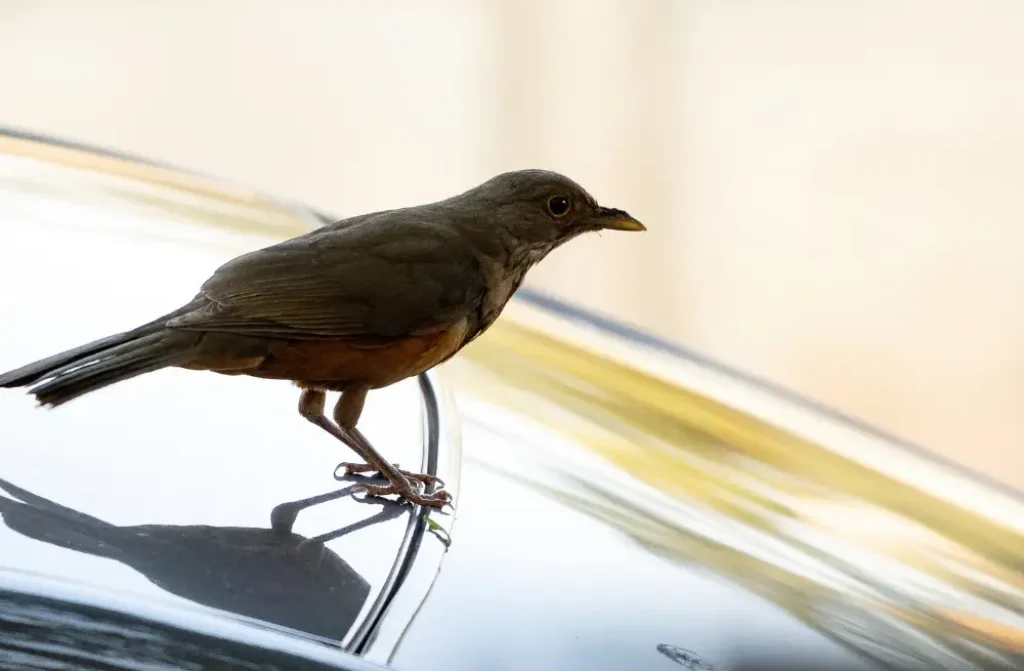
The Rufous-bellied Thrush is native to eastern and southern South America, especially Brazil, Paraguay, Uruguay, Bolivia, and northeastern Argentina.
But Brazil is really where this bird became iconic.
You find them in Atlantic Forest edges, city parks, suburban gardens, schoolyards, backyards, quiet streets with too many fruit trees, and random empty lots with overgrown vegetation.
Unlike many native birds, they adapted extremely well to human spaces.
Watered lawns are full of worms. Gardens provide fruit. Shrubs offer cover for nests. Cities accidentally created excellent thrush habitat.
Meanwhile other species disappeared once urban expansion started.
The thrush stayed.
5. Nesting & Secret Family Drama
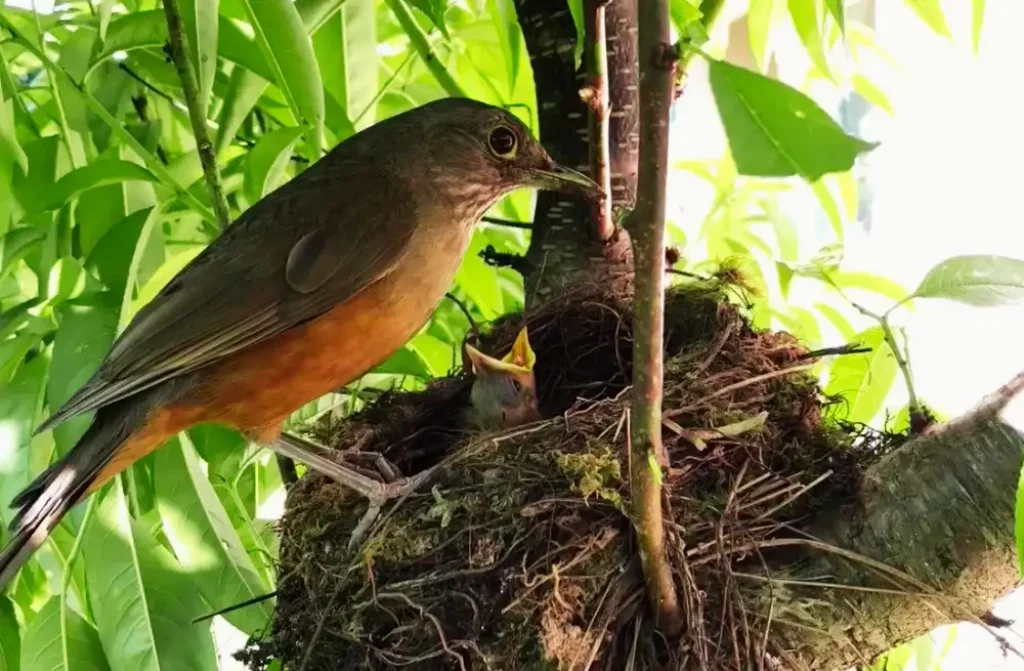
During breeding season, Rufous-bellied Thrushes become surprisingly intense.
Nest Architecture
Their nests are sturdy bowls made from mud, roots, grasses, leaves, and small twigs. The mud layer works almost like cement, helping keep the structure solid during rain.
They build nests in trees, shrubs, vines, balconies, gutters, window ledges, and occasionally places that seem ridiculously exposed.
I once saw one nesting beside an air conditioner unit in the middle of a noisy apartment building. Apparently that was acceptable real estate.
Parenting
Females usually lay between 2 and 4 eggs, but both parents help feed the chicks afterward.
The males also become extremely territorial during nesting season. Constant singing. Chasing rivals. Alarm calls at anything suspicious.
Including humans sometimes.
Tiny bird. Massive confidence.
6. Conservation & Backyard Tips
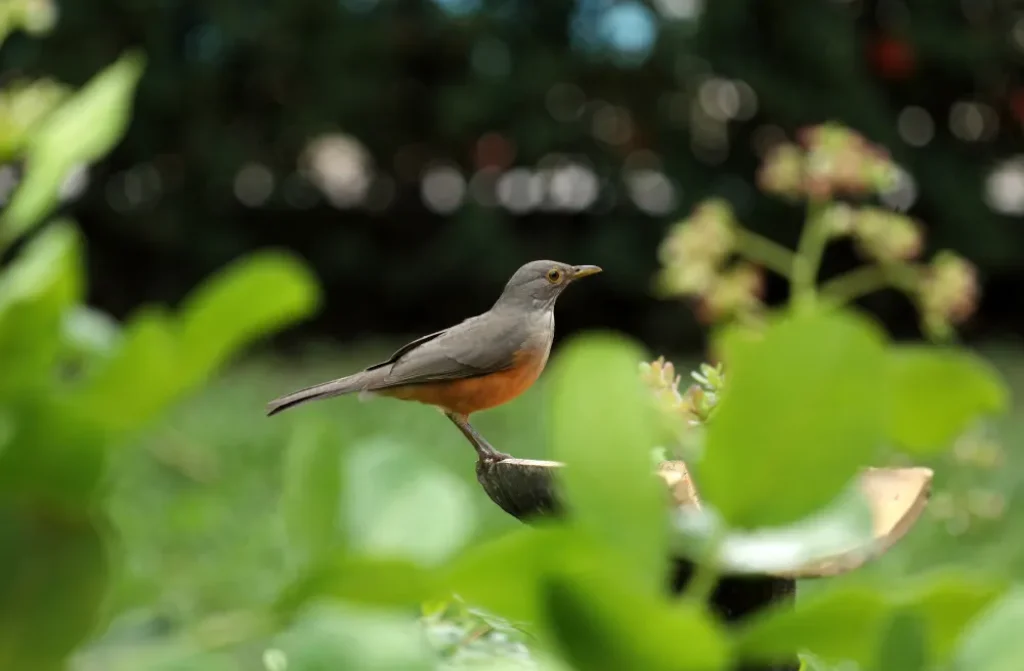
Right now, the Rufous-bellied Thrush is doing fairly well overall and remains one of the most common native songbirds across much of Brazil.
That does not mean urban life is harmless though.
Main threats include:
- Domestic cats
- Pesticides reducing insect populations
- Window collisions
- Habitat fragmentation
- Illegal cage-bird trade in some regions
Still, compared to many South American birds, this species adapted remarkably fast.
How to Attract Rufous-bellied Thrushes
If you want them visiting your yard regularly, focus on three things: food, water, and dense vegetation.
Native fruiting trees work especially well, including:
- Pitanga
- Jabuticaba
- Guava
- Mulberry
- Native palms
They also love shallow water dishes for bathing during hot afternoons.
And yes, chopped papaya works ridiculously well. Sometimes suspiciously well.