Light-mantled Albatross

The Light-mantled Albatross (Phoebetria palpebrata) is a sleek, medium-sized seabird that spends almost its entire life flying over the freezing, wind-swept waters of the Southern Ocean.
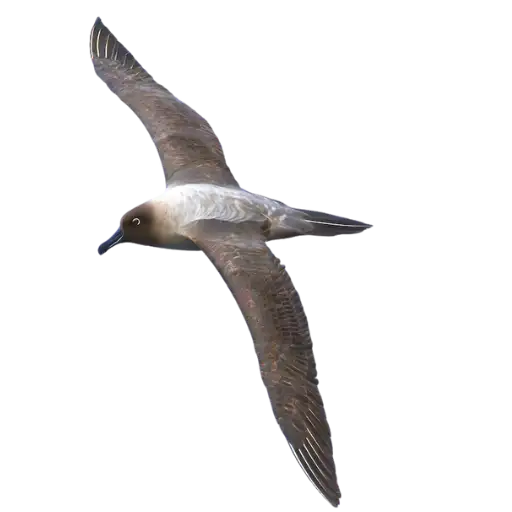
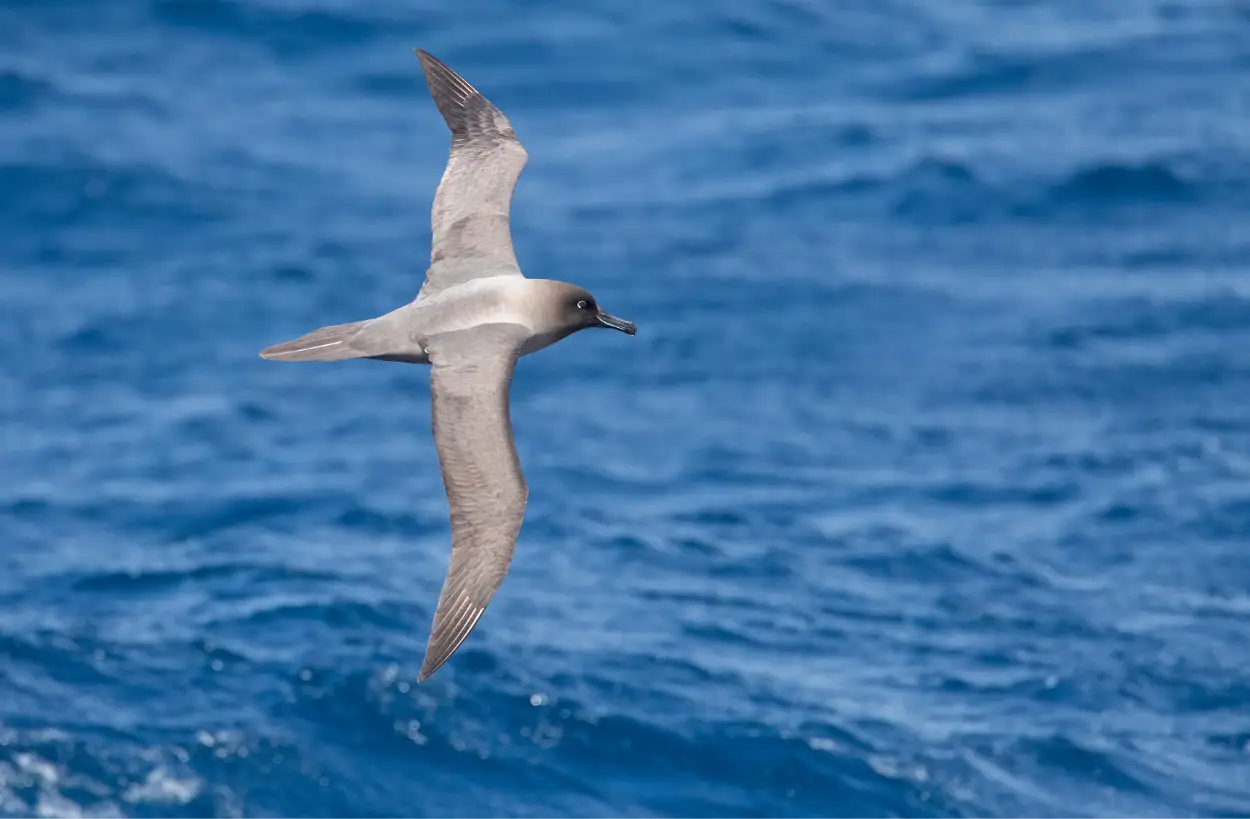
Known for its smoky charcoal-brown plumage and ghostly ash-grey back, this incredible bird is widely considered one of the most elegant flyers on Earth.
First described by scientists in 1785, it is a master of using massive ocean winds to glide for thousands of miles without ever flapping its wings.
Scientific Classification
View Additional Quick Facts
Light-mantled Albatross
Named for its strikingly distinctive ash-grey mantle and back, which contrasts sharply with its darker, soot-brown head, wings, and tail. This elegantly shaded plumage gives the illusion of a light-colored cloak or mantle draped over its body.
Phoebetria palpebrata
Wingspan
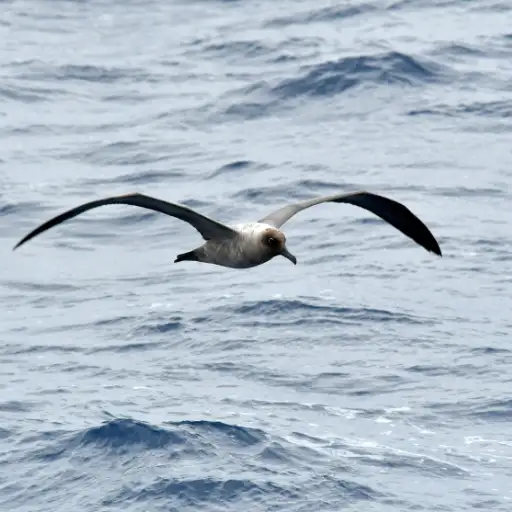
A highly adapted marine wanderer that spends the vast majority of its life cycle navigating global oceans, returning to land solely to breed.
Encompasses all feathered, winged, bipedal, endothermic (warm-blooded), egg-laying, vertebrate animals.
The taxonomic order of tubenosed seabirds, uniquely characterized by external tubular nostrils used for dynamic scent tracking and salt excretion.
The definitive albatross family, celebrated for commanding the largest wingspans on earth and masterful wind-gliding performance.
A specialized genus consisting exclusively of the two sooty albatross species, known for darker plumages and elegant, narrow wings.
The precise species label highlighting its diagnostic, bright white partial eye-ring that frames its dark face.
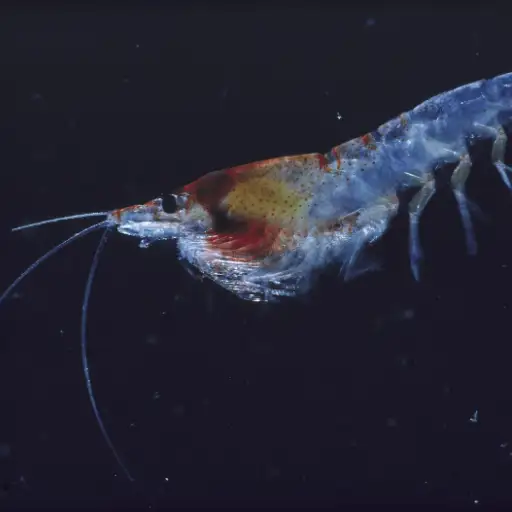
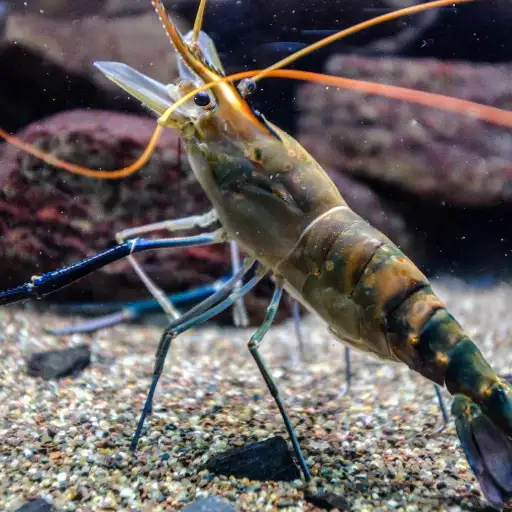
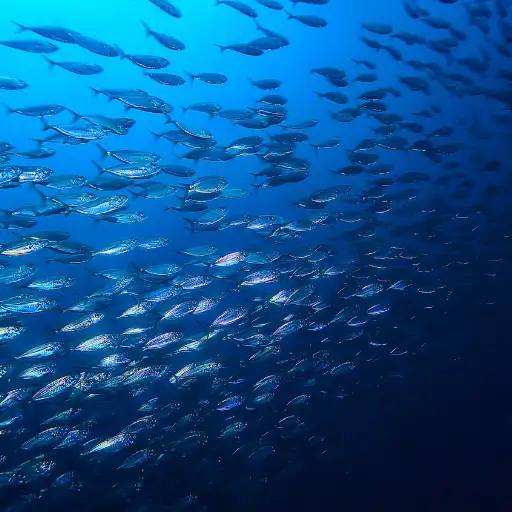
Plucks pelagic prey directly from the ocean surface, focusing heavily on squid, krill, small fish, and floating carrion.
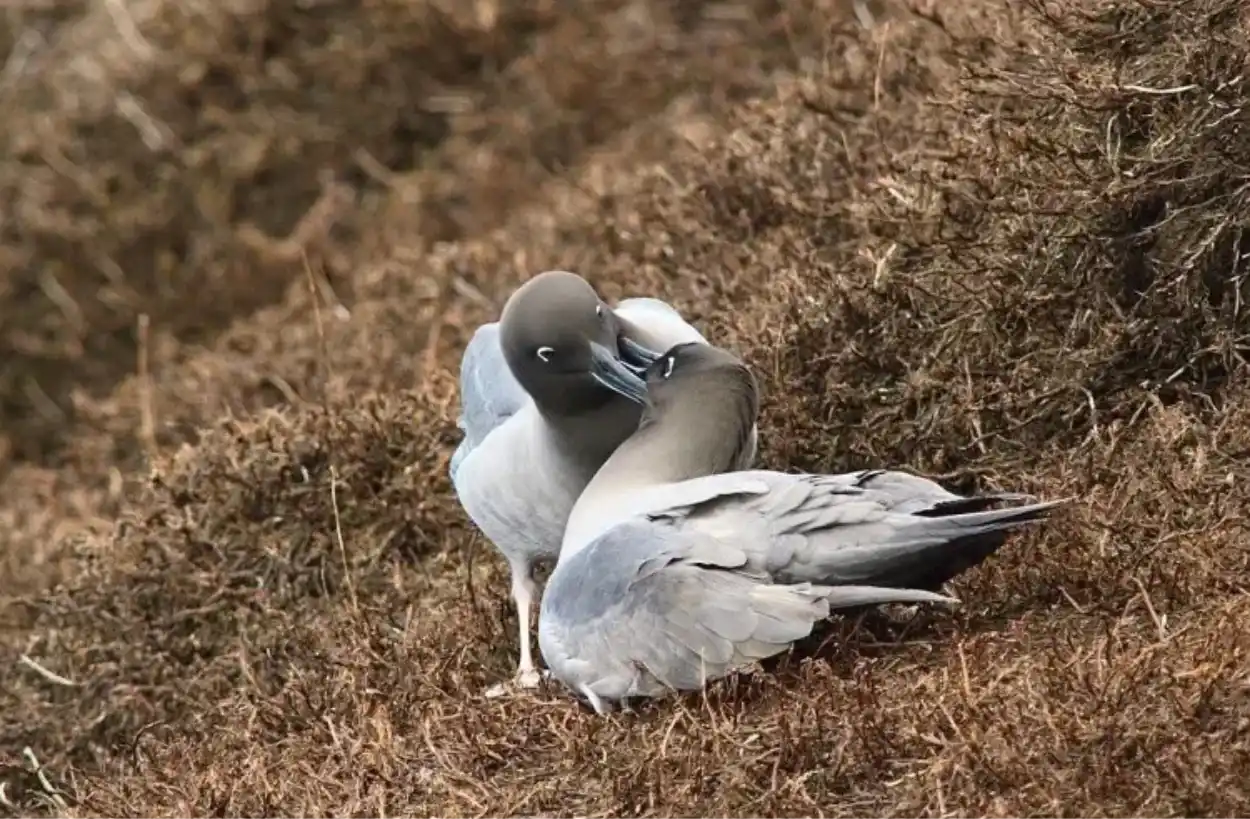
Ranges widely over freezing subantarctic waters and southern oceans, choosing rugged, vegetated island cliffs for nesting.
Maintains relatively stable numbers across its isolated southern range, though carefully tracked for longline fishing risks.
How to Identify Them (Field Marks)
The Light-mantled Albatross is one of the most elegant seabirds in the Southern Ocean. Unlike the large white albatrosses that stand out from a distance, this species has a sleek, dark appearance with soft color transitions that almost seem painted onto its feathers. Many birdwatchers compare its shading to that of a Siamese cat because of the way the darker and lighter tones blend together.
Adults
Adult Light-mantled Albatrosses are mostly covered in deep, smoky-brown plumage, with the darkest feathers concentrated around the head, face, and wings. This dark coloration gradually fades into a beautiful ash-grey mantle that spreads across the back, neck, and upper body, creating the bird’s signature “light-mantled” appearance.
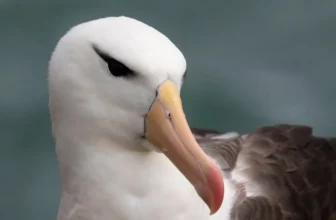
One of the easiest field marks to spot is the striking white crescent that curves around each eye, giving the bird a sharp, almost intense expression. The bill is long, slender, and entirely black, measuring around 10.5 cm (4 inches) in length. Along the lower edge of the bill runs a thin blue or violet line that can appear surprisingly bright in good light. Males and females look virtually identical, making them impossible to tell apart in the field based on appearance alone.
Juveniles
Young birds closely resemble adults, but their plumage lacks the clean contrast seen in fully mature individuals. The pale grey mantle is usually less distinct and often mixed with darker brown mottling, giving the bird a slightly scruffier appearance. Their eye crescents may also appear less obvious, and the colorful line along the bill is much duller, often looking greyish rather than blue. As the bird ages, these features gradually become sharper and more defined, eventually developing into the sleek, striking look of an adult.
The Sound: Sky-Calling Duets
While roaming the open ocean, the Light-mantled Albatross is a completely silent wanderer. However, everything changes when they return to land for the breeding season.
Their primary call is a loud, ringing, trumpet-like bray that carries over the sound of crashing waves. When defending their nests or greeting a mate, they perform a behavior called “sky-calling.” A bird will point its bill straight up to the sky and let out a shrill cry, which its partner will instantly echo. If threatened by an intruder, they will rapidly snap their upper and lower bills together, making a loud, wooden clicking sound to warn them away.
Observation Videos & Courtship Displays
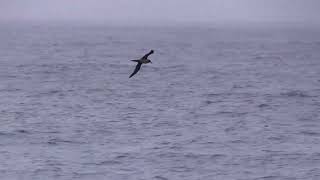
Light-mantled Albatross Close-up
A detailed observation highlighting the soot-colored plumage and distinct white eye-ring of the Phoebetria palpebrata.
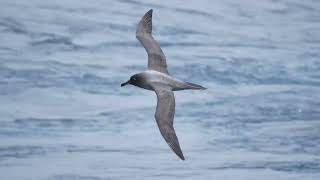
Macquarie Island Flight Mechanics
Footage capturing pelagic dynamic soaring patterns over choppy waters in the Sub-Antarctic northeast of Macquarie Island.

Sub-Antarctic Island Nesting Grounds
An insightful view of solitary nesting habits on steep, vegetation-covered coastal cliffs in the wild Southern Ocean.
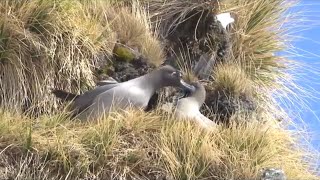
Synchronized Courtship Rituals
Remarkable capture of air courtship routines, demonstrating flawless precision and lifelong mate pairing alignments.
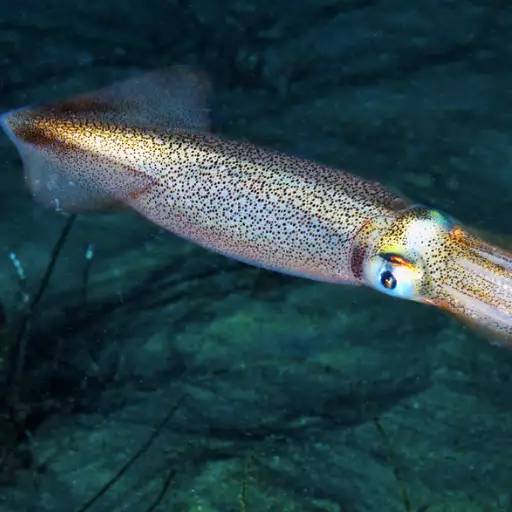


Range, Habitat & Pelagic Mastery

Explore Circumpolar Southern Oceans
The Light-mantled Albatross has a massive home range, covering over 44 million square kilometers of open water across the bottom of the globe.
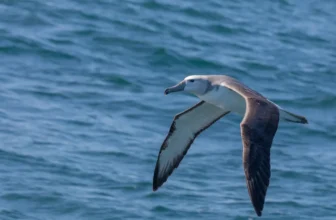
They spend their non-breeding lives entirely at sea, circling Antarctica. They easily handle the freezing temperatures of the far south, with some birds spotted right at the edge of the Antarctic ice pack. They rely on a flight technique called dynamic soaring—by catching the changing wind speeds just above ocean waves, they harvest energy from the wind itself, allowing them to glide for days without spending energy.
Nesting & Cliffside Cities
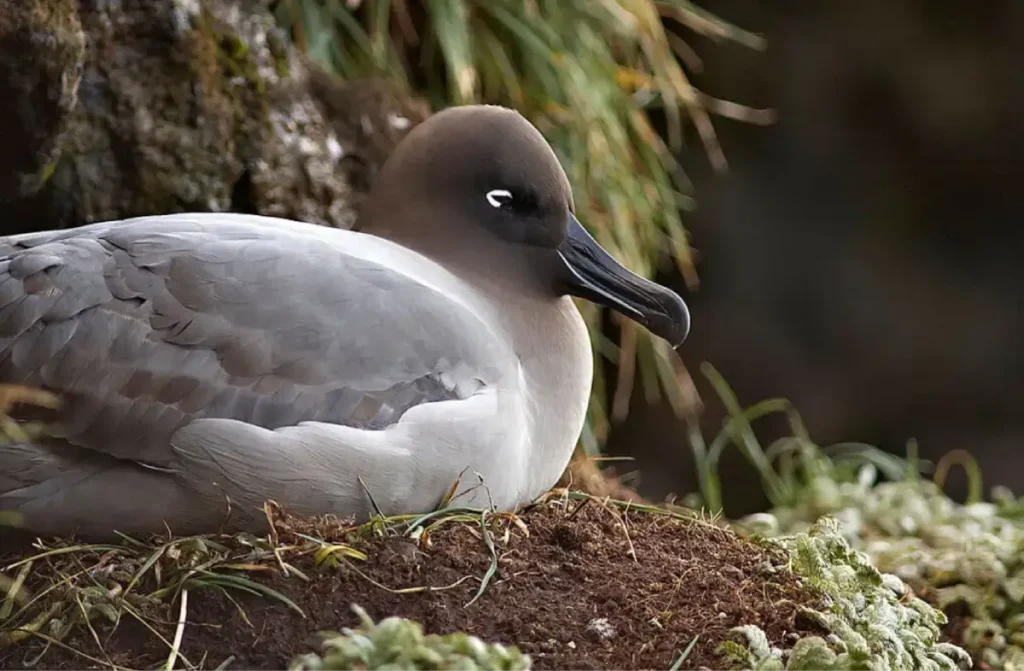
When it is time to lay eggs, the Light-mantled Albatross avoids flat beaches, choosing steep, dramatic cliffs instead.
Cliffside Architecture
Unlike other albatrosses that nest in flat, crowded colonies of thousands of birds, this species prefers privacy. They are solitary breeders, nesting either completely alone or in small, spread-out groups on vertical cliff ledges and rugged slopes.
They build a neat, sturdy cone-shaped nest out of mud, peat, and roots, lining the top with soft grass. These mounds sit up to 30 cm (11 inches) high, protecting the single egg from freezing puddle water and keeping it safe from any land predators.
Family Dynamics
Pairs form deeply loyal, lifelong bonds and follow a strict biennial breeding cycle (breeding only once every two years). Raising a chick takes so much energy that they can usually only fledge one successful chick every five years.
The female lays a single white egg in October or November. Both parents take turns sitting on the egg for nearly 70 days.
Once the chick hatches, the parents take turns foraging at sea, sometimes flying thousands of miles on a single trip to bring back digested squid and krill for the hungry chick.
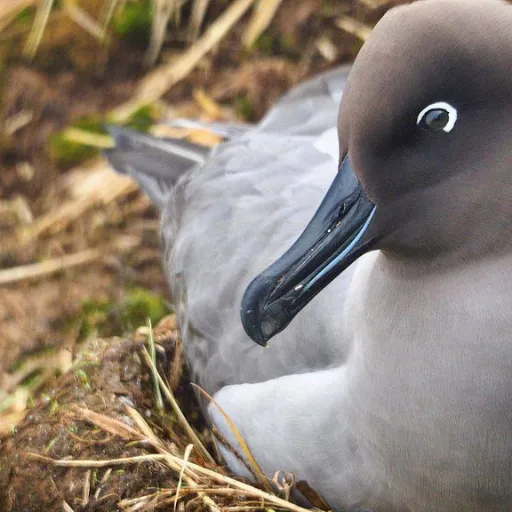
The young albatross stays on its cliffside pedestal for up to five months before finally taking its very first flight into the ocean winds.
Conservation & Observation Facts
Scientists estimate there are roughly 58,000 Light-mantled Albatrosses in the wild, but their global population is currently declining.
Main Threats Include:
- Longline Fishing Hooks: Commercial fishing boats trail miles of lines with baited hooks. Albatrosses dive for the bait, get caught on the hooks, and are dragged underwater.
- Ocean Plastics: Floating plastics are easily mistaken for food. Parents accidentally scoop them up and feed them to chicks, causing internal damage and starvation.
- Shifting Currents: Rising ocean temperatures push cold-water squid and krill further away, forcing parents to fly much further to find food.
Finding Them in the Wild
To see these birds up close during the breeding season, researchers and wildlife observers travel by boat to remote sub-Antarctic islands.
- South Georgia Island: The absolute stronghold for the species, where thousands of pairs build their nests along the sheer, grassy coastal cliffs.
- Macquarie & Campbell Islands: Critical nesting islands south of Australia and New Zealand, offering great land-based viewing points.
- The Drake Passage: The turbulent stretch of water between South America and Antarctica, where non-breeding birds love to glide alongside expedition vessels.
Frequently Asked Questions