Burrowing Parrot
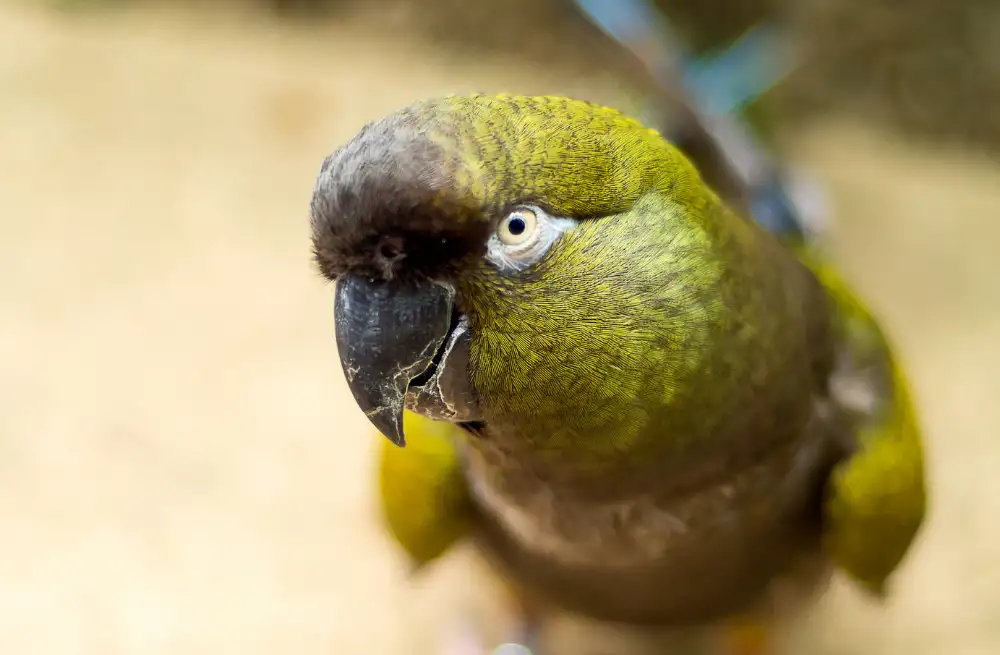
The Burrowing Parrot (Cyanoliseus patagonus) is a vibrant, medium-sized parrot native to the rocky cliffs and arid scrublands of Argentina and Chile.
Known for its loud, unmistakable call and its habit of digging deep nesting tunnels into sandstone cliffs, this resilient species forms the largest single-species parrot colonies on Earth.
First described in 1788, it remains one of the most unique examples of avian architecture in the natural world.
Scientific Classification
View Additional Quick Facts
Burrowing Parrot
Named precisely for its exceptional and highly unusual nesting style. Unlike most parrots that utilize tree hollows, this specialized species excavates deep, intricate breeding burrows along vertical sandstone, limestone, or earth cliffs.
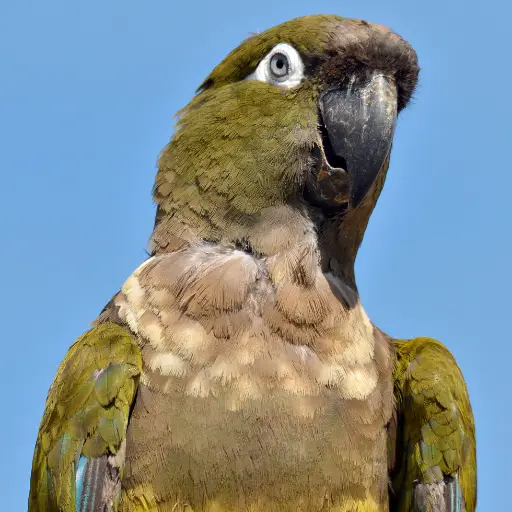
Cyanoliseus patagonus
A brilliant lineage of colorful parrots natively distributed across the tropical and temperate zones of South and Central America.
Encompasses all feathered, winged, bipedal, endothermic (warm-blooded), egg-laying, vertebrate animals.
The definitive order containing all true parrots, parakeets, macaws, and cockatoos, characterized by strong curved bills and zygodactyl feet.
A diverse biological family focusing heavily on New World and African parrots, distinguished by their immense intelligence and crushing bills.
A specialized monotypic genus created entirely to classify this unique cliff-excavating and highly colonial parrot species.
The exact species tag recognizes the windswept Patagonia plains and scrublands that form the historical core of its wild range.
Utilizes a powerful crushing bill to crack tough wild seeds, grains, berries, seasonal fruits, and vegetable matter found on the ground.
Thrives across open arid Monte savannas, dry scrublands, pasture edges, and steep sandstone valleys flanking river systems.
Monitored due to localized habitat alterations and historical capturing pressures, keeping regional populations vulnerable.
How to Identify Them (Field Marks)
The Burrowing Parrot stands out sharply against the dry, dusty cliffs it calls home. Its plumage is a striking mix of dark tones and bright, unexpected highlights.
Adults
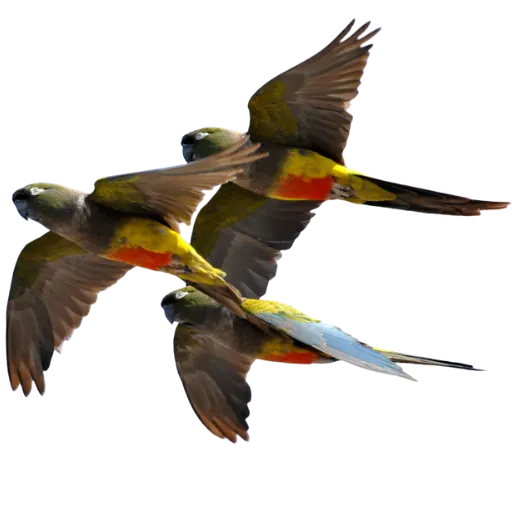
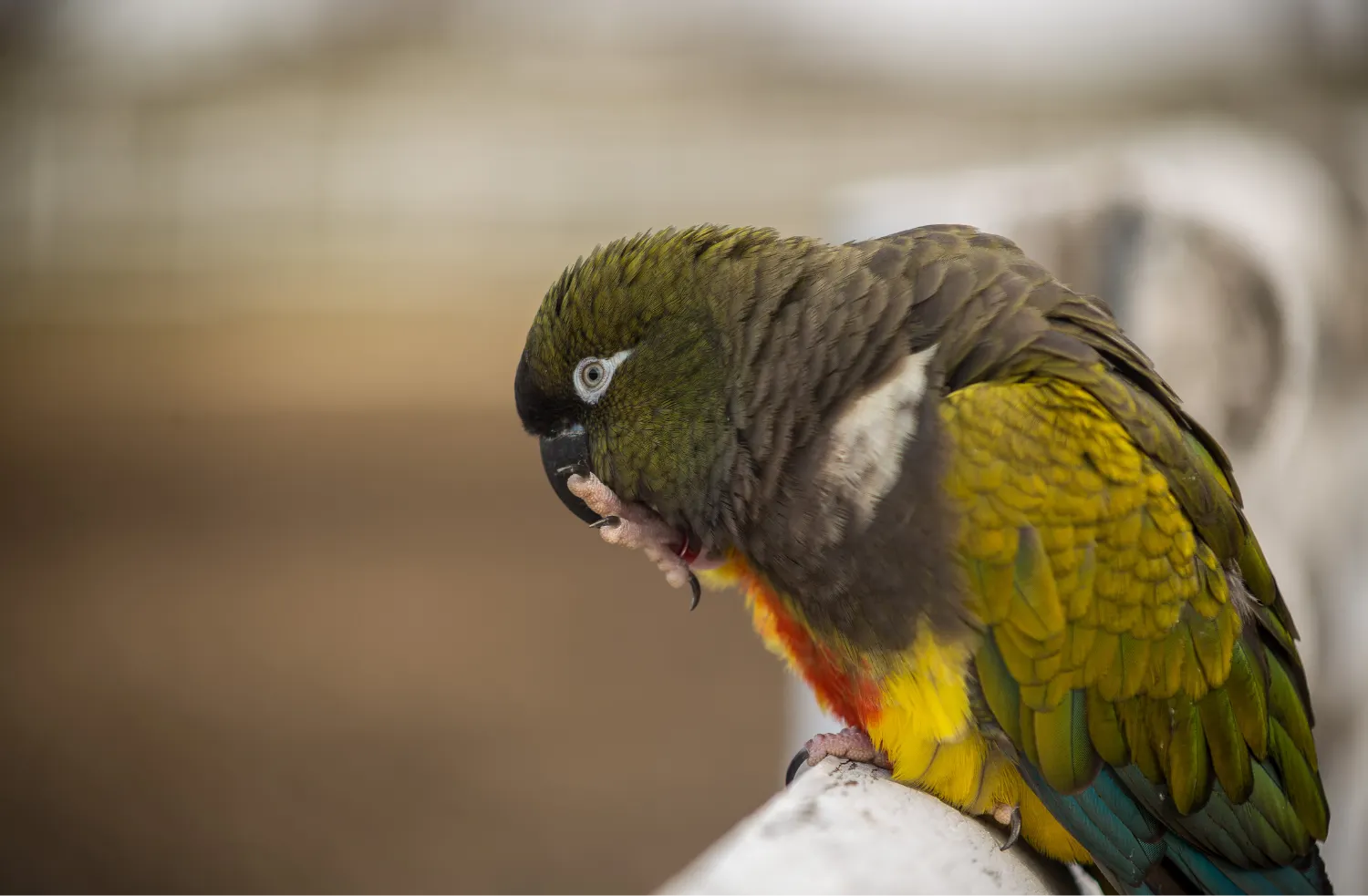
The face and upper parts are a dark olive-green, which serves as natural camouflage against desert vegetation. The breast features a distinct whitish-gray band across the chest, creating a clean visual boundary before the bright colors below.
The most prominent feature is lower down, where a bright yellow abdomen displays a patch of vibrant red right in the center of the belly. Blue flight feathers line the edges of the wings, flashing clearly when the bird is in motion. They carry themselves with an alert, energetic posture.
Juveniles
Younger birds look like a slightly faded version of their parents. The bright red belly patch is much smaller and less defined, and their upper bills are often pale white instead of the mature dark gray. They look like an adult parrot that has simply not finished developing its full coloration.
The Sound: Colony Communication
This is the part where the Burrowing Parrot completely dominates its environment.
If you are anywhere near a Patagonian cliffside during the breeding season, the noise is constant. Their call is a loud, piercing, metallic screech that sounds like a sharp “Kee-ahr.” It carries for miles over open ground.
They are highly vocal animals. They call when they wake up, they call when they fly in flocks, and they call to establish boundaries over nesting space. When one bird gets startled, the alarm spreads quickly, and the entire cliffside erupts into collective noise. It can be overwhelming up close, but it serves as an essential survival tool for the community.
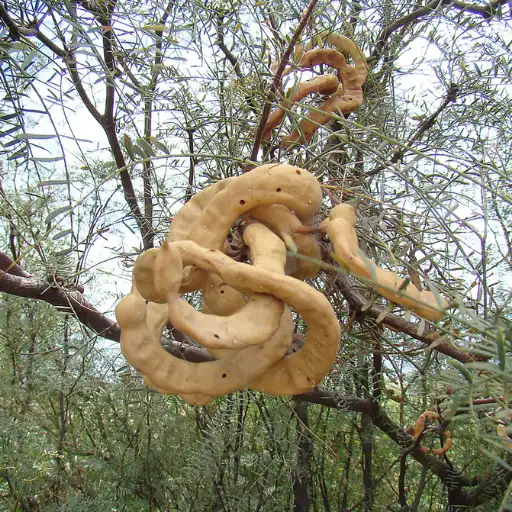
Relationship: Using strong, curved beaks, they effortlessly slice through tough outer fibers to slice away single, nutrient-dense interior seeds.
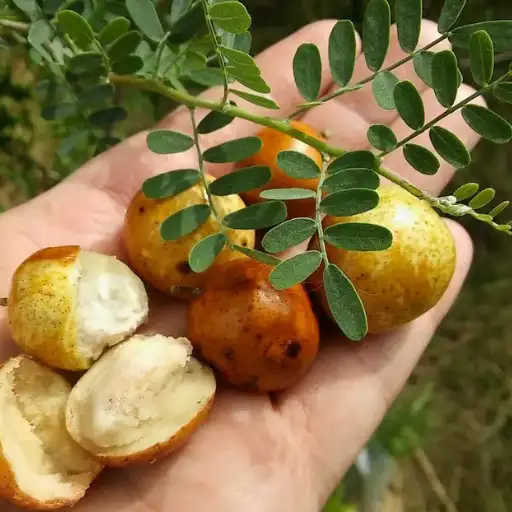
Relationship: Parrots scrape off sweet external layers to digest vital sugars, acting as localized environmental crushers of hard woody pits.
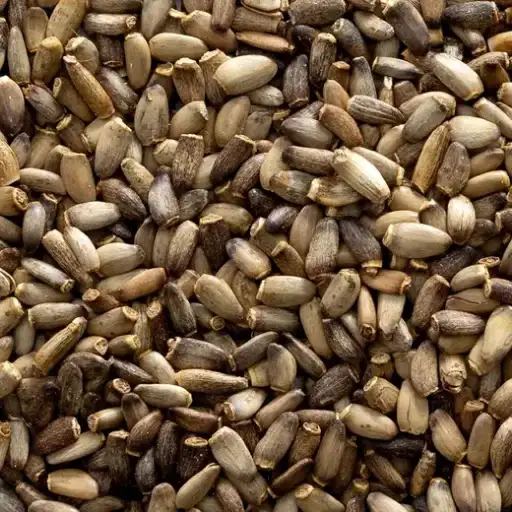
Relationship: They handle sharp composite flower clusters carefully with a highly flexible tongue to strip out oil seeds safely.
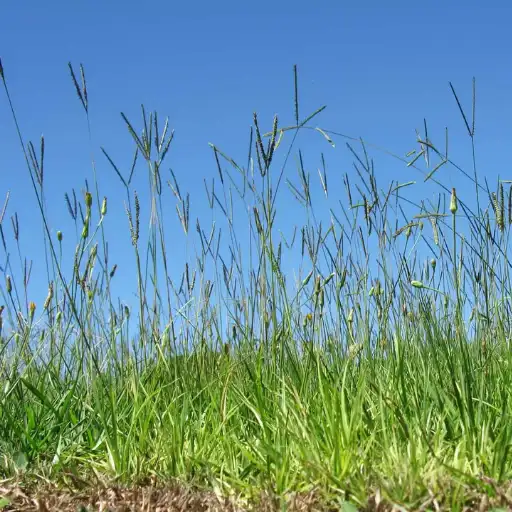
Relationship: Parrots pin dry stalks against the soil with their toes, pulling their beaks upward to strip long stems clean.

Relationship: They remove seed coats expertly in a matter of seconds, making agricultural fields a popular foraging site.

Relationship: Their powerful crushers easily rip open thick husks, systematically extracting and fragmenting dry kernels.
Range, Habitat & Agricultural Adaptability
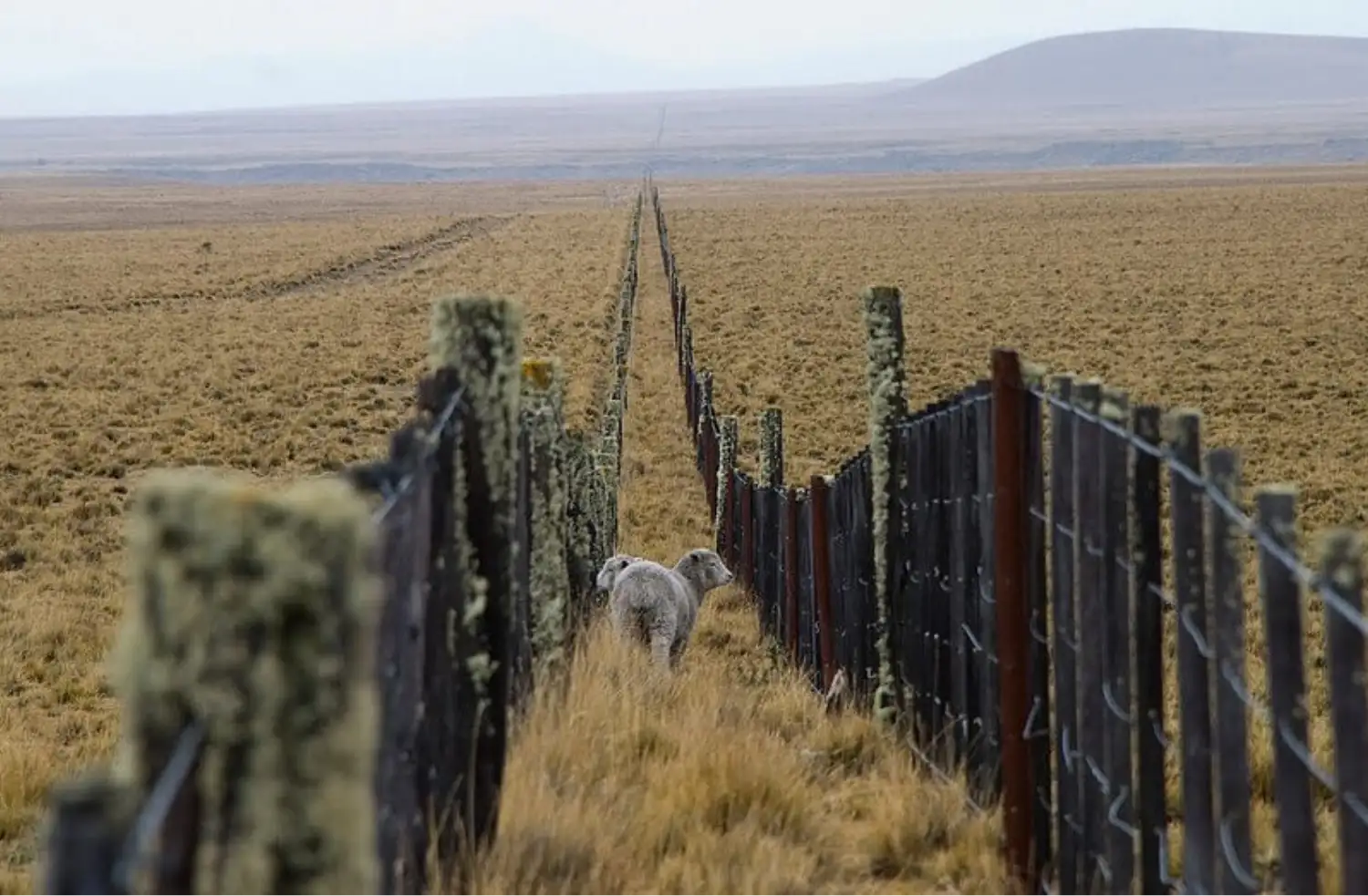
The Burrowing Parrot is native to the southern cone of South America, primarily dominating the Monte desert and Patagonian regions of Argentina, with small populations clinging to the rocky valleys of Chile.
They avoid lush rainforests, choosing dry scrublands, open fields with plenty of seeds, and massive limestone or sandstone cliffs facing water.
While urban expansion has altered some traditional areas, they have adapted remarkably well to agricultural zones. Fields of grain provide an abundant food source. The birds routinely fly up to thirty miles a day from their cliffs just to forage in agricultural fields, showing how easily they can pivot to exploit human-altered landscapes.
Nesting & Cliff Labyrinths
During the breeding season, Burrowing Parrots reveal their true specialty as diggers.
Cliff Architecture
They do not build nests out of twigs. Instead, they use their heavy, curved bills and strong claws to tunnel deep into the faces of solid sandstone cliffs.
These tunnels are not shallow holes. They can bend, twist, and reach up to ten feet deep into the rock face, ending in a dark, safe nesting chamber. Even more impressive, these tunnels often interconnect inside the cliff, creating a massive, underground labyrinth of parrot pairs. The single colony at El Cóndor in Argentina holds over 35,000 active nests, making it a massive subterranean city.
Family Dynamics
Pairs form deeply loyal, lifelong monogamous bonds. They take their real estate seriously, returning to the exact same tunnel year after year.
Both parents take turns incubating the two to five eggs and raising the chicks in absolute darkness deep inside the cliff. Defense of these holes is intense. If an intruder or another parrot looking to steal a pre-dug hole gets too close, the resident will stand at the entrance and actively defend the territory until the rival backs off.
Conservation & Observation Facts
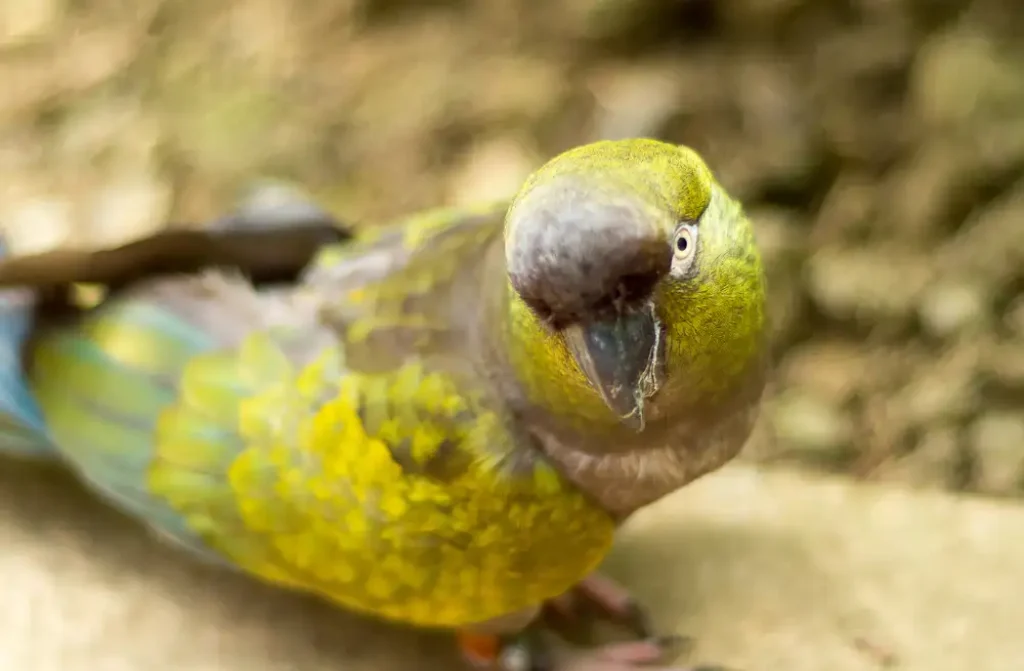
Right now, the Burrowing Parrot is doing relatively well in Argentina, but the Chilean subspecies (Cyanoliseus patagonus bloxami) is highly endangered and facing severe threats.
Main threats include:
- The Pet Trade: Because they are intelligent and colorful, thousands have been targeted by illegal trapping.
- Habitat Destruction: Clearing native scrubland for heavy agriculture destroys their primary wild food sources.
- Persecution: In certain regions, they are viewed as agricultural pests by crop farmers who use harsh measures against them.
Finding Them in the Wild
To witness the spectacle of thousands of these birds returning to their cliffside apartments at sunset, researchers and observers head to the coastal cliffs of Patagonia, specifically El Cóndor in Río Negro, Argentina.
They require a few specific elements to thrive:
- Large, undisturbed sandstone cliffs near coastal or river corridors.
- Native fruit-bearing desert shrubs like Condalia and Lycium.
- Fresh water sources where hundreds will gather at a time to drink, bathe, and socialize before heading back to the caves.
Frequently Asked Questions
Find technical answers regarding the unique colonial behavior, terrestrial feeding adaptations, and ecological positioning of the Burrowing Parrot.