Black-browed Albatross
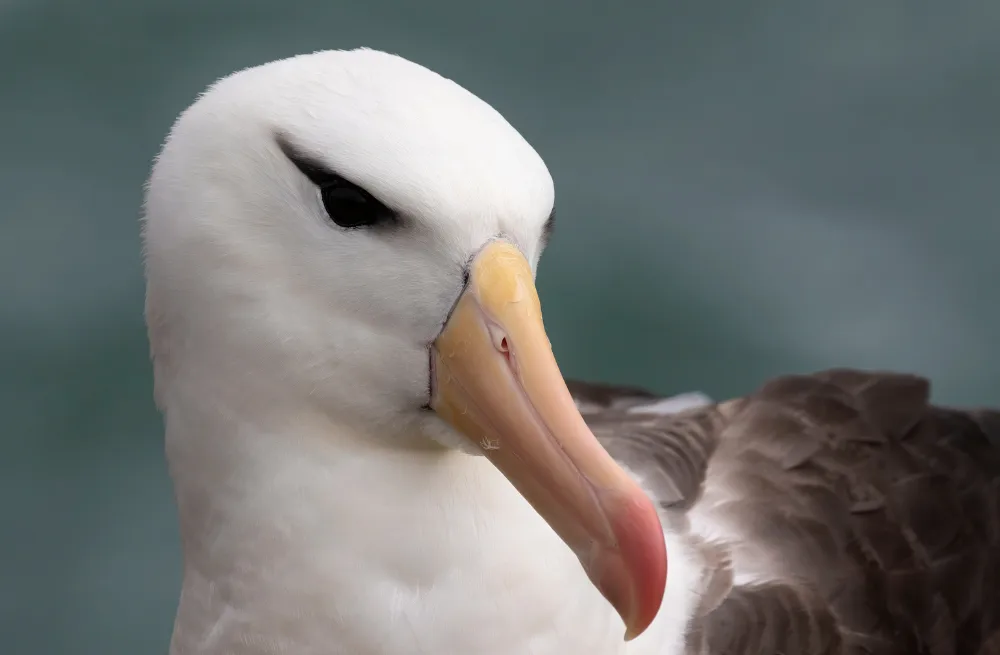
Few seabirds command the Southern Ocean like the Black-browed Albatross (Thalassarche melanophris). With a wingspan reaching 2.4 meters, a lifespan that can stretch well past 70 years, and a flight style so efficient it barely registers as effort, this species has spent millions of years perfecting life on the open sea.
It is the most abundant of all albatross species, breeding in dense colonies across the Falkland Islands, South Georgia, and a scattering of remote sub-Antarctic outposts, before dispersing across southern ocean waters that span three entire ocean basins.
The distinctive dark eyebrow marking that gives the bird its common name is more than a field mark. It has made the Black-browed Albatross one of the most photographed and studied of all pelagic seabirds, a flagship species for understanding the health of an ecosystem that covers nearly a quarter of the planet’s surface.
Yet even as scientific knowledge of the species deepens, so too does concern: populations face sustained pressure from human activity, making conservation as urgent a topic as natural history when discussing this remarkable bird.
Scientific Classification
View Additional Quick Facts
Black-browed Albatrosses spend most of their lives far from land, moving across massive expanses of the open ocean.
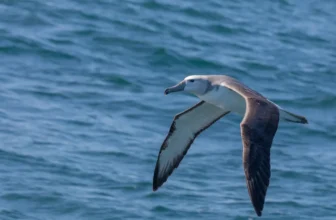
Using dynamic soaring techniques, these birds harness ocean waves to fly thousands of miles without flapping wings.
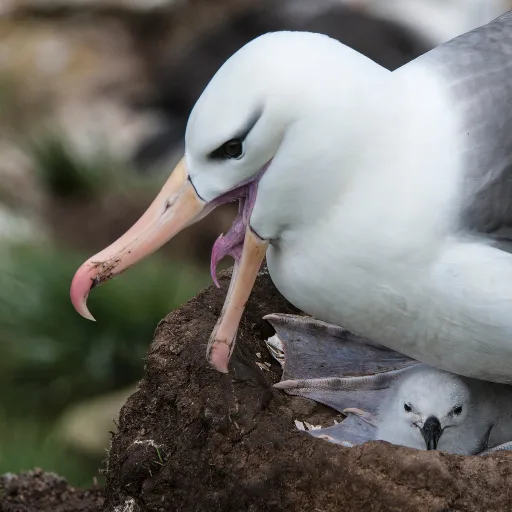
A dark grey smudge over each eye creates the prominent, striking eyebrow visual that gives the species its common name.
With wingspans measuring up to 7.5 feet (2.3 meters), their narrow design is built perfectly for riding sea breezes.
Features distinct tubular nostrils on top of the bill, links them directly with petrels, shearwaters, and storm-petrels.
Breeding colonies feature thousands of pairs nesting right alongside one another on wind-swept ocean cliffs.
Pairs form dedicated bonds that last for life, meeting at the exact same nest site every single year to breed.
Feeds primarily by snatching fish, krill, and squid directly from the water’s surface while swimming.
Capable of performing minor aerial plunge-dives down to several meters deep to catch fast-moving schools of prey.
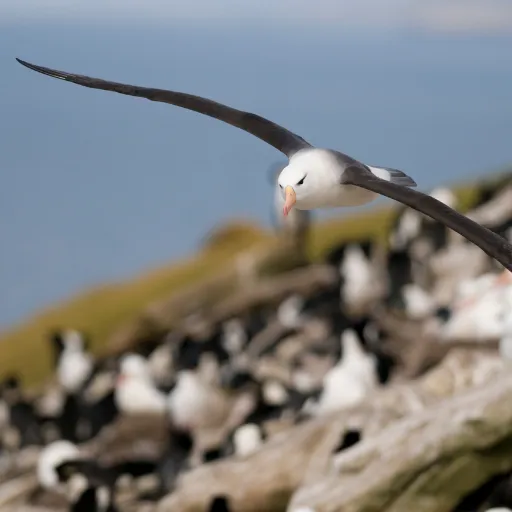
Requires isolated, predator-free landmasses like the Falklands or South Georgia to raise their single chicks.
Specialized nasal glands allow them to drink saltwater and flush out pure excess sodium directly through their bills.
Exhibiting delayed maturity, these birds survive for decades due to having very few natural predators out in the open sea.
Physical Appearance and Identification
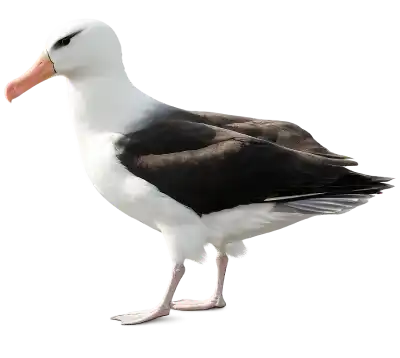
The Black-browed Albatross is among the most recognizable seabirds in the Southern Ocean, combining bold markings with a striking contrast of black and white that makes identification straightforward even at a distance or in flight.
The Brow The most defining feature is the dark grey-to-black stripe running above and through each eye, the marking that gives the species its name. Far from subtle, it lends the bird a permanently stern, focused expression, as though it is perpetually scanning the horizon.
The Bill Adults carry a bright orange-yellow bill tipped with pinkish-red, one of the most vivid features of any albatross and an instant field identifier for experienced birdwatchers.
Plumage The head, neck, and underparts are pure white, set against a dark grey back and upper wings. From below, the underwings are predominantly white but framed by a thick black border along the leading and trailing edges, a pattern so distinctive it can be used to identify the species from a moving boat with confidence.
Juvenile Plumage Juveniles differ notably from adults, carrying a darker brownish-grey bill and a greyish wash across the neck and head, with a dirtier underwing pattern showing more extensive black. As they mature over several years, the bill gradually brightens and clean adult plumage develops. Young birds are sometimes confused with other mollymawk species before these characteristic features fully emerge, so age-related variation is worth noting for birders.
Habitat, Range, and Migration Patterns
These birds are nomadic mariners of the Southern Ocean. They have a circumpolar distribution, meaning they fly across the entire globe in the southern hemisphere, utilizing powerful wind currents.
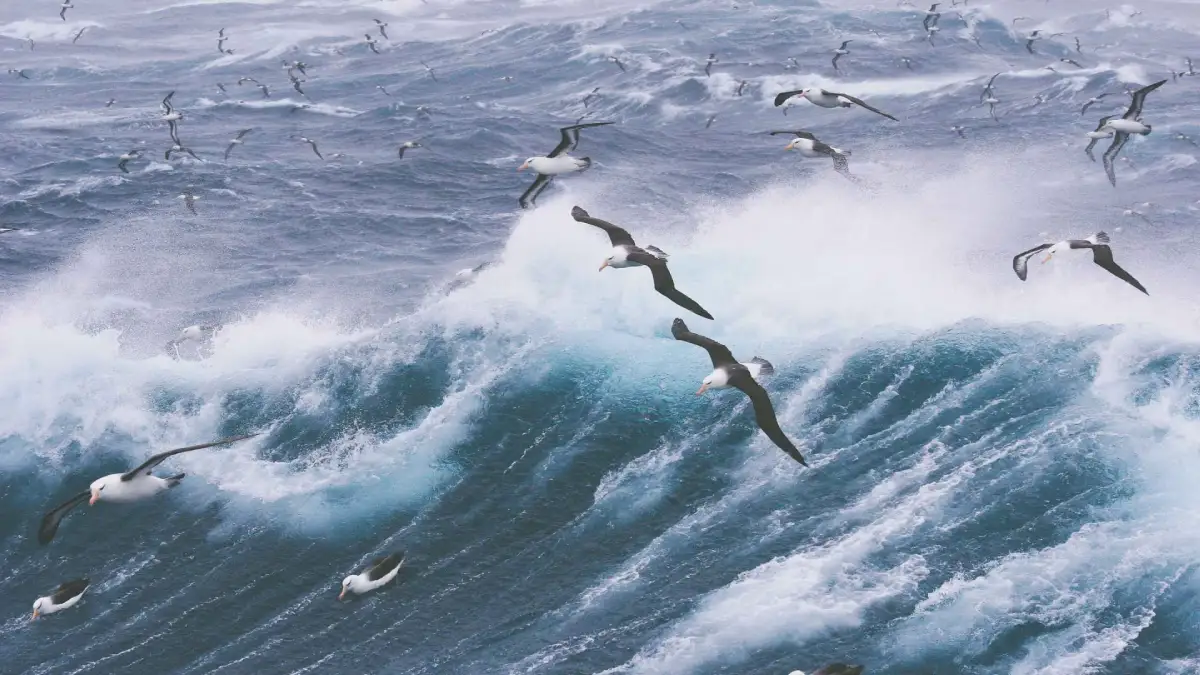
Masters of the Southern Ocean
Black-browed Albatrosses spend up to 80% of their lives at sea, often remaining completely out of sight of land. Using powerful Southern Ocean winds, they glide effortlessly across vast stretches of cold sub-Antarctic waters.
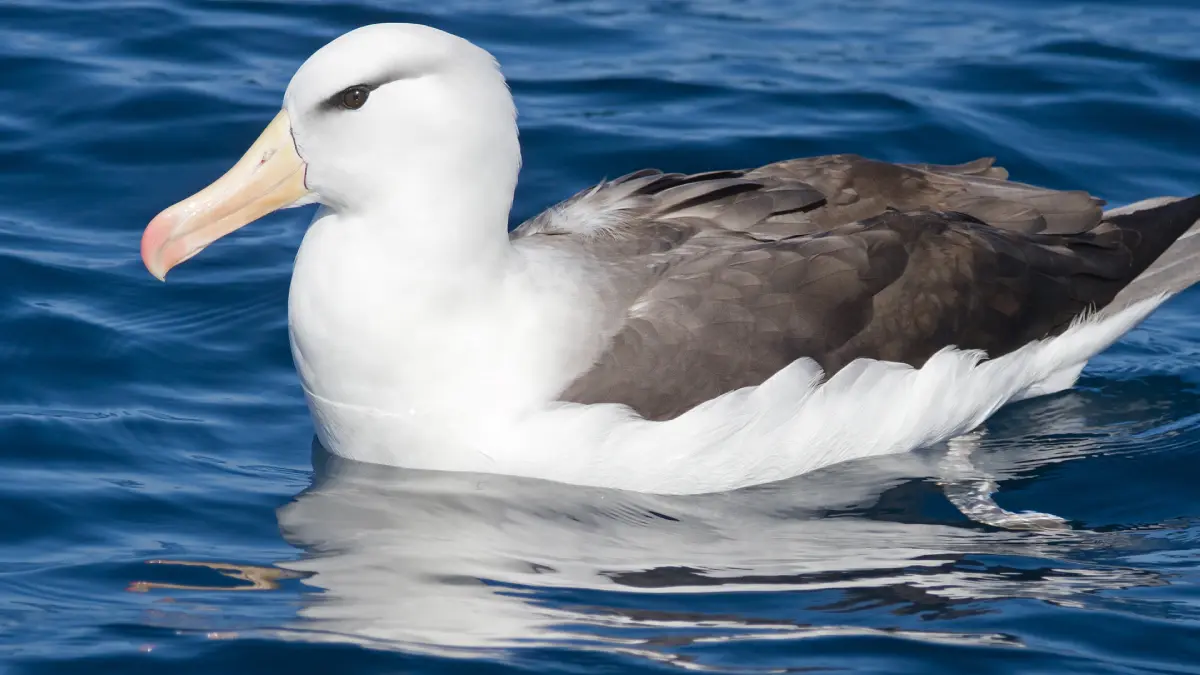
Global Population Stronghold
The Falkland Islands support approximately 70% of the world’s Black-browed Albatross population. Important breeding colonies are also found on South Georgia and islands off the coast of Chile.
Diet and Hunting Methods
The Black-browed Albatross is an adaptable seabird that takes advantage of a wide variety of food sources across the open ocean. As an opportunistic feeder, it searches vast stretches of water for prey, often following productive ocean currents and areas where food is abundant.
Surface Feeding
Most of the bird’s food is collected directly from the ocean’s surface. The Black-browed Albatross commonly uses a technique known as surface-seizing, where it lands on the water and quickly snatches prey floating near the surface. This method allows it to feed efficiently while expending minimal energy.
Shallow Diving
Although it is not a specialized diving bird, the Black-browed Albatross can perform shallow plunge-dives when necessary. By dropping from the air and briefly submerging, it is able to capture prey located several feet below the surface.
An Efficient Ocean Hunter
Its combination of soaring flight, sharp eyesight, and flexible feeding behavior makes the Black-browed Albatross a highly effective hunter. Rather than relying on a single technique, it adapts its hunting strategy to changing ocean conditions and available food sources.
Breeding and Lifelong Mating Rituals
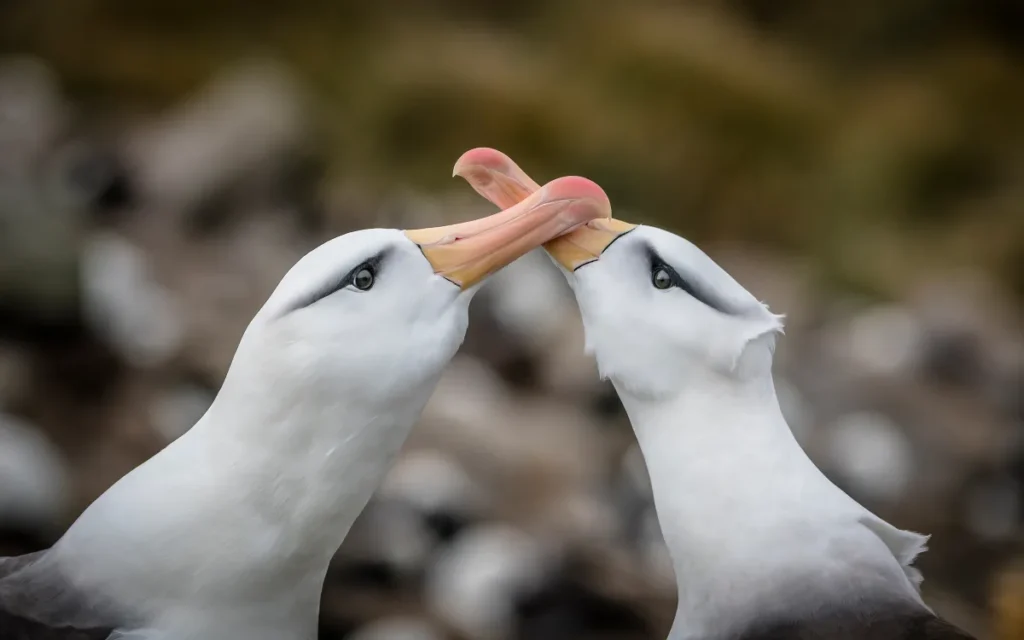
The Black-browed Albatross is renowned for its strong pair bonds and remarkable breeding behavior. Like many albatross species, these seabirds invest heavily in raising their young, forming long-lasting partnerships that can endure for decades.
Monogamous Partners
Black-browed Albatrosses are highly monogamous and typically mate for life. Once a pair bond is established, the same male and female usually reunite each breeding season, returning to the same nesting colony year after year.
The Reunion Dance
Each year, breeding pairs return to their nesting grounds around September. Before nesting begins, they perform elaborate courtship displays to strengthen their bond. These rituals include synchronized beak-clapping, mutual bowing, head movements, and distinctive calls. Even long-established pairs continue these displays, helping maintain the partnership that is essential for successful breeding.
Nesting and Egg Incubation
The female lays a single egg in a sturdy pedestal-shaped nest constructed from mud, grass, and other available vegetation. Both parents share incubation duties, taking turns protecting and warming the egg for approximately 70 days.
Raising the Chick
After hatching, the chick depends entirely on its parents for food and protection. The adults make repeated foraging trips across the ocean, returning with nutrient-rich meals to feed their growing offspring. This period of parental care lasts several months, with the young bird remaining at the nest until it is fully developed and ready to leave. Most chicks fledge around April, beginning their first independent journey across the Southern Ocean.
1. Commercial Fishing Bycatch
The biggest threat to this species is longline and trawl fisheries. Because they follow fishing boats, they often dive for baited hooks on longlines, get caught, and drown.
2. Climate Change
Rising ocean temperatures alter the distribution of krill and fish. This forces the parents to fly much further away from their nests to find food, leaving chicks vulnerable and starving for longer periods.