Gray-headed Albatross
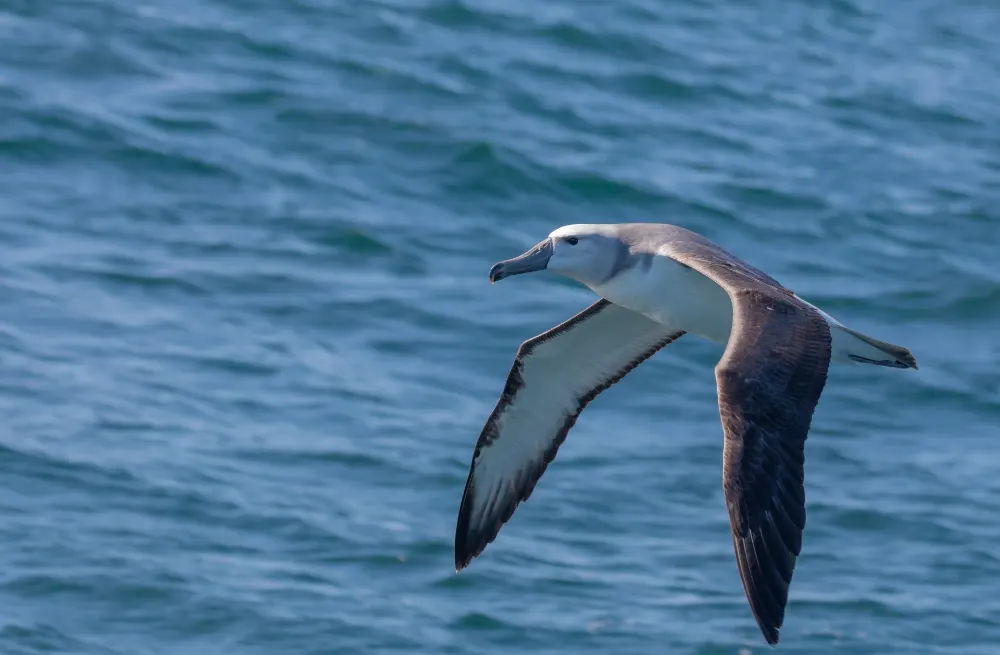
Gray-headed Albatross (Thalassarche chrysostoma) is a large pelagic seabird in the family Diomedeidae. The species breeds on subantarctic islands of the Southern Ocean and ranges across the southern Atlantic, Indian, and Pacific Oceans.
The common name refers to the distinctive ash-gray coloration of the adult head and neck.
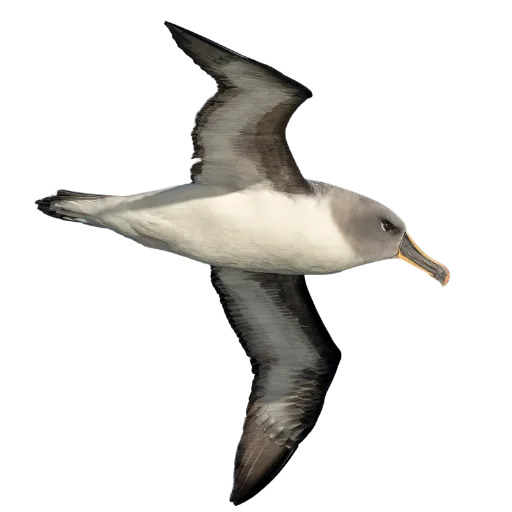
Scientific Classification
View Additional Quick Facts
Gray-headed Albatross
Derived directly from the beautiful, uniform ash-gray coloration that blankets the entire head and upper neck region of mature adults, cleanly separating them from purely white-headed family relatives.
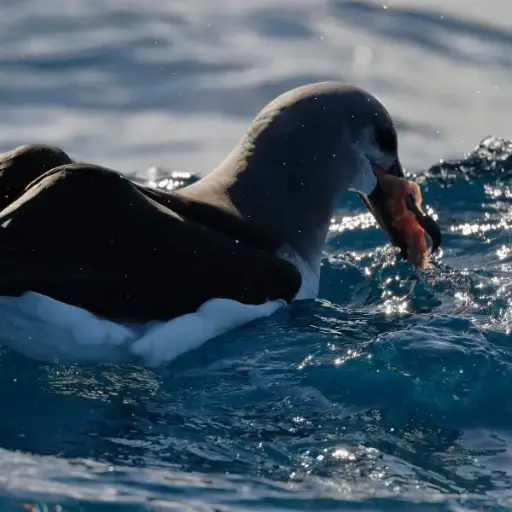
Thalassarche chrysostoma
A specialized grouping of birds adapted to marine environments, spending the vast majority of their lives on the high seas.
Encompasses all feathered, winged, bipedal, endothermic (warm-blooded), egg-laying, vertebrate animals.
Commonly known as tubenoses, this order features distinct tubular nostrils and highly developed dynamic soaring mechanics.
The definitive biological family of albatrosses, containing the world’s most masterful gliders with extreme wingspans.
A genus of medium-sized albatrosses known as mollymawks, distinct for their brightly colored bills and dark upper wings.
The precise species name translates roughly to ‘golden mouth,’ referencing the rich yellow stripes defining their bills.
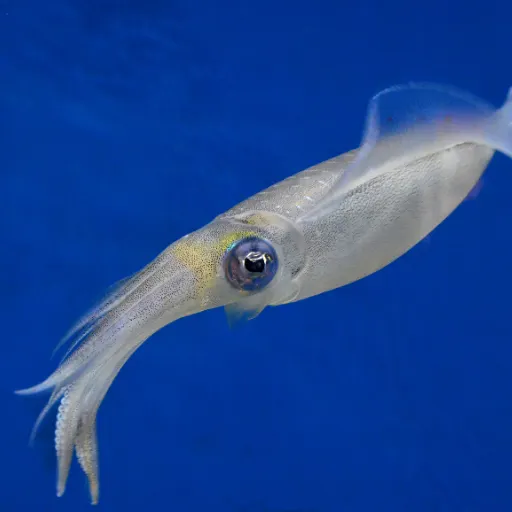
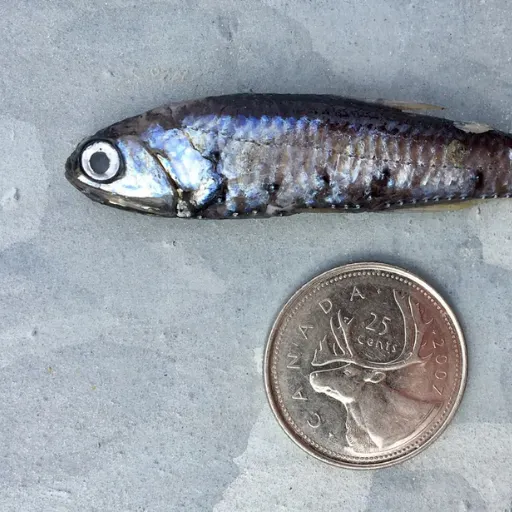
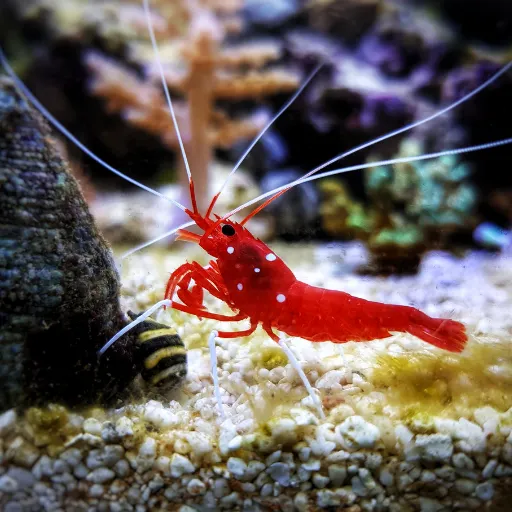
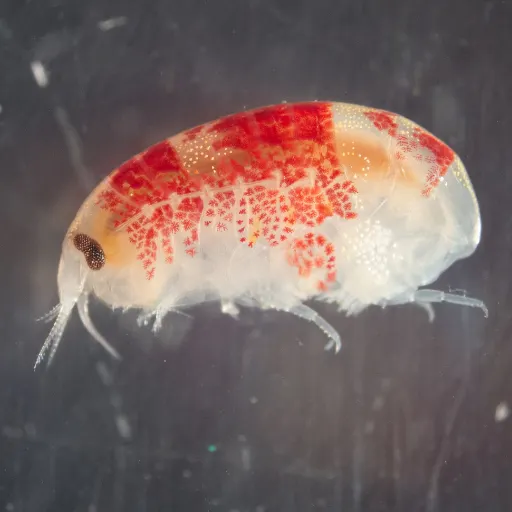
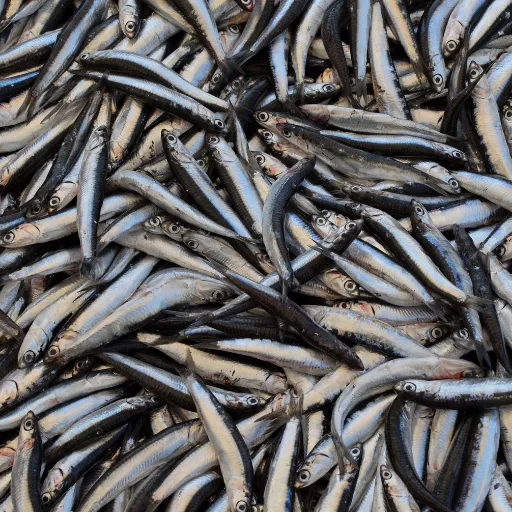
Feeds aggressively on marine animal matter, actively hunting squid, pelagic fish, krill, and large scavenging opportunities.
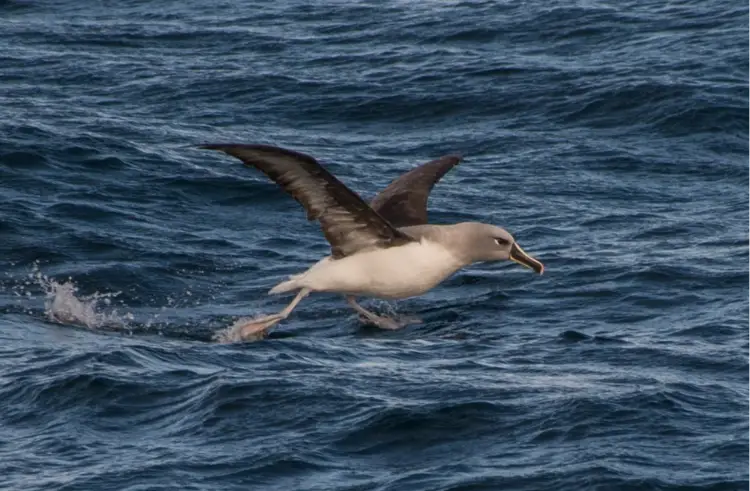
Utilizes boundless open oceanic corridors for foraging, returning solely to wind-battered Subantarctic Islands to nest.
Living entirely in the open waters of oceans or seas rather than waters adjacent to land or the sea floor.
Gathers in dense, highly synchronized breeding groups on steep, grassy coastal slopes to lay and protect eggs.
Primarily active and alert during daylight hours, navigating and visually tracking marine surface targets.
Performs immense, continuous circumpolar movements spanning thousands of nautical miles around the Southern Ocean.
Breeds once every two years if successful, as raising a single chick requires an intensive, multi-month investment.
Faces an extremely high risk of extinction in the wild, severely impacted by longline commercial fishing long-bycatch.
Appearance
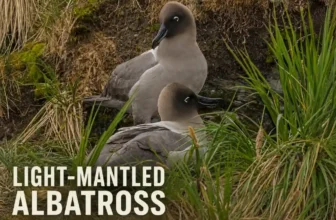
Adult Gray-headed Albatrosses measure approximately 81–93 cm (32–37 in) in length and possess a wingspan ranging from 2.2–2.4 m (7.2–7.9 ft). Average body mass ranges between 2.6–4.4 kg (5.7–9.7 lb).
Adults exhibit:
- Ash-gray head and neck
- White breast, belly, and rump
- Blackish-brown upperwings and mantle
- Dark tail
- Black bill with yellow-orange ridges and cutting edges
- Dark brown eyes
The gray head becomes progressively darker with age until full adult plumage is attained.
Juveniles differ from adults by displaying:
- Darker head coloration
- Reduced gray pigmentation
- Less pronounced bill markings
- More extensive brown plumage on the upper body
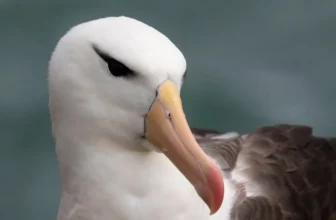
The species is distinguished from the closely related Black-browed Albatross by its entirely gray head and darker facial appearance.
Habits, Lifestyle & Diet
The Gray-headed Albatross is a highly pelagic predator that spends the majority of its life over open sub-Antarctic ocean currents, returning to land almost exclusively for colonial breeding cycles.
Locomotion & Physiology
Primary Diet Components
Most feeding occurs at the ocean surface. Diet configuration balances heavily between cephalopods and specialized pelagic families:
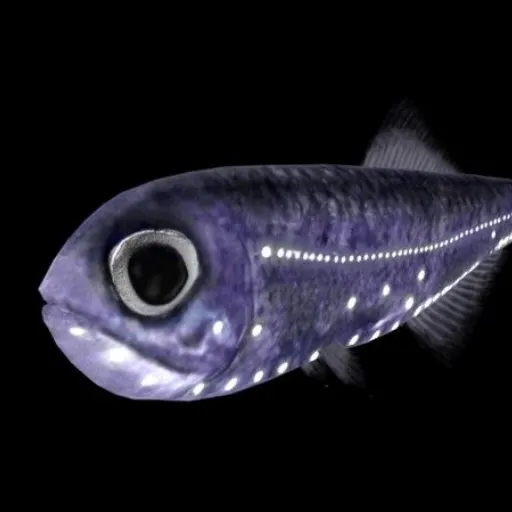
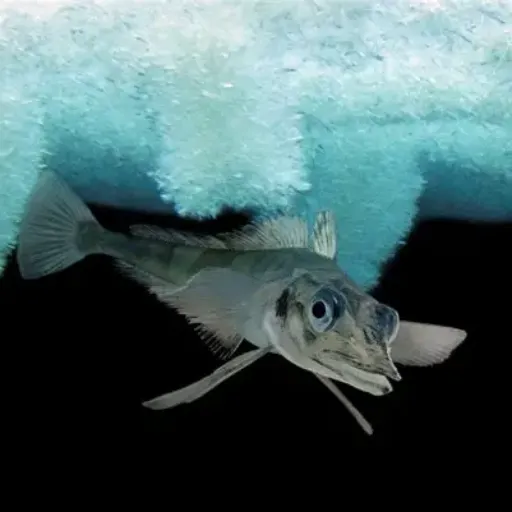
Key Exceptions: While most possess light-producing photophores and undergo deep-sea vertical migrations at night, exceptional benthic species lack bioluminescence entirely and inhabit permanent deep dark zones.
Mating Habits and Breeding Cycle
The Gray-headed Albatross is a long-lived seabird that forms strong, long-term pair bonds. Once a pair is established, the birds typically reunite at the same breeding colony year after year. Their reproductive strategy is slow and highly specialized, with most successful breeders raising only a single chick every two years.
Population and Conservation Status
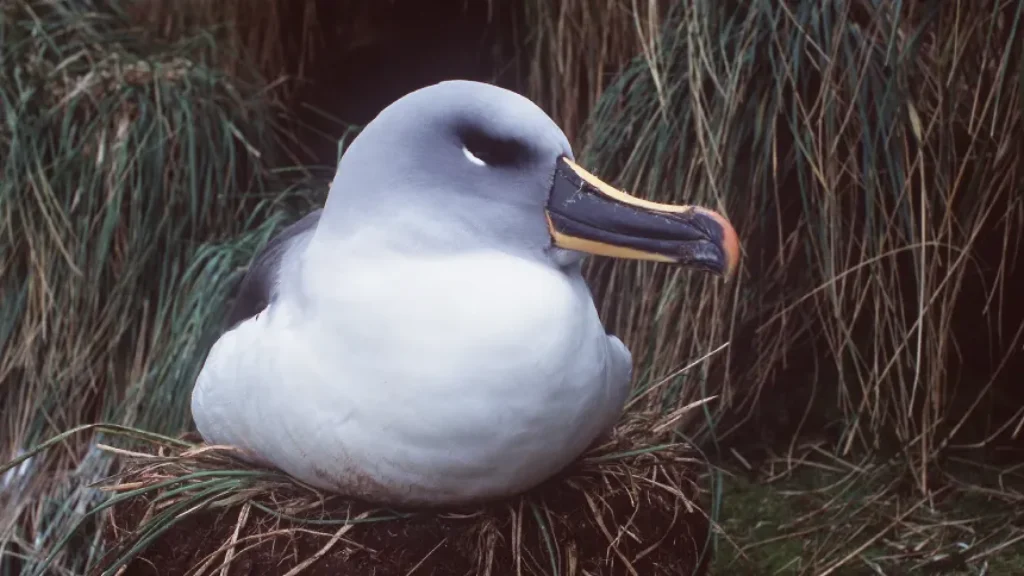
The Gray-headed Albatross is classified as Endangered, and its population continues to decline across much of its range. Current estimates suggest that around 250,000–300,000 mature individuals remain worldwide, with the largest breeding colonies located on South Georgia, the Prince Edward Islands, the Crozet Islands, and the Kerguelen Islands.
Although the species occupies more than 100 million km² of ocean across the Southern Hemisphere, its wide distribution does not protect it from increasing environmental pressures. The most serious threat is fisheries bycatch. Gray-headed Albatrosses frequently follow fishing vessels and may become hooked on longlines or caught in trawl gear while attempting to feed. Because the species reproduces slowly and usually raises only one chick every two years, the loss of adult birds can have a major impact on population stability.
Marine pollution is another growing concern. Adults and chicks may accidentally swallow floating plastics and other debris mistaken for food. Plastic ingestion can reduce feeding efficiency, affect health, and contribute to lower survival rates, particularly in young birds.
The species is also being affected by climate change. Shifts in ocean temperatures, currents, and weather systems are changing the distribution of important prey such as squid, fish, and krill. As food becomes less predictable, albatrosses often need to travel farther from breeding colonies to find enough resources, increasing energy demands and reducing breeding success.
Conservation efforts are active throughout much of the species’ range and include bird-safe fishing regulations, fishery monitoring programs, long-term breeding colony surveys, habitat protection measures, and international agreements focused on migratory seabirds. These actions have reduced some threats in several regions, but overall population trends show that the Gray-headed Albatross remains under significant pressure.
With its slow breeding cycle, late maturity, and dependence on healthy marine ecosystems, the Gray-headed Albatross remains particularly vulnerable to environmental change. Protecting adult birds at sea continues to be one of the most important factors in ensuring the long-term survival of the species.
Gray-headed Albatross: Main Predators
While mature adults spend years gliding safely over the open ocean, the Gray-headed Albatross faces intense predation pressure during critical nesting stages on remote subantarctic islands, as well as opportunism from marine hunters at sea.
Avian and marine hunters that impact populations across breeding grounds and coastal corridors:
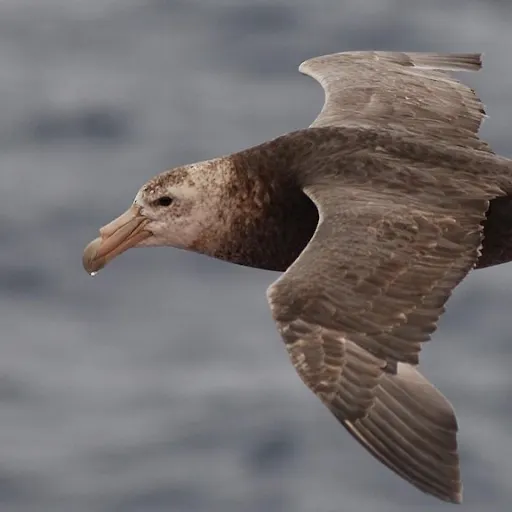
Impact: They systematically target exposed eggs, hatchlings, and recently fledged juveniles resting on coastal waters before they can achieve sustained flight.
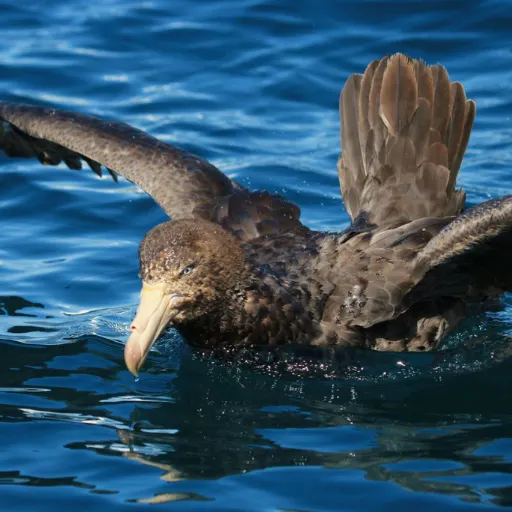
Impact: They capitalize on any parental negligence, preying upon un-brooded chicks during high-winds or severe subantarctic storms when breeding structures weaken.
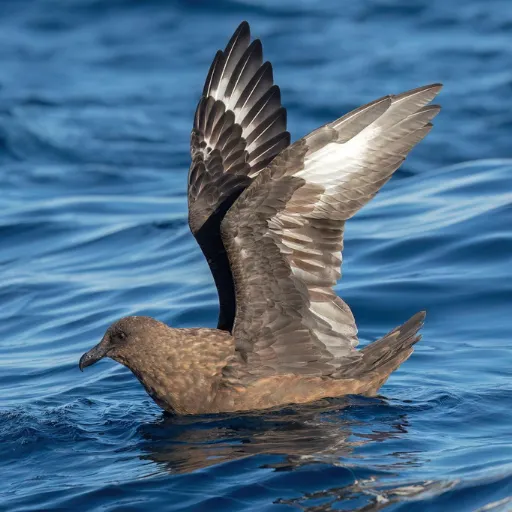
Impact: They represent a major cause of nest failure, diving swiftly to snatch small chicks or roll away unattended eggs the moment a parent stands to adjust position.
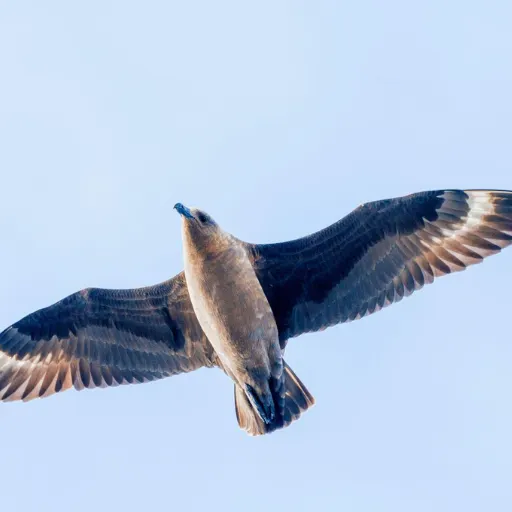
Impact: They kleptoparasitize foraging parents, stealing food deliveries and picking off weakened or small unattended chicks when opportunity permits.
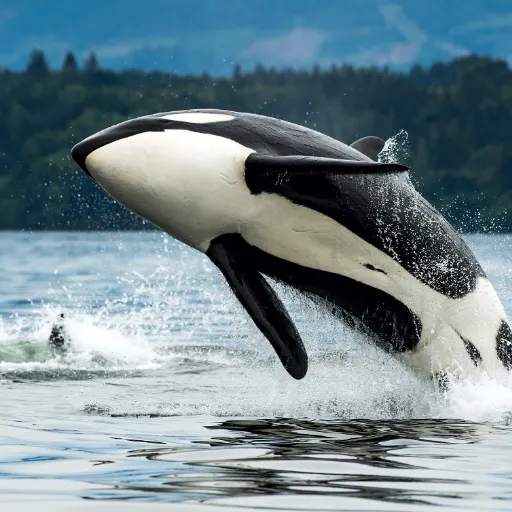
Impact: Pods traveling along shelf breaks execute opportunistic surface-snatching maneuvers, picking off fully grown adults as they rest or feed on bait balls.
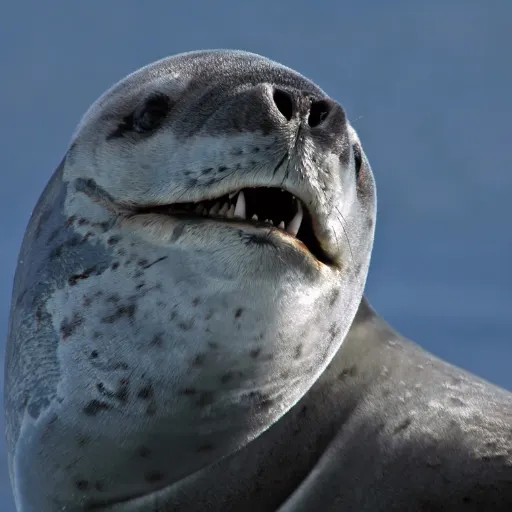
Impact: They leverage underwater camouflage to leap vertically, catching clumsy, water-logged young albatrosses making their first-ever critical ocean takeoffs.
Frequently Asked Questions
Find quick answers to the most common questions regarding the biology, distribution, metrics, and conservation profile of the Gray-headed Albatross.

Black-browed Albatross