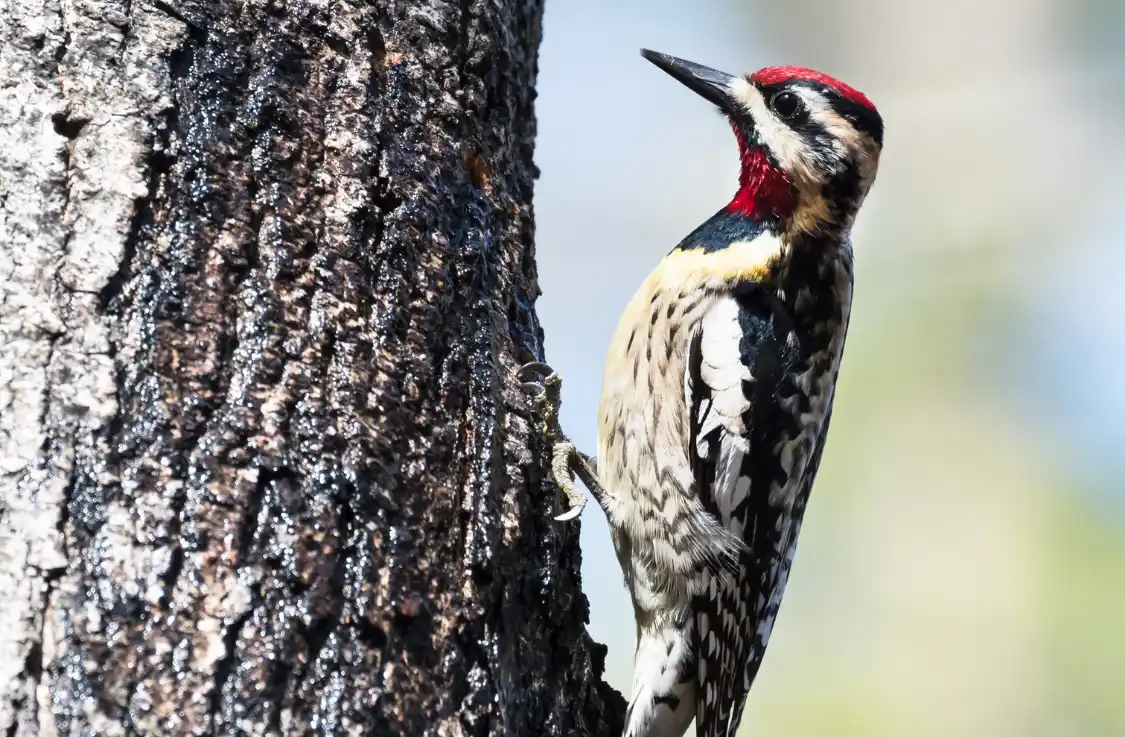
The name sounds almost ridiculous, but the bird behind it is anything but.
The Yellow-bellied Sapsucker is a real sap-feeding woodpecker, and despite its name, it doesn’t actually “suck” sap. Instead, it drills tidy rows of holes into living trees and returns to drink the sap as it flows out.
Those sap wells are more than just feeding sites. They also become a food source for hummingbirds, insects, and even squirrels, giving this small woodpecker an outsized role in the forest.
Species Profile
Scientific Classification
Birds known for strong bills used in drumming and foraging on trees, zygodactyl feet (two toes forward, two back), and stiff tail feathers used to prop themselves against trunks.
An order of largely arboreal birds that includes woodpeckers, toucans, and honeyguides. They typically have zygodactyl feet (two toes facing forward, two backward) for grasping branches.
The true woodpeckers, piculets, and wrynecks. They are characterized by specialized shock-absorbing skulls and stiff tail feathers used as a prop when climbing.
The sapsuckers. A unique genus of North American woodpeckers that specialize in drilling neat rows of shallow holes in tree bark to feed on the weeping sap.
While famous for drinking tree sap, the Yellow-bellied Sapsucker actually has a highly varied diet that also includes large amounts of insects (especially ants) and seasonal fruits.
They rely heavily on mixed and deciduous forests for breeding, particularly areas with paper birch and quaking aspen, but adapt to orchards and forest edges in winter.
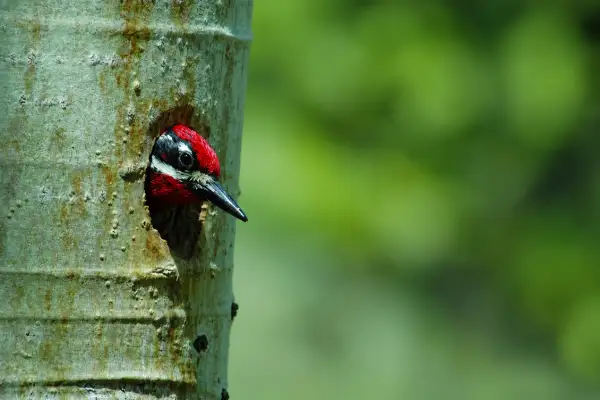
They excavate their own nesting holes in dead or dying trees, often selecting living aspens suffering from heartrot fungus which softens the interior wood.
An IUCN conservation category assigned to species that are widespread and abundant, facing no immediate threat of severe decline or global extinction.
1. Naming & Taxonomy
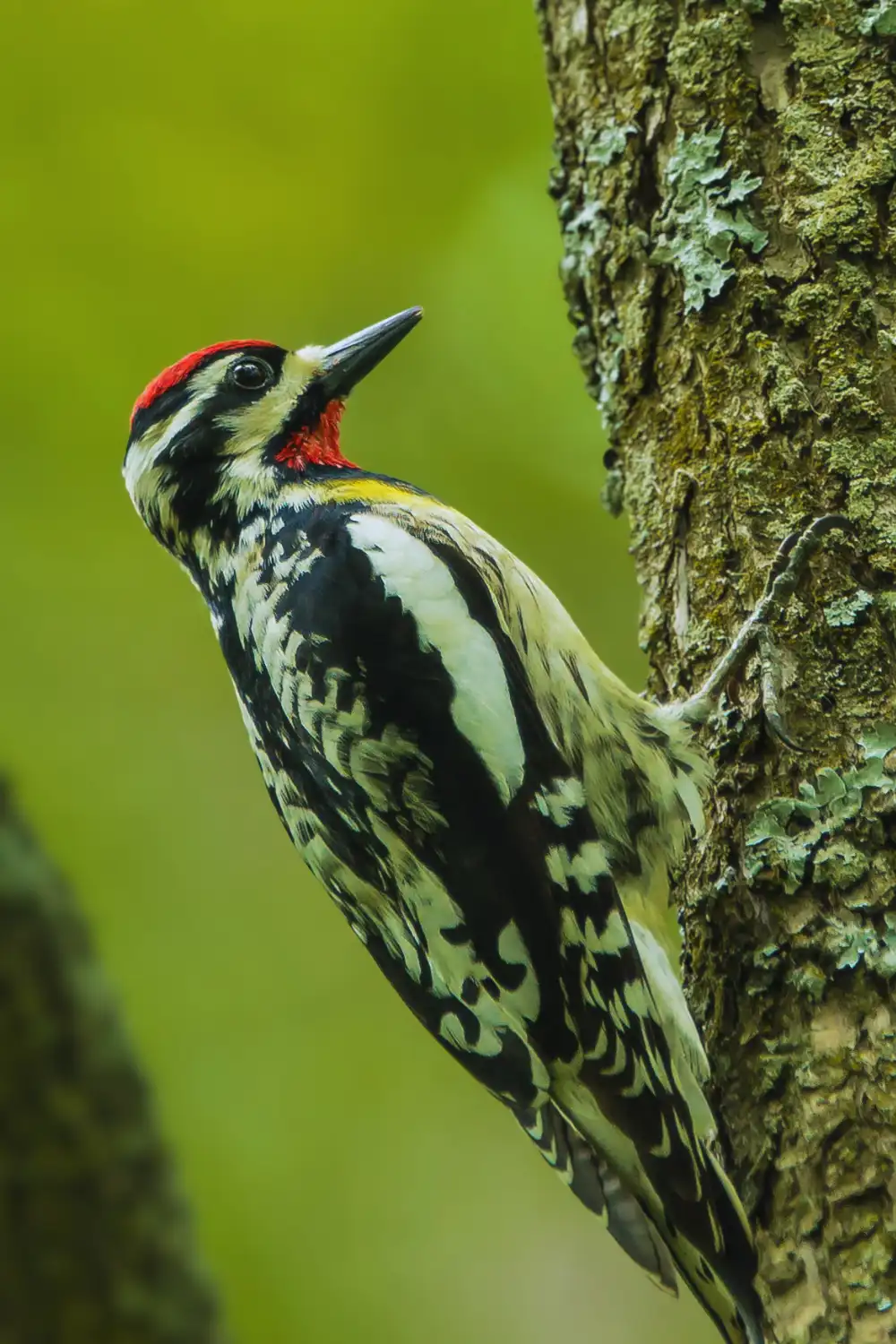
Mark Catesby described and illustrated the species between 1729 and 1732 in The Natural History of Carolina, Florida and the Bahama Islands.
Linnaeus included it in the twelfth edition of Systema Naturae in 1766, coining the binomial Picus varius and citing Catesby's plate. The epithet varius is Latin for various, diverse or variegated, a fair description of a bird patterned in black, white, red and yellow. Linnaeus gave the type locality as America septentrionalis, North America, which was later narrowed to South Carolina.
The modern genus came a century afterwards. Spencer Baird erected Sphyrapicus in 1858 with this bird as its type species.
Within the genus, the Yellow-bellied Sapsucker is sister to a clade containing the Red-breasted Sapsucker and the Red-naped Sapsucker. The species is monotypic: no subspecies are recognised.
2. Identification & Appearance
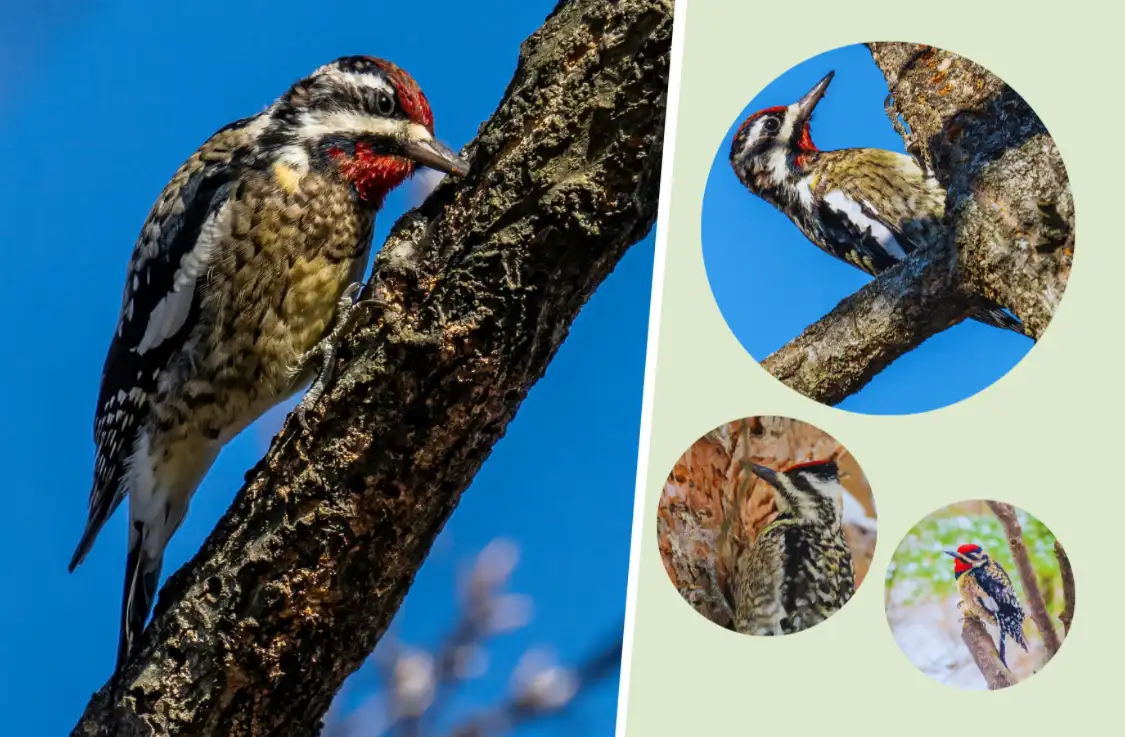
The Long White Wing Stripe
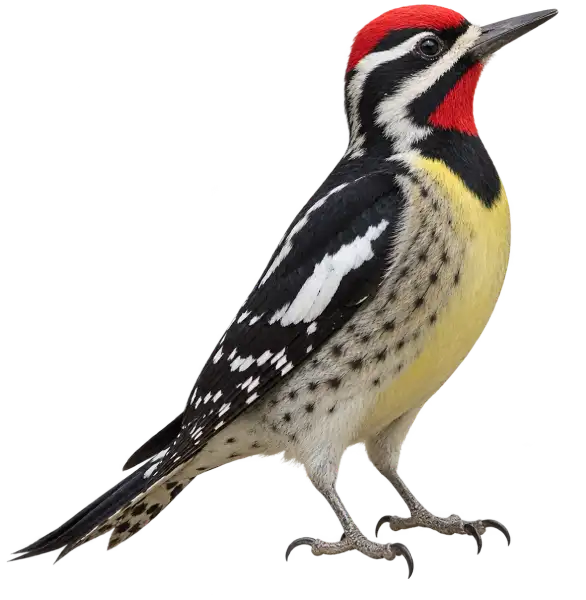
The most reliable mark, visible at rest and in flight. The wing coverts are black with a white panel across the median and central greater coverts, producing a solid pale stripe no other eastern woodpecker of this size shows.
The head is boldly striped: a white line starting above the eye and widening toward the nape, a broad black stripe through the ear coverts and down the side of the neck, and a second white line running from the nasal tufts to the side of the breast. The mantle is white with irregular black barring, and the lower rump is white.
Sexing Is Easy
Look at the throat. It is red in the male and white in the female. Both sexes usually show a red crown, bordered black, though the female's is paler and sometimes mixed with black. The male's forehead is bright red and, very occasionally, yellow.
The Yellow Belly
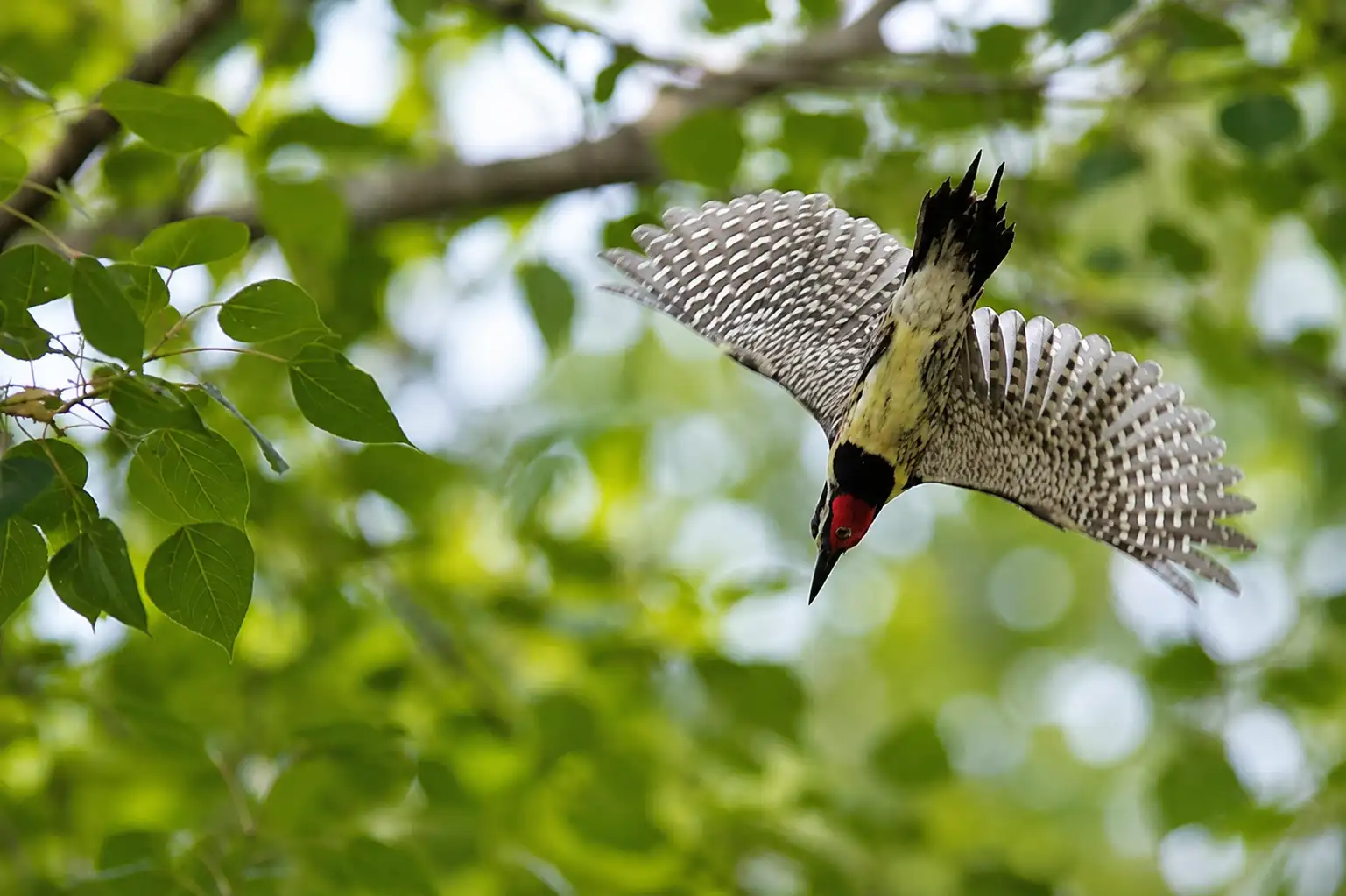
Present, but faint. The underparts carry a yellow wash that fades to whiter below, with black arrowhead markings along the sides. It is a poor field mark and sometimes almost absent.
Juveniles
Dark olive-brown overall, with a buff-striped head, a streaked crown and a scaly breast. The throat is usually white, though young males may show some red. They are frequently mistaken for another species entirely.
3. Range & Habitat
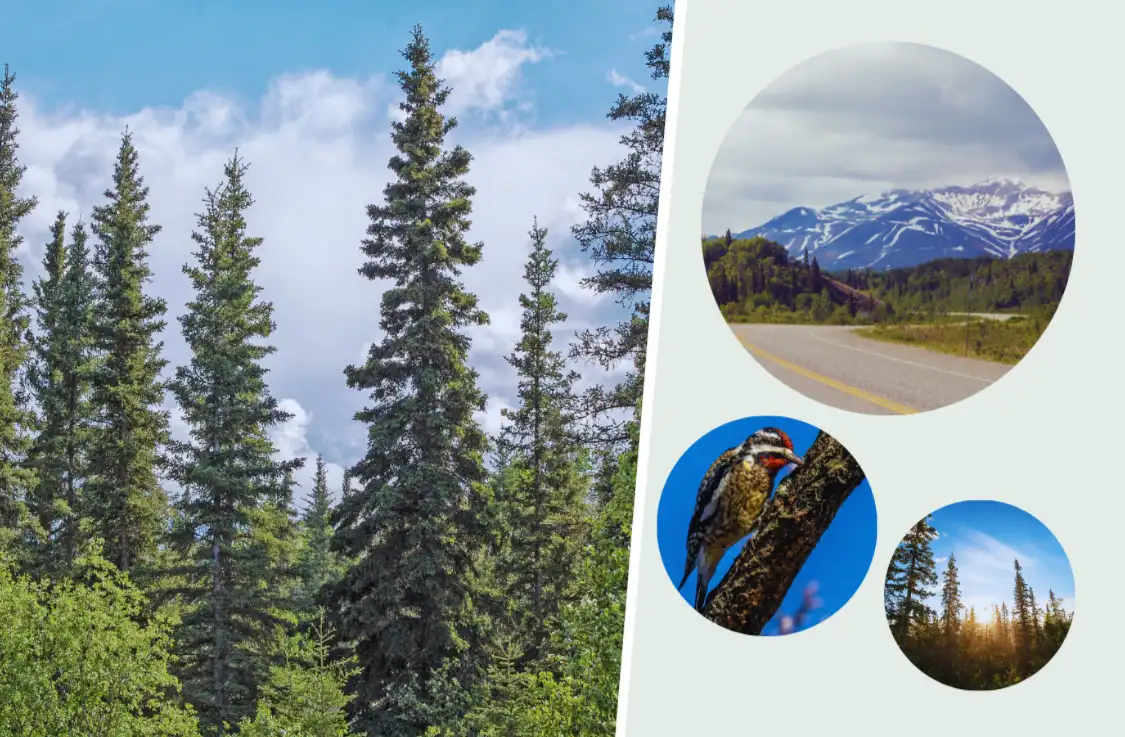
Sphyrapicus varius · Detailed Distribution & Ecology
Migratory Woodland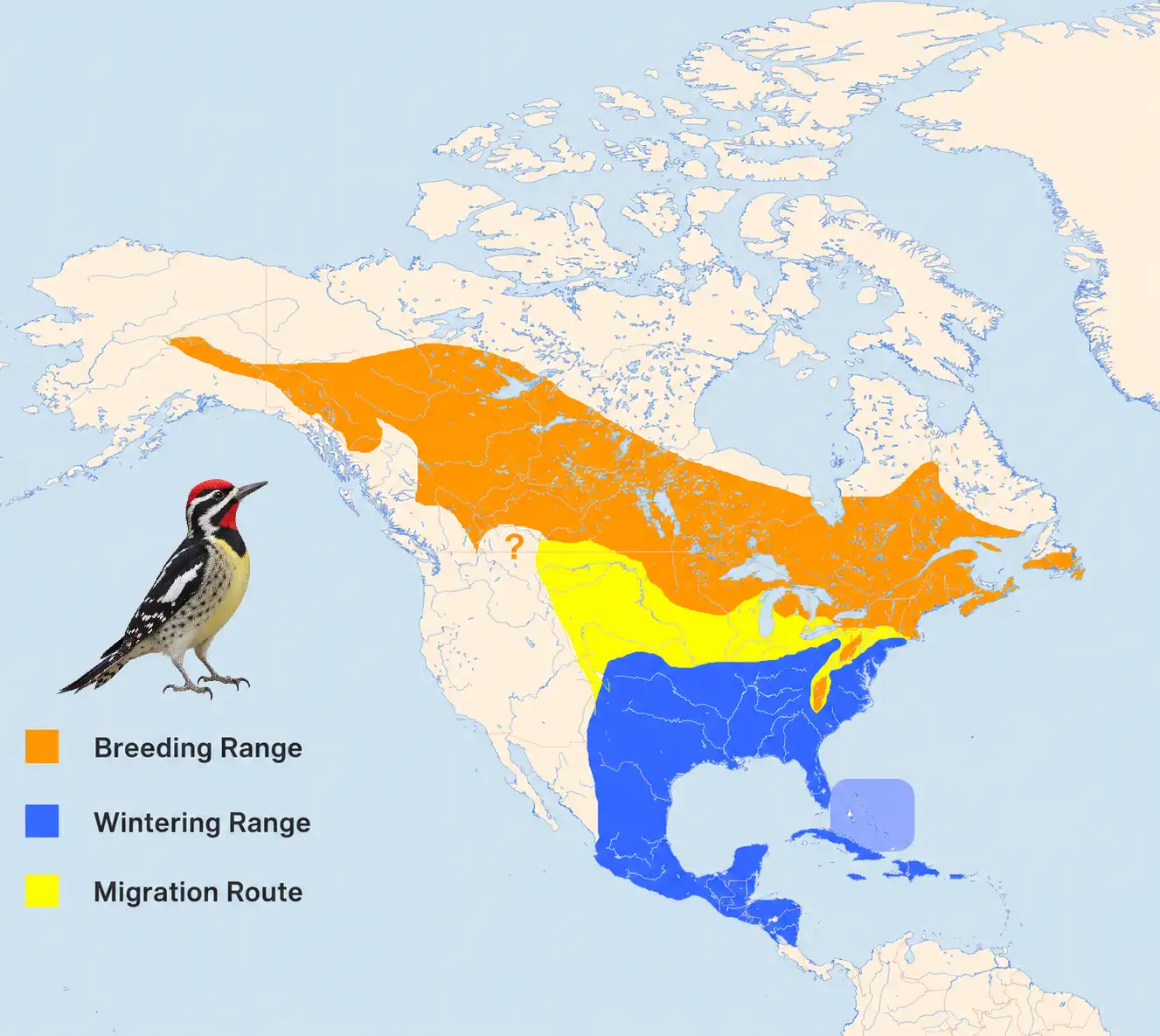
America
Migratory
& Woodlands
-
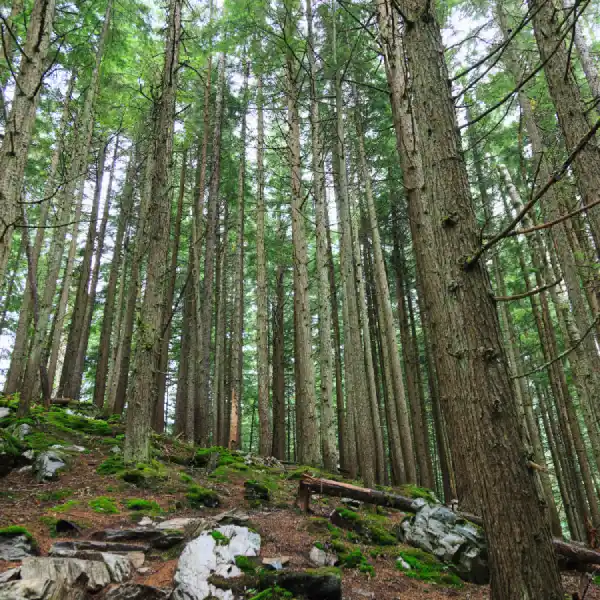 Boreal Forests
The core summer breeding grounds, providing vast expanses of the deciduous trees they need for nesting.
Boreal Forests
The core summer breeding grounds, providing vast expanses of the deciduous trees they need for nesting. -
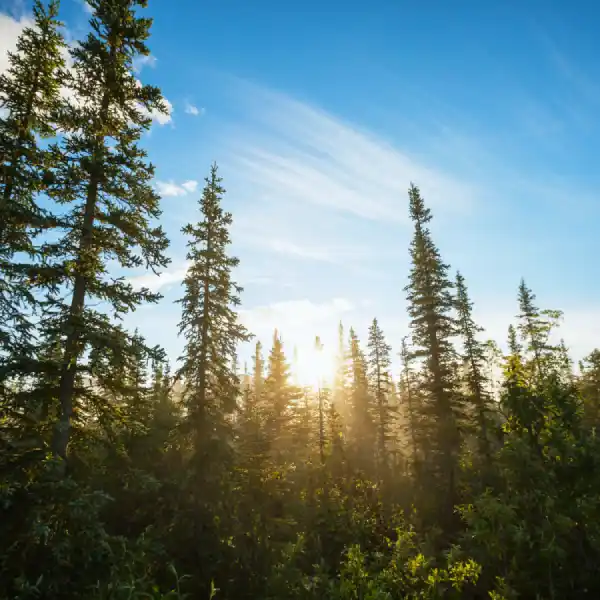 Mixed Woodlands
Ideal nesting habitats featuring a reliable mix of conifers and broadleaf trees like birch and maple.
Mixed Woodlands
Ideal nesting habitats featuring a reliable mix of conifers and broadleaf trees like birch and maple. -
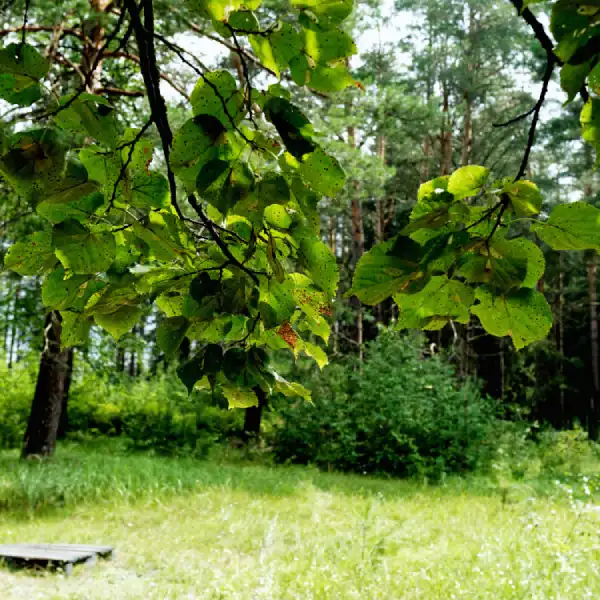 Forest Edges
Frequently utilized during migration and wintering, offering diverse foraging opportunities in semi-open country.
Forest Edges
Frequently utilized during migration and wintering, offering diverse foraging opportunities in semi-open country. -
 Coniferous Stands
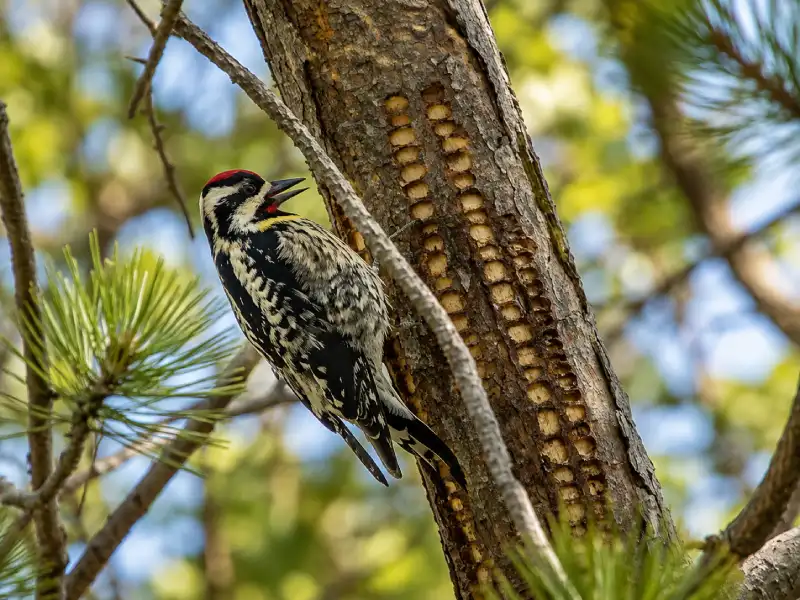
Important during early spring and winter when they shift to drilling pines and spruces for sap.
Coniferous Stands
Important during early spring and winter when they shift to drilling pines and spruces for sap.
This is one of the few genuinely migratory woodpeckers, and the seasonal shift in habitat is marked. It breeds in northern forest, then winters across a much wider range of wooded and semi-open country, using large trees in pastures, clearings and suburbs, and occasionally turning up in palm groves.
It forages alone for the most part, though it will join small groups in winter and sometimes attaches itself to mixed flocks of insectivores.
4. Sap Wells
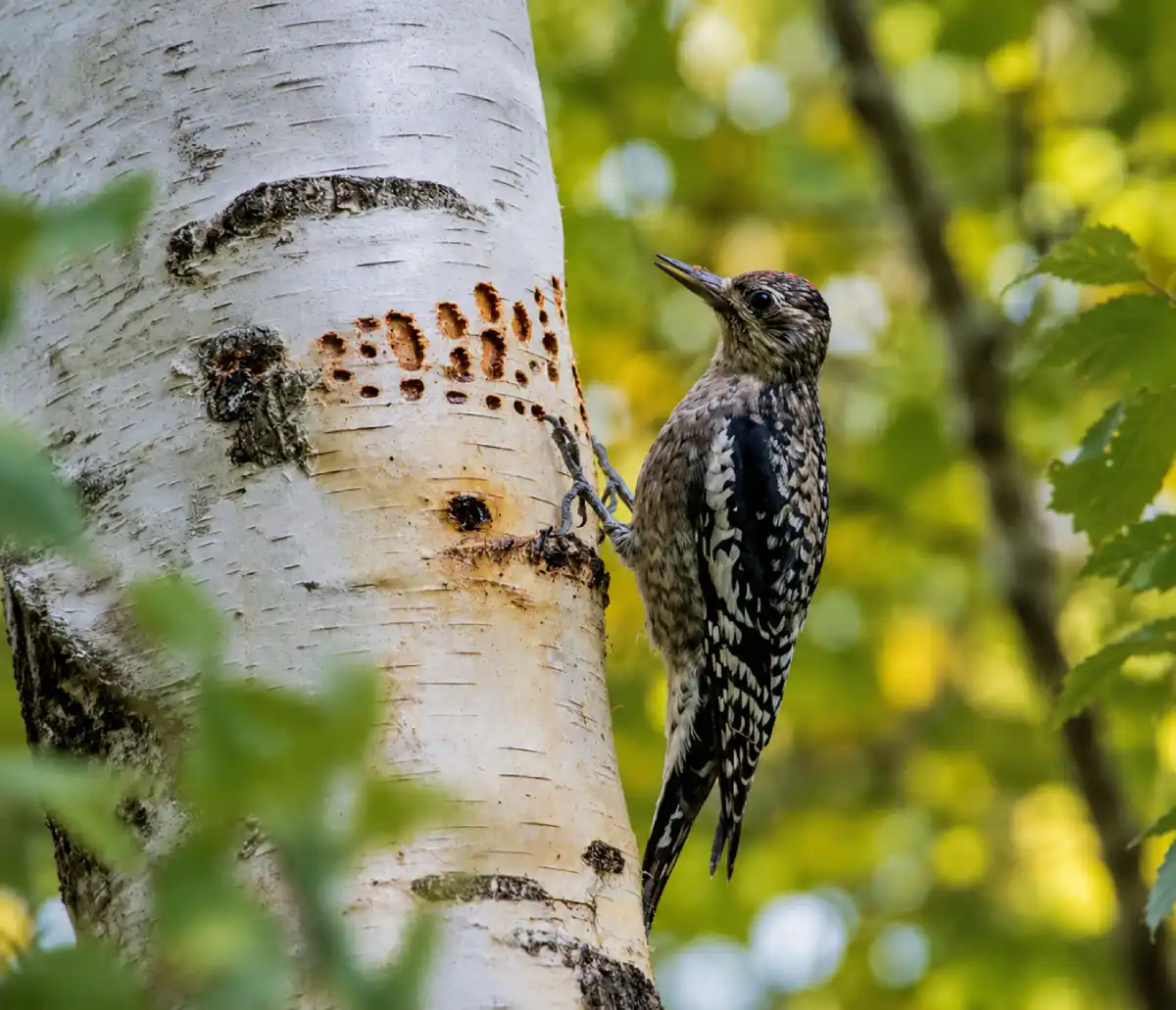
This is the behaviour the bird is named for, and it is more methodical than most people assume.
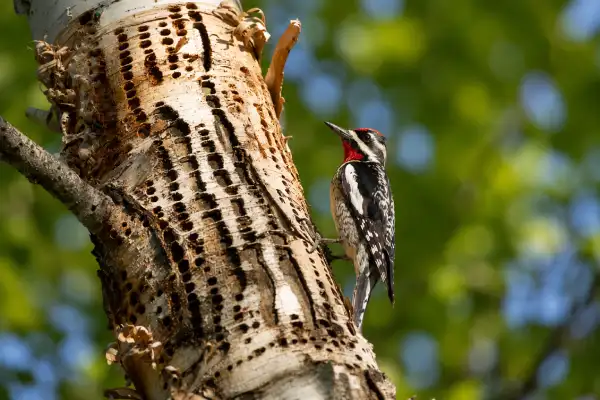
It tests the tree first. Before committing, the sapsucker drills exploratory bands in horizontal rows near a live branch. If the tree is photosynthesising well, it follows up with more holes about a fifth of an inch above the original band, and these build into vertical columns.
Each hole is engineered. A well starts as an oval elongated sideways, cut through bark and phloem to the outer edge of the xylem. The bird then enlarges it vertically, which increases the sap yield, but only for a few days before it has to move on.
It eats the tree as well as the sap. Beyond the sap itself, the sapsucker takes bast and cambium, often stripping it from the edges of the wells. In winter, when the wells are cut into conifers, that bast is probably the more important food.
Preferred sap trees in the breeding season are paper birch, red maple, serviceberry and bigtooth aspen, with poplars, birches, maples, willows, hickories, alders and conifers including pines, spruces and firs also used. It favours conifers in winter and spring, and rough-barked trees in autumn.
The Wells Feed Other Animals
Sapsucker wells are a shared resource, and Cornell notes the relationship with the Ruby-throated Hummingbird is especially close. Hummingbirds place nests near active wells, follow sapsuckers through their daily movements, and may even time their migration to coincide. Insects drawn to the flowing sap become food for both. The sapsucker's abandoned nest cavities are also used by birds and mammals that cannot excavate their own, including northern flying squirrels.
5. Diet
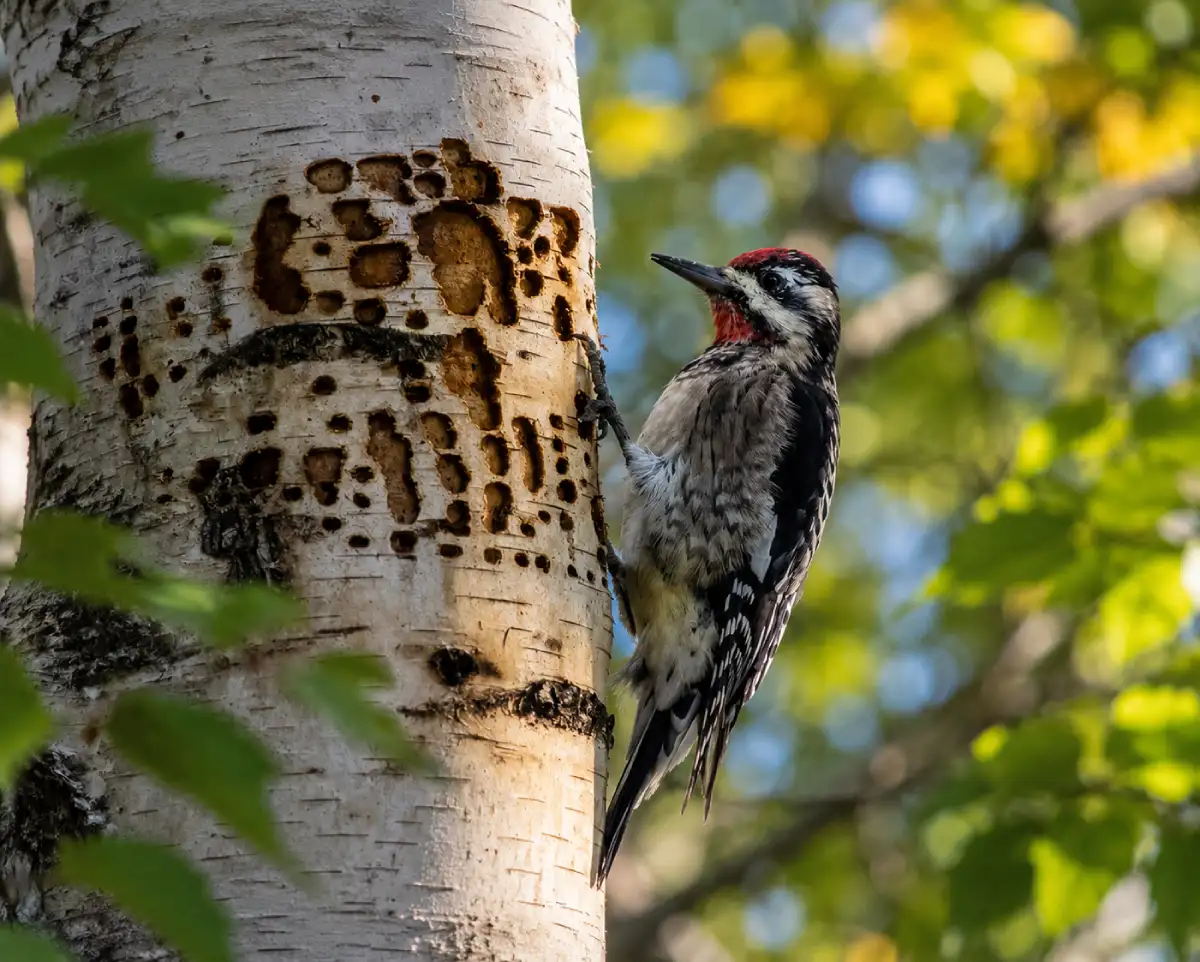
Arthropods, sap, fruit and nuts make up most of the diet, with the balance shifting sharply through the year.
Insects account for roughly half of an adult's intake during the nesting season, mainly moths and butterflies, dragonflies, and both larval and adult beetles and ants. Sap becomes the primary food in late summer and autumn. Cambium is taken year-round but matters most in winter and spring. Fruit is mostly an October to February food, and buds are eaten in spring.
Chicks are fed by both parents, on insects that are sometimes dipped in sap first, with smaller prey given to younger chicks. Begging calls carry over 300 feet, and it is normally the hungriest chick that calls, which is why it gets fed first.
6. Voice & Drumming
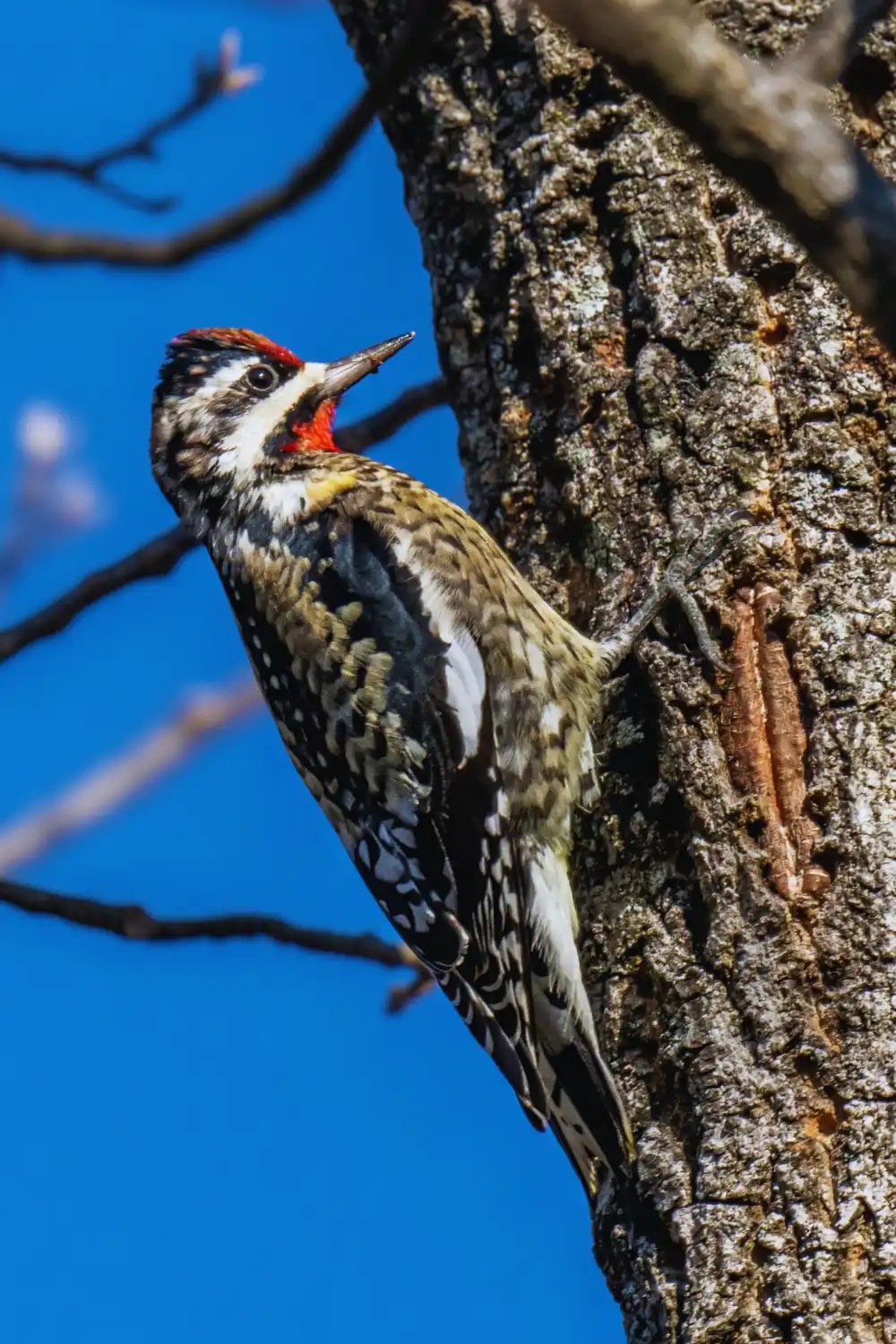
A varied vocabulary. At the start of breeding the male gives long-distance calls written as neaaah, owee-owee, wee-wee-wee-wee or kwee-urk, used to draw a mate around his territory. Family groups exchange low week week and wurp wurp notes, and pairs meeting on territory give a scratchy quirk quirk. Alarm begins as a soft mew and grows louder and hoarser as the threat closes. In an outright conflict, the call is a shrill quarr.
Drumming starts as a rapid burst and becomes progressively more drawn out, with bursts lasting roughly one and a half to five seconds. It was once thought to advertise the quality of a nest or feeding site, but the current view is that it functions as long-distance communication. Tellingly, the trees chosen for drumming are dead, and are not the trees used for feeding or nesting.
7. Breeding & Nesting
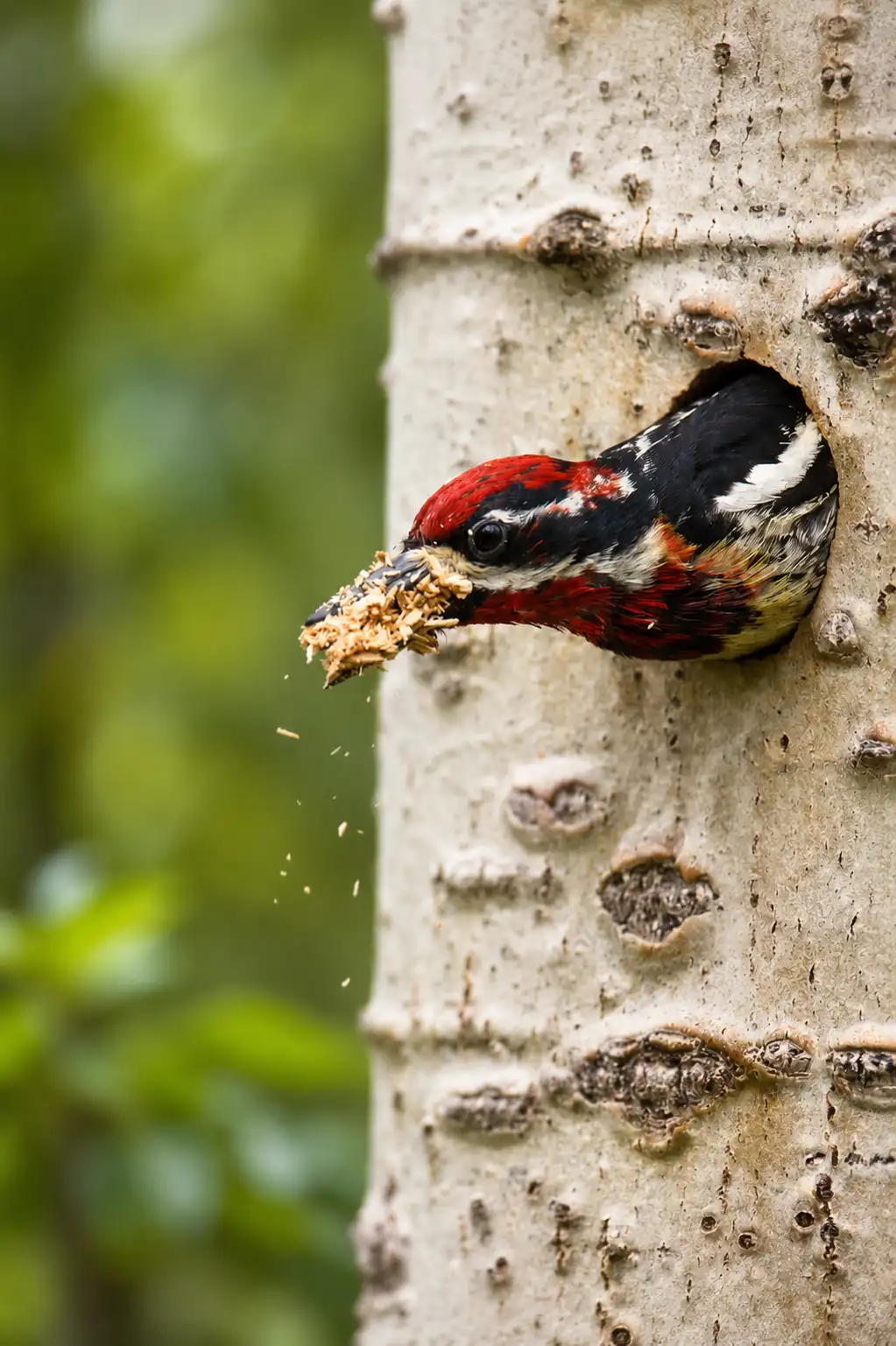
| Season | April to July |
| Clutch size | 4 to 7 eggs, larger in the north |
| Egg appearance | Plain white, unmarked, about 24 by 17 mm |
| Incubation | 10 to 13 days, by both sexes |
| Brooding | 8 to 10 days after hatching |
| Fledging | 25 to 29 days, independent about two weeks later |
| Nest height | 6.5 to 65 ft, usually 10 to 46 ft |
The Fungus Connection
The nest goes into a large cavity in a living deciduous tree, usually one with rotten heartwood, and a good tree may be reused. The strong preference is for quaking aspen carrying conks of the fungus Fomes fomentarius, which softens the heartwood while the outer trunk stays sound.
That preference is not aesthetic. Sapsuckers nesting in trees other than Fomes-infected aspen are markedly more vulnerable to raccoons, which is thought to have driven the evolution of a search image for the right tree.
Studies disagree slightly on the target: work in northern Canada found nest trees averaging about 14 inches diameter at breast height, while a northeastern US study concluded the birds seek trees of 8 to 10 inches, deviating only when such trees are scarce.
Pairing and Rearing
Monogamous, nesting in pairs. The male arrives on the breeding grounds about a week ahead of the female, often before the snow has finished falling. Both sexes work on the cavity, but the male does most of the excavating, in stretches of 15 to 30 minutes, and the whole job takes 15 to 28 days.
Courtship includes a flight in which one bird flaps rapidly below its partner, a bobbing dance with the wings half opened, and bill touching, accompanied by quirk and kwee-urk calls.
During laying, the female is dominant and will sometimes drive the male off the nest. Both incubate, with the male usually taking the night. Eggs are left uncovered about 16% of the time, and on hot days the parents sit less. Broods with fewer chicks are brooded more, since small broods lose heat faster.
Territories run roughly 150 to 450 feet in radius from the nest, and are larger in less wooded country.
8. Tree Damage
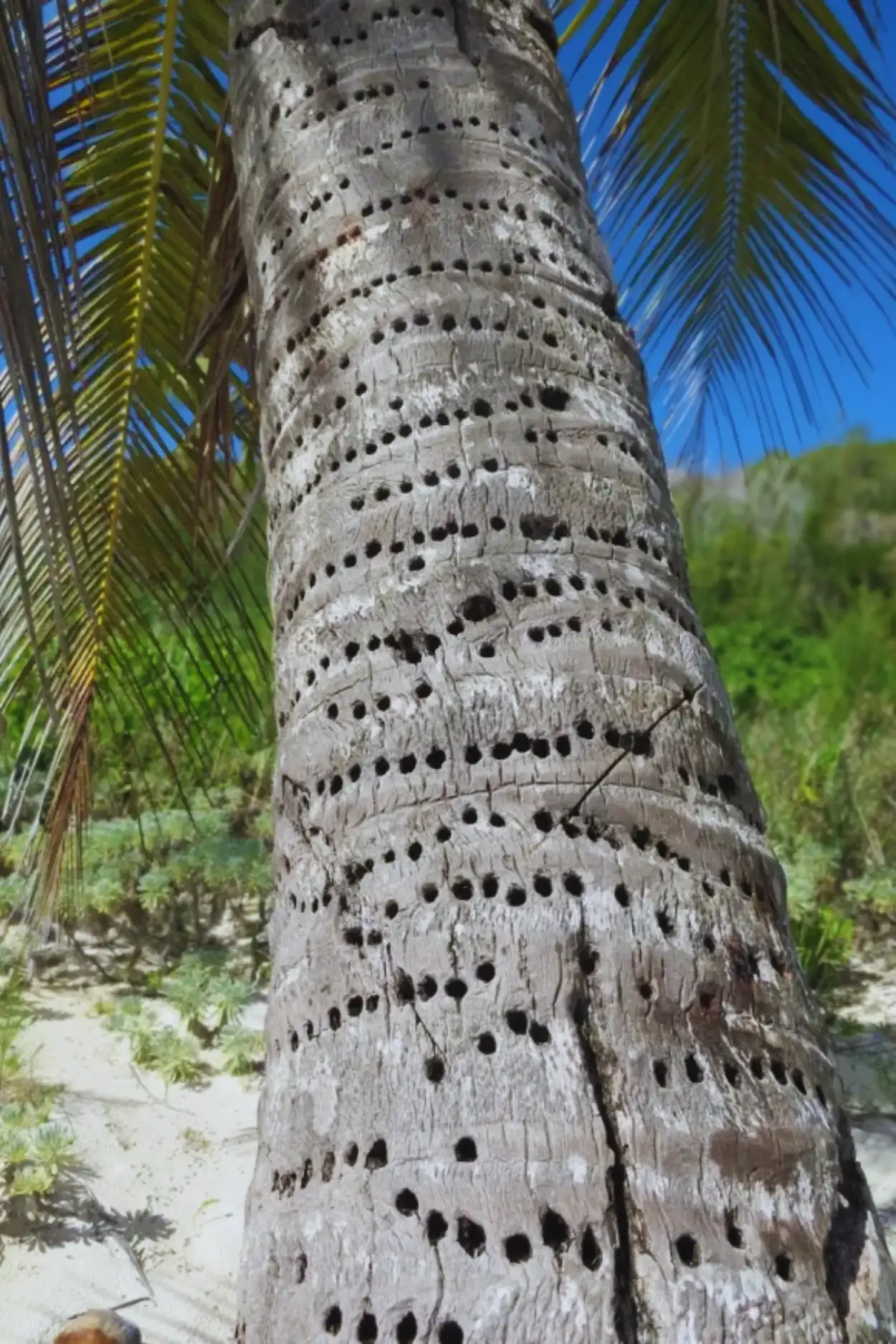
Worth its own section, because this is the one North American woodpecker with a genuine reputation as a pest.
Sapsucker feeding injures trees and attracts insects, and intensive feeding has been documented as a cause of tree death. A ring of wells can girdle a trunk, and sapsucker injury is associated with ring shake, the separation of growth rings within the wood.
Susceptibility varies enormously by species. A USDA study of trees injured by Yellow-bellied Sapsuckers recorded mortality of 67% in gray birch, 51% in paper birch and 40% in red maple, against just 3% in red spruce and 1% in eastern hemlock.
Despite this, the bird is protected in the United States under the Migratory Bird Treaty Act, so taking, killing or possessing one without a permit is illegal.
9. Conservation
The IUCN lists the species as Least Concern, and does so despite a decreasing population. The reasoning is scale: the range covers roughly 7,830,000 square kilometres and the population is large, with the bird common through its range even though it is inconspicuous outside the breeding season.
One unusual detail sits behind that. The Yellow-bellied Sapsucker has notably low genetic diversity, around half that of most birds.
10. Similar Species
- Red-naped Sapsucker: The closest match, distinguished by a red nape. Ranges barely overlap, and the two hybridise where they meet in the Rockies.
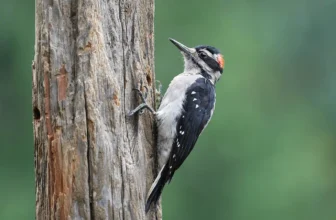
- Hairy Woodpecker: No red on the crown or throat, and a blacker back. Lacks the long white wing stripe.
- Downy Woodpecker: Same markings as the Hairy but noticeably smaller. Again, no red crown or throat.
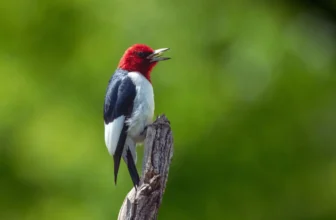
- Red-breasted Sapsucker: Western, with an extensively red head and breast. Part of the same clade.