Rock Ptarmigan (Agopus Muta)
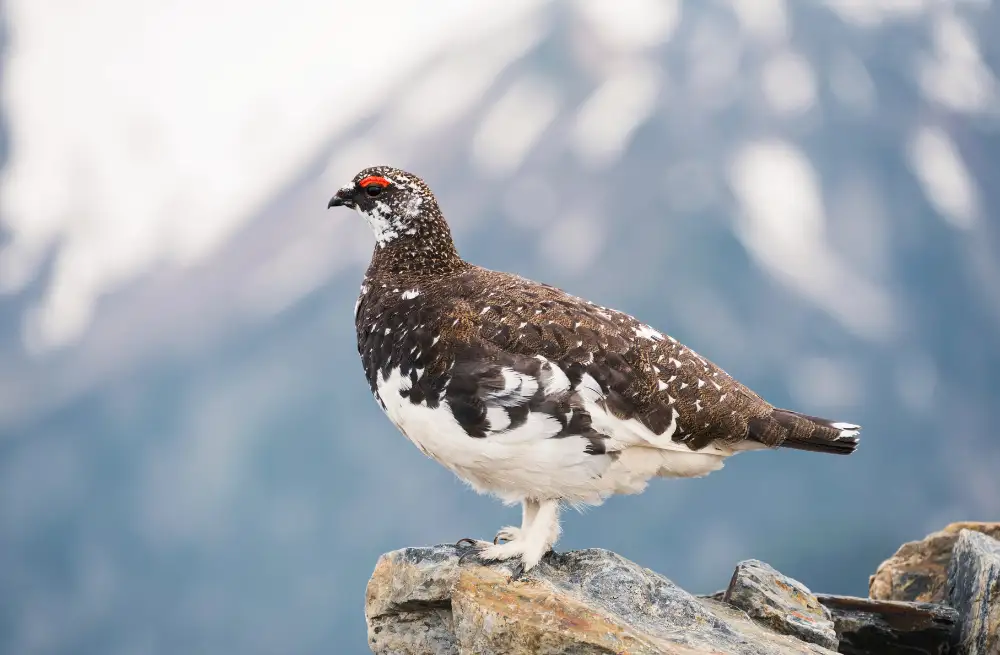
The Rock Ptarmigan is an Arctic and alpine grouse famous for something few birds can do quite as well: change its appearance with the seasons. Its plumage shifts from mottled brown and gray in summer to almost entirely white in winter, allowing it to blend into rocky tundra in one season and snow-covered landscapes in the next.
It is also remarkably well adapted to extreme cold. Its feet are covered in feathers, its plumage provides excellent insulation, and it can take shelter beneath the snow during severe winter weather.
Species Profile
Scientific Classification
Heavily built, ground-dwelling gamebirds known for their feathered feet and nostrils, adapted to survive in harsh, cold environments.
An order of heavy-bodied ground-feeding birds, commonly referred to as gamefowl or gamebirds, which includes turkeys, chickens, quails, and ptarmigans.
A diverse family of heavy, ground-living birds such as pheasants, partridges, and grouse, characterized by strong legs adapted for scratching and running.
A small genus of grouse known as ptarmigans. They are uniquely adapted to Arctic and subarctic conditions, famously changing their plumage to stark white in winter.
An animal that feeds primarily on plant matter. In harsh environments, this includes foraging for tough buds, twigs, catkins, seeds, and hardy berries.
A vast, treeless Arctic or alpine ecosystem characterized by cold temperatures, high winds, and low-growing vegetation like mosses, lichens, and dwarf shrubs.
A reproductive strategy where birds lay their eggs directly on the ground, often relying on extraordinary camouflage to protect their shallow scrapes from predators.
An IUCN conservation category assigned to species that are widespread and abundant, facing no immediate threat of severe decline or global extinction.
What does a Rock Ptarmigan look like?
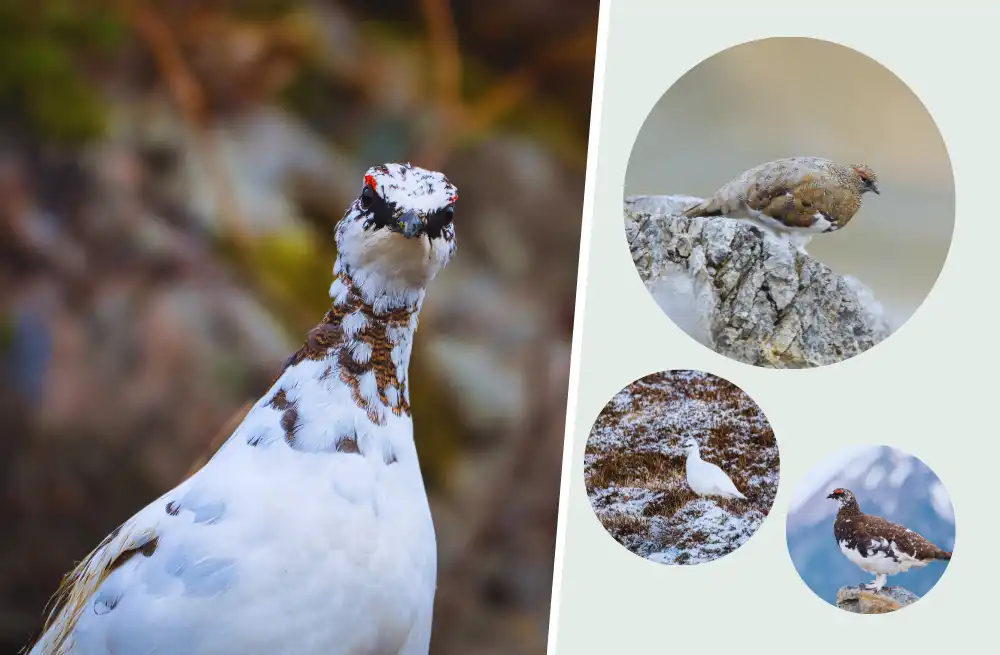
The Rock Ptarmigan is a compact, rounded grouse with a short bill, short tail, and heavily feathered legs and feet. Its appearance changes dramatically throughout the year.
Summer plumage
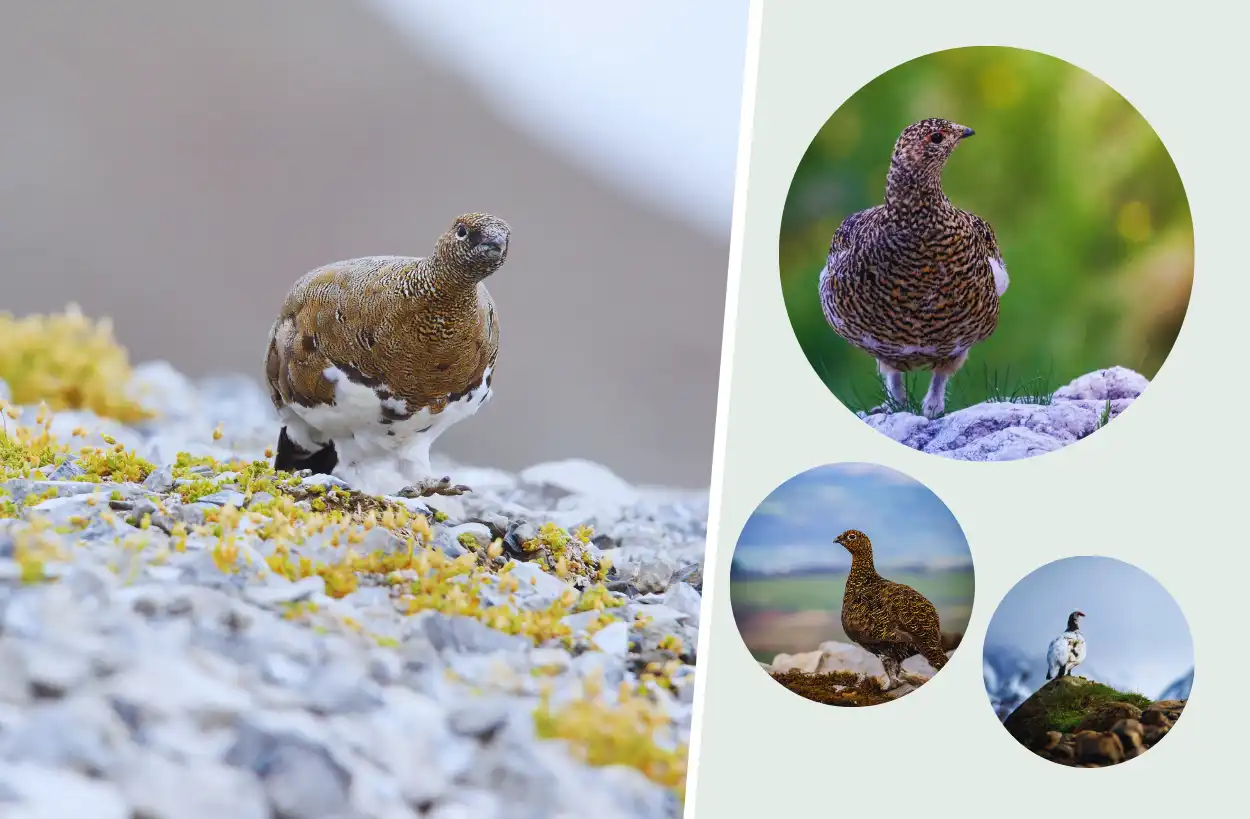
During the warmer months, Rock Ptarmigans become mottled brown, gray, black, and white. This coloration provides camouflage among rocks, lichens, mosses, and low tundra vegetation.
Breeding males are generally more boldly marked than females and have conspicuous red combs above their eyes. Females have more subdued brown and black plumage, which helps them remain hidden while sitting on the nest.
Winter plumage
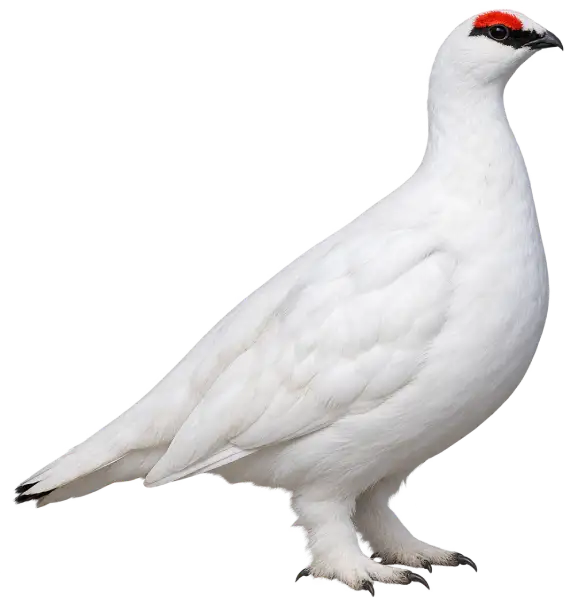
When winter arrives, the Rock Ptarmigan becomes predominantly white. This provides excellent camouflage against snow and ice.
The tail remains partly dark, while males retain their dark facial markings and red eye combs.
One unusual feature of the species is that males and females do not always molt into their summer plumage at exactly the same time. Females can become brown earlier in spring, while males may remain white for longer.
Where does the Rock Ptarmigan live?
Rock Ptarmigans are birds of cold, open country.
They occur across large parts of the Arctic and in high mountain environments, where they usually live above the treeline. Their preferred habitat tends to be relatively dry and rocky rather than densely vegetated.
Typical habitat includes:
- rocky Arctic tundra
- alpine slopes
- barren mountain terrain
- dry heath
- areas of dwarf willow and birch
- tundra containing mosses and lichens
- rocky areas above treeline
The species has an extensive circumpolar distribution. It occurs across northern North America and Greenland and extends through Iceland, northern Europe and large parts of northern Asia.
In North America, the species is particularly widespread in Alaska and northern Canada.
What does the Rock Ptarmigan eat?
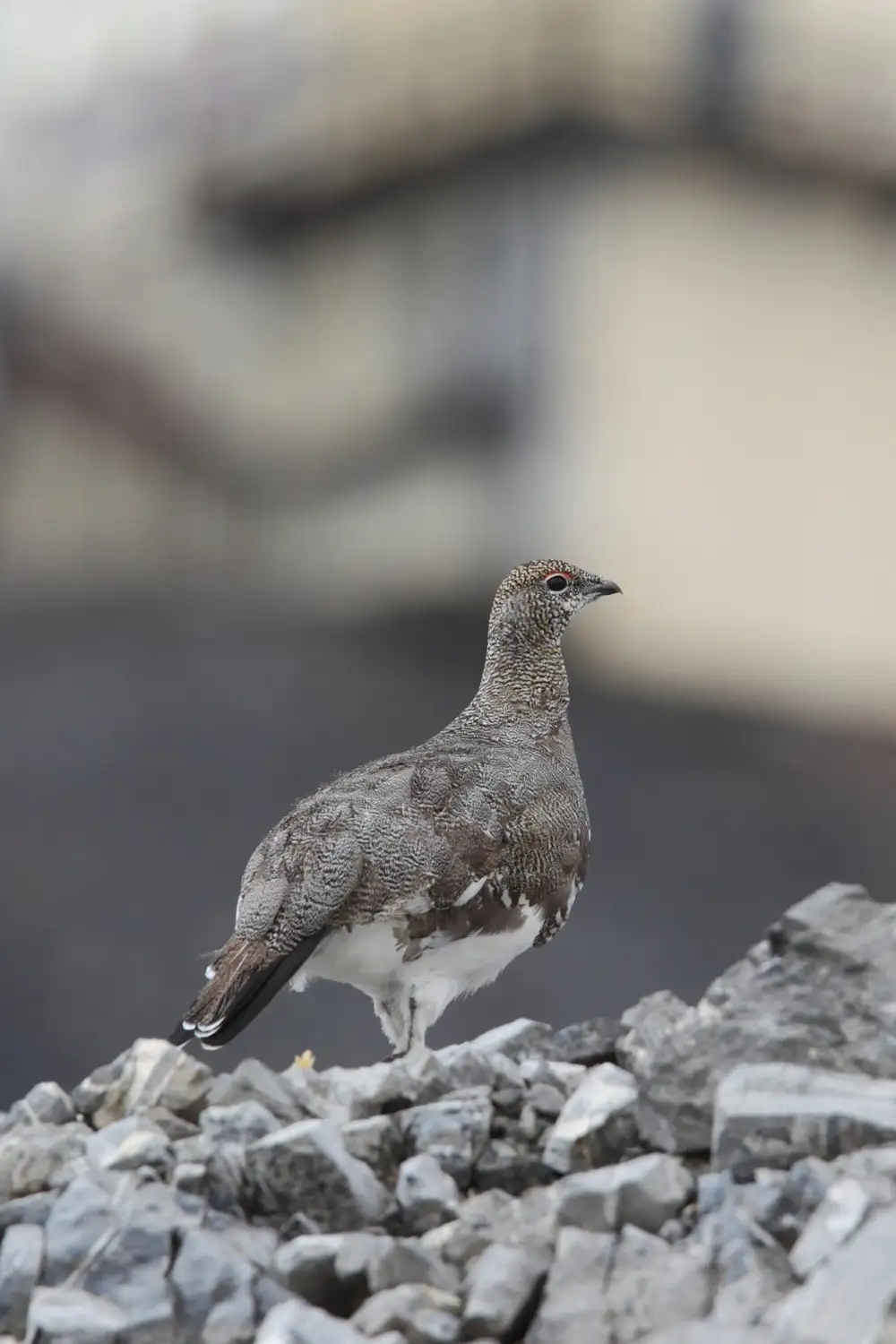
Rock Ptarmigans are primarily herbivorous.
Their food changes somewhat with the seasons and what is available in their harsh environment. They feed on a variety of tundra plants, including:
- willow buds and leaves
- dwarf birch
- berries
- seeds
- flowers
- catkins
- small twigs
- saxifrages
- mountain avens
- crowberries
- blueberries
- bearberries
They also consume insects, spiders and other small invertebrates.
This animal matter is particularly important for growing chicks, which eat considerably more invertebrates than adults.
How does the Rock Ptarmigan survive the cold?
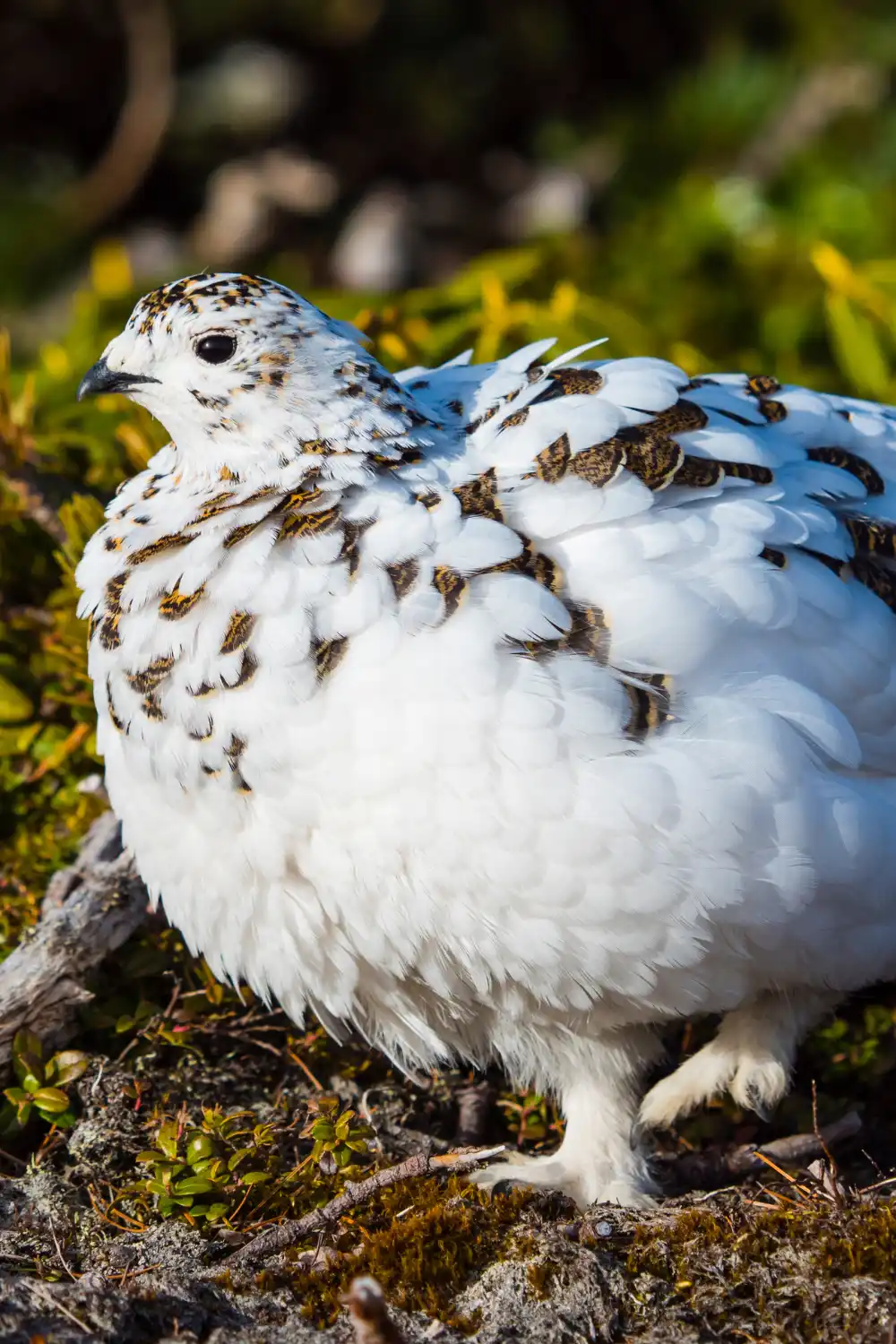
Living in the Arctic requires more than simply having thick feathers. Rock Ptarmigans have several adaptations that help them survive conditions that would be difficult for most birds.
Feathered feet
Perhaps the most obvious adaptation is found at the bottom of the bird.
The Rock Ptarmigan has feathers covering its legs and feet. These feathers provide additional insulation and help the bird move across snow.
Its feet also distribute its weight over soft snow, making movement easier.
Seasonal camouflage
The species effectively changes its camouflage as its environment changes.
In summer:
brown + gray + black → rocks and vegetation
In winter:
white → snow
This camouflage is particularly important because the Rock Ptarmigan lives in open landscapes where there may be little vegetation available for concealment.
Snow shelters
During severe winter conditions, Rock Ptarmigans can dig into snow and use it as shelter.
Snow can actually provide insulation from the much colder air above it, allowing the birds to conserve heat during extreme weather.
Rock Ptarmigan behavior
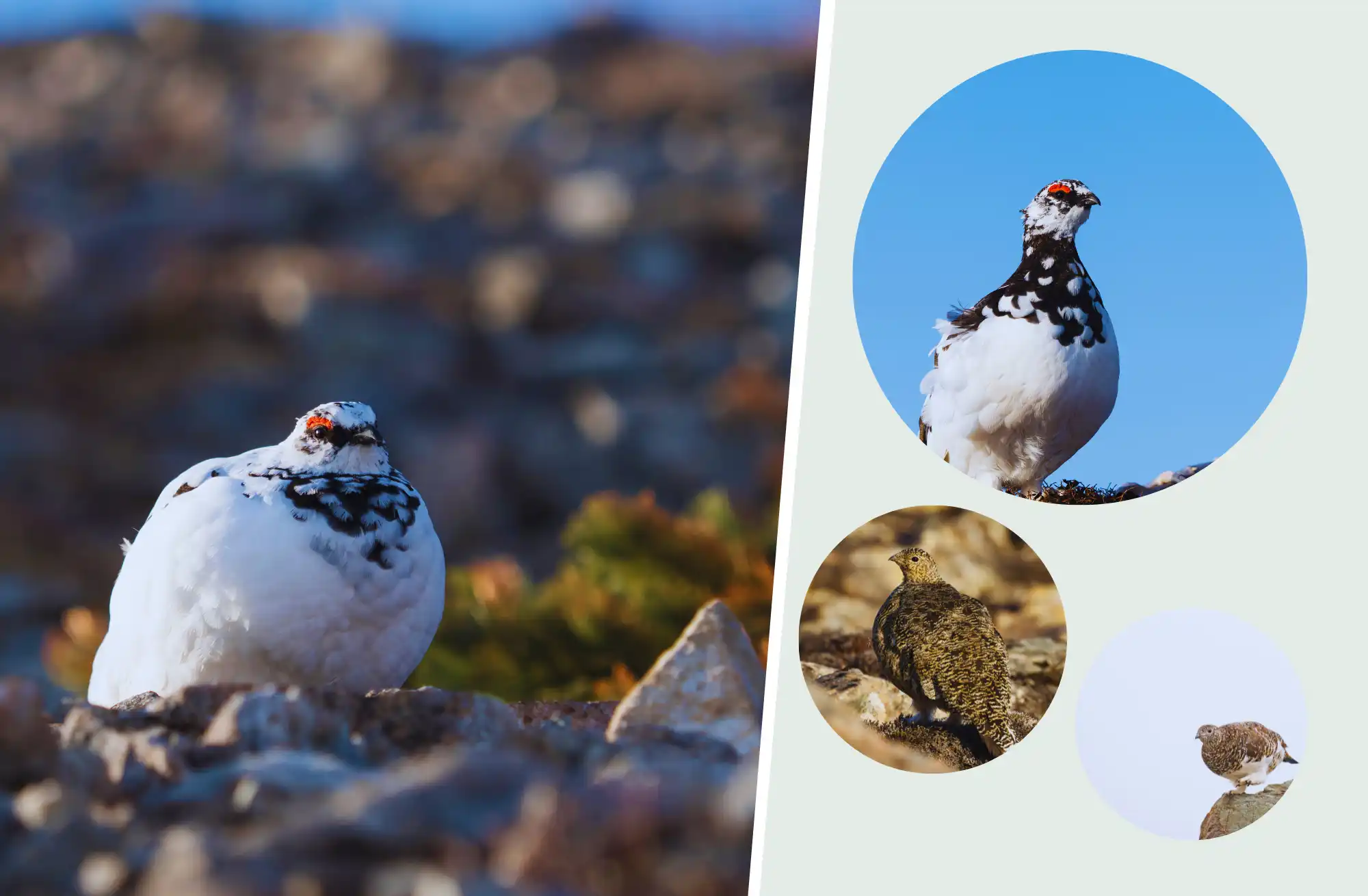
Rock Ptarmigans are generally active during the day.
Their behavior changes considerably during the breeding season.
In spring, males become territorial and use calls, postures, flights, and visual displays to attract females and compete with other males.
One of the most impressive displays is an aerial courtship flight. A male can rise well above the tundra before gliding back toward the ground with his wings and tail positioned in a distinctive display.
Outside the breeding season, the birds become much less territorial and may gather into flocks.
Some populations remain relatively close to their breeding areas throughout the year, while others make seasonal movements, including movements between different elevations.
Rock Ptarmigan breeding
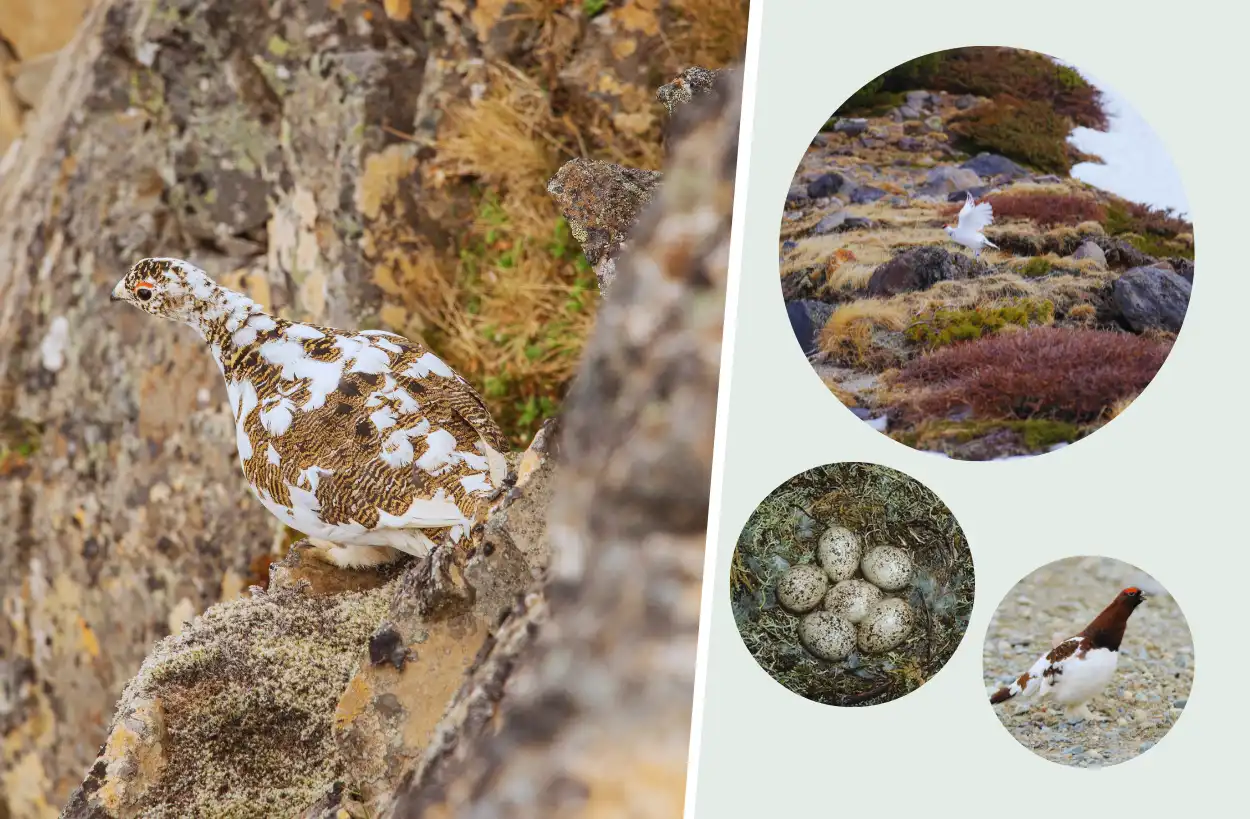
Breeding begins after the return of spring conditions to the Arctic and alpine tundra.
The male establishes a territory and performs displays to attract a female. Once paired, the female selects a suitable nesting site, usually on dry, rocky ground.
The nest itself is remarkably simple.
It is generally a shallow depression scraped into the ground and lined with materials such as moss, lichens, vegetation, and feathers.
Rock Ptarmigan eggs
A clutch usually contains 3–13 eggs.
The eggs are pale or buff-colored and marked with darker spots.
The female performs the incubation, which lasts approximately three weeks.
When the chicks hatch, they are already relatively well developed. They are covered in down, have their eyes open, and can leave the nest very soon after hatching.
This is an important adaptation for a ground-nesting bird living in an environment where predators and cold weather can pose serious risks.
What do Rock Ptarmigan chicks eat?
Young Rock Ptarmigans initially depend heavily on insects and other small invertebrates.
These foods provide concentrated protein and other nutrients needed for rapid growth.
As the chicks mature, plant material becomes increasingly important and their diet gradually becomes more similar to that of adults.
The mother leads the brood through the tundra while they forage.
Rock Ptarmigan and predators
Despite its excellent camouflage, the Rock Ptarmigan is preyed upon by several Arctic and alpine predators.
Depending on location, predators can include:
- Arctic foxes
- Red foxes
- Ermines
- Gyrfalcons
- Golden Eagles
- Rough-legged Hawks
- Ravens
- other birds of prey
Eggs and chicks are particularly vulnerable because the nest is located directly on the ground.
Camouflage is therefore one of the species' most important defenses.
Is the Rock Ptarmigan endangered?
The Rock Ptarmigan is currently classified as Least Concern.
It remains widespread across a huge geographic range, and the global population is considered large. Cornell Lab of Ornithology currently cites an estimated global breeding population of roughly 8 million individuals.
However, Least Concern does not mean that every population is stable or that the species faces no threats.
Rock Ptarmigans are highly specialized for cold, open environments. Changes to Arctic and alpine ecosystems caused by a warming climate could alter the habitats and vegetation on which they depend.
Hunting is also an important source of mortality in parts of the species' range.
Why is the Rock Ptarmigan important?
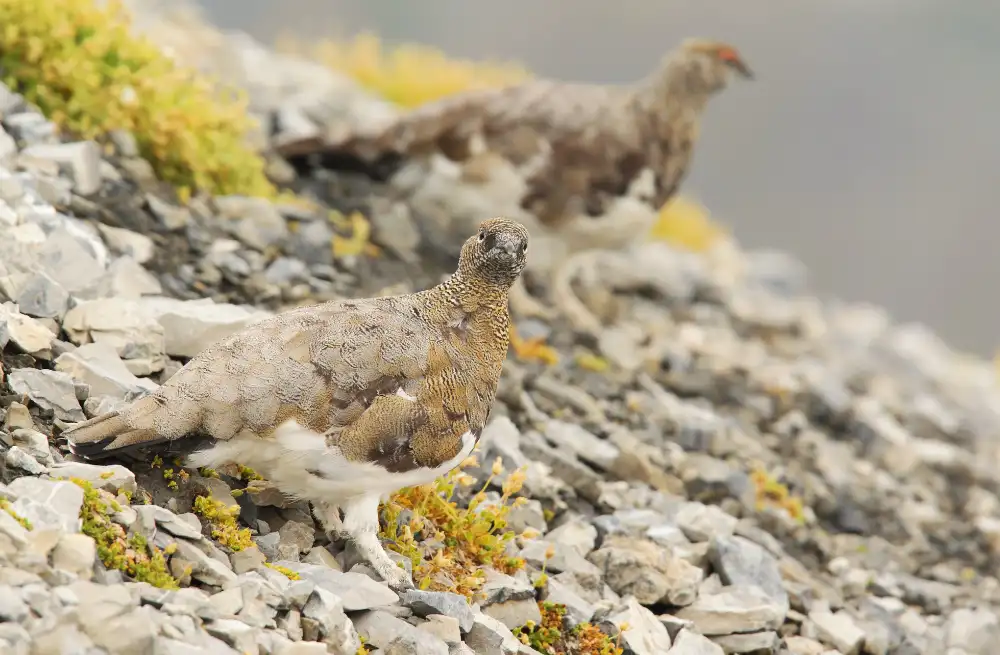
The Rock Ptarmigan is more than simply another Arctic bird.
It is an excellent example of how animals can evolve to survive extreme environments.
Its seasonal camouflage, feathered feet, cold-weather behavior, specialized habitat, and ability to exploit a short Arctic growing season all reflect the demands of life in northern ecosystems.
Because it is so closely associated with cold tundra and alpine environments, changes in its distribution and abundance can also provide useful information about how these ecosystems are changing.
10 fascinating Rock Ptarmigan facts
- Rock Ptarmigans change color with the seasons, becoming white in winter and brown and mottled in summer.
- Their feet are feathered, helping protect them from the cold.
- They can shelter beneath snow during extremely cold weather.
- Rock Ptarmigans live farther north than most grouse species.
- Males perform aerial courtship displays during the breeding season.
- Females usually become brown before males in spring, improving their camouflage while nesting.
- The chicks leave the nest very soon after hatching.
- Chicks eat considerably more insects and other invertebrates than adults.
- Rock Ptarmigans can form large flocks outside the breeding season.
- The species lives across three continents, with populations in North America, Europe, and Asia.
Rock Ptarmigan vs. Willow Ptarmigan
The Rock Ptarmigan is sometimes confused with the closely related Willow Ptarmigan.
The easiest distinction is habitat.
Rock Ptarmigan: generally favors higher, drier, rockier and more barren tundra.
Willow Ptarmigan: generally prefers areas with taller vegetation, particularly willow and birch habitats.
Their ranges also overlap extensively in parts of the Arctic, so habitat and detailed plumage characteristics are useful when identifying them.